 Skip to content
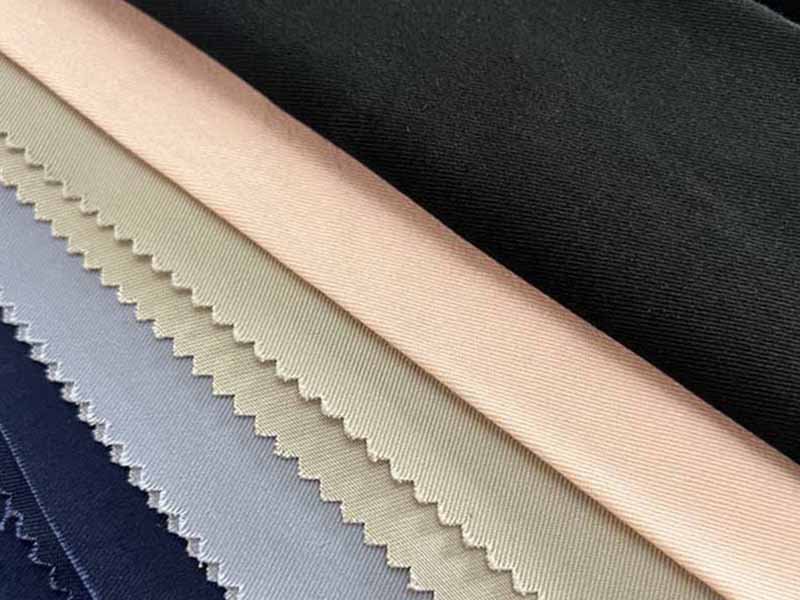
Two fabrics can look almost identical on a sample table. They may have the same color, similar weight, and an equally smooth surface. Yet one may be supported by a traceable certified supply chain, while the other depends entirely on a seller’s claim that it was made from recycled material. For brands building recycled bag collections, that difference can affect compliance reviews, retailer acceptance, marketing language, and customer trust.
GRS-certified fabric contains verified recycled material that has passed through a supply chain certified to the Global Recycled Standard. GRS verifies recycled inputs, chain of custody, and selected social, environmental, and chemical-processing requirements. It does not automatically prove that a fabric is waterproof, highly durable, legally compliant in every market, or suitable for a specific bag design.
This distinction matters because certification and product performance solve different problems. GRS helps answer whether the recycled-content claim is supported. Fabric specifications and product testing answer whether the material can survive abrasion, loading, weather, repeated opening, and real customer use.
A sourcing team that checks only the certificate can still end up with a weak bag. A team that checks only performance can end up with an unsupported environmental claim. The strongest custom bag programs treat traceability, material engineering, testing, production control, and marketing claims as one connected system.
What Is GRS-Certified Fabric?

GRS-certified fabric contains eligible recycled material verified through an independently audited supply chain. The Global Recycled Standard tracks recycled inputs and applies additional requirements to participating processing facilities. It supports credible recycled-content claims, but it should not be treated as a complete fabric-quality specification or a substitute for product testing, regulatory review, and finished-bag engineering.
What GRS Really Means
GRS stands for Global Recycled Standard. It is a voluntary international standard managed by Textile Exchange. Its central purpose is to verify recycled content and maintain traceability as materials move from recycling through processing, manufacturing, and business-to-business sales.
The phrase “GRS-certified fabric” is commonly used in sourcing conversations, but GRS is not a fabric construction in the same way that 600D Oxford, 420D nylon, ripstop, canvas, or twill are fabric constructions. A GRS certificate does not tell a buyer the denier, fabric weight, yarn density, coating type, tear strength, abrasion resistance, or hand feel.
Two fabrics described as 600D recycled polyester may perform very differently. One could be densely woven with a stable PU backing and strong coating adhesion. Another could be loosely woven, lighter than expected, and vulnerable to seam slippage. Both might have valid recycled-content documentation if they pass through an eligible certified supply chain.
GRS should therefore be read as a traceability and processing standard. It explains how the recycled claim is controlled. The technical specification explains what the fabric is and how it is expected to perform.
Fabric or Supply Chain?
Certification does not belong only to a roll of fabric. It operates across a chain of organizations, materials, processes, and commercial transactions.
A recycled polyester bag fabric may pass through several stages:
- Reclaimed-material collection
- Sorting and cleaning
- Recycling into chips, flakes, or fiber
- Yarn spinning
- Fabric weaving or knitting
- Dyeing and finishing
- Coating or lamination
- Fabric trading
- Cutting and sewing
- Finished-product sale
Each stage can affect the validity of the final claim. A certified recycled yarn does not automatically make every fabric woven from it GRS certified. A certified greige fabric does not automatically cover every dyeing, coating, printing, or lamination route. A certified fabric mill does not automatically make every bag factory eligible to sell a finished product with a GRS claim.
That is why professional buyers should ask more than, “Do you have GRS fabric?”
They should ask:
- Which legal company holds the certificate?
- Which production site is included?
- Is the proposed product category covered?
- Are dyeing, coating, trading, and bag manufacturing included where required?
- Can transaction-level documentation support the actual order?
What GRS Does Not Prove
GRS does not guarantee that a fabric is premium quality. It does not prove that the product is waterproof, highly abrasion-resistant, colorfast, UV-resistant, or suitable for heavy loading. It also does not replace destination-market regulations or a buyer’s restricted-substance requirements.
A GRS-certified material can still fail because of:
- Low yarn density
- Weak tear strength
- Poor coating adhesion
- Excessive color migration
- Inconsistent dye lots
- Surface abrasion
- Seam slippage
- Strong odor
- Poor print bonding
- Hydrolysis of an unsuitable coating
The finished bag can fail even when the fabric itself performs well. Handle attachments may tear away from the body. Shoulder straps may be under-reinforced. Zippers may jam around sharp curves. Foam may collapse. Binding may fray. Hardware may corrode.
A professional product file should therefore keep two separate evidence groups:
- Certification and traceability documents
- Technical specifications and test reports
The first group supports the recycled-material claim. The second group supports actual product quality and performance.
Why Brands Use GRS
Brands choose GRS because recycled-material claims increasingly require evidence that procurement teams, retailers, compliance departments, sustainability managers, and customers can review.
Descriptions such as “eco-friendly,” “made from recycled bottles,” or “sustainable polyester” may sound convincing, but they do not always explain:
- The actual recycled percentage
- Whether the input was eligible
- Whether it was pre-consumer or post-consumer
- Which facility processed it
- Whether the supply chain was independently audited
- Whether the finished transaction can be documented
GRS provides a more structured way to manage those questions.
For commercial buyers, its value usually appears in four areas:
- **Traceability:**supporting the movement of certified recycled material
- **Claim control:**helping brands use more defensible recycled-content language
- **Supplier management:**requiring participating organizations to maintain defined records
- **Risk reduction:**making undocumented substitutions more difficult
The value is highest when certification is defined before sampling. An internal sustainability target, a retailer purchasing requirement, and a consumer-facing GRS label may require different percentages and documentation. Treating them as the same requirement can create avoidable delays and claim risks.
What Does GRS Certification Cover?
GRS covers recycled-material verification, chain-of-custody control, social requirements, environmental management, and restrictions on selected chemical inputs used during certified processing. It also establishes conditions for certain recycled-content claims. The standard does not replace finished-product testing, market regulations, private retailer requirements, quality inspections, or engineering validation of the completed bag.
Recycled Content and Traceability
The first purpose of GRS is to distinguish documented recycled material from unsupported marketing language. Certified organizations must maintain records connecting incoming reclaimed inputs, recycling, processing, inventory, production losses, outgoing goods, and commercial transactions.
A credible record system should answer:
- What material entered the process?
- Where did it come from?
- Was it pre-consumer or post-consumer?
- How much was received?
- How much certified output was produced?
- What processing loss occurred?
- Which buyer received the certified goods?
- Which invoice and shipment records support the transaction?
These controls matter because recycled material can be accidentally mixed with conventional stock, incorrectly described, substituted, or overclaimed. Certification cannot eliminate every operational risk, but it creates an auditable system that is stronger than a supplier declaration alone.
GRS Version 5.0 was published in July 2026 and strengthens documentation around reclaimed materials entering the recycling chain. Buyers working across certificate renewals or long-running development projects should confirm which version appears on the supplier’s current certification documents.
| Control Area | What GRS Helps Address | What Still Requires Separate Evidence |
|---|---|---|
| Recycled content | Eligibility and traceability of recycled inputs | Product durability or market suitability |
| Supply chain | Certified handling and transaction records | Whether every quoted supplier is within scope |
| Social practices | Defined requirements at certified facilities | Every retailer-specific social audit |
| Environmental management | Policies for water, energy, emissions, and waste | A complete life-cycle assessment |
| Chemical processing | Restrictions on selected processing chemicals | Testing of every finished-bag component |
| Product claims | Conditions for approved recycled-content claims | Permission to use any marketing wording |
| Fabric quality | Not a central purpose of GRS | Abrasion, tear, tensile, and coating performance |
| Legal compliance | Not replaced by GRS | Country-specific product regulations |
Social and Environmental Controls
GRS includes social requirements for participating certified operations. These cover areas such as forced labor, child labor, discrimination, worker health and safety, employment conditions, and worker representation.
Certified organizations must also maintain environmental management procedures. Depending on the operation, these may involve monitoring:
- Energy use
- Water consumption
- Wastewater treatment
- Air emissions
- Waste generation
- Chemical storage
- Pollution risks
- Emergency response
These requirements add value, but their meaning should remain precise. A GRS certificate is not automatically equivalent to every retailer social-compliance program. A major customer may still request a separate audit, code-of-conduct review, factory assessment, or supply-chain due-diligence process.
The same caution applies to environmental impact. Certification confirms that defined management requirements are audited. It does not mean every certified material has identical carbon emissions, water use, durability, recyclability, or end-of-life performance.
For bag products, service life matters. A recycled backpack that fails after limited use may create more replacement demand than a longer-lasting product with a different material balance. Responsible sourcing should therefore consider verified recycled content and product durability together.
Chemical Restrictions
GRS controls selected hazardous chemical inputs used during certified processing. These requirements help reduce harmful chemical use within participating operations.
However, GRS should not be presented as a complete finished-product chemical certification. Reclaimed materials may contain residues from their previous use, and a finished bag includes many components beyond the main fabric.
A typical backpack may contain:
- Coated shell fabric
- Lining
- Mesh
- Foam
- Zipper tape
- Zipper teeth
- Webbing
- Buckles
- Metal hardware
- Sewing thread
- Printed labels
- Rubber patches
- Adhesives
Each component can introduce different chemical considerations. Depending on the product and destination market, buyers may still require review or testing related to:
- REACH
- Retailer restricted-substance lists
- Lead
- Phthalates
- AZO dyes
- California Proposition 65
- PFAS policies
- CPSIA for relevant children’s products
- Food-contact requirements for applicable interiors
- Marketplace-specific compliance rules
The practical approach is to use GRS for recycled-content and processing claims, then create a separate compliance plan for the finished bag.
The 20% and 50% Rules
GRS applies to products containing at least 20% recycled material within the applicable certification framework. Consumer-facing GRS product labeling generally requires at least 50% recycled content.
These numbers do not mean that any fabric containing 20% recycled fiber can display a GRS consumer label. They also do not mean that a bag becomes 50% recycled simply because its outer fabric contains 50% recycled polyester.
Consider a travel bag weighing 1,000 grams:
- Certified recycled shell fabric: 380 grams
- Certified recycled lining: 120 grams
- Conventional webbing: 100 grams
- Foam and reinforcement: 180 grams
- Zippers and hardware: 140 grams
- Thread, labels, and other components: 80 grams
The recycled percentage of the shell fabric is not automatically the recycled percentage of the complete bag. The applicable calculation must consider product composition, certified components, component weights, and current claims rules.
Brands should define the intended claim before approving materials. A business-to-business sourcing requirement, an internal recycled-material target, and a retail GRS label can create different documentation obligations.
Which Fabrics Can Be GRS Certified?

GRS may apply to eligible recycled polyester, recycled nylon, recycled cotton, recycled wool, recycled blends, and other accepted reclaimed materials. Woven fabrics, knitted fabrics, linings, meshes, webbings, and certain coated or laminated constructions may qualify when their recycled inputs, processing facilities, chain of custody, and product scope meet the standard’s requirements.
Common Recycled Materials
Recycled polyester is one of the most widely used options in the bag industry. It appears in Oxford fabrics, linings, webbings, mesh, ripstop, and printable promotional materials. RPET generally refers to recycled polyethylene terephthalate, often derived from eligible packaging or textile waste.
Recycled nylon is frequently selected for travel, sports, outdoor, and lightweight technical bags. It may offer a soft hand and good tear performance, but those properties depend on yarn quality, weave density, heat setting, coating, and finishing—not simply on the words “recycled nylon.”
Recycled cotton is common in canvas-style totes and blended fabrics. Mechanically recycled cotton fibers are often shorter than virgin fibers, so mills may blend them with virgin cotton, recycled polyester, or other fibers to improve spinning stability and strength.
GRS may accept eligible pre-consumer and post-consumer reclaimed material:
- Pre-consumer materialis recovered from waste generated during manufacturing before reaching the final user.
- Post-consumer materialhas completed its intended consumer use and is recovered from the waste stream.
Eligibility depends on the standard’s definitions and documentary evidence. A factory cannot automatically call every internal cutting scrap or production leftover “GRS recycled material.”
Coated and Laminated Fabrics
Most functional bag fabrics include more than a woven face. Polyester or nylon may be coated with PU, backed with PVC, laminated with TPU, treated for water repellency, printed, embossed, or combined with films.
These processes create certification questions because the chain must cover the relevant operations. A certificate for recycled yarn does not automatically cover the finished coated fabric.
Buyers should verify:
- Whether weaving is included
- Whether dyeing is included
- Whether coating or lamination is included
- Whether printing is included
- Whether the fabric trader is certified where required
- Whether the final material description appears in the certificate scope
- Whether a Transaction Certificate can follow the material to the bag manufacturer
Coating mass can also affect recycled-content calculations. A fabric may use a recycled woven substrate with a conventional polymer coating. The recycled percentage should not be inferred from the face yarn alone.
From a performance perspective, coatings still require testing. A PU backing may provide practical water resistance, but an unsuitable formulation may become sticky or brittle after aging. TPU lamination can support stronger waterproofing goals, but it may change hand feel, seam construction, welding options, and cost.
Typical Bag Materials
The following ranges are practical sourcing references rather than GRS requirements. Finished weight can vary according to yarn density, weave, coating thickness, lamination, and finishing.
| Material Direction | Indicative Finished Weight | Common Applications | Important Checks |
|---|---|---|---|
| 190D–210D recycled polyester | 80–150 GSM | Linings, packing cubes, drawstring bags | Tear strength, seam slippage, coating |
| 300D recycled polyester Oxford | 150–250 GSM | Daypacks, organizers, promotional bags | Abrasion, print adhesion, water resistance |
| 420D recycled nylon or polyester | 180–300 GSM | Travel, sports, lightweight outdoor bags | Tear strength, UV exposure, coating adhesion |
| 500D–600D recycled polyester | 250–420 GSM | Backpacks, totes, luggage, work bags | Abrasion, tensile strength, stitch retention |
| 900D recycled polyester | 350–550 GSM | Utility, structured, heavy travel bags | Weight, stiffness, seam bulk, fold marks |
| Recycled ripstop | 70–250 GSM | Hiking, cycling, packable bags | Grid strength, puncture resistance, coating |
| Recycled polyester lining | 60–140 GSM | Cosmetic, travel, and backpack interiors | Colorfastness, seam strength, odor |
| Recycled webbing | Varies | Handles, straps, trim | Tensile load, elongation, abrasion |
Denier alone is not a quality grade. A tightly woven 300D fabric can outperform a loosely woven 600D fabric in certain tests. Two materials labeled 600D RPET can differ in weight, coating thickness, yarn quality, abrasion resistance, color stability, and price.
A purchase specification should define at least:
- Fiber composition
- Recycled percentage
- Yarn size
- Fabric construction
- Finished weight
- Usable width
- Coating or lamination
- Color standard
- Surface treatment
- Required performance tests
Components Beyond the Shell
A finished bag is a material system. Focusing only on the outer fabric can create an attractive sustainability story without creating a well-designed product.
Depending on the intended claim, buyers may also need to review:
- Lining
- Mesh
- Webbing
- Binding tape
- Zipper tape
- Sewing thread
- Labels
- Elastic
- Padding textiles
- Packaging
Not every component must be certified for every project. However, the actual product composition must support the proposed recycled-content statement.
Compatibility also matters. Recycled polyester webbing may show a different shade from the shell. A lightweight recycled lining may tear around overloaded pockets. Heat-transfer printing may require a specific surface finish. Some coated materials may develop visible needle holes or fold marks. Fabrics and trims should be approved as a complete construction rather than as isolated swatches.
The best material combination is not necessarily the one with the largest number of certificates. It is the one that balances traceability, structural performance, appearance, production stability, cost, and expected service life.
How Is GRS Different from Other Standards?

GRS verifies recycled content and chain of custody while adding social, environmental, and chemical-processing requirements. RCS focuses more narrowly on recycled-content verification and traceability. OEKO-TEX STANDARD 100 addresses harmful-substance testing, while GOTS centers on certified organic fibers and textile processing. These standards answer different sourcing questions and should not be treated as interchangeable quality levels.
GRS vs RCS
GRS and RCS are both recycled-material standards managed by Textile Exchange. Both use third-party certification to verify recycled content and trace materials through the supply chain.
The main difference is breadth. GRS includes additional requirements covering:
- Social practices
- Environmental management
- Chemical inputs
- Higher consumer-labeling thresholds
RCS is more focused on recycled-content identity and chain of custody.
That does not make RCS an inferior choice for every project. It may be appropriate when the buyer’s main objective is to verify recycled content without requiring the wider GRS processing framework.
The choice should depend on:
- Customer procurement policy
- Required recycled percentage
- Intended product claim
- Availability of certified suppliers
- Retailer requirements
- Processing requirements
- Documentation cost
- Product composition
A brand should not request GRS only because it is more recognizable. If the product contains too little recycled content for the planned claim, or if the supply chain cannot preserve certification, the sourcing strategy should be adjusted before materials are booked.
GRS vs OEKO-TEX
OEKO-TEX STANDARD 100 is a product-testing certification that evaluates textiles for specified harmful substances. Its purpose differs from GRS.
- GRS asks whether recycled content is verified and traceable through a qualifying supply chain.
- OEKO-TEX STANDARD 100 asks whether the tested textile article meets its harmful-substance criteria.
A fabric can be GRS certified without being OEKO-TEX certified. It can also be OEKO-TEX certified without containing recycled material. Some materials carry both when a brand wants evidence for recycled content and harmful-substance testing.
Even when both are available, the scope should be checked. A certificate for the main fabric may not cover:
- Printed logos
- Rubber patches
- Metal coatings
- Zipper pullers
- Adhesives
- Buckles
- Foam
- Packaging inks
For children’s bags, cosmetic storage products, food-related delivery bags, or goods sold through strict retail channels, buyers should develop a finished-product compliance plan rather than relying only on the shell fabric’s certificate.
GRS vs GOTS
GOTS stands for Global Organic Textile Standard. It applies to products made with certified organic fibers and controls relevant stages of textile processing, manufacturing, labeling, trading, and distribution.
The core distinction is the material claim:
- GRS is centered on recycled materials.
- GOTS is centered on certified organic natural fibers.
A recycled polyester backpack is not a GOTS product. An organic cotton tote is not automatically a GRS product.
Neither standard makes one material universally better than another. The correct choice depends on product function, brand positioning, performance requirements, customer expectations, and supply-chain feasibility.
A lightweight outdoor bag may benefit from recycled nylon because of weight and tear-performance targets. A lifestyle tote may benefit from organic cotton because of texture, appearance, and natural-fiber positioning.
Durability should remain part of the decision. A material with a strong certification story but poor product life can undermine the practical value of the project.
Standards at a Glance
| Standard | Main Purpose | Typical Material Focus | Important Limitation |
|---|---|---|---|
| GRS | Recycled-content verification, traceability, and processing requirements | Recycled synthetic and natural materials | Does not prove complete quality or legal compliance |
| RCS | Recycled-content verification and chain of custody | Recycled synthetic and natural materials | Has fewer additional processing requirements than GRS |
| OEKO-TEX STANDARD 100 | Harmful-substance testing | Virgin or recycled textile articles | Does not verify recycled or organic content |
| GOTS | Organic-fiber and textile-processing requirements | Certified organic natural fibers | Not designed primarily for recycled synthetics |
| ISO 9001 | Quality-management system | Organizational processes | Does not certify individual product quality |
| ISO 14001 | Environmental-management system | Organizational processes | Does not verify recycled content |
| Product test report | Measures defined safety or performance criteria | Specific tested material or product | Applies only to the tested sample and method |
The most reliable sourcing files often contain several forms of evidence. Each certificate, audit, specification, and test report should address a specific risk rather than being collected only to make the document folder look impressive.
How Do Buyers Verify GRS Certification?

Buyers should check the supplier’s Scope Certificate in the official Textile Exchange database, confirm that the legal company, site, process, material, and product category are covered, and authenticate the Transaction Certificate when required. Certificate dates, invoices, product descriptions, quantities, and shipment records should agree. A certificate PDF alone does not prove that the actual order is certified.
Scope Certificate
A Scope Certificate, commonly called an SC, confirms that an organization has been audited and is qualified to conduct specified certified activities for listed materials and products.
It does not mean that every product manufactured or sold by that organization is GRS certified.
Buyers should review:
- Legal company name
- Registered facility address
- Certificate number
- Issuing certification body
- Validity period
- Certified standard
- Material composition
- Product categories
- Processing activities
- Listed sites or subcontractors
For example, a business may be certified to trade recycled polyester yarn but not to manufacture coated bag fabric. A mill may hold certification for woven recycled polyester while recycled nylon webbing is outside its listed scope. A bag factory may be certified under one legal entity while the quotation is issued by an affiliated trading company.
These situations are not automatically improper, but the relationship must be explained and documented.
A cropped certificate image is not enough. The appendix is often where the actual products, materials, and processes are listed.
Transaction Certificate
A Transaction Certificate, or TC, supports a specific movement of certified products between named parties. It connects the seller, buyer, material, quantity, and transaction details.
The simplest distinction is:
- The Scope Certificate answers: “Is this organization qualified?”
- The Transaction Certificate answers: “Is this particular transaction supported as certified?”
TC responsibilities should be discussed during quotation. The buyer should confirm:
- Who will apply for the TC
- Who will pay the related fee
- What buyer information is required
- Whether partial shipments affect documentation
- How quantity changes will be recorded
- When the TC can be issued
- Whether the material supplier, trader, or finished-goods manufacturer is responsible
Waiting until the goods are ready to ship can create problems. The seller may not have included documentation charges, the transaction route may not match the planned certificate flow, or the buyer’s final legal name may differ from the purchase-order information.
Verification Workflow
| Verification Step | What to Check | Common Risk |
|---|---|---|
| Obtain the full SC | Certificate and all appendices | Product scope is hidden or incomplete |
| Search the official database | Company name and certificate status | Certificate is expired, suspended, or missing |
| Match the legal entity | Seller, factory, invoice, and certificate | Certified company differs from the invoicing company |
| Confirm the site | Actual processing address | Production occurs at an unlisted facility |
| Review product scope | Fiber, material, and product category | Certificate covers yarn but not finished fabric |
| Review processes | Weaving, dyeing, coating, trading, sewing | A key process falls outside the certified chain |
| Define the TC plan | Issuer, fee, timing, responsibility | Seller cannot provide transaction evidence |
| Authenticate the TC | Certificate number and transaction data | TC details are invalid or inconsistent |
| Reconcile quantities | PO, invoice, packing list, and TC | Certified volume is lower than shipped volume |
| Approve the claim | Wording, percentage, artwork, and logo | Marketing exceeds the supported claim |
Verification records should be stored with:
- Purchase order
- BOM
- Fabric specification
- Approved sample
- Invoice
- Packing list
- Test reports
- Production-lot records
- Claim artwork
This creates a practical evidence chain for customer reviews, retailer audits, repeat orders, and future product-line expansion.
Common Red Flags
Further investigation is needed when:
- The supplier provides only a GRS logo screenshot.
- The Scope Certificate appendix is missing.
- The certificate has expired.
- The legal company name does not match the seller.
- The certified site differs from the production site.
- The certificate covers yarn, but the quotation is for finished bags.
- The supplier says one certificate covers every product.
- The recycled percentage changes between documents.
- The seller refuses to discuss Transaction Certificates.
- The TC quantity does not match the invoice.
- A consumer GRS label is offered without reviewing the applicable threshold.
- The supplier claims GRS proves waterproofness or market compliance.
Not every discrepancy proves misconduct. A certificate may be under renewal. Database updates may take time. Groups of related companies may use different legal entities for production and export.
The correct response is to request clarification, compare supporting documents, and contact the issuing certification body when necessary. Buyers should neither accept every certificate at face value nor accuse a supplier based on one unexplained difference.
Is GRS Fabric Right for Custom Bags?
GRS fabric is suitable for custom bags when a brand needs verified recycled-content sourcing and can maintain the required certified chain. The decision must also consider fabric construction, coating, product load, testing, colors, MOQ, documentation cost, lead time, and the intended claim. GRS creates value when it is integrated into product development rather than added as a marketing request after production begins.
Suitable Bag Programs
GRS materials can be considered for:
- Backpacks
- Tote bags
- Travel bags
- Packing cubes
- Drawstring bags
- Cosmetic bags
- Sports bags
- Laptop sleeves
- Corporate gift bags
- Outdoor bags
- Storage organizers
- Reusable shopping bags
The material should be selected according to the use case.
A foldable shopping bag may prioritize low weight, compact packing, tear strength, and printability. A commuter backpack may require abrasion resistance, foam compatibility, shape retention, and strong stitch holding. A tool bag may need heavy fabric, reinforced panels, high-load webbing, and robust seams. A wet-weather cycling bag may depend more on lamination and seam construction than on denier alone.
The recycled-material objective should be built into the BOM. The buyer should decide whether the project requires:
- Certified shell fabric only
- Certified shell and lining
- Certified webbing
- Certified zipper tape
- A target finished-product recycled percentage
- Business-to-business certification support
- Consumer-facing GRS labeling
This avoids approving a recycled shell fabric and later discovering that the finished product cannot support the planned claim.
MOQ, Cost, and Timing
GRS fabric is not automatically expensive, but certified sourcing can add commercial constraints.
Cost and MOQ may be affected by:
- Certified stock availability
- Custom dyeing
- Minimum dye-lot size
- Coating or lamination
- Printing
- Fabric width
- Recycled percentage
- Matching webbing
- Matching lining
- Transaction documentation
- Laboratory testing
- Segregated production records
- Number of colors and SKUs
Consider a backpack using 0.8 meters of shell fabric. An order of 500 backpacks requires approximately 400 meters before sampling and cutting loss. The sewing quantity may meet the bag factory’s MOQ, but a custom-color fabric mill may require a larger dye lot.
The buyer may need to:
- Use an available stock color
- Increase the order quantity
- Share one material across several SKUs
- Purchase and store excess fabric
- Select another certified construction
- Use custom colors only for trims or branding
Bag MOQ and fabric MOQ should be calculated separately. The same applies to custom webbing, lining, zipper tape, and printed materials.
Lead time should account for:
- Certificate review
- Fabric booking
- Lab dips
- Dyeing and finishing
- Testing
- Sample development
- Sample revisions
- Bulk production
- Inspection
- Transaction documentation
A short schedule may require available certified materials rather than a fully customized material program.
Testing and Approval
Certification should be followed by practical testing based on the product’s intended use.
Common fabric checks include:
- Fiber composition
- Recycled percentage
- Fabric weight
- Finished width
- Tensile strength
- Tear strength
- Abrasion resistance
- Colorfastness to rubbing
- Colorfastness to water
- Coating adhesion
- Hydrostatic pressure
- Spray rating
- Dimensional stability
- Print adhesion
- Odor
Common finished-bag checks include:
- Seam strength
- Handle loading
- Shoulder-strap loading
- Zipper cycling
- Buckle operation
- Hardware corrosion
- Drop performance
- Shape recovery
- Compartment loading
- Packaging protection
- Appearance after transport simulation
Testing should reflect actual risk. A cosmetic pouch does not need the same loading plan as a hiking backpack. A lightweight promotional tote does not need the same coating specification as a waterproof equipment bag.
The approved sample should record the exact material source, construction, coating, color, lining, webbing, zipper, thread, labels, foam, and reinforcement. This helps prevent a visually similar but technically different recycled fabric from being substituted during bulk production.
Briefing the Manufacturer
“Use GRS fabric” is not a complete development brief.
A useful brief should include:
- Product drawings, Tech Pack, sample, or reference images
- Finished dimensions
- Intended use
- Expected loading
- Preferred fiber type
- Required recycled percentage
- Certification and documentation requirements
- Intended consumer claim
- Fabric weight or denier
- Coating or water-resistance requirement
- Color standard
- Logo process
- Destination market
- Testing requirements
- Order quantity by color
- Packaging and delivery plan
The quotation should separate major assumptions relating to material, coating, printing, testing, certification documents, packaging, and production.
This makes supplier comparisons more meaningful. A lower total price may exclude transaction documentation, testing, custom dyeing, reinforced construction, or matching certified trims.
Lovrix supports material-driven OEM and ODM development for custom bags, fabric products, webbing, and engineered soft goods. Projects can begin from drawings, Tech Packs, physical samples, reference images, or product concepts. The development process evaluates material suitability, structure, sampling, branding details, production feasibility, quality control, packaging, and global delivery.
For a GRS-related bag project, provide:
- Product design or reference
- Target dimensions
- Preferred material
- Required recycled percentage
- Intended certification claim
- Destination market
- Testing standard
- Order quantity
- Color requirements
- Delivery schedule
The project can then be reviewed as a complete manufacturing system rather than as a simple request to replace conventional fabric with recycled fabric.
Plan Your GRS Custom Bag Project
A well-developed GRS bag is not simply a conventional bag produced in recycled fabric. It is a documented product system in which the recycled-content claim, supply-chain evidence, material construction, component selection, testing plan, manufacturing process, and marketing language all support one another.
Before requesting a quotation, define what you are trying to achieve. Do you need verified recycled shell fabric, a target recycled percentage for the finished bag, Transaction Certificate support, or an approved consumer-facing GRS claim? These goals can lead to different material choices, costs, MOQs, and production routes.
Lovrix helps global brands and commercial buyers evaluate custom bag projects from material selection through sampling, production, quality control, packaging, and delivery. The team can review recycled polyester, recycled nylon, certified linings, webbing, coatings, structural requirements, certification documents, and product-testing needs before bulk production.
Send your product drawing, Tech Pack, existing sample, reference images, target quantity, material requirements, planned GRS claim, destination market, and delivery schedule for a structured project review.


