 Skip to content
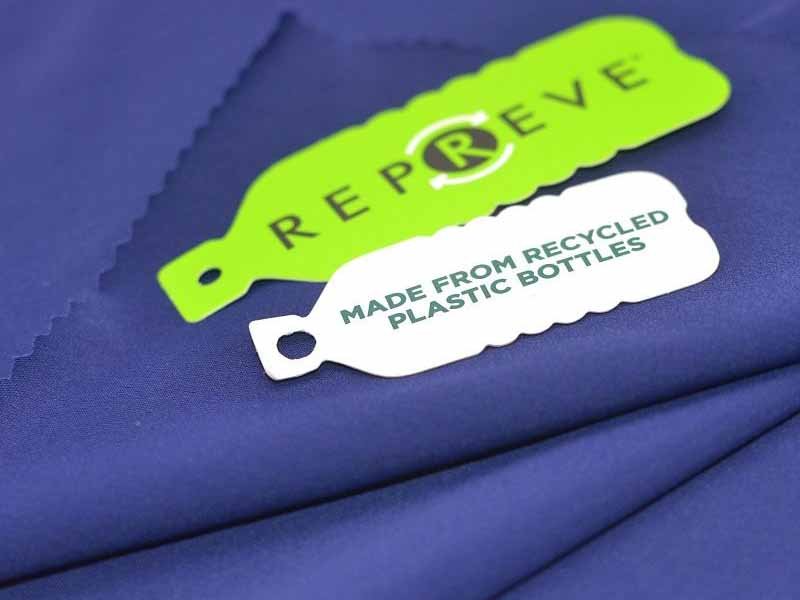
A supplier can add the word “recycled” to a quotation in seconds. Proving the claim is much harder. For a brand buyer, the real question is not whether a fabric looks sustainable or whether a supplier owns an impressive certificate. The question is whether the claimed recycled input can be traced from an approved source into the exact material batch, production order, finished bag, and public claim.
To verify recycled material content, define exactly what the percentage applies to, authenticate the supplier and certification documents, match transaction and purchasing records to the delivered batch, reconcile material input with production output, and calculate the finished product from its approved BOM. Laboratory testing can strengthen the evidence for some materials, but it normally supports rather than replaces a documented chain of custody.
This distinction matters because a backpack can use a 100% recycled polyester shell while still containing virgin lining, foam, zipper components, sewing thread, labels, buckles, and reinforcement panels. Calling that backpack “100% recycled” would be difficult to defend. The same problem appears when a supplier presents a general Scope Certificate as proof for a specific shipment. One document may be genuine, yet still fail to prove the claim being made. The sections below show how experienced bag buyers move from a marketing statement to an evidence file that can withstand internal review, retailer scrutiny, and third-party audit.
What Is Recycled Material Content?

Recycled material content is the measurable share of recovered material used in a fiber, fabric, component, or finished product. A defensible claim must identify the material, recycled percentage, source category, and calculation boundary. A recycled outer fabric does not make the entire bag equally recycled, and a recyclable product does not necessarily contain any recycled input.
Recycled Material Defined
A recycled input comes from material recovered or diverted from a waste stream and processed into a usable manufacturing input. In bag production, common examples include polyester made from recovered PET packaging, nylon made from qualifying industrial or post-use waste, recycled cotton fibers, reclaimed plastic hardware, and recycled metal parts.
The word “recycled” should not be used simply because a material is reusable, recyclable, surplus, or left over from another order. Unused virgin fabric from a cancelled program is still virgin material. A bag that might be recyclable at the end of its life also does not automatically contain recycled content.
A useful material description answers four questions: What is the material? How much of it is recycled? Is the input pre-consumer or post-consumer? Does the percentage describe a fiber, a component, or the finished item?
For example, “100% polyester fabric” identifies fiber composition but says nothing about origin. “Polyester Oxford containing 70% post-consumer recycled polyester by weight” is far more useful. It gives procurement and product teams a measurable requirement that can be repeated in the specification, purchase order, supplier declaration, and supporting certification documents.
Vague expressions such as “eco fabric,” “green polyester,” and “environmentally friendly material” may be suitable for early product conversations, but they are not technical approval criteria. Before bulk purchasing, the claim must be translated into a percentage, source type, evidence requirement, and product boundary.
Pre-Consumer and Post-Consumer Content
Pre-consumer recycled content generally comes from material diverted from a manufacturing waste stream before it reaches an end user. Depending on the applicable standard and process, qualifying inputs may include production scrap, cutting waste, rejected yarn, or other material recovered and reprocessed rather than discarded.
Post-consumer recycled content comes from products that have completed their intended use. Common examples include used PET bottles, discarded textiles, recovered fishing nets, or plastic products collected after consumer or commercial use.
The distinction matters because two fabrics described as “60% recycled polyester” may rely on very different feedstocks. A retailer may accept both categories, request a minimum post-consumer share, or require the two values to be reported separately. A buyer should therefore avoid assuming that all recycled polyester is bottle-derived.
A stronger declaration reads: “60% total recycled polyester, including 45% post-consumer and 15% pre-consumer content.” The supplier’s technical sheet, quotation, invoice, certification documents, and final declaration should use the same terminology. When one record says “post-consumer,” another says only “recycled,” and a third omits the percentage, clarification is needed before material approval.
Experienced buyers also check whether the feedstock description is commercially plausible. A supplier offering every color, coating, weight, and construction as immediately available in the same certified post-consumer grade may be oversimplifying a supply chain that normally involves separate yarn, dyeing, coating, and inventory controls.
Material Claims and Product Claims
Material-level content and finished-product content are different calculations. A fabric may contain 100% recycled polyester fiber, but the completed bag may contain a much lower percentage after lining, foam, zippers, webbing, hardware, thread, labels, coatings, and reinforcement materials are included.
A simple tote can contain six to ten material groups. A structured backpack, cooler bag, camera bag, or tool bag can contain 15 to 30 identifiable component groups. Each component may have a different recycled percentage and a different evidence source.
| Claim level | What is measured | Clear claim example | Common error |
|---|---|---|---|
| Fiber | Fiber composition inside one textile | Fabric contains 80% recycled polyester fiber | Applying 80% to the whole bag |
| Component | One identifiable product part | Outer shell is made with recycled polyester | Ignoring virgin lining and hardware |
| Finished product | All included bag components | Bag contains 46% recycled material by weight | Calculating only the main fabric |
| Packaging | Polybag, carton, or paper insert | Polybag contains 30% recycled plastic | Adding packaging to product content |
The claim boundary should be defined before calculation starts. Otherwise, two suppliers can calculate the same bag differently and produce percentages that cannot be compared fairly. Heavy virgin components should not be quietly excluded to improve the result. Packaging should normally be stated separately unless the claim explicitly covers the combined product-and-packaging system.
Recycled, Recyclable, and Certified
Recycled, recyclable, and certified describe different product attributes. A recycled material contains recovered input. A recyclable material may be capable of collection and reprocessing after use. A certified material or product has been assessed within a defined third-party system and must meet that system’s scope, documentation, and chain-of-custody rules.
A product can be recyclable without containing recycled material. It can contain recycled material without being certified. It can also use certified recycled fabric while the finished bag remains outside a certified product claim because another required process, trader, or factory is not included in the certified chain.
These questions should therefore be answered separately:
- Does the input contain recycled material?
- What percentage is recycled?
- Is it pre-consumer, post-consumer, or a mixture?
- Is the material certified?
- Is the shipment supported by order-specific documents?
- Is the complete processing chain covered?
- Is the finished product eligible for the intended claim?
- Is the product itself designed to be recyclable after use?
Separating these issues reduces greenwashing risk and improves sourcing decisions. It also helps designers avoid a common trap: choosing several individually “sustainable” components that create a mixed-material product that is difficult to disassemble or recycle at the end of its useful life.
Which Evidence Proves Recycled Content?

Recycled content is best supported by a matching evidence set rather than one certificate. The strongest file links the approved specification, supplier declaration, Scope Certificate, Transaction Certificate where applicable, purchase records, receiving data, production consumption, finished BOM, and final calculation to the same material, quantity, supplier, and production batch.
Technical and Commercial Records
Verification should begin before the material purchase order is released. The approved specification should identify fiber composition, recycled percentage, source category, fabric construction, nominal weight, usable width, coating or lamination, color, and required certification status.
A practical bag-fabric specification might read: “600D polyester Oxford, 250 +/- 15 g/m², PU coated, black, minimum 50% post-consumer recycled polyester, order-specific certification documents required.” This is more useful than “600D eco RPET” because it creates measurable purchasing and inspection criteria.
The core description should remain consistent across the supplier quotation, material approval form, purchase order, invoice, packing list, receiving record, warehouse lot, production issue sheet, and finished BOM. Minor formatting differences are normal, but the material identity, recycled percentage, supplier, and quantity should not change without documented approval.
Commercial records do not prove recycled origin by themselves. Their value is that they connect the technical claim to a real transaction. An authentic certificate that cannot be linked to the delivered fabric lot is weak order-level evidence. Likewise, a detailed invoice that says “recycled polyester” is still only a supplier statement unless supported by traceability and verification records.
For recurring programs, assign a controlled material code to each approved specification. The code should change when the recycled percentage, supplier, coating, construction, or certification route changes. This prevents a familiar problem in which several visually similar black fabrics are treated as interchangeable even though their evidence status differs.
Scope and Transaction Certificates
A Scope Certificate, commonly called an SC, confirms that an organization has been audited and approved to operate within a defined certification scope. It normally identifies the legal entity, certified location, applicable standard, approved products, permitted processes, issue date, and validity period.
An SC shows capability and scope. It does not prove that every material or product sold by the organization is certified.
A Transaction Certificate, commonly called a TC, is connected to a particular transfer of certified goods. It generally identifies the seller, buyer, product, quantity, and related shipment or invoice information. For a buyer checking a specific fabric delivery, the TC is normally more directly relevant than a general SC.
| Evidence | What it supports | What it does not prove alone | Practical buyer check |
|---|---|---|---|
| Scope Certificate | Facility is approved within a defined scope | The current shipment is certified | Match legal name, address, scope, and validity |
| Transaction Certificate | Specified transferred goods follow the stated certified route | Finished-bag percentage | Match seller, buyer, material, quantity, and invoice |
| Technical data sheet | Declared construction and recycled composition | Independent verification | Compare with PO, sample, and incoming inspection |
| Supplier declaration | Supplier formally states the claim | Third-party assurance | Require product, batch, percentage, and date |
| Laboratory report | Results for the submitted sample | Full supply-chain continuity | Check method, batch identity, and limitations |
| BOM calculation | Finished-product percentage within a defined boundary | Authenticity of upstream inputs | Link every supported percentage to evidence |
The practical rule is straightforward: do not accept “our factory is GRS certified” as the complete answer. Ask which legal entity holds the certificate, whether the purchased material is within scope, whether the relevant shipment will receive the required transaction documentation, and whether the downstream bag production is eligible for the intended claim.
Certificate Authentication
An official-looking PDF is not enough. Certificate authentication should compare the document with the legal and commercial facts of the order.
Start with the company name and production address. They should correspond to the supplier or processing facility actually involved. A certificate owned by a related company, sister factory, or different location may not cover the current transaction. Then check the certificate number, issuing certification body, standard, issue date, expiry date, product scope, process scope, and directory status.
For a TC, match the seller, buyer, material description, quantity, invoice number, and shipment information. The dates should make commercial sense. A transaction document issued for a different buyer, product, or period cannot support the current order simply because the supplier name is familiar.
Particular attention is needed when the material receives additional processing. A woven fabric may later be dyed, printed, coated, laminated, or traded. Those steps can introduce new organizations and sites. A base-fabric certificate does not automatically cover an external coating or lamination process.
Warning signs include altered text alignment, missing pages, inconsistent fonts, cropped certificate numbers, expired dates, mismatched addresses, unexplained product descriptions, and refusal to allow verification with the issuing body. None of these automatically proves misconduct, but they justify a pause before bulk production.
Building the Evidence File
A good evidence file allows a reviewer who did not manage the order to reconstruct the claim months later. This matters for retailer audits, certification reviews, sustainability reporting, customer complaints, and product relaunches.
A practical file can include:
- Approved material specification and color standard
- Supplier quotation and material purchase order
- Scope Certificate and applicable Transaction Certificate
- Supplier recycled-content declaration
- Invoice, packing list, and roll or lot references
- Incoming inspection and warehouse receiving records
- Material issue, cutting, return, and waste records
- Approved BOM and sample revision
- Finished-product weight calculation
- Production lot and packing records
- Packaging recycled-content declarations
- Final claim approval and retained reference sample
The documents should share traceable references such as material codes, purchase order numbers, invoice numbers, roll numbers, production orders, and BOM revisions.
The strongest suppliers are not always those that send the largest folder. They are the suppliers that can explain how each record connects. Six unrelated certificates are weaker than one clear chain tied to the exact material and order. A useful internal test is: Can another reviewer identify which recycled input entered which bag production lot and reproduce the final percentage? If not, the file is not yet complete.
How Do GRS and RCS Work?
GRS and RCS use third-party certification and chain-of-custody controls to verify recycled inputs as materials move through the supply chain. RCS concentrates on recycled-content verification and traceability. GRS includes those principles while adding broader requirements for processing sites. Neither standard makes every product from a certified organization automatically certified.
Chain of Custody
Chain of custody records how the recycled input moves through each stage of ownership and processing. A recycled polyester bag supply chain may involve a recycler, polymer or chip producer, yarn spinner, weaving mill, dyeing facility, coating facility, trader, cut-and-sew manufacturer, and brand.
At each controlled stage, the organization must identify incoming material, review supporting documents, maintain inventory records, control storage and production, calculate outputs, and issue sales documentation according to the applicable certification system.
For a bag buyer, the chain should answer six practical questions:
- Who supplied the verified recycled input?
- Which facilities transformed it?
- Which organizations owned the material during transfer?
- What quantities entered and left each controlled stage?
- Which documents accompanied each transfer?
- Which production lot used the material?
A broken link can affect the final claim even when the original fiber was genuinely recycled. For example, a certified fabric that passes through an uncontrolled trader or receives a required process at an uncovered facility may lose eligibility for a particular certified-product statement.
This is why certification cannot be treated as paperwork added after sampling. The required chain influences supplier choice, material availability, coating options, color development, minimum quantities, documentation fees, and lead time. The intended claim should be discussed before material approval, not after finished bags are packed.
Choosing the Right Standard
RCS is commonly used when the main objective is to verify recycled content and trace material through the supply chain. GRS follows the same general traceability logic while adding broader environmental, social, and chemical-related requirements for relevant processing operations.
The better choice depends on the brand’s purchasing specification, customer requirements, target market, and intended claim. A retailer may require GRS for a program because it wants broader process controls. Another buyer may require RCS because the central need is content verification and chain-of-custody evidence. Some brands may accept documented recycled material without making a certified-product claim.
The request must therefore be precise:
- “Use recycled polyester fabric” defines a material preference.
- “Use RCS-certified recycled polyester fabric” defines a certification route for the material.
- “Deliver a finished bag eligible for a certified claim” may require the downstream factory and other processing steps to be covered.
- “Provide a TC for the final shipment” adds an order-specific documentation requirement.
These statements are not interchangeable. When the buyer uses only the word “GRS,” different suppliers may quote different solutions: certified yarn, certified fabric, a certified factory, or a finished certified transaction. That creates price comparisons that look similar but do not cover the same deliverable.
A professional quotation should state exactly which level is included and which documents are expected at shipment.
Certified Suppliers and Shipments
A certified company can sell both certified and non-certified goods. The company’s SC shows that it has an approved system and scope. It does not mean every fabric roll, color, coating, or finished bag in its warehouse carries certified status.
Several common situations create confusion:
- The mill has certification, but the selected color is produced from non-certified stock.
- The base fabric is certified, but a special coating is added at another site.
- The manufacturer is certified, but the fabric is purchased through an uncovered commercial route.
- The supplier can provide an SC but not the requested TC.
- A historical certified transaction is used to support a new order.
- Recycled fabric is sold correctly as recycled but not as certified material.
The purchase order should state whether certified material, a TC, a certified finished-product route, or only a supplier declaration is required. Responsibility for applying for transaction documents should also be agreed in advance.
Certification requirements can affect commercial details. A certified material may have a higher mill minimum, fewer stock colors, longer replenishment time, or a separate document charge. Custom coating and printing can require a new assessment of the chain. These are normal planning issues, not reasons to lower the evidence requirement after production has started.
RPET Is Not a Certification
RPET means recycled polyethylene terephthalate. It describes the recycled polymer source, not the level of independent verification.
A fabric may genuinely contain bottle-derived recycled polyester without being supplied through GRS or RCS. Another fabric may use a certified supply chain and come with order-specific transaction evidence. Both can be called RPET, but their documentation strength is different.
The same principle applies to recycled nylon, recycled cotton, recycled plastic buckles, and recycled webbing. The material description explains what the input is claimed to be. Certification and transaction records explain how the claim has been controlled and traced.
A practical evidence ladder is:
- General marketing statement
- Supplier technical declaration
- Batch-specific declaration
- Independent material testing where technically suitable
- Valid Scope Certificate
- Matching Transaction Certificate
- Production and finished-product traceability
These levels should not be treated as equal. A small internal product trial may accept a documented supplier declaration. A national retailer using a public certified claim may require the full chain. The evidence level should rise with the visibility, value, and reputational risk of the statement.
The safest purchasing question is not “Is this RPET?” It is “What exact recycled percentage, source category, certification status, and shipment evidence will be supplied for this order?”
How Do You Audit the Supply Chain?

A recycled-content audit traces a finished production lot backward to approved material inputs and follows purchased inputs forward into production output, waste, and inventory. The auditor compares certificates, invoices, receiving records, batch numbers, BOMs, issue sheets, finished quantities, and stock. The goal is to prove continuity, identity, and plausible quantity rather than simply collect documents.
Batch Traceability
The most useful audit method is to choose one finished production lot and trace it backward. Start with the customer purchase order, finished-goods quantity, packing date, product code, and approved BOM revision. Then identify the materials issued to that lot, including fabric rolls, webbing lots, zipper batches, and other important components.
Those issue records should connect to warehouse receiving records. Receiving data should connect to supplier invoices, packing lists, material purchase orders, declarations, and transaction documents.
A practical traceability path is:
Customer PO -> Production order -> BOM -> Material issue sheet -> Warehouse lot -> Receiving record -> Supplier invoice -> Certification or transaction evidence
Roll-level identification is valuable for fabrics because visually similar rolls may have different suppliers, dye lots, coating dates, or certification status. Barcode labels, colored warehouse tags, separated storage zones, and controlled material codes can reduce the risk of accidental substitution.
Dates and quantities should follow a logical sequence. A material cannot be used before it was received. A batch requiring 4,000 kilograms of shell fabric cannot be supported by 2,500 kilograms of documented input unless an additional verified stock source exists.
Traceability should also cover returned material. Unused certified fabric returned from the cutting room must re-enter controlled inventory rather than disappearing from the accounting record.
Mass-Balance Reconciliation
Mass balance compares verified material input with production use, closing inventory, and documented loss over a defined period. It helps identify whether claimed output is commercially possible.
A simplified reconciliation is:
Available verified input = Opening verified stock + Verified receipts
Accounted verified input = Production issue + Closing verified stock + Documented waste or loss
| Record category | Example quantity |
|---|---|
| Opening verified fabric stock | 360 kg |
| Verified fabric received | 4,940 kg |
| Total available input | 5,300 kg |
| Issued to approved production | 4,520 kg |
| Cutting and process waste | 260 kg |
| Closing verified stock | 520 kg |
| Total accounted input | 5,300 kg |
The next step is to compare material issue with approved unit consumption. If the BOM requires 0.42 kilograms of shell fabric per bag, issuing 4,520 kilograms supports a theoretical output of about 10,762 bags before reasonable adjustments. A production record showing 14,000 bags would need investigation.
Actual consumption is rarely identical to the theoretical figure. Fabric width, marker efficiency, product size tolerance, defect removal, cutting method, and pattern layout all affect yield. The concern is not small variance; it is variance that cannot be explained or supported.
Waste should be recorded during production, not estimated later to force the figures to balance. Large, repeated, or unusually round loss percentages can indicate weak records. Mass balance is most reliable when it is part of normal inventory management rather than an audit exercise created after shipment.
Production Records
Certificates establish approved systems or transactions, but production records connect the material to the bags that were actually made.
Useful records include the approved pre-production sample, final BOM, cutting order, fabric issue sheet, cutting quantity, bundle identification, line input, line output, rework quantity, rejection quantity, finished quantity, packing record, material return, and waste record.
For multi-SKU orders, material allocation should be visible by color, size, or style where practical. A single total issue figure is weak when several variants use different materials or consumption rates.
Substitution control is especially important. If recycled webbing runs short, production should not replace it with standard webbing without approval. The shortage, alternative material, effect on performance, effect on documentation, and revised finished-product percentage should be reviewed before use.
The same applies to “minor” components. Replacing a recycled zipper tape, lining, mesh, or buckle may not visibly change the bag, but it can change the evidence file and final percentage. Controlled factories connect the material code in the BOM to the code issued by the warehouse so that production staff cannot rely on visual similarity alone.
Good traceability is not separate from good manufacturing. The same records used to prevent color, size, and quality errors also support recycled-content verification.
Common Red Flags
Unsupported claims often become visible through inconsistencies across records rather than one obvious false document.
Common warning signs include:
- One general certificate is presented for every product and shipment.
- The certificate belongs to another legal entity or address.
- The product or process scope does not cover the purchased material.
- The supplier cannot identify the relevant lot or roll numbers.
- The PO requires certified material, but the invoice omits the status.
- TC quantities do not match invoices or packing lists.
- Claimed output exceeds documented verified input.
- Recycled percentages change between quotation, specification, and declaration.
- Pre-consumer and post-consumer values are merged without explanation.
- A coated material is called 100% recycled without clarifying the coating.
- Material substitutions are missing from the revised BOM.
- A test report from one batch is applied to all future production.
- The supplier refuses reasonable contact with the issuing certification body.
Not every discrepancy is fraud. Data-entry errors, delayed TC issuance, unit conversions, and translation differences occur. The supplier’s response is therefore important. A reliable partner retrieves records, explains the issue, provides corrected documentation, and improves the control process. A risky supplier repeats broad assurances or sends the same unrelated certificate without resolving the mismatch.
Can Testing Confirm Recycled Content?

Laboratory testing can strengthen recycled-content verification for certain materials, but it rarely replaces supply-chain evidence. Recycled and virgin polymers may become chemically similar after processing, so no universal test can confirm every recycled claim. Testing is most useful when the method fits the material, the sample is linked to the production batch, and the result is read within its stated limitations.
Limits of Laboratory Identification
Many buyers expect a laboratory to test a finished fabric and report its exact recycled percentage. For numerous synthetic materials, that expectation is unrealistic. Recycled and virgin polyester share the same basic polymer, and after melting, spinning, dyeing, and finishing, their chemistry can be very similar. Recycled nylon can present a comparable challenge.
Specialized methods may provide evidence for defined feedstocks or recycling routes. However, their usefulness can depend on the source material, recycling technology, recycled percentage, additives, dyes, coating, lamination, and detection threshold.
Before commissioning a test, ask the laboratory:
- What exact material and feedstock can the method assess?
- Is the result qualitative or quantitative?
- What detection range applies?
- Can blends, dyes, coatings, or laminations interfere?
- Does the method identify origin, polymer type, or a process marker?
- Does the result apply only to the submitted sample?
A report should never be interpreted beyond its method and sample description. A positive result for one swatch does not prove every roll in the shipment, every later batch, or every component in the finished bag.
This is why testing normally sits beside certificates and traceability records rather than replacing them. Documents establish the commercial and production chain; testing can provide an independent technical check where a suitable method exists.
Composition and Performance Tests
Material composition, recycled origin, and product performance are separate questions.
Fiber-composition testing can confirm whether a textile contains polyester, nylon, cotton, or a blend. It may identify an undeclared fiber, but it does not automatically show whether the polyester or nylon is recycled.
Performance tests evaluate whether the selected material is fit for the product. Depending on the bag type and target market, relevant tests may include:
- Fabric weight and thickness
- Tensile and tear strength
- Abrasion resistance
- Colorfastness to dry and wet rubbing
- Colorfastness to water or perspiration
- Coating adhesion
- Water resistance or hydrostatic pressure
- Seam strength
- Handle or strap loading
- Zipper cycling
- Buckle operation and hardware corrosion
These tests matter because recycled content does not guarantee durability. Two 600D recycled polyester fabrics can perform differently due to yarn quality, weave density, coating weight, curing, dyeing, and finishing.
Evidence must be labeled accurately. An abrasion report supports a durability assessment. A fiber-composition report supports a composition claim. A specialized recycled-material method may support origin verification. None of them proves the others.
For a commercial bag program, it is often more useful to ask both “Can the recycled claim be verified?” and “Will the material survive the intended use?” A product that is well documented but performs poorly still creates returns, complaints, and waste.
Sampling Controls
A technically sound laboratory method cannot compensate for an untraceable sample. The submitted piece should be linked to the actual material batch used in production.
Record the supplier, purchase order, invoice, material code, color, roll or lot number, sampling date, sampling location, person collecting the sample, seal number, and laboratory submission reference. Retain a sealed comparison sample when the project risk justifies it.
One small swatch may not represent a large or mixed delivery. Sampling depth should consider the number of rolls, dye lots, suppliers, production dates, and the importance of the claim. A shipment of 120 rolls from one controlled mill lot may require a different plan from a shipment assembled from several suppliers or production lots.
Samples should ideally be collected during receiving inspection, while original labels and commercial records are available. If testing occurs only after bags are produced, tracing an unexpected result back to a particular roll becomes harder.
Retesting may be appropriate when the supplier, feedstock, yarn source, coating facility, or manufacturing process changes. A report from a previous program should not automatically support a newly sourced fabric with a similar appearance.
Chain-of-custody control also applies to the sample itself. For a disputed or high-value claim, sealed samples and documented handover reduce questions about whether the laboratory received the correct material.
When Third-Party Testing Adds Value
Third-party testing is most valuable when the financial, regulatory, or reputational exposure justifies independent technical evidence.
It may be appropriate when a major retailer requires it, a recycled statement appears prominently on packaging, the supplier is new, the material source has changed, the recycled content carries a significant price premium, documents conflict, a customer challenges the claim, or an unusual feedstock is being introduced.
Testing can also help during product development. Comparing recycled and virgin alternatives for abrasion, tear strength, coating adhesion, and colorfastness gives the brand a practical basis for choosing a material rather than relying only on sustainability language.
The strongest verification plan often combines:
- Technical specifications and supplier declarations
- Valid certification and transaction evidence where required
- Batch-linked receiving and production records
- Controlled independent sampling
- Appropriate composition or origin-supporting methods
- Product performance testing
- Finished-product BOM calculation
Testing cannot repair a broken commercial chain. If the supplier cannot show where the material came from or how it entered production, a laboratory result may leave major questions unanswered. The reverse is also true: perfect certificates do not guarantee acceptable product performance. Documentation, testing, and manufacturing control solve different parts of the problem.
How Is Content Verified in Finished Bags?
Finished-bag recycled content is calculated from the approved BOM, actual component weights, and the verified recycled share of each component. Multiply each component weight by its supported recycled percentage, add the recycled weights, and divide by the total included product weight. Unsupported components should be counted as zero rather than excluded to improve the result.
Weight-Based Calculation
Weight is a practical calculation basis for many bag projects because components can be measured and linked to the approved BOM. The final method should follow the buyer’s policy, certification program, or applicable claim guidance, but the basic calculation is consistent.
For each component:
Recycled component weight = Component weight x Verified recycled percentage
For the finished product:
Finished recycled content = Total recycled component weight / Total included product weight x 100
| Component | Component weight | Verified recycled share | Recycled weight |
|---|---|---|---|
| Outer fabric | 430 g | 100% | 430 g |
| Lining | 175 g | 50% | 87.5 g |
| Webbing | 105 g | 100% | 105 g |
| Mesh | 55 g | 70% | 38.5 g |
| Foam | 165 g | 0% | 0 g |
| Zipper assemblies | 90 g | 20% | 18 g |
| Buckles and adjusters | 60 g | 0% | 0 g |
| Reinforcement board | 40 g | 0% | 0 g |
| Thread, labels, and minor parts | 30 g | 0% | 0 g |
| Total | 1,150 g | – | 679 g |
The finished backpack contains approximately 59.0% recycled material by included product weight. The 100% recycled shell does not make the full backpack 100% recycled.
Every percentage in the calculation should point to supporting evidence. When the recycled status of a component is not adequately supported, assigning 0% is more defensible than assuming it matches a similar component from another supplier or program.
Components to Include
The safest calculation includes every meaningful component inside the defined product boundary. For most bags, this goes well beyond the shell and lining.
Typical components include main fabric, secondary fabric, lining, mesh, foam, interlining, reinforcement panels, webbing, elastic, binding, zipper tape, teeth, sliders, buckles, adjusters, hooks, metal hardware, sewing thread, labels, patches, and permanent decorative parts.
Small items can be grouped when weighing each part separately is impractical. Thread, labels, small binding pieces, and minor reinforcements may be placed in a controlled “minor components” group. The grouping method should be documented and applied consistently.
Heavy virgin components should not be excluded because they lower the percentage. A foam insert, rigid base board, or metal frame that remains in the product during normal use belongs inside the product boundary unless a recognized method clearly says otherwise.
Packaging should normally be calculated separately. A recycled paper carton and recycled-content polybag are useful achievements, but they should not increase the stated recycled percentage of the bag. Separate statements are clearer:
- Finished bag recycled content
- Retail polybag recycled content
- Shipping carton recycled content
Detachable accessories need a defined rule. A shoulder strap sold as part of the bag will usually be included. A removable information card or shipping carton will normally be treated as packaging.
BOM and Production Control
The final calculation must use the approved production BOM, not an early concept or first sample. Bag specifications often change during development. Foam may become thicker, lining heavier, hardware larger, or webbing wider. Each change affects total weight and can change the recycled percentage.
The BOM should record component name, material code, supplier, specification, unit weight, verified recycled percentage, evidence reference, calculation status, and revision number.
During development, estimated supplier weights can support an initial calculation. Before a public or contractual claim is approved, the values should be checked using the production-ready sample or controlled component measurements.
Tolerance also matters. A fabric specified at 250 g/m² may vary within an approved range. Coating weight, cutting efficiency, thread consumption, and hardware tolerances also affect finished weight. For this reason, brands should avoid setting a public claim at the absolute theoretical maximum.
If a calculated sample reaches 50.4%, claiming “at least 50% recycled content” leaves little margin for normal production variation. A minor increase in virgin foam or hardware weight could move a production unit below the claim. Product teams can respond by setting an internal design target above the public threshold, controlling high-weight virgin parts, and recalculating after any BOM change.
Repeat orders should use the same approved material codes and evidence references. When a supplier, fabric construction, recycled share, coating, or accessory changes, the calculation must be reviewed again.
Clear Claims and Buyer Briefs
A strong product claim tells the reader what contains recycled material, how much it contains, and what the percentage refers to.
Clear examples include:
- “Outer shell contains 100% recycled polyester fiber.”
- “Lining contains 50% post-consumer recycled polyester.”
- “Finished bag contains 59% recycled material by weight.”
- “Calculation excludes removable retail packaging.”
- “Certified recycled fabric is used for the outer shell; order-specific documentation is available for the applicable shipment.”
Avoid claims broader than the evidence, such as “100% recycled bag” when only the shell is recycled, “completely sustainable,” “zero-impact material,” “made from ocean plastic” without source verification, or “GRS bag” when only one upstream supplier holds an SC.
Before product launch, procurement, development, quality, marketing, and compliance teams should review the same evidence file. The final language must match the material actually used in production, not the original design intention.
A reliable claim should survive four questions:
- What exactly is included in the calculation?
- Which evidence supports every recycled percentage?
- Does the evidence match the actual production lot?
- Can another reviewer reproduce the result from the BOM?
For a custom recycled-material bag project, the buyer brief should state the target product, required material percentage, pre-consumer or post-consumer preference, certification route, TC requirement, target market, testing needs, packaging claim, expected quantity, and delivery schedule. This information allows the manufacturer to evaluate material availability, minimum quantities, sample development, documentation responsibilities, and production feasibility before the quotation is finalized.
Lovrix supports global brands and commercial buyers with material-driven custom bag development, including recycled polyester and recycled nylon options, webbing and component selection, sample development, BOM control, quality planning, production traceability, packaging, and worldwide delivery coordination. The standard MOQ for most custom bag projects is 500 pieces, subject to material availability, certification route, product structure, branding process, and packaging requirements.
To evaluate a project, send the product drawing, reference sample, dimensions, material target, required recycled percentage, certification or transaction-document needs, testing standard, logo files, estimated quantity, and delivery plan to email. The project team can then review the evidence route and manufacturing plan before preparing a structured OEM or ODM proposal.


