 Skip to content
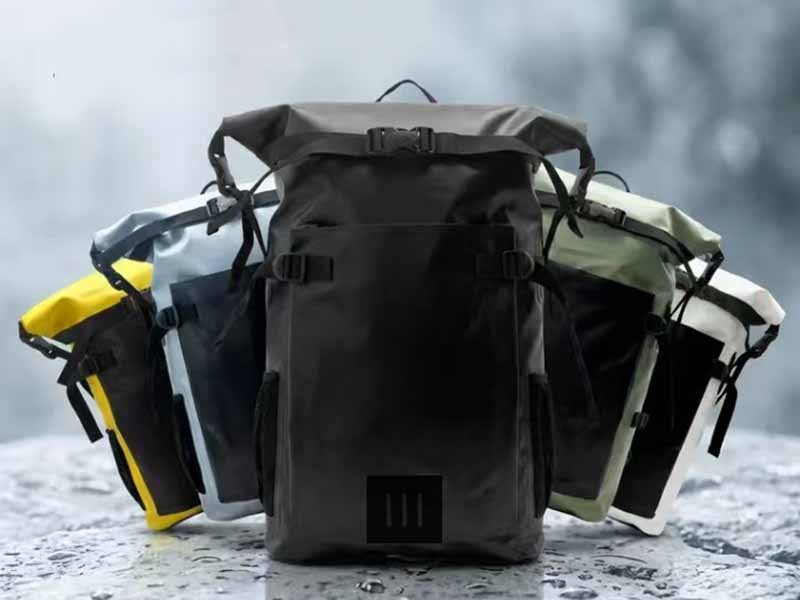
A fabric can look completely waterproof in a showroom and still leak within minutes when it is stretched, pressed against wet ground, or sewn into a finished bag. Water beading on the surface is visually convincing, but it does not tell a product developer how much pressure the material can withstand before water passes through it. This is where hydrostatic head testing becomes important. It replaces vague descriptions such as “waterproof fabric” with a measurable result that sourcing teams, laboratories, manufacturers, and brand owners can evaluate.
Hydrostatic head testing measures how much water pressure a fabric can resist before water penetrates through it. The test applies steadily increasing hydrostatic pressure to one side of a specimen and records the pressure at the specified leakage endpoint. Results are commonly reported in millimeters of water column, written as mmH₂O. A higher result generally indicates stronger resistance to water penetration.
However, a high laboratory number is only the beginning of the story. A buyer may approve a 10,000 mm fabric, build a backpack with ordinary needle stitching and an exposed zipper, then discover that the finished product leaks around the seams. The material passed; the bag failed. Understanding that difference turns a laboratory result into a useful product-development tool rather than just another marketing number.
What Does Hydrostatic Head Testing Measure?
Hydrostatic head testing measures how much water pressure a fabric can resist before water passes through it. The result is usually reported in millimeters of water column, or mmH₂O. It evaluates pressure resistance rather than surface beading, so it is more useful than a simple spray observation when comparing coated fabrics, laminated textiles, and materials intended for rain-exposed or waterproof bags.
Water Resistance vs. Water Repellency
Water repellency describes what happens when droplets land on a fabric surface. A durable water-repellent finish may cause rain to bead and roll off instead of spreading across the material. This is useful because it slows surface saturation, reduces drying time, and helps the fabric remain cleaner. However, visible beading does not prove that the material can resist pressure.
Hydrostatic head testing looks at a different failure mechanism. Water is pressed against the fabric until it finds a path through yarn gaps, coating pinholes, lamination defects, cracked surfaces, or weak bonding areas. A fabric can perform well in a spray test but fail at a relatively modest hydrostatic pressure. The opposite is also possible: a coated fabric may resist strong water pressure even though the face fabric wets out quickly.
This difference matters in bag development. Light rain falling on a tote creates relatively little pressure. The bottom of a loaded backpack resting on wet ground creates more concentrated pressure because the contents push the fabric against the water. A cyclist sitting on a wet saddle bag, or tightly packed equipment pressing against a soaked panel, can create conditions that a surface-repellency test does not represent.
| Property | What It Evaluates | Typical Observation | Main Use in Bag Development |
| Surface repellency | Resistance to surface wetting | Water beads or spreads | Rain shedding and drying behavior |
| Hydrostatic resistance | Resistance to pressure-driven penetration | Water appears through the specimen | Fabric barrier performance |
| Rain simulation | Exposure to falling or driven water | Leakage after timed exposure | Openings, panels, and overall construction |
| Immersion resistance | Performance below water for a defined period | Internal moisture or leakage | Dry bags and specialized equipment bags |
A reliable product specification normally separates these properties rather than using one general word such as “waterproof.”
Fabric Structure and Barrier Layers
The test result reflects the entire material construction, not only the fiber name or denier. A tightly woven nylon can offer better initial resistance than a loose weave, but most high-performing bag fabrics depend on a coating, film, or lamination to form a continuous water barrier.
PU-coated polyester and nylon are widely used because they can provide a practical balance of water resistance, flexibility, weight, appearance, and cost. PVC-coated materials are often selected for heavier-duty products where easy cleaning, structure, and weldability are important. TPU-laminated fabrics are commonly considered for technical bags that require flexibility, low-temperature performance, strong barrier properties, or welded seams.
Two materials both described as “600D polyester” may produce very different hydrostatic results. Differences may come from yarn density, base fabric weight, coating chemistry, coating thickness, curing temperature, adhesion, color formulation, pinholes, and roll-to-roll variation. Denier identifies yarn size; it does not define waterproof performance.
The tested side also matters. Applying pressure from the face side may produce a different result from applying it directly against the coating or membrane. For meaningful comparisons, the material construction, test direction, conditioning, and test method must remain consistent.
Pressure in Real Bag Use
Hydrostatic pressure is relevant whenever water is held against a fabric rather than simply falling onto it. This can occur around the base of a bag, behind shoulder straps, under compression panels, near tightly loaded corners, or where water collects against a horizontal zipper.
Everyday products generally experience intermittent rain and splashes. Outdoor and cycling products may face continuous spray, wind-driven rain, mud, and repeated flexing. Cooler bags and wet-storage products may face pressure from liquid inside the bag rather than outside it. Dry bags and marine products introduce more demanding conditions because water may remain in contact with the structure for extended periods.
Pressure is not distributed evenly across a finished bag. Corners, folded areas, stitched reinforcements, and hardware attachment points often carry higher local stress. This is why a material can pass a flat-specimen test but perform less consistently after it has been cut, folded, sewn, welded, or repeatedly abraded.
A useful hydrostatic requirement should reflect the actual use case. A high number may be unnecessary for a cosmetic pouch, while a low number can be risky for a bike pannier or equipment bag expected to remain outdoors for hours.
What the Test Does Not Measure
Hydrostatic head testing does not measure abrasion resistance, coating adhesion, seam strength, zipper leakage, UV durability, cold-crack resistance, hydrolysis resistance, or long-term flex performance. It also does not prove that a finished bag is suitable for immersion.
A new material may show an impressive result while still failing after repeated folding or abrasion. A coating can lose integrity around sharp creases. A membrane may delaminate after heat aging or extended humidity exposure. A high result on a pristine swatch does not reveal how the product will behave after months of use.
The test is best understood as one part of a wider performance system. It helps answer whether the main fabric can resist water pressure. Additional evaluation is needed to determine whether the material remains stable over time and whether the finished construction protects its contents under realistic conditions.
How Is Hydrostatic Head Tested?

A fabric specimen is clamped in a hydrostatic tester, and water pressure is gradually applied to one side. The pressure rises at a controlled rate until the specified penetration endpoint is reached. Laboratories record the result in mmH₂O or another pressure unit. Accurate testing depends on sample conditioning, orientation, clamping, pressure rate, endpoint rules, and equipment calibration.
Sample Preparation
Testing begins with a clearly identified specimen. The laboratory should know whether the material is unfinished fabric, coated fabric, laminated fabric, printed fabric, aged fabric, or fabric taken from a production roll. These details are important because finishing processes can change water resistance.
Samples are normally conditioned under controlled temperature and humidity before testing. Conditioning allows the textile, coating, and membrane to reach a stable state. Flexible polymers can respond differently when they are unusually cold, hot, dry, or humid, so uncontrolled storage may introduce avoidable variation.
Specimens should be cut from representative locations. Testing five pieces from the same small area may overlook coating inconsistency elsewhere on the roll. For development work, samples are often taken across the width and from different positions along the roll. For production verification, the sampling plan may also consider separate coating or lamination lots.
The specimen must be free from accidental creases, punctures, oil, dust, and handling damage. Even a small pinhole can create an early failure that does not represent the wider material. At the same time, unusual low readings should not be dismissed automatically because they may reveal genuine production defects.
The tested direction should be recorded. For coated fabrics, the laboratory should state whether water pressure contacted the face fabric or the coated side.
Pressure Application
The specimen is secured over the test head so water cannot escape around the clamp. The tester then increases water pressure at a defined rate. As pressure rises, the fabric may stretch, dome, or shift slightly depending on its stiffness and restraint.
A well-controlled test separates water passing through the active test area from water leaking around the gasket. Edge leakage usually indicates a clamping or sample-preparation problem rather than material failure. The operator should also check that the clamp does not cut or excessively compress the specimen.
Pressure rate affects the result. A rapid increase may produce a different value from a slower, sustained increase because some coatings and laminations respond over time. Soft or extensible fabrics may deform more under a slow load, while brittle coatings may fail suddenly. Buyers comparing supplier reports should therefore confirm that the same procedure was used.
| Test Variable | Why It Matters | Practical Control |
| Sample conditioning | Moisture and temperature can affect polymers and textiles | Condition samples under the selected method |
| Test direction | Face-side and coating-side exposure may differ | Record the water-contact side |
| Pressure rate | Fast and slow increases can change failure behavior | Use one defined rate for comparisons |
| Specimen restraint | Stretching or doming can affect results | Confirm restrained or unrestrained testing |
| Clamp sealing | Edge leakage can create false failure | Inspect gasket and clamping pressure |
| Number of specimens | One reading cannot show variation | Test multiple representative pieces |
| Endpoint rule | Different droplet criteria produce different values | Record the exact endpoint |
| Material identity | Similar names may hide different constructions | Record lot, color, coating, and specification |
For supplier qualification, it is often better to test all candidate materials at the same laboratory under identical settings rather than compare numbers from unrelated reports.
Penetration Endpoint
The endpoint is the moment when the test method considers the specimen to have allowed water penetration. Depending on the applicable method, this may involve the appearance of water droplets at defined points on the opposite surface.
The operator must distinguish true penetration from surface condensation, water at the clamp edge, or moisture left from handling. Good lighting and a clear observation area are important, particularly with dark, textured, or highly absorbent face fabrics.
Several specimens should be tested because coatings are rarely perfectly uniform. Individual readings tell more than one average. Consider two sets of five results:
Set A: 5,100, 5,200, 5,300, 5,250, and 5,150 mm.
Set B: 8,000, 7,800, 2,000, 7,900, and 1,900 mm.
Set B may have a higher average, but the low results suggest pinholes, weak coating zones, or process inconsistency. For a production specification, a minimum threshold can be more protective than an average-only requirement.
The acceptance rule should be agreed before testing. Buyers may specify a minimum for every specimen, an allowed number of low readings, or a combination of minimum and average performance. Without a defined rule, the same data can be interpreted differently by the laboratory, supplier, and brand.
Units and Conversions
Hydrostatic head is most commonly reported in millimeters of water column. One millimeter of water corresponds to approximately 9.81 pascals under conventional conversion. Therefore, 1,000 mmH₂O is approximately 9.81 kPa, while 10,000 mmH₂O is approximately 98.1 kPa.
Other reports may use centimeters of water, kilopascals, millibars, inches of water, or pounds per square inch. Converting units is straightforward, but converting product meaning is not.
| Water Column | Approximate Pressure | Approximate psi |
| 500 mmH₂O | 4.90 kPa | 0.71 psi |
| 1,000 mmH₂O | 9.81 kPa | 1.42 psi |
| 1,500 mmH₂O | 14.71 kPa | 2.13 psi |
| 3,000 mmH₂O | 29.42 kPa | 4.27 psi |
| 5,000 mmH₂O | 49.03 kPa | 7.11 psi |
| 10,000 mmH₂O | 98.07 kPa | 14.22 psi |
| 20,000 mmH₂O | 196.13 kPa | 28.45 psi |
A 10,000 mm material result does not mean a finished bag is approved for use ten meters underwater. The laboratory tests a flat specimen under controlled pressure. A bag includes folded corners, zipper tracks, seams, hardware holes, closure gaps, and stress concentrations.
When reviewing reports, buyers should check whether values are presented as individual results, an average, a minimum, or a maximum instrument reading. A report that only states “greater than 10,000 mm” may mean the material exceeded the tester’s range rather than revealing the actual failure point.
Which Testing Standards Apply?
ISO 811 and AATCC TM127 are widely used to evaluate textile resistance to water penetration under hydrostatic pressure. Other methods may be selected for coated fabrics, restrained specimens, or specific markets. Test results are only directly comparable when the method, edition, pressure rate, conditioning, test direction, restraint, and penetration endpoint are aligned.
ISO 811
ISO 811 is an international method for determining fabric resistance to water penetration under hydrostatic pressure. It is commonly referenced in global textile, outdoor, apparel, and bag-material specifications.
The method is suitable for fabrics intended to resist water, including materials with coatings, laminations, and water-resistant treatments. In practical sourcing, ISO 811 provides a shared language for brands, mills, bag factories, and third-party laboratories operating in different countries.
However, writing “ISO 811 required” is not enough to create a complete purchasing standard. The brand should also define the required hydrostatic value, specimen orientation, number of samples, tested material stage, and acceptance criteria. It should be clear whether the requirement applies to raw fabric, coated fabric, finished fabric, aged fabric, or production-lot material.
A good specification identifies the exact construction. For example, it may reference a defined nylon or polyester base fabric, coating type, finished weight range, color, approved supplier, and minimum hydrostatic result. That is more useful than asking for an undefined “ISO waterproof certificate.”
ISO 811 is a test method, not a blanket certification for every product produced from the tested fabric.
AATCC TM127
AATCC TM127 is widely used in North American textile testing and evaluates water resistance under hydrostatic pressure. It applies to many fabric types, including treated and untreated textiles.
One important detail is specimen restraint. AATCC TM127 is commonly performed without restraint, which allows the specimen to deform under pressure. For materials that stretch or dome significantly, the deformation can influence the observed result. A restrained procedure may be selected where appropriate, but results from restrained and unrestrained testing should not be treated as equivalent.
TM127 is often paired with other methods because hydrostatic pressure does not reproduce every type of water exposure. A brand may use it to evaluate the main fabric, then use a spray or rain test to study surface wetting and assembled-product leakage.
The method is especially useful during material selection and supplier comparison. It can help identify differences between apparently similar coated fabrics and reveal whether a material continues to meet its target after finishing, printing, aging, or production changes.
As with ISO testing, the report should identify the method edition, test direction, pressure rate, specimen description, individual values, and acceptance rule.
Other Relevant Methods
Some projects require methods designed for coated fabrics or more specialized constructions. ASTM methods may be referenced for rubber- or plastic-coated textiles. A restrained hydrostatic method may be appropriate where material deformation needs to be controlled. Product-specific internal procedures may also be developed for dry bags, cooler liners, medical products, or welded equipment cases.
Surface-wetting methods such as spray tests are useful but measure a different property. Rain tests simulate falling or driven water. Immersion tests evaluate whether a finished product leaks under a defined depth and time. Water-hold tests may be used for liners or bags intended to contain liquid.
| Method Type | Primary Question | Typical Test Object | Main Limitation |
| Hydrostatic pressure | How much water pressure can the fabric resist? | Flat material specimen | Does not test the finished bag |
| Spray rating | Does the surface resist wetting? | Flat fabric specimen | Does not represent sustained pressure |
| Rain simulation | Does water enter during controlled rain exposure? | Fabric or finished product | Results depend on setup and orientation |
| Seam leakage test | Does water pass through a sewn or sealed seam? | Seam specimen | Does not represent every bag detail |
| Water-hold test | Can a liner or container retain liquid? | Liner or finished product | Pressure may be relatively low |
| Immersion test | Does the product leak under defined submersion? | Finished bag | Must define depth, time, loading, and closure |
The best method depends on the claim being made. A water-resistant backpack and a submersible equipment bag should not use the same test plan.
Comparing Test Reports
Two reports displaying the same unit are not necessarily comparable. The pressure rate may differ. One specimen may be restrained while another is free to stretch. One laboratory may apply water to the face side and another to the coating side. One report may use a minimum result while another highlights the highest value.
Conditioning also matters. A new material may test differently after flexing, abrasion, heat aging, hydrolysis exposure, or washing. If one supplier tests a pristine swatch and another tests an aged specimen, the higher number does not automatically indicate the more durable material.
The most reliable comparison uses the same laboratory, method, equipment range, pressure rate, specimen orientation, conditioning, and acceptance rule. Candidate materials should ideally be identified by supplier, lot, color, coating, and finished weight.
Buyers should also check report dates. A three-year-old report from an earlier material construction may no longer represent current production. Changes in coating suppliers, resin formulation, base fabric, color, or film thickness can affect performance even when the commercial material name remains unchanged.
organized quality-control laboratory, professional neutral lighting, 16:9 landscape format.
What Do Hydrostatic Head Ratings Mean?
A hydrostatic head rating shows the pressure a tested fabric withstands before reaching the defined penetration endpoint. Higher ratings generally indicate stronger water-pressure resistance, but the correct target depends on exposure, construction, abrasion, flexibility, weight, cost, and claim language. There is no single rating that automatically makes every bag waterproof or suitable for immersion.
Understanding mmH₂O
The unit mmH₂O represents millimeters of water column. A result of 3,000 mm means the specimen resisted pressure equivalent to a conventional water column approximately three meters high under the selected laboratory procedure.
The number is useful for material comparison because it converts a difficult-to-see barrier property into a measurable value. It can help a developer distinguish between a lightly coated fabric and a more continuous, higher-performance barrier.
The number should not be treated as a direct real-world depth rating. A flat specimen in a test fixture does not behave like a finished bag. Product geometry, stitch holes, zipper tracks, folds, seams, closures, and user handling introduce additional failure paths.
Hydrostatic results should always be connected to the exact material. A statement such as “5,000 mm waterproof polyester” is incomplete. A stronger specification identifies the base textile, coating or lamination, finished weight, color, lot, test method, test direction, and acceptance rule.
The difference between 3,000 and 5,000 mm may be meaningful in one project and irrelevant in another. If the product has an exposed zipper and untreated seams, raising the main fabric rating may not solve the real leakage problem.
Practical Rating Ranges
There are no universal hydrostatic requirements for every bag category. Brands, retailers, and laboratories may use different internal standards. The following ranges are practical development references rather than certification thresholds.
| Hydrostatic Range | Typical Material Positioning | Possible Bag Applications | Main Development Caution |
| Below 1,000 mm | Light splash resistance | Organizers, simple pouches, promotional bags | Limited resistance under pressure |
| 1,000–3,000 mm | Basic to moderate rain resistance | Casual backpacks, totes, travel accessories | Seams and openings may dominate leakage |
| 3,000–5,000 mm | Stronger outdoor-oriented resistance | Daypacks, travel bags, bike accessories | Abrasion and aging should be verified |
| 5,000–10,000 mm | Technical rain and pressure resistance | Outdoor packs, protective covers, panniers | Construction usually requires sealing |
| Above 10,000 mm | High-barrier coated or laminated materials | Dry bags, welded technical products | Finished-product immersion is not guaranteed |
A commuter backpack used for short walks in rain may not require the same material as a welded roll-top bag used on a kayak. Similarly, an insulated cooler lining may need strong liquid containment but not an expensive technical outer shell.
The target should be selected after considering exposure duration, water direction, product loading, flexing, abrasion, temperature, cleaning, and expected service life.
Higher Is Not Always Better
Specifying the highest possible rating can increase cost and create new problems. A heavier coating may make the fabric stiff, noisy, difficult to fold, and less attractive. A thicker laminate may improve pressure resistance but reduce sewing efficiency or create puckering around curves.
Some high-barrier materials are better suited to welding than sewing. Others may work well in straight panels but crack around sharp folds. A rigid tarpaulin can be excellent for a box-shaped equipment bag but unsuitable for a lightweight packable travel pouch.
Material weight also affects the finished product. Increasing coating weight across a large backpack can add noticeable mass. For a premium outdoor bag, the added weight may be justified. For a compact retail accessory, it may reduce customer satisfaction without providing a meaningful benefit.
Initial performance is only one part of the decision. A material that reaches 15,000 mm when new but drops sharply after repeated flexing may be less suitable than a stable 8,000 mm alternative. Brands should consider performance after abrasion, folding, heat, humidity, cold, and cleaning where those conditions are relevant.
The best rating is the one that supports the intended claim while maintaining acceptable weight, feel, appearance, durability, process compatibility, and cost.
Coatings and Laminations
PU coatings are common in backpacks, travel bags, cosmetic bags, covers, and outdoor accessories. They can be formulated across a wide performance range. A thin PU coating may provide basic rain resistance, while a heavier or multilayer construction may achieve much higher hydrostatic results.
PVC-coated fabrics are often selected for structure, easy cleaning, barrier performance, and compatibility with high-frequency welding. They are common in tool bags, covers, equipment cases, tarpaulin bags, and some dry-bag products. Their disadvantages may include higher weight, stiffness, odor, and cold-temperature limitations, depending on formulation.
TPU-laminated fabrics are frequently considered for technical products requiring flexibility, lower-temperature performance, strong bonding, and welded seams. They can be suitable for dry bags, bike bags, medical applications, and specialized outdoor equipment. Cost is usually higher than basic PU-coated fabric, and production requires careful control of film type and welding settings.
Coating quality cannot be judged by polymer name alone. Resin formulation, film thickness, adhesion, curing, coating uniformity, pinhole control, and base-fabric stability all influence the result. Even color can matter because pigments and processing conditions may affect coating behavior.
A serious material specification should define the complete construction and not rely on terms such as “PU waterproof” or “TPU fabric” without measurable performance criteria.
technical fabric. Include transparent water-column graphics of increasing height and finished examples such as a commuter backpack, bike pannier, outdoor pack, and welded dry bag. Photorealistic product-development studio, no readable text, no logos, 16:9 landscape format.
Does a High Rating Make a Bag Waterproof?

No. A high hydrostatic head rating only proves that the tested fabric resisted water pressure under specific laboratory conditions. A finished bag may still leak through needle holes, seams, zipper tracks, roll-top edges, hardware attachments, welded joints, or damaged coatings. Waterproof performance must be engineered and verified across the fabric, components, construction, and finished product.
Seams and Needle Holes
Sewing creates holes through the fabric. In a tightly coated or laminated material, each needle penetration breaks the continuous barrier. The thread fills part of the opening, but it rarely restores the original waterproof layer.
Needle size, thread diameter, stitch density, seam allowance, tension, and fabric stability all affect leakage risk. A large needle can create an oversized hole. Very high stitch density may create a line of closely spaced perforations. Excessive thread tension can enlarge holes or distort the coating.
Seam tape is often used to cover stitched lines. Heat and pressure activate an adhesive layer that bonds the tape to the coating or membrane. Successful taping depends on chemical compatibility, surface cleanliness, temperature, pressure, speed, and seam geometry.
Straight seams are easier to tape than tight curves, bulky corners, zipper ends, or locations where webbing and reinforcement layers overlap. These complicated areas are often where leakage first appears.
A seam-sealed claim should therefore be supported by inspection of all critical junctions, not only the long visible seams. One untreated needle line around a handle reinforcement can undermine the performance of an otherwise well-sealed bag.
Zippers and Openings
A coated reverse-coil zipper can reduce water entry during rain, but it is not automatically watertight. Water may pass around the slider, through the zipper end, along the stitching line, or between the zipper tape and bag panel.
The orientation of the zipper matters. A horizontal zipper on the top panel can collect water. A raised opening, angled panel, protective flap, or drainage channel may perform better because it prevents water from sitting directly over the zipper track.
Zipper garages protect the slider area but must be shaped carefully. A poorly designed garage can trap water near the opening. End stops, folded tape, and corner seams also require attention because small gaps can become direct leakage paths.
Specialized airtight or watertight zippers are available for demanding products, but they are more expensive, stiffer, and harder to operate. They may require specific installation tolerances and reinforcement.
The correct zipper system depends on the claim. A rain-resistant travel bag may use a coated zipper with a protective flap. A technical equipment case may require a more specialized closure. A roll-top dry bag may avoid a long zipper entirely because the closure creates a lower-risk water path.
Welded Construction
Welding bonds compatible coated or laminated materials without creating the repeated needle holes associated with sewing. Common processes include high-frequency welding, hot-air welding, hot-wedge welding, and ultrasonic welding.
The weld must be wide enough and strong enough for the expected load. Overlap width, heat, pressure, dwell time, machine frequency, tool shape, and material chemistry all influence the bond. Too little energy can create weak channels. Too much can thin, burn, distort, or weaken the film.
Material compatibility is essential. Not every PU-coated fabric can be welded effectively. TPU and PVC constructions are often selected because they can form reliable bonds under controlled conditions, but the exact formulation still matters.
Corners and multi-layer intersections require special tooling and process control. A straight panel weld may pass while a folded corner leaks. Valve attachments, reinforcement patches, handles, and external pockets can also create difficult transitions.
Weld strength and water resistance should both be checked. A seam may remain watertight under low pressure but peel apart under load. Conversely, a mechanically strong weld can contain narrow channels that allow slow leakage. Both properties matter in dry bags and technical waterproof products.
Finished-Product Testing
A finished bag should be tested according to its intended claim. A commuter backpack may be evaluated under controlled spray or rain exposure with absorbent indicators placed inside. A cooler liner may undergo a water-hold test. A dry bag may require compression, spray, and temporary immersion checks.
The test setup must be defined. Important variables include exposure time, water pressure, spray direction, product orientation, internal load, closure method, number of samples, and allowable moisture. Without these details, a statement such as “passed waterproof test” is too vague to support a strong claim.
Testing should use production-representative samples. A carefully hand-built prototype with extra sealing may not reflect normal bulk manufacturing. Materials, zippers, thread, seam tape, welding settings, and closure parts should match the approved bill of materials.
Products may also need preconditioning. Flexing, abrasion, temperature cycling, or repeated opening can reveal weaknesses that a new sample does not show.
Fabric testing selects the barrier material. Component and seam testing identify local risks. Finished-product testing determines whether the assembled construction performs as intended. A reliable waterproof claim requires all three levels.
How Should Brands Verify Waterproof Claims?

Brands should verify waterproof claims with a written specification, traceable material identity, recognized test methods, representative samples, production-level controls, and finished-product evaluation. Reports should identify the method, test conditions, specimen construction, direction, individual values, and acceptance criteria. Material changes, coating changes, zipper substitutions, and construction changes should trigger review before bulk production.
Test Report Details
A credible report should allow a technical buyer to understand exactly what was tested. The document should identify the laboratory, report number, test date, test method, specimen description, color, lot, coating or lamination, test direction, conditioning, pressure rate, endpoint, individual readings, and final result.
Reports that state only “waterproof test passed” provide little protection. They do not show the threshold, sample identity, method, or variability. A buyer cannot tell whether the result was 500 mm or 10,000 mm.
Individual readings are especially important. A strong average can hide defective specimens. For production approval, brands may choose to set both an average requirement and a minimum individual result.
The report should match the actual production material. A test on black fabric from one coating lot may not represent a white fabric, a different coating supplier, or a later production batch. Color changes can involve different pigments and processing conditions. Film thickness or resin formulation may also change without affecting the commercial material name.
The test date should be reviewed. An older report can still be useful as historical evidence, but it should not automatically replace current verification when the material construction or supplier has changed.
Representative Sampling
Testing should follow the product through development rather than occur only once. Initial swatches help compare material options. The selected material should then be linked to the approved sample and bill of materials.
If the fabric is printed, embossed, coated again, heat transferred, laser cut, or otherwise processed, retesting may be appropriate because those operations can affect the barrier. High-temperature logo application, for example, can damage some coatings if the process is not controlled.
Pre-production samples should use production-intended materials and methods. The same zipper type, needle, thread, seam tape, welding process, reinforcement, and closure should be included. A sample built with temporary premium components may create unrealistic expectations for bulk production.
Production-lot material should be sampled from normal rolls, not from specially selected pieces. Samples taken across the roll width and from different roll positions can help reveal coating variation.
Finished bags should also be chosen randomly from the production line. Testing only a sample prepared by the development room does not demonstrate repeatability. For larger or higher-risk projects, brands may define lot-based verification or third-party inspection requirements.
Supplier Comparison
Suppliers should be compared against the same written requirement. Asking each supplier whether a material is “waterproof” invites inconsistent answers because the word may mean anything from light splash resistance to temporary immersion.
The comparison should include the exact method, required minimum value, specimen stage, product claim, seam treatment, zipper system, finished-product test, and acceptance criteria.
A technically capable supplier should be able to explain where water is likely to enter and why. It should distinguish between surface repellency, hydrostatic resistance, seam leakage, and product-level performance. It should also discuss trade-offs rather than automatically recommending the highest rating.
Buyers should examine whether the supplier can maintain material identity across repeat orders. A passing first sample has limited value if later production uses a different coating, film, zipper, or seam tape without approval.
The most reliable suppliers tend to ask detailed questions before making claims. They want to know the target market, use environment, expected exposure, required standards, closure design, cleaning conditions, packaging, and test responsibility. Immediate promises of “100% waterproof” without reviewing the design should be treated cautiously.
Bulk Approval
Waterproof requirements should be locked before mass production. The approval file should identify the final fabric supplier, base textile, coating or film, color, finished weight, target hydrostatic value, test method, test direction, and acceptance rule.
Construction details should include seam type, seam-tape specification, tape width, application settings, zipper brand and model, closure design, weld overlap, welding parameters, reinforcement methods, and approved pre-production sample.
The finished-product test should define exposure, duration, loading, orientation, closure procedure, sample quantity, internal detection method, and allowable moisture. Claim wording should also be approved. “Water resistant,” “rain resistant,” “waterproof,” and “submersible” communicate different expectations.
Any substitution should trigger review. A lower-cost coating, thinner TPU film, different zipper tape, alternative seam tape, or adjusted weld setting may change performance even when the bag looks identical.
The goal is not to create paperwork for its own sake. A clear approval package prevents disagreement, reduces inconsistent production, supports repeat orders, and gives both the buyer and manufacturer an objective basis for quality decisions.
Plan Your Waterproof Bag Project
Hydrostatic head testing is most valuable when it is connected to a complete product-development process. The test helps determine whether a fabric can resist water pressure, but the final result still depends on material aging, pattern design, seam construction, zipper selection, closure geometry, welding or seam sealing, production consistency, and finished-product verification.
Before requesting a quotation, define the product’s real use environment. A commuter backpack exposed to short periods of rain needs a different material and test plan from a welded roll-top dry bag used for kayaking. Clear requirements allow the manufacturer to balance hydrostatic performance with weight, hand feel, structure, appearance, durability, cost, and production feasibility.
Lovrix supports the development of custom waterproof backpacks, outdoor bags, bike bags, dry bags, cooler bags, travel bags, medical bags, protective covers, and other engineered soft goods. Projects can be evaluated using PU-coated, PVC-coated, TPU-laminated, Oxford, nylon, polyester, ripstop, tarpaulin, taped-seam, and welded constructions according to the intended application.
To receive a project evaluation, provide the following information:
- Product drawing, Tech Pack, reference image, or physical sample
- Finished dimensions and expected loading
- Target market and intended use environment
- Preferred material or required hydrostatic rating
- Required waterproof, rain-resistant, or immersion-related claim
- Seam, zipper, closure, or welding requirements
- Logo and packaging specifications
- Estimated order quantity
- Required testing standard
- Target delivery schedule
The development team can review material options, structural risks, sampling requirements, testing coordination, production feasibility, quality-control checkpoints, packaging, and quotation before bulk production.


