 Skip to content
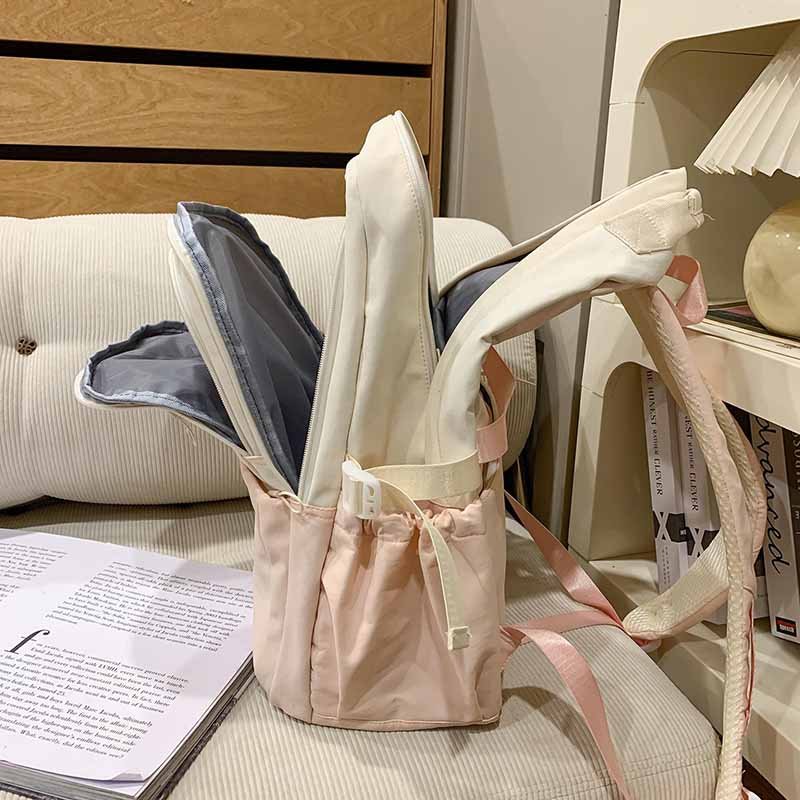
Bag lining is easy to underestimate because it sits inside the product, away from the first product photo and often away from the first sourcing discussion. Yet many quality problems begin there. A lining that is too light may tear around pockets, while one that is too stiff can make a soft handbag feel bulky. A coated lining may resist spills but introduce odor, noise, or an artificial hand feel that clashes with an otherwise premium product.
Choosing bag lining material means matching the lining to the bag’s use, outer fabric, required durability, cleaning needs, structure, brand position, production method, and target cost. Polyester and nylon suit many everyday and technical applications, cotton and canvas create a more natural textile feel, while satin, velvet, coated fabrics, PEVA, PVC, TPU, and laminated constructions are better suited to specific aesthetic or functional requirements.
Two bags can look almost identical on a showroom shelf and perform very differently after months of use. One may keep its pockets stable, corners clean, and interior shape intact, while the other develops loose lining, worn pocket edges, stains, or seam failures. The difference is rarely caused by fiber type alone. It usually comes from the combination of material weight, weave, coating, reinforcement, sewing method, and whether the lining was selected as part of the product system from the beginning.
What Is Bag Lining Material and Why Does It Matter?

Bag lining is the inner fabric, film, or laminated layer used to finish and protect the inside of a bag while supporting pockets, compartments, seams, and other internal features. The right lining improves durability, usability, cleanability, appearance, and structural consistency. It should be selected together with the outer shell and bag construction rather than added as a cosmetic afterthought once the rest of the product is already fixed.
What Does a Bag Lining Actually Do?
The most obvious purpose of lining is to hide seam allowances, reinforcement layers, foam edges, backing materials, and construction details that should not remain exposed. In a well-developed product, however, lining does considerably more than make the inside look tidy. It becomes the working surface for zipper pockets, slip pockets, laptop sleeves, elastic retainers, key clips, bottle pockets, dividers, pen slots, cable organizers, and many other features used every day.
Those features create real mechanical stress. A large tablet pocket filled with a device and charger can pull on the lining seam every time the bag moves. A bottle pocket may experience repeated sideways force, while a zipper pocket concentrates tension around the opening. If the fabric is weak or the attachment method is poorly designed, the lining can fail even when the outer material remains almost undamaged.
Lining also affects how easily the bag is used and maintained. Smooth materials allow clothing, electronics, or accessories to slide in and out easily. Lighter interior colors can make small objects easier to find inside deep bags, while darker tones hide dirt more effectively. Brushed or textured fabrics may protect delicate products but can collect lint, powder, or dust more easily than smooth woven or coated surfaces.
How Does Lining Affect Bag Quality?
Customers rarely ask for a lining specification by GSM or denier, but they immediately notice whether the inside feels thin, rough, noisy, loose, wrinkled, or poorly fitted. Interior quality becomes especially visible in handbags, travel bags, organizers, laptop bags, and cosmetic cases because the user touches the lining repeatedly. A premium exterior combined with a flimsy or badly fitted interior can make the entire product feel cheaper than its price position suggests.
Durability depends on more than fabric strength. Pocket attachment, seam construction, local reinforcement, binding, stitch density, and the direction of stress all influence how long the lining lasts. A strong woven fabric can still tear when a large pocket is attached to a single unsupported seam, while a lighter fabric may perform well when the stress is spread across reinforcement tape or a properly constructed backing panel.
Consistency matters as much as initial appearance. Two fabrics described simply as “black polyester lining” can differ in weight, weave density, gloss, coating, stiffness, and hand feel. If those differences are not controlled, repeat production can look noticeably different from the approved sample even though the material name on the purchasing document appears unchanged.
Do All Bags Need the Same Type of Lining?
There is no universal lining that performs best in every bag. A lightweight tote, premium handbag, travel backpack, cosmetic pouch, cooler bag, medical organizer, and tool bag are exposed to very different stresses and environments. The material that feels ideal inside a fashion accessory may perform poorly when exposed to moisture, hard equipment, heavy contents, sharp edges, or frequent cleaning.
A lightweight tote may prioritize softness and low weight, while a backpack usually needs greater abrasion resistance around laptop sleeves, bottle pockets, and lower corners. A cosmetic bag benefits from a surface that can tolerate spills and repeated wiping. Cooler bags need an inner system designed to work with insulation, while a tool bag may require heavy pocket panels or reinforced wear zones rather than a single lining fabric used throughout.
Even within the same product category, different designs can justify different materials. A cosmetic pouch sold primarily as a gift item may use satin because the appearance matters, while a professional makeup case may need coated polyester, TPU, or another easy-clean material. The correct decision therefore starts with the product’s real use rather than with a generic list of “best” fabrics.
Lining as Part of the Product System
Lining should be developed alongside the outer shell, foam, reinforcement, webbing, zipper, pocket layout, binding, and internal structure. These components interact during cutting, sewing, turning, edge finishing, and daily use. Selecting the lining in isolation can create unexpected bulk, stiffness, seam distortion, or weak connection points later in development.
For example, a thick lining may feel substantial when examined as a flat fabric swatch, but the same material can become difficult to sew when combined with outer fabric, foam, zipper tape, reinforcement, and binding around a corner. A lighter main lining combined with stronger local reinforcement may provide better performance with less weight and cleaner construction.
This is also why material selection is an important part of quality control rather than only a purchasing decision. Lovrix describes its manufacturing approach as material-driven and evaluates lining together with factors such as GSM, thickness, denier, hand feel, coating, color, and batch variation when relevant to a project.
Which Bag Lining Materials Are Most Common?

Polyester and nylon are the most common general-purpose lining families because they offer useful combinations of durability, weight, color availability, and cost. Cotton and canvas suit products that need a natural or substantial textile feel, while satin and velvet are chosen mainly for appearance or surface protection. Coated polyester, TPU, PVC, PEVA, foil laminates, and related materials are used when moisture control or easy cleaning becomes more important.
Polyester Lining
Polyester is widely used because it is available in many weights, constructions, colors, and finishes. It can be made as lightweight taffeta, smooth plain weave, denser twill, Oxford-style fabric, or coated material. This flexibility allows it to work in handbags, backpacks, organizers, promotional bags, travel products, pouches, and many other commercially produced soft goods.
Its main advantage is balance rather than dominance in one single property. Polyester can be relatively lightweight, dimensionally stable, easy to color, and cost-efficient. It also tends to absorb less moisture than many natural fibers, which can be useful in travel, sports, and everyday applications where the interior may occasionally be exposed to damp items.
The main mistake is treating “polyester” as a complete specification. A 70 GSM lightweight taffeta and a 160 GSM polyester twill can both be sold as polyester lining, yet they behave very differently in sewing, abrasion, pocket support, drape, hand feel, and total bag weight. For production, the fiber name should therefore be accompanied by construction details and an approved physical sample.
Nylon Lining
Nylon is widely considered for technical bags, outdoor equipment, lightweight backpacks, travel products, and internal compartments that experience repeated friction. It can provide a useful combination of abrasion resistance and relatively low weight, which makes it attractive where durability is important but adding unnecessary material mass would reduce the product’s comfort or portability.
A lower-denier nylon can work well in lightweight compartments, while denser or higher-denier constructions may be appropriate in harder-wearing areas. Denier alone, however, does not determine quality. Yarn strength, weave density, coating, finishing, and seam design all influence how the material performs after it has been cut and sewn.
Nylon should not automatically be presented as superior to polyester. Some nylon constructions may absorb more moisture, and specific finishes can change hand feel, color behavior, coating adhesion, printing, or bonding. The best choice depends on the complete product requirement rather than a simple fiber comparison.
Cotton, Canvas, Satin, and Velvet
Cotton and canvas are useful when the interior should feel natural, substantial, or visually connected to a lifestyle-oriented exterior. They often pair well with canvas bags, leather goods, PU leather products, denim, casual totes, and premium accessories where a textile hand feel is part of the intended product character.
Cotton usually feels softer, while canvas adds more body and can support structured internal pockets. The trade-offs are greater moisture absorption, possible shrinkage, staining, wrinkling, and additional weight. A heavier canvas lining may feel excellent in a small structured handbag but become unnecessarily bulky inside a large travel bag.
Satin and velvet serve different purposes. Satin creates a smooth, polished interior in fashion handbags, cosmetic pouches, gift items, and accessory cases. Velvet and other soft brushed fabrics can protect jewelry, eyewear, electronics, and other delicate products from rubbing against harder internal surfaces. Lovrix’s documented product-material mapping includes satin and velvet among cosmetic-bag options and velvet lining for EVA cases, reflecting this application-specific approach.
Coated and Functional Linings
Coated and laminated materials are selected when ordinary woven fabrics cannot provide enough resistance to moisture, staining, or contamination. Common options include coated polyester, coated nylon, TPU-laminated fabric, PVC, PEVA, and foil-based constructions used in cosmetic bags, toiletry bags, cooler bags, medical organizers, wet-storage products, and certain outdoor applications.
The fiber or film name alone does not guarantee waterproof performance. Water can pass through stitch holes, zipper openings, unsealed seams, bindings, or other construction joints even when the liner material itself resists penetration. Finished-product performance therefore depends on both the material and the way the bag is assembled.
The following ranges are practical starting points frequently encountered during commercial product development rather than universal manufacturing standards. Exact specifications should be confirmed through sampling, physical comparison, and testing because weave density, coating, yarn quality, and construction can produce very different results even within the same nominal weight or denier.
| Lining Type | Typical Development Reference | Common Applications | Main Point to Check |
|---|---|---|---|
| Polyester taffeta | About 60–100 GSM | Handbags, totes, pouches | Tear resistance |
| Polyester twill | About 100–180 GSM | Travel bags, organizers | Added weight and bulk |
| Nylon lining | Often 70D–210D | Backpacks, outdoor, travel | Finish and seam behavior |
| Cotton lining | About 100–180 GSM | Lifestyle and fashion bags | Shrinkage and staining |
| Canvas lining | About 180–300 GSM | Structured totes, cases | Weight and seam bulk |
| Satin lining | About 70–130 GSM | Fashion, cosmetic, gift | Snagging and puckering |
| PEVA / foil laminate | Varies by construction | Cooler and insulated bags | Seam leakage |
| TPU / PVC liner | Varies by construction | Medical, cosmetic, outdoor | Stiffness, odor, bonding |
How Do You Choose Lining for Different Bags?

The most reliable way to choose lining is to start with what the bag carries, how frequently the interior is handled, whether dirt or moisture is expected, and how much support the internal structure requires. Handbags generally prioritize appearance and feel, backpacks need abrasion resistance, cosmetic bags benefit from cleanability, cooler bags need functional inner layers, while technical products may require several lining or reinforcement materials in different zones.
Totes and Handbags
Totes and handbags support a particularly wide range of lining choices because their construction and price positions vary greatly. A soft cotton tote may work well with a lightweight cotton or polyester interior, while a structured fashion handbag may use polyester twill, cotton twill, satin, microfiber-like fabric, or another material selected for a more refined tactile experience.
The lining should behave naturally with the outer shell. If a soft bag is paired with a very rigid interior, the lining can distort the intended silhouette. If a heavy exterior is combined with an extremely lightweight lining, the inside may sag around pockets and feel inconsistent with the rest of the product.
Pocket size changes the requirement as well. A small card pocket creates little stress, while a large tablet or organizer pocket may need a heavier fabric, backing material, local reinforcement, or foam even when the main body lining stays relatively light. Material should therefore follow the load path rather than simply remain identical across every internal panel.
Interior color is another practical consideration. Very dark lining can make small items difficult to find in deep bags, while white or very light colors show dirt quickly. Medium neutral shades are often a useful compromise because they improve visibility without making everyday wear immediately obvious.
Backpacks and Travel Bags
Backpacks and travel bags experience more repeated friction than many fashion accessories. Laptops, power adapters, bottles, shoes, hard cases, clothing organizers, and other objects continually rub against internal panels. These products therefore require closer attention to abrasion resistance, seam strength, tear resistance, and how large pockets are attached.
Polyester and nylon are common because they can provide useful durability without adding excessive weight. Lightweight 70D–100D materials may work in less demanding compartments, while 150D–210D constructions or heavier fabrics can be considered where additional strength is needed. Those numbers should remain reference points rather than quality guarantees because weave density and finishing can change performance substantially.
High-wear zones should be identified during the sample stage. Laptop compartment bases, bottle-pocket seams, lower corners, zipper openings, shoe compartments, and divider attachment points are common areas where localized reinforcement provides more value than simply increasing the weight of every lining panel.
A well-engineered travel product may therefore combine lightweight general lining, stronger pocket material, foam-backed dividers, and coated fabric in dirty or damp compartments. Using more than one internal material can reduce total weight while placing strength exactly where it is needed.
Cosmetic and Toiletry Bags
Cosmetic and toiletry bags are usually affected more by spills and staining than by heavy loads. Foundation, shampoo, creams, oils, toothpaste, powders, and wet toiletries can permanently mark absorbent fabrics, which makes smooth polyester, coated polyester, nylon, TPU, PVC, PEVA-type materials, or other wipeable surfaces useful for many everyday products.
The easiest-to-clean fabric can still perform poorly when the construction traps liquid. Deep seam allowances, unfinished corners, exposed edges, and complicated internal pocket geometry can retain residue. Rounded corners, bound seams, simple compartment shapes, removable sections, or carefully designed internal panels can make maintenance easier even when the same lining material is used.
Premium presentation products may follow a different logic. Satin or velvet can be appropriate in gift pouches and beauty accessories where tactile quality matters more than frequent washing. A professional travel toiletry case and a retail presentation pouch should not automatically share the same lining merely because both belong to the beauty category.
The product’s actual use should determine the balance between appearance, cleanability, moisture resistance, structure, and cost.
Cooler, Medical, and Technical Bags
Cooler bags rely on a layered thermal system rather than a conventional decorative lining. A typical structure may include an abrasion-resistant outer fabric, foam insulation, and an internal layer such as PEVA or aluminum foil. The liner must remain flexible enough for manufacturing while tolerating moisture, repeated wiping, cold contents, container edges, and frequent folding during use.
Seam design becomes critical because moisture can travel through stitched joints even when the inner material itself resists water. For products where leakage control matters, seam construction, binding, welding, or sealing methods may be just as important as the film or laminate selected.
Medical bags can use polyester, Oxford fabric, PVC, TPU, mesh, and other materials depending on the compartment. Visibility, cleanability, organization, labeling, and access can matter more than decorative appearance. Tool bags require another level of mechanical resistance because tools may create puncture, abrasion, or concentrated load around pocket edges.
The table below shows how lining priorities change by product category. It is intended as a practical comparison rather than a fixed formula, because final construction should reflect the contents, target market, expected service life, and approved product specification.
| Bag Type | Main Lining Priority | Practical Material Direction | Common Failure Risk |
|---|---|---|---|
| Fashion handbag | Hand feel and appearance | Polyester twill, cotton, satin | Sagging or puckering |
| Backpack | Abrasion and low weight | Polyester, nylon | Pocket tearing |
| Travel bag | Durability and cleaning | Polyester, nylon, coated fabric | Lower-panel wear |
| Cosmetic bag | Wipe-clean interior | Coated polyester, TPU, PVC | Staining and leakage |
| Cooler bag | Moisture and insulation | PEVA, foil laminate | Seam leakage |
| Medical bag | Cleaning and organization | Polyester, PVC/TPU, mesh | Hard-to-clean zones |
| Tool bag | Abrasion and reinforcement | Heavy polyester, Oxford | Puncture and seam failure |
| EVA case | Soft product contact | Velvet, soft polyester | Surface abrasion |
Which Lining Specifications Matter Most?

Fiber content is only one part of a useful lining specification. GSM, denier, thickness, weave density, surface finish, coating, shrinkage, colorfastness, and compatibility with the outer shell determine how the material actually behaves. A production-ready specification should therefore describe measurable characteristics and retain an approved physical reference instead of relying on vague terms such as “good polyester lining” or “heavy-duty nylon.”
GSM and Denier
GSM measures fabric mass per square meter, while denier measures the linear density of the yarn. These numbers describe different properties and cannot be used interchangeably. A higher GSM generally means more material mass, but it does not automatically guarantee better tear or abrasion performance because weave density, yarn quality, coating, and finishing also matter.
The same applies to denier. A 210D fabric is not automatically stronger than every 150D fabric. A tightly woven lower-denier fabric using high-quality yarn may perform better in certain applications than a looser higher-denier construction.
For early product development, broad reference ranges can help narrow the options. Linings around 60–90 GSM are often used where low weight matters. Roughly 90–150 GSM covers many everyday handbag, backpack, and organizer applications. Around 150–220 GSM can provide more body for travel or structured uses, while heavier fabrics are normally considered when abrasion resistance or shape support justifies the extra weight.
These ranges are not formal standards. The material still needs to be evaluated inside the actual bag because performance depends on the entire construction.
Thickness and Bulk
Thickness changes how a product sews, folds, turns, binds, and holds its shape. A heavier lining may feel more substantial when touched as a sample swatch, but every additional layer becomes noticeable around zipper openings, corners, gussets, and reinforced seams.
A zipper section can already contain the outer shell, lining, zipper tape, foam, reinforcement, and binding. Increasing the thickness of every component may produce a hard, bulky seam that is difficult to stitch consistently and uncomfortable to handle.
Local reinforcement is often a better engineering solution than making the whole interior heavier. A laptop sleeve can use medium-weight lining with foam and a stronger backing panel. A bottle pocket can use reinforced attachment points. A tool pocket may use a completely different fabric because its mechanical load is much higher than the surrounding lining.
Product scale should also influence the decision. A substantial fabric that feels appropriate in a small handbag can add unnecessary weight when repeated across the large internal surface of a 40- or 50-liter travel bag.
Weave and Surface
Weave construction influences both durability and manufacturing behavior. Taffeta-type fabrics are generally lightweight, smooth, and compact. Twill constructions often feel denser and more substantial. Ripstop structures use reinforcement yarns intended to help limit the spread of small tears, while Oxford-style weaves usually provide a more visible texture and greater body.
Surface finish affects how items move inside the bag. Smooth lining works well for clothing, laptops, accessories, and fashion handbags because objects slide easily. Textured or brushed surfaces can reduce movement and protect delicate items but may collect lint, cosmetic powder, or dust more readily.
Manufacturing characteristics are equally important. Slippery fabrics can shift during sewing, loose weaves may fray, and dense coatings can make needle penetration more difficult. Some laminated materials retain visible needle holes, which means mistakes cannot be corrected as easily as they can on ordinary woven fabric.
For this reason, sample review should include actual sewing, folding, turning, pocket attachment, zipper installation, and seam appearance rather than approving the lining solely from a flat swatch.
Coating and Shell Compatibility
Coatings and laminations can improve moisture resistance, cleanability, stiffness, or surface protection, but they also affect weight, odor, flexibility, friction, and sewing performance. PU coating is common on polyester and nylon, PVC can create a strong wipeable barrier, and TPU laminations can provide flexible moisture protection for applications that justify the additional material and processing cost.
A coated lining should be checked for more than initial resistance to water. Coating adhesion, flex cracking, surface tackiness, odor, stiffness, delamination, and sewing behavior can become quality issues after repeated use.
Compatibility with the outer shell should also be reviewed because the two layers behave together in the finished product. A rigid lining inside a soft shell can create distortion, while a highly flexible lining may not support a structured outer material adequately.
| Specification | Practical Question |
|---|---|
| Weight | Does the lining feel proportionate to the shell? |
| Stiffness | Will both layers move naturally together? |
| Shrinkage | Could one layer contract more than the other? |
| Color | Is transfer or visible contrast a concern? |
| Stretch | Will one fabric restrict or distort the other? |
| Coating | Can seams and corners be sewn cleanly? |
| Surface friction | Will layers slide, bunch, or rub excessively? |
| Brand position | Does the interior quality match the exterior? |
A balanced bag does not require the heaviest or most expensive lining. It requires an interior material whose weight, stiffness, surface, and performance complement the shell instead of working against it.
How Does Lining Affect Cost and Production?
Lining affects total manufacturing cost through much more than price per meter. Material consumption, cutting yield, waste, sewing speed, reinforcement, coating, testing, MOQ, production lead time, and freight weight can all change with the lining choice. A cheaper fabric can become more expensive if it creates excessive fraying, rework, reinforcement, or quality problems, while a higher-priced material may sometimes simplify production and improve repeatability.
Real Cost Versus Fabric Price
Fabric price is only one part of the actual cost. A realistic comparison considers material price, consumption, cutting waste, coating or lamination, reinforcement, sewing time, inspection, testing, defect risk, and any effect on finished-product weight.
An inexpensive lining may stretch during cutting, fray heavily, or require additional binding. Another material may cost more per meter but cut cleanly, support pockets without backing, and move through sewing operations more efficiently. In that situation, the apparently more expensive material may produce the better commercial result.
Bag size also changes the calculation. Upgrading the lining in a compact cosmetic pouch may add only a small amount to the finished unit because fabric consumption is limited. The same change in a large duffel with multiple dividers, shoe compartments, zipper pockets, and organizers can have a much larger effect on material consumption and shipping weight.
Good cost engineering therefore focuses on value rather than simply reducing material price. Areas that customers touch frequently or that carry structural load may justify stronger or more refined lining, while hidden low-stress panels may not need the same level of material.
MOQ and Customization
Standard stock colors and common fabric constructions usually create fewer sourcing constraints than custom-dyed materials, special coatings, proprietary laminations, or specialized recycled fabrics. MOQ can increase when the project needs custom Pantone colors, special surface treatments, TPU lamination, custom printing, uncommon fabric widths, or project-specific testing.
A brand developing many exterior colorways does not necessarily need the same number of custom lining colors. One or two carefully chosen neutral interiors may support multiple SKUs while reducing purchasing complexity and leftover material.
Material MOQ should also be separated from finished-bag MOQ. A fabric mill may require a minimum dye or coating batch that is larger than the amount needed for one production order. This becomes particularly important when a bag uses only a small amount of lining per unit.
For multi-style programs, sharing one approved lining across several products can improve sourcing efficiency, reduce material fragmentation, and make future repeat orders easier to manage.
Production Lead Time
Material availability can influence the manufacturing schedule long before sewing begins. A common stock polyester lining may be ready quickly, while a custom material may require color matching, lab-dip approval, base-fabric production, dyeing, coating, lamination, inspection, testing, and transportation before cutting can start.
A frequent development mistake occurs when the sample is made from leftover material that happens to be available. There may be enough for several prototypes but not enough for a 5,000- or 20,000-piece production run. If supply continuity is checked only after sample approval, the team may be forced to substitute material at a late stage.
For larger orders, practical questions include current stock, replenishment time, minimum dye quantity, coating schedule, supplier production capacity, test requirements, backup material options, and likely batch variation.
Lovrix’s documented supply-chain approach specifically evaluates material availability, color, MOQ, performance, lead time, testing requirements, supplier reliability, and substitution options during product development rather than waiting until bulk production has already started.
Repeat-Order Consistency
Repeat orders reveal weak specifications quickly. If the BOM states only “black polyester lining,” the next production batch may use a fabric with a different sheen, GSM, stiffness, weave density, or coating while still technically meeting that description.
A stronger record includes the supplier reference, material code, fiber composition, construction, GSM, denier where relevant, width, color standard, coating or lamination, approved hand feel, retained swatch, and testing requirements.
Textiles naturally show some variation between batches, so the practical goal is not to promise absolute identity. The objective is to define an acceptable range, retain physical references, inspect incoming material, and identify unacceptable changes before cutting begins.
This kind of control becomes especially valuable for products expected to remain in a brand’s assortment for several seasons. Stable lining records reduce repeated decision-making, make material substitutions easier to evaluate, and help preserve the feel of the original approved product across future orders.
How Do You Test and Approve Bag Lining?
Bag lining should be approved through measurable specifications, incoming inspection, finished-sample evaluation, and project-specific testing. Relevant checks may include GSM, thickness, color, shrinkage, tensile strength, tear resistance, abrasion resistance, colorfastness, coating adhesion, and water resistance. The final approved fabric swatch and completed sample should then become reference standards that help control bulk production and future repeat orders.
Practical Material Testing
Testing should reflect the actual risks of the product rather than follow the same long checklist for every bag. A lightweight fashion pouch and a heavy travel backpack do not need identical test programs, and a cooler bag faces different failure modes from a dry cosmetic pouch.
Common evaluations can include GSM verification, tensile strength, tear resistance, abrasion resistance, colorfastness, shrinkage, coating adhesion, water resistance, and hydrostatic performance where relevant. Coated PVC, TPU, or laminated materials may also justify odor, surface, flexibility, or bonding checks depending on the product.
The useful question is not how many tests are performed. It is whether the selected checks address the most likely ways the product could fail in real use.
A material can also achieve an acceptable laboratory result and still feel too stiff, noisy, heavy, or visually unsuitable for the intended product. Testing should therefore support the finished-sample decision rather than replace it.
Incoming Inspection
Incoming inspection is one of the least expensive places to stop a large quality problem because defects become much harder to correct after material has been cut into thousands of individual panels.
Practical inspection can include shade, color, GSM, thickness, denier where specified, fabric width, weave appearance, hand feel, coating condition, stains, holes, snags, wrinkles, odor, and roll-to-roll variation. If water resistance or coating performance is part of the specification, those characteristics can also be checked according to the project requirement.
Roll variation deserves attention because several rolls delivered under one material code may still show small differences in color or finish. When those differences are visible, mixing them randomly in the same finished production lot can create inconsistent interiors.
Lovrix’s documented fabric-inspection system covers color, GSM, thickness, denier, texture, hand feel, coating, visible defects, color variation, odor, and additional performance checks when required.
Sample-to-Bulk Control
A visually attractive prototype is not enough to control bulk production. The approved lining should be linked to a material reference, and the surrounding construction should also be documented because pocket attachment, seam allowances, zipper installation, reinforcement, foam, binding, and sewing sequence can change how the lining behaves.
A first production piece can reveal differences that are difficult to predict from a sample room prototype. Bulk material may feed through machinery differently, operators may use a different sewing sequence, or the production roll may behave slightly differently from the small sample cut.
When substitution becomes necessary, the alternative should be compared for material weight, thickness, hand feel, color, stiffness, coating, sewing behavior, performance, availability, and cost. A replacement that appears visually similar on a table can behave very differently after being sewn into the product.
The objective is not to eliminate every natural textile variation. It is to prevent unapproved variation from entering large-scale production.
Bulk Approval Standard
Before mass production begins, the project team should be able to identify exactly which lining has been approved. A practical record can include material family, fiber composition, construction, color, GSM, denier where relevant, critical thickness, width, coating or lamination, surface finish, hand feel, shrinkage requirements, performance requirements, approved swatch, finished sample, and any permitted substitution rules.
This level of control may appear detailed for a material hidden inside a bag, but the lining affects durability, cleaning, organization, appearance, sewing efficiency, and repeat-order consistency. It is part of the product rather than packaging around the product.
Lovrix’s material-driven manufacturing model is built around the same principle: material selection is connected to structure, sampling, bulk-production feasibility, quality inspection, and repeat-order consistency rather than treated as an isolated purchasing step.
A good lining is therefore not simply the strongest fabric or the most expensive option. It is the material that performs reliably in the intended application, works naturally with the shell, can be sourced at the required scale, supports efficient sewing, and remains commercially sensible when the product is reordered.
Conclusion
Choosing bag lining material becomes much easier once the discussion moves beyond fiber names. Polyester, nylon, cotton, canvas, satin, velvet, TPU, PVC, PEVA, and other constructions each have useful applications, but none should be selected without considering the finished product. Weight, weave, denier, coating, pocket design, outer-shell compatibility, cleaning requirements, production volume, cost, and repeat-order consistency all shape the final decision.
The most effective development process is practical rather than theoretical. Compare several suitable materials, build them into real samples, test the areas most likely to fail, and lock the approved specification before bulk production. A well-chosen lining rarely attracts attention by itself, and that is often the point. It supports the bag quietly, keeps pockets stable, makes the interior easier to use, and helps the entire product continue to feel well made after months or years of regular handling.
What Is the Best Material for Bag Lining?
There is no single best bag lining material because the correct choice depends on the product. Polyester is a practical general-purpose option for many handbags, backpacks, totes, and travel bags, while nylon is useful when abrasion resistance and low weight matter. Cotton and canvas suit natural-feeling products, and coated or laminated materials are more appropriate when moisture resistance or easy cleaning is required. The best option is the one that matches the bag’s actual use and construction.
Is Polyester or Nylon Better for Bag Lining?
Polyester and nylon can both make durable bag linings, but they suit slightly different priorities. Polyester is widely available, dimensionally stable, relatively cost-efficient, and offered in many colors and constructions. Nylon is often selected for technical, lightweight, or higher-friction applications. Neither fiber should be judged by name alone because denier, GSM, weave density, coating, and finishing can change performance significantly. Comparing actual fabric samples is more useful than assuming one fiber is always stronger.
What GSM Is Good for Bag Lining?
There is no universal GSM requirement, but approximately 60–90 GSM is often considered for lightweight interiors, while roughly 90–150 GSM covers many handbag, backpack, and organizer applications. More substantial 150–220 GSM fabrics may be appropriate where pocket support or abrasion resistance matters. These values are development references rather than fixed standards. A fabric’s weave density, yarn quality, coating, and finished construction should always be considered alongside GSM before approval.
What Denier Is Common for Backpack Lining?
Lightweight backpack linings are often developed around roughly 70D to 210D constructions, although heavier materials may be used in compartments exposed to greater abrasion or load. Denier measures yarn size rather than complete fabric strength, so it should not be used as the only quality indicator. A tightly woven 150D fabric can outperform a looser 210D construction in some applications. Pocket design, reinforcement, coating, and seam construction also influence the finished backpack’s durability.
What Lining Is Best for Cosmetic and Toiletry Bags?
Cosmetic and toiletry bags usually benefit from smooth, easy-clean interiors because liquids, creams, powders, and wet toiletries can stain absorbent fabrics. Coated polyester, nylon, TPU, PVC, PEVA-type materials, and similar wipeable constructions are common starting points. Satin or velvet may still suit presentation-oriented beauty products where appearance matters more than frequent cleaning. Seam geometry and internal finishing are also important because even a wipe-clean fabric can trap residue around poorly designed corners and exposed seams.
Does a Waterproof Fabric Make a Bag Lining Waterproof?
Not necessarily. A lining material can resist water while the finished bag still leaks through stitch holes, zipper openings, bindings, seam intersections, or unsealed construction joints. Waterproof performance is a property of the complete system rather than the fabric alone. When leakage control matters, material selection should be combined with suitable seam design, coating or lamination, sealing methods, zipper construction, and finished-product testing appropriate to the intended use.
Should Bag Lining Be Thicker Than the Outer Fabric?
Usually not. Lining does not need to be thicker than the outer shell to perform well, and making it unnecessarily heavy can increase weight, seam bulk, and sewing difficulty. The better approach is to choose a lining that complements the shell and then reinforce high-stress areas such as laptop sleeves, bottle pockets, tool pockets, zipper openings, or lower corners where needed. Balanced construction generally performs better than simply increasing the thickness of every internal panel.


