 Skip to content
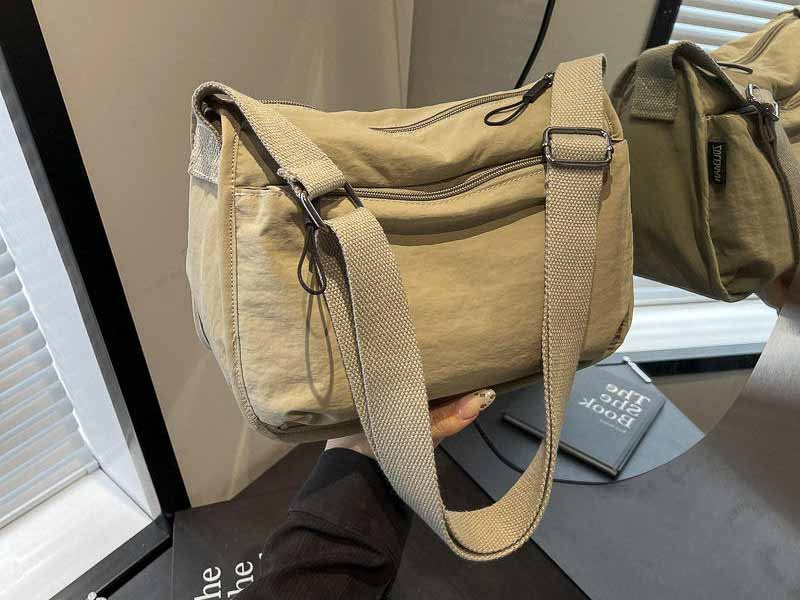
A fabric can look heavy, tightly woven, well coated, and expensive yet become surprisingly vulnerable once a small cut appears. This is one reason experienced bag developers do not judge material durability only by denier, GSM, thickness, hand feel, or a supplier’s description of the fabric as “heavy duty.” Many real failures begin at one damaged point rather than across an intact sheet of textile. A sharp object catches a backpack panel, a tool edge presses through a lining, or airport handling creates a small cut in a travel bag. The important question is what happens next.
Fabric tear strength is tested by preparing a standardized specimen, creating the required initial cut or tear geometry, and measuring the force needed to continue the tear under a defined test method. Common approaches include Elmendorf falling-pendulum testing, tongue tear testing, and trapezoid tear testing. Reliable results require a clearly identified method, specimen direction, conditioning procedure, equipment setup, calculation method, units, and representative samples.
That definition sounds straightforward, but material approval becomes more complicated once two fabrics with almost identical commercial descriptions produce very different results. Two rolls may both be sold as 600D polyester Oxford, yet yarn quality, weave construction, coating, finishing, and batch conditions can change the way a tear travels. Understanding the test is therefore only the beginning. The real value lies in knowing which method to use, how to interpret the numbers, and how to turn laboratory data into better material decisions before thousands of finished bags enter production.
What Is Fabric Tear Strength?

Fabric tear strength describes how strongly a textile resists the continued growth of an existing tear. It is not the same as the force required to break an intact fabric. For bags and sewn soft goods, tear strength is particularly relevant because real damage often begins with a small cut, puncture, snag, or worn area where stress becomes concentrated.
What Tear Strength Measures
A tear test focuses on tear propagation. Several yarns have already been interrupted, and the test measures how the surrounding textile responds as that damaged zone moves farther through the material. This distinction reflects what often happens in practical use. A hiking pack can brush against a sharp branch, a mechanic’s bag can be punctured by a tool, or a travel bag can catch against a metal edge during transport. The first defect may be tiny, but continued handling can place concentrated force directly at the end of that defect.
The textile structure determines how efficiently that force is redistributed. Some yarns can shift, bunch together, stretch, or pull against neighboring yarns, forcing a larger group of fibers to resist the tear. Other constructions provide much less redistribution, allowing the tear to progress more easily. The final behavior depends on fiber characteristics, yarn construction, weave or knit pattern, density, coating, finishing, and the direction in which the tear travels.
This is why a material description such as “strong nylon” or “durable polyester” is not sufficient for engineering approval. Strength has several meanings. Tear resistance, breaking strength, seam strength, abrasion resistance, coating adhesion, and finished-product load capacity describe different failure mechanisms. A technical specification becomes useful only when the property being discussed is clearly identified.
Directional behavior also deserves attention. Woven fabrics frequently produce different tear values in their two principal directions because yarn density, crimp, size, tension, and finishing are not necessarily identical. Test results should therefore retain direction information rather than combining every reading into one unexplained average.
Tear vs Tensile Strength
Tear strength and tensile strength are both used to evaluate textile durability, but they answer different questions. Tensile or breaking-strength testing generally applies increasing force to an intact specimen until it reaches a specified failure condition. Tear testing deliberately introduces a cut or controlled tear configuration before measuring how readily that damage propagates through the textile.
| Property | What Is Evaluated | Practical Question |
|---|---|---|
| Tear strength | Propagation of an existing tear | Will a small cut keep growing? |
| Tensile strength | Intact fabric under pulling force | How much force can the fabric withstand before breaking? |
| Abrasion resistance | Surface wear from rubbing | How quickly will the material wear through? |
| Seam strength | Fabric and stitching around a seam | Will the seam area fail under load? |
| Strap pull strength | Finished attachment point | Will a strap or handle pull away from the bag? |
This difference matters during sourcing because one impressive strength value cannot represent every type of durability. A textile can have strong tensile performance but become relatively easy to tear after several yarns have already been cut. Another material can resist tear propagation well but perform poorly under repeated abrasion. A third may show strong flat-fabric data while failing around seams because the needle holes, stitch density, thread, reinforcement, or construction create a weaker system.
For that reason, tear testing should not be used as a replacement for a wider material and product performance review. It becomes most useful when the expected failure mechanism is understood and the test result is compared with other properties that matter to the finished bag.
What Affects Tear Resistance
Tear strength is created by the interaction of multiple variables rather than by one specification number. Fiber type matters, but yarn linear density, yarn twist, filament construction, weave density, weave pattern, yarn mobility, finishing treatment, coating, lamination, aging, and material consistency can all influence how a tear moves through the textile.
This explains why commercial fabric names can create false confidence. Two mills may both offer material described as “600D polyester Oxford,” yet one may use a different yarn construction, pick density, coating formulation, backing weight, heat-setting process, or finishing treatment. The resulting fabrics can look similar in photographs and still behave differently when tested.
Denier should therefore be interpreted carefully. A 420D, 600D, 900D, or 1000D designation primarily tells the reader something about yarn linear density. It does not provide a universal prediction of finished-fabric tear strength. GSM also has limits. A heavier fabric may contain more material, but grams per square meter do not describe how that material is arranged, how the yarns interact, or how a coating affects tear propagation.
Coating can be particularly important in bag materials. A backing layer can stabilize the construction, restrict yarn movement, increase stiffness, alter load distribution, or create additional failure behavior such as cracking or delamination. The effect may be beneficial for some performance requirements and less favorable for others. Testing the finished construction is therefore more reliable than assuming that a thicker coating automatically produces better tear performance.
Why It Matters in Bags
Bag fabrics rarely experience perfectly distributed force. Actual products are folded, stitched, loaded, dragged, compressed, packed, and repeatedly handled. Hard contents can press against small areas, exposed corners can contact rough surfaces, and a minor cut can become the starting point for much larger damage. Tear strength is therefore especially useful when the application contains realistic opportunities for localized damage.
Outdoor and hiking bags deserve attention because they may encounter branches, rocks, rough walls, equipment, and repeated environmental exposure. Tool bags carry rigid and sometimes sharp contents that can load the shell from inside. Travel bags move through vehicles, conveyor systems, luggage areas, and repeated loading cycles. Protective cases, tactical-style pouches, bike bags, fishing bags, pet travel products, and industrial soft cases can also create localized mechanical stress.
The required tear resistance should still be proportional to the application. A lightweight promotional drawstring bag does not need the same material specification as a heavily loaded equipment carrier. Overengineering the fabric can increase weight, stiffness, cost, sewing difficulty, and shipping weight without providing meaningful value to the end product.
A more useful question is therefore not, “Which material gives the highest tear-strength number?” It is, “What level of tear resistance is appropriate for the actual damage risk, construction, expected service life, and total performance requirements of this bag?”
Which Tear Strength Test Should You Use?

The correct tear test depends on the fabric construction, customer specification, product requirement, previous benchmark, and testing standard. Elmendorf, tongue tear, and trapezoid tear methods create different loading conditions and use different specimen geometries. Their results should therefore be compared within the same method rather than treated as interchangeable tear-strength numbers.
Elmendorf Tear Test
The Elmendorf method uses a falling pendulum to continue a tear through a prepared textile specimen. The specimen is placed in the tester, the required starter cut is created or positioned according to the method, and the pendulum is released. As the pendulum moves through its arc, the remaining section tears, allowing the instrument to determine the force associated with tear propagation.
ASTM D1424 is widely associated with this falling-pendulum approach, while ISO 13937-1 covers the corresponding ballistic-pendulum family of textile tear testing. The method is familiar in textile laboratories because it provides a practical way to compare the tear resistance of appropriate materials when specimen preparation and equipment range are properly controlled.
The method should not, however, be selected automatically for every bag fabric. Very strong constructions can exceed a particular pendulum range. Highly extensible materials can behave differently from conventional woven textiles. Heavy coatings, laminations, dense constructions, or unusual yarn structures may cause irregular propagation instead of the clean tear expected by the test.
This makes the reporting detail important. “Elmendorf tested” alone is not a complete result. A useful record identifies the test standard, specimen direction, instrument configuration, number of specimens, units, individual measurements, calculated result, and any unusual tear behavior.
Tongue Tear Test
The tongue method prepares a specimen with a cut that creates two legs or tongues. These sections are mounted in opposing grips on a constant-rate-of-extension tensile testing machine. As the grips move apart, the tear continues through the textile while the machine records the changing force throughout the test.
ASTM D2261 is commonly associated with this type of single-rip tongue testing. One useful characteristic of the method is that tear resistance is visible as a sequence of changing forces rather than necessarily appearing as one perfectly smooth load. Groups of yarns may resist the tear, move, redistribute load, and then fail, producing a series of peaks on the recorded curve.
This characteristic is important when test reports are compared. A statement such as “tear strength 48 N” is incomplete if it does not explain which method produced that number and how the result was calculated. Depending on the applicable procedure, reporting may involve defined peak values or calculations based on selected portions of the recorded data.
The tongue method can work with a variety of textile constructions, but the operator still needs to watch the physical behavior of the specimen. Slippage, excessive stretch, coating separation, grip damage, or a tear traveling outside the intended path can make a reading less representative of the material being evaluated.
Trapezoid Tear Test
The trapezoid method also relies on a tensile testing machine, but the specimen shape and grip arrangement create a different stress distribution from the tongue method. A trapezoid is marked or prepared according to the procedure, and the specimen is mounted so that tensile loading progressively concentrates force around the intended tear zone.
ASTM D5587 is commonly referenced for trapezoid tearing of textile fabrics. It is useful for controlled comparisons of appropriate textile constructions and is often practical in laboratories that already use constant-rate-of-extension tensile equipment for other mechanical testing.
The fact that both trapezoid and tongue methods use tensile machines does not make their values directly interchangeable. Specimen geometry changes how force reaches the tear front. Grip position, local stress concentration, tear path, and calculation procedures can all differ.
This becomes commercially important when qualifying alternative materials. If an approved fabric has historical results from one method and a replacement supplier submits data from another, two values expressed in newtons still do not establish an equivalent comparison. The most defensible approach is to test both fabrics using the same defined procedure.
Choosing the Right Method
Method selection should begin with the specification governing the project. If a retailer, established brand standard, previous approved report, material engineering requirement, or independent laboratory protocol already defines the procedure, that method should normally remain the reference unless a change is formally agreed.
| Method | Typical Equipment | Basic Specimen Principle | Common Use |
|---|---|---|---|
| Elmendorf | Falling-pendulum tester | Pre-cut specimen torn by pendulum movement | Routine tear comparison for suitable textiles |
| Tongue tear | CRE tensile tester | Two prepared tongues pulled apart | Progressive tear-force evaluation |
| Trapezoid tear | CRE tensile tester | Trapezoid geometry loaded in tension | Comparative tearing of suitable fabrics |
When no customer-specific method exists, the choice should consider fabric structure, expected tear behavior, historical test data, equipment availability, and the purpose of the test. A method used for comparing two candidate fabrics may not necessarily be the same one required by a retailer’s formal product specification.
Consistency becomes particularly valuable once a method has been selected. Using the same procedure for development samples, supplier comparisons, approved reference fabrics, incoming bulk material, and repeat orders creates a usable performance history. Changing the method every time a different laboratory is involved makes trend analysis more difficult and can create apparent differences that come from the procedure rather than from the fabric.
How Do You Prepare Fabric Samples?

Reliable tear testing begins before the specimen enters the machine. Fabric direction, sampling location, conditioning, specimen dimensions, initial cuts, and handling must follow the chosen method. A well-calibrated tester cannot correct poor specimen preparation, and inconsistent preparation can create differences large enough to influence a material approval decision.
Sample Conditioning
Textile behavior can change with environmental conditions because fibers, yarn friction, extensibility, coatings, and moisture response are not completely independent of temperature and humidity. Standardized testing therefore uses defined conditioning procedures instead of assuming that any sample removed directly from storage is ready for meaningful comparison.
The exact conditioning requirement should follow the selected standard or the agreed laboratory procedure. The important point for commercial material control is that reference and comparison specimens need sufficiently equivalent conditions. A fabric tested after prolonged conditioning in a controlled laboratory should not be casually compared with another specimen tested immediately after transport from a very different environment.
Basic test records should identify the material code, supplier, production lot, color, coating or lamination, selected standard, test direction, conditioning state, specimen count, and test date. These details become especially useful during repeat orders because they allow new material to be evaluated against a real historical reference rather than against memory or a loosely described fabric sample.
When two laboratories produce conflicting results, conditioning is one of the first variables worth checking. The disagreement may still reflect a real material difference, but test environment and specimen preparation should be excluded as potential causes before a commercial conclusion is reached.
Cutting Direction
Woven textiles normally have two principal yarn directions, and their mechanical behavior may differ. Warp and filling or weft yarn systems can use different densities, crimp levels, tensions, or even yarn characteristics. Tear testing therefore commonly evaluates defined directions separately rather than assuming that one orientation represents the entire fabric.
The terminology used on the report should follow the applicable method carefully. Depending on the procedure, the reported direction may refer to the orientation of particular yarns or to the direction in which the tear propagates. This can create confusion when teams use casual labels without checking the standard.
Sampling location also matters. Choosing all specimens from one conveniently accessible strip of material may fail to represent variation across the usable width. At the opposite extreme, random cutting without respecting edge restrictions, spacing requirements, or orientation can introduce additional variability.
The objective is repeatability. If two supplier fabrics are being compared, both should be sampled using equivalent logic. When a production lot is checked against an approved reference, the preparation process should remain consistent enough that differences in the results are more likely to reflect the material rather than the way the specimens were cut.
Initial Cut and Geometry
Tear tests deliberately create a controlled stress concentration. Specimen width, shape, starter slit, trapezoid marking, tongue dimensions, clamp position, and remaining tear distance are therefore part of the test rather than optional preparation details. Changing those dimensions changes the way force enters the textile and can alter the measured behavior.
Hand-cutting a strip of fabric with scissors and pulling it apart can be useful as a quick workshop demonstration, but it should not be confused with standardized tear testing. The starting defect may vary in length, neighboring yarns may be damaged unintentionally, the pulling speed is uncontrolled, and force cannot be measured with sufficient repeatability.
Common preparation problems include incorrect dimensions, mixed test directions, damaged specimen edges, excessively long starter cuts, creases, coating damage, misalignment in the clamps, and samples taken from defective or inappropriate parts of the material.
These errors are especially important when small differences influence approval. If two candidate fabrics differ by only several newtons, a poor cut or misaligned specimen can create a false conclusion about material quality. Good laboratories therefore treat cutting and specimen preparation as part of measurement control rather than as simple housekeeping.
Number of Specimens
One specimen should not be treated as proof of an entire fabric lot. Textiles contain normal local variation, and tear behavior can be irregular because the propagating damage interacts with individual yarn groups, coating distribution, and small structural differences.
The number of specimens should follow the selected test method, customer specification, or laboratory procedure. Individual measurements should normally be retained even when an average is eventually used for approval because the spread of the results can reveal instability that a single average hides.
The following example is illustrative rather than an acceptance standard:
| Specimen | Direction A | Direction B |
|---|---|---|
| 1 | 47 N | 39 N |
| 2 | 50 N | 41 N |
| 3 | 48 N | 38 N |
| 4 | 49 N | 40 N |
| 5 | 46 N | 42 N |
| Average | 48.0 N | 40.0 N |
The numbers above are useful because they show two characteristics at once. Direction A is stronger than Direction B under this hypothetical procedure, and the readings within each direction are relatively close. An average of 48 N created by values ranging from 46 to 50 N tells a different quality story from the same average produced by readings of 25, 30, 45, 65, and 75 N.
Variation should therefore be considered part of interpretation. Unexpected scatter can justify checking specimen preparation, material uniformity, coating distribution, sampling location, or equipment setup before the lot is accepted or rejected.
How Is Fabric Tear Strength Tested?

Fabric tear testing follows a controlled sequence: identify the method, prepare and condition specimens, configure the correct equipment, mount samples accurately, propagate the tear, record the required forces, calculate results according to the selected standard, and document any abnormal behavior. The machine reading only becomes meaningful when the procedure and sample identity remain traceable.
Running an Elmendorf Test
An Elmendorf test begins by selecting an instrument configuration or pendulum range that is suitable for the expected strength of the material. The prepared specimen is positioned and clamped according to the procedure, and the required starter cut is introduced or aligned before the pendulum is released.
As the pendulum moves, the remaining section of textile tears. The instrument measures the energy associated with that movement and converts it into the required tear-force result according to its calibrated system and the relevant testing method.
Digital equipment simplifies calculation, but it does not eliminate operator influence. The specimen still needs to sit correctly in the clamps, the appropriate range must be used, the initial cut must be prepared correctly, and the operator should confirm that the tear followed a valid path.
Instrument range is particularly important. Testing a weak material on an unnecessarily large-capacity setup can reduce useful resolution, while a material that exceeds the available range may not produce a valid result. Laboratories normally establish equipment-selection procedures to avoid relying on guesswork for every specimen.
The specimen should also be inspected after each run. Grip slippage, incomplete tearing, severe distortion, unusual stretching, coating separation, or an off-path tear can affect the validity of the measurement. A number displayed by the machine should not automatically be accepted without looking at how the material actually failed.
Running a CRE Test
Tongue and trapezoid tests commonly use a constant-rate-of-extension tensile machine. The laboratory first confirms the appropriate load cell, grips, machine configuration, test speed, specimen setup, and calculation requirements specified by the procedure.
In a tongue tear test, the prepared legs of the specimen are placed into opposing grips. As the machine separates the grips at the required rate, the tear travels through the material while force is measured continuously. The resulting graph often contains a sequence of peaks because groups of yarns resist the tear before slipping, redistributing load, or breaking.
The trapezoid method uses different geometry and mounting, so the local stress pattern around the tear is different even though the equipment belongs to the same general category.
During testing, the operator should monitor the physical specimen rather than watching only the computer display. Grip slippage, unexpected elongation, yarn pullout, coating separation, edge failure, load-cell overload, or an unusual tear path may indicate that the result needs investigation.
When a specimen behaves differently from the rest, the appropriate response is not always to delete the value. First determine whether the event came from an obvious test error or whether it represents real material behavior that could also matter in the finished product.
Recording Results
A useful report should allow someone who was not present during the test to understand exactly what was measured. Material identity, lot information, method, standard revision where applicable, direction, condition, equipment, specimen count, individual readings, calculation approach, units, test date, and abnormal observations all contribute to traceability.
This becomes important when one test result later turns into a long-term purchasing benchmark. Six months or two years later, the sourcing and quality teams should be able to determine how the original approved value was obtained and whether a repeat-order material has been tested under comparable conditions.
Units also need to remain explicit. Newtons are common in modern textile reporting, but older customer specifications or laboratories may use other units. Conversions can be made when necessary, but the original result and procedure should remain available so that assumptions are not introduced during comparison.
The same principle applies to calculation. If one method reports a selected peak, another reports an average of defined peaks, and another derives force using a different instrument principle, the numbers cannot simply be placed in a spreadsheet under one column called “tear strength.”
Good records prevent that type of false precision.
Handling Abnormal Failures
Textiles do not always fail in a clean textbook pattern. A coated material may delaminate before the base fabric tears. A dense woven construction may show substantial yarn pullout. A stretch fabric can distort between the grips. A laminated material may separate between layers, and a specimen can occasionally tear outside the intended region.
When this happens, the first question is whether the behavior reflects a test problem or a material property. If one specimen slipped because the grip pressure was incorrect, the setup can be corrected and the test repeated according to the procedure. If every specimen separates at the laminate interface, however, that failure mode may be genuine engineering information rather than laboratory noise.
Visual records can help. Photographs of unusual failures often make discussions with material suppliers and product developers much clearer than a spreadsheet alone. A photograph can show whether the tear followed the weave, whether coating peeled away, whether yarns pulled out, or whether failure occurred close to the clamp.
This is particularly useful during material changes. When a new supplier’s fabric produces similar average force but fails in a noticeably different way from the approved material, the team has a reason to investigate further before assuming complete equivalence.
How Do You Interpret Tear Strength Results?
A higher tear-force result generally indicates greater resistance to tear propagation under that particular method, but it does not prove that the fabric is better for every product. Results should be interpreted using comparable methods, directions, conditions, and calculations while also considering variation, construction, coating, weight, sewability, and the actual demands of the finished bag.
Reading the Numbers
The most reliable interpretation is comparative. Compare the same method with the same method, the same direction with the same direction, and materials tested under sufficiently similar conditions. When these controls are maintained, tear data becomes useful for comparing candidate fabrics, incoming lots, supplier changes, or modifications to a material construction.
Suppose an approved fabric records 50 N under a defined procedure while a proposed alternative records 60 N under the same conditions. The alternative has demonstrated greater resistance to that specific tear mechanism. It does not automatically mean the material is 20 percent better as a bag fabric.
The alternative may also be heavier, stiffer, more difficult to stitch, less resistant to abrasion, less suitable for printing, or more expensive. Stronger tear performance may be useful, but material approval still has to balance the complete product requirements.
Variation within the test set also deserves attention. Five readings grouped closely around the average generally provide more confidence than an average created by several very low and very high measurements. That wider spread may indicate material inconsistency, sampling variation, coating irregularity, or a problem in the testing process.
A useful review therefore looks at direction, average, individual readings, variation, failure appearance, comparison with the approved reference, and whether the result makes sense in the context of the material construction.
Directional Differences
Differences between the principal textile directions are common and do not automatically indicate a defect. Warp and filling yarn systems can differ in density, crimp, size, tension history, and the way they interact with finishing or coating. These differences influence how a tear reaches and breaks successive groups of yarns.
A material producing 55 N in one direction and 38 N in the other may still be entirely suitable if that behavior is expected and both values meet the project requirement. The more important question is whether the weaker direction creates a risk in the way the fabric will be cut and used.
Pattern orientation can therefore become part of material engineering. Rotating a panel changes grain direction and may affect dimensional behavior, appearance, fabric yield, and mechanical performance. For highly stressed products, material testing and pattern development should not be treated as unrelated activities.
Repeat-order changes are more concerning. If an approved material has historically shown stable directional performance and one incoming lot suddenly becomes much weaker in one orientation, that shift deserves investigation. Possible causes include changes in yarn, weave density, finishing, coating, supplier process, or the underlying base fabric.
The goal is not to eliminate every difference between directions. It is to understand which variation belongs to the construction and which variation represents a potentially important change.
Causes of Low Results
Unexpectedly low tear strength can result from many interacting factors. Weak yarn is one possible cause, but looking only at yarn strength can miss the more important structural explanation. Yarn mobility, construction density, coating stiffness, finishing, and how groups of yarns share load can all change the way a tear progresses.
A tighter fabric is not automatically more tear resistant. Restricting yarn movement may reduce the ability of neighboring yarns to gather and share force around the tear. Similarly, a heavier coating can increase stiffness while changing how the textile deforms during tearing.
When results fall below expectations, review the complete material history. Useful questions include whether the yarn source changed, whether finished GSM changed, whether coating weight or chemistry was modified, whether weaving density shifted, whether the dyeing and finishing route changed, or whether a substitute base fabric was introduced.
Test conditions also need review. A change in specimen direction, cutting method, conditioning, grip setup, equipment range, or sampling position can create apparent differences that do not originate entirely from the material.
Corrective action should therefore be specific. Telling a mill to “make the fabric stronger” is much less useful than identifying whether the issue lies in yarn specification, construction, finishing, coating, or process consistency.
Comparing Laboratories
Two laboratory reports can differ without either laboratory necessarily being incompetent. Textile testing contains sources of variation, and different specimens cut from the same commercial roll may not be identical. Equipment, conditioning, specimen preparation, calculation settings, and interpretation of abnormal failures can introduce further differences.
Before comparing results from two laboratories, verify that they used the same test method, relevant revision, specimen orientation, material condition, units, specimen preparation, and calculation basis. If one laboratory used tongue tear and another used Elmendorf, the fact that both reports contain values in newtons does not make the results directly comparable.
The specimens themselves must also be comparable. A supplier may test a retained swatch from one production stage while the customer tests material from the delivered roll. If the material is not homogeneous, the laboratories may be measuring genuine batch or location variation.
When a disagreement has meaningful commercial consequences, matched-sample comparison is often more useful than debating two existing reports. Homogeneous material can be divided so that both laboratories test equivalent specimens using the same agreed procedure. This reduces uncertainty and helps identify whether the difference comes mainly from the material or the laboratory system.
Independent laboratory testing can add valuable confidence, but the name of the laboratory does not replace the need for traceable methods and representative sampling.
How Do Tear Results Guide Bag Material Approval?
Tear data should support material approval rather than function as a standalone purchasing score. The result becomes useful when it is connected to product use, abrasion, tensile behavior, seam performance, coatings, weight, structure, and finished-product loading. Strong approval systems also connect laboratory evidence to the approved sample, supplier, material lot, BOM, and repeat-order inspection process.
Matching Fabric to Use
Material selection should begin with the finished product rather than with a fabric catalog. The same tear performance does not carry the same importance in every bag category. A lightweight event tote, a structured cosmetic case, a travel duffel, and a heavily loaded equipment carrier have different damage mechanisms and different consequences when material failure occurs.
Tool bags, outdoor packs, motorcycle luggage, protective equipment cases, fishing bags, travel products, industrial soft cases, and tactical-style equipment frequently deserve closer attention because hard contents, rough environments, repeated transport, and concentrated loading can increase the chance that local damage will propagate.
The location of the material within the product also matters. An internal pocket, decorative panel, outer shell, bottom panel, and reinforced attachment area do not experience identical stress. Using one heavy fabric throughout the whole bag may increase cost and weight without producing meaningful benefits everywhere.
A better design process identifies where damage can begin, what load will act on that damaged area, and what happens if the material fails. A cosmetic mark on a low-stress pocket and a tear in the base of a loaded tool bag represent very different levels of commercial risk.
This allows material performance to be allocated more deliberately. Stronger or more abrasion-resistant constructions can be concentrated in exposed areas while lighter materials are used where the mechanical risk is lower.
Beyond Denier and GSM
Denier and GSM are valuable specifications, but neither should be treated as a shortcut for tear strength. Denier describes yarn linear density, while GSM describes material mass per unit area. Neither specification fully describes yarn quality, construction density, coating, finishing, lamination, or the way the fabric redistributes force around a growing tear.
This is why a 1000D textile cannot automatically be declared superior to every 600D fabric. A well-engineered lower-denier construction may provide very effective performance for its intended use, while a heavier-denier textile can still be poorly balanced, excessively stiff, or inconsistent.
The same logic applies to fabric weight. Higher GSM may come from heavier yarns, denser construction, additional coating, or other material components. Each route can affect mechanical behavior differently.
Material review is therefore more useful when it combines fiber type, yarn specification, fabric construction, finished GSM, coating, lamination, tear strength, breaking strength, abrasion resistance, water performance, colorfastness, hand feel, stiffness, and sewability.
Not every product needs every test, but the selected information should reflect the real risks of the application. A number becomes useful when it answers a specific product question rather than simply making the specification sheet look more technical.
Building an Approval Standard
A controlled tear-strength specification should identify more than a minimum number. Writing “minimum tear strength 50 N” without stating the method, direction, condition, or calculation basis leaves room for completely different interpretations.
A stronger approval record links the requirement to a material code, construction, approved supplier, color, coating, test method, specimen direction, reference result or limit, approved report, and physical material reference where appropriate.
Acceptance values should come from a validated source: a customer requirement, established retailer specification, engineering history, tested approved material, product benchmark, or properly developed internal standard. Copying a number from an unrelated fabric or product category can create a requirement that is either unnecessarily expensive or insufficient for the real application.
A practical approval chain often follows this logic:
- Reference material
- Laboratory verification
- Prototype development
- Finished-product evaluation
- Approved sample
- Bulk material verification
- Production monitoring
- Repeat-order comparison
This sequence matters because flat-fabric strength is only one part of the finished product. A material can meet the tear requirement while the assembled bag fails at a seam, bartack, zipper opening, webbing attachment, or hardware connection.
Material approval becomes meaningful when the laboratory result remains connected to what was physically approved and what will actually be purchased for production.
Controlling Bulk Risk
The largest commercial value of tear testing often appears after sampling. A development sample may use an excellent piece of material, but future production can introduce changes through yarn sourcing, fabric mills, dye lots, coating recipes, finishing conditions, substitutions, or different production batches.
Important programs therefore benefit from maintaining records that connect the approved fabric to the BOM, physical reference, supplier, specification sheet, test report, color standard, coating details, and production lot. Incoming material can then be reviewed against an established reference instead of being accepted simply because the roll label carries the same commercial name.
Testing frequency should reflect risk rather than becoming an automatic ritual. A new material, supplier change, performance-critical application, unusual production lot, or unexplained customer complaint may justify more testing than a stable repeat order with a long history of consistent material.
Tear strength can also be reviewed alongside other relevant tests. Depending on the product, that may include tensile strength, abrasion resistance, seam performance, coating adhesion, zipper cycling, strap pull strength, hardware security, water resistance, colorfastness, or finished-product load verification.
Lovrix’s documented quality-control system follows this broader approach by combining incoming material inspection with fabric verification and project-based performance testing instead of relying only on final inspection. Tear resistance, tensile strength, abrasion resistance, coating adhesion, and other tests can be arranged according to the requirements and risk profile of the project.
For custom bag development, this type of testing is most valuable when it prevents an avoidable production problem. The aim is not to create the thickest possible test file. It is to identify which material properties could realistically cause failure, verify them before bulk production, and retain enough evidence to keep later orders consistent.
Conclusion
Fabric tear strength testing is most useful when it is treated as a practical engineering tool rather than as another number on a textile specification sheet. The test answers a specific question: once damage has begun, how effectively can the material resist further tearing under a defined set of conditions? Elmendorf, tongue, and trapezoid methods provide different ways of answering that question, which is why test methods, specimen directions, preparation conditions, and reporting rules must remain clear when results are compared.
For bag development, the larger lesson is that material names, denier, GSM, thickness, or visual appearance cannot replace measured performance. A fabric should be selected according to the stresses it will experience, the construction of the finished product, and the consequences of failure. Tear resistance should then be reviewed with other relevant properties such as abrasion, tensile behavior, seams, coatings, and finished-product load performance.
The strongest material approval process creates a continuous evidence chain from the development sample to bulk production and later repeat orders. That approach makes laboratory testing commercially useful: not because every product needs the highest possible tear-strength value, but because the material that reaches production has been selected, verified, recorded, and matched to the way the finished bag will actually be used.
Frequently Asked Questions
How Is Fabric Tear Strength Measured?
Fabric tear strength is measured using a controlled specimen and a defined test method that forces an existing tear to propagate through the textile. Depending on the selected standard, testing may use a falling-pendulum apparatus or a constant-rate-of-extension tensile machine. The reported value is meaningful only when the test method, direction, specimen preparation, conditioning, units, and calculation procedure are identified. For reliable comparisons, different fabrics should be tested using the same controlled procedure.
What Is a Good Tear Strength for Fabric?
There is no single tear-strength value that can be considered good for every textile or bag. An acceptable value depends on the test method, material construction, application, expected load, damage risk, customer requirements, and historical benchmark. A lightweight pouch and a heavy equipment bag should not be evaluated against the same arbitrary number. The strongest approach is to establish a requirement using a validated reference material, product specification, engineering history, or applicable customer standard.
What Is the Difference Between Elmendorf and Tongue Tear Testing?
Elmendorf testing uses a pendulum to propagate a tear through a pre-cut specimen, while tongue tear testing uses a tensile machine to pull two prepared sections of a specimen apart as the tear progresses. Because specimen geometry, loading rate, equipment, and calculation principles differ, results from the two methods should not be treated as directly interchangeable. When comparing materials or suppliers, the same method should be used whenever possible so that the comparison remains technically meaningful.
Is Tear Strength the Same as Tensile Strength?
Tear strength and tensile strength measure different material behaviors. Tensile testing generally evaluates how an intact specimen responds when pulled until a defined breaking condition is reached. Tear testing evaluates how readily an existing cut or controlled tear continues through the textile. A material can perform strongly in one test and less strongly in the other, so neither result should automatically be used as a substitute for the other when evaluating bag fabric durability.
Does Higher Denier Mean Better Tear Strength?
Higher denier does not automatically guarantee higher tear strength. Denier describes yarn linear density, but tear behavior is also influenced by fiber properties, yarn construction, weave density, yarn mobility, coating, lamination, finishing, and production consistency. A well-engineered 600D fabric can therefore perform differently from another 600D construction and may outperform a poorly engineered heavier-denier material under a specific tear test. Actual testing provides stronger evidence than denier alone.
Can Tear Strength Results From Different Laboratories Be Compared?
Results from different laboratories can be compared more confidently when the same standard, specimen direction, material condition, equipment principle, calculation method, units, and representative material are used. Differences in sampling, conditioning, specimen preparation, or laboratory procedures can create variation. When two reports disagree significantly, testing matched specimens from the same homogeneous material under an agreed procedure can help determine whether the difference comes from the material itself or from the testing system.
Which Bag Fabrics Should Be Tested for Tear Strength?
Tear testing is particularly useful for fabrics used in products exposed to rough handling, hard or pointed contents, abrasion, outdoor surfaces, repeated transport, or concentrated loads. Examples include outdoor backpacks, travel bags, tool bags, equipment cases, fishing bags, bike bags, tactical-style pouches, and industrial soft goods. Testing can also be valuable when a supplier, coating, construction, or material source changes, because it provides objective evidence that the replacement remains consistent with the approved performance requirement.


