 Skip to content
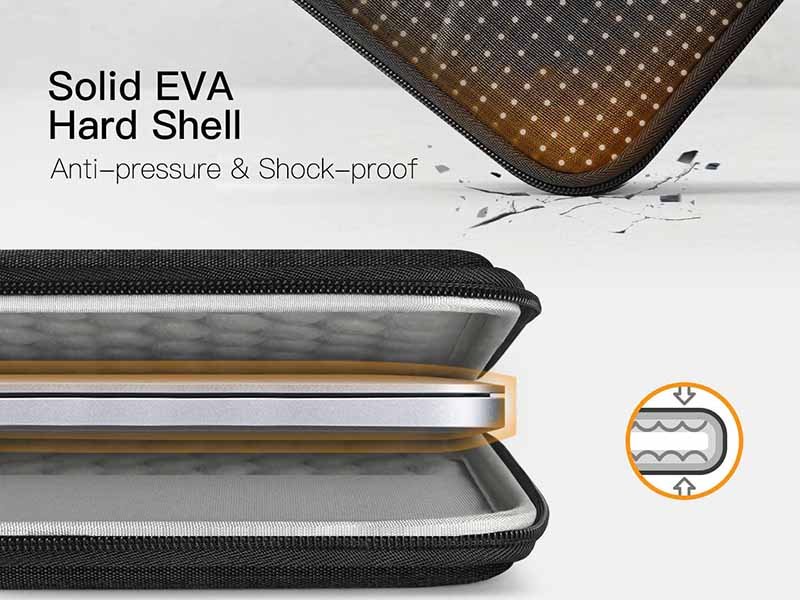
Foam is often treated as a minor component hidden inside a protective bag. In reality, it can determine whether an expensive instrument arrives safely, whether a tool stays fixed during transport, and whether a customer trusts the product after months of use. A bag can look strong on the outside yet still fail because its internal foam is too soft, too thin, poorly positioned, or unable to recover after repeated compression.
The most effective foam is selected by matching the protected product’s weight, fragility, geometry, failure points, handling conditions, and environmental exposure with the correct foam type, density, hardness, thickness, and insert structure. EVA, PE, EPE, and PU foam each behave differently, so the best solution is often a layered system rather than one material used throughout the entire bag.
A buyer once increased the wall padding of an equipment bag because the first sample seemed too soft. The finished bag became heavier and more expensive, but the device still suffered damage during testing. The real problem was not the sidewalls. Four narrow metal feet were pressing through an unsupported base. Once the load path was redesigned, a thinner but better-placed foam structure provided more protection than the original oversized padding.
What Must the Foam Protect?

The right foam starts with the object, not the material name. Define the product’s weight, fragility, shape, failure points, handling frequency, and exposure conditions before comparing EVA, PE, EPE, or PU foam. A protective bag should control movement, distribute load, absorb impact, resist repeated compression, and prevent hard components from contacting the outer shell.
Weight and Geometry
Product weight changes the way foam behaves under real conditions. A lightweight sensor may only need gentle surface protection, while a heavy power tool can permanently compress the same foam or force its way through the base during a drop.
Weight should always be considered together with contact area. A flat device spreads its load across a relatively large surface. A compact machine resting on four narrow feet creates concentrated pressure at a few small locations. Both products may weigh 5 kg, but the second product can create much greater localized compression.
The product’s center of gravity also matters. Batteries, motors, lenses, pumps, and metal frames can make one side considerably heavier. If the foam does not support that area correctly, the product may lean, rotate, or compress the insert unevenly.
| Product condition | Main foam risk | Practical response |
|---|---|---|
| Under 1 kg with broad contact area | Surface scratches or loose movement | Soft contact liner with accurate fit |
| 1–5 kg with regular geometry | Moderate shock and vibration | Medium-support foam with reinforced base |
| 5–15 kg with narrow feet or corners | Bottoming out and permanent dents | Denser local pads or layered base |
| Above 15 kg | Foam fatigue and structural distortion | Rigid support and project-specific testing |
| Top-heavy or irregular product | Rotation inside the bag | Contoured cavity and directional restraints |
These values are useful screening references rather than universal specifications. Drop orientation, carrying method, product sensitivity, and bag construction can change the final requirement.
Fragility and Failure Points
“Fragile” is too general to guide a professional foam decision. Products fail for different reasons. Some are vulnerable to shock, while others are more sensitive to vibration, abrasion, bending, moisture, static electricity, or pressure on a specific component.
Typical high-risk components include:
- Screens and glass surfaces
- Camera lenses and optical coatings
- Connectors, plugs, and ports
- Antennas and external sensors
- Hinges and movable joints
- Control knobs and switches
- Calibrated internal parts
- Batteries and circuit boards
- Sharp metal corners
- Detachable accessories
The insert should support the strongest parts of the product while relieving pressure around the weakest parts. Foam should not press directly against an unsupported screen, sensitive button, or projecting connector.
Damage records are often more valuable than general specifications. If previous bags caused broken corners, scratched housings, loose accessories, or bent plugs, these incidents reveal where protection is actually failing.
A delicate surface may need a soft covered foam layer, while the structural layer underneath remains firm enough to support the product. Using a soft material throughout the entire insert may feel premium but fail under load.
Handling and Impact
The same product may need very different protection depending on how it moves through its working life.
A presentation kit carried between an office and a meeting room has a lower exposure level than an instrument moved through airports, service vehicles, warehouses, workshops, or rental operations.
The full handling route should be reviewed:
- Will the bag be hand-carried, wheeled, stacked, or shipped?
- Can it fall from a workbench, vehicle, or loading platform?
- Will it be stored vertically or horizontally?
- How often will the product be removed?
- Will other equipment be placed on top of the bag?
- Does the bag travel through parcel distribution?
- Will trained technicians or general users handle it?
- Is the bag frequently placed on concrete, gravel, or wet ground?
One severe drop is not the only concern. Repeated low-level vibration can loosen accessories, wear cavity walls, and reduce foam recovery over time.
A protective bag used by a field technician may be opened several times every day. After hundreds of insertion cycles, a tightly cut cavity can tear, become loose, or permanently deform. A foam design that performs well on the first day may not remain reliable after one year of frequent use.
Cost of Failure
Foam cost should be judged against the cost of product damage, downtime, returns, repairs, and lost customer confidence.
The total risk may include:
- Product replacement
- Repair labor
- Spare components
- Return transportation
- Warranty claims
- Missed service appointments
- Lost operating time
- Negative product reviews
- Safety consequences
- Brand reputation damage
A promotional gift set does not need the same protection margin as a calibrated medical instrument or industrial testing device.
For low-value products, a simple EPE or laminated padding structure may be commercially reasonable. For expensive equipment, a precision-cut EVA or PE insert may justify the additional material and processing cost.
The objective is not to maximize foam thickness. Overdesign increases weight, dimensions, material consumption, and freight costs without always improving protection.
A better strategy is to concentrate protection where risk is highest: under heavy components, around corners, near protruding controls, along impact zones, and wherever movement must be restricted.
Which Foam Type Should You Choose?

Choose foam by matching its cell structure, firmness, recovery, moisture behavior, and durability to the product. EVA provides balanced support and a clean finish, PE delivers firmer long-term structure, EPE offers economical lightweight cushioning, and PU provides softer compression. Many protective bags perform best with two or more foam types serving different functions.
EVA Foam
EVA is widely used in protective bags because it combines resilience, moderate firmness, water resistance, clean appearance, and good processability.
It can be:
- Laminated
- Die-cut
- CNC-cut
- Heat-formed
- Compression-molded
- Fabric-covered
- Bonded to shell panels
EVA is commonly used in electronics cases, tool bags, medical equipment bags, camera cases, sports products, molded cases, and semi-rigid protective bags.
Its main advantages include:
- Closed-cell structure
- Relatively low water absorption
- Good compression recovery
- Smooth and clean cutting surfaces
- Availability in several densities and hardness levels
- Compatibility with heat-forming processes
- Better shape retention than many lightweight packaging foams
However, EVA is not automatically the best material for every product.
Very soft EVA can bottom out under heavy or concentrated loads. Very firm EVA may transmit more impact because it does not compress enough. High-density or thick EVA can also add noticeable weight and cost.
EVA is frequently covered with polyester, jersey, brushed fabric, velvet-like lining, or other decorative layers. The cover can improve appearance and reduce abrasion, but adhesive selection and lamination quality must be controlled.
Poor lamination can cause:
- Bubbles
- Peeling
- Strong odor
- Uneven stiffness
- Surface wrinkles
- Dimensional distortion
PE and EPE Foam
PE foam is often selected when the insert needs firmer support, low water absorption, good dimensional stability, and resistance to repeated loading.
Cross-linked PE normally has a finer cell structure and cleaner cutting appearance than basic expanded polyethylene. It is often suitable for heavier tools, industrial instruments, reusable transit cases, equipment bags, and inserts that require precise cavity geometry.
PE works particularly well in:
- Structural base layers
- High-load support blocks
- Reusable equipment inserts
- Precision-cut cavities
- Heavy accessory compartments
- Multi-layer inserts
EPE is lighter and generally more economical. It is widely used in protective packaging, entry-level bag padding, lightweight inserts, and cost-sensitive projects.
EPE can provide effective basic cushioning, but it may offer less precise appearance, lower structural stability, and weaker long-term compression performance than well-specified EVA or cross-linked PE.
| Foam type | General feel | Main advantages | Main limitations | Common applications |
|---|---|---|---|---|
| EVA | Soft to firm | Balanced cushioning, clean finish, water resistance | Higher grades increase cost and weight | Semi-rigid cases, electronics, tools |
| Cross-linked PE | Firm | Shape retention, durability, precise cutting | Can transfer shock when too hard | Heavy equipment and reusable inserts |
| EPE | Lightweight and springy | Economical and low weight | Less precise finish and lower durability | Basic bag padding and packaging |
| PU | Soft and compressible | Gentle contact and vibration damping | Moisture absorption and possible fatigue | Lid padding and delicate surfaces |
| ESD foam | Varies | Static-control performance | Must match required resistance range | Circuit boards and electronics |
These are general characteristics. Actual performance varies according to formulation, density, thickness, hardness, cell size, and supplier consistency.
PU Foam
PU foam is usually softer and more compressible than EVA or PE. It can conform around irregular products and provide gentle contact with sensitive surfaces.
Typical uses include:
- Lid padding
- Convoluted foam
- Camera protection
- Optical equipment
- Lightweight electronics
- Delicate finishes
- Removable cushioning pads
- Vibration-control layers
Its softness makes it comfortable and forgiving, but it also limits structural support.
Under a heavy product, PU foam may compress too deeply. Open-cell PU can also absorb more moisture and may develop permanent deformation after repeated loading.
A common layered solution is to use firm EVA or PE under the product and softer PU above it. The lower layer carries the weight and prevents bottoming out. The upper layer fills gaps and reduces pressure against delicate surfaces.
PU foam should be checked for:
- Odor
- Color change
- Oxidation
- Crumbling
- Slow recovery
- Permanent compression
- Cell-size consistency
Low-grade PU may appear acceptable during initial sampling but age poorly in hot or humid environments.
Open-Cell or Closed-Cell
Open-cell foam contains interconnected pores. Air and moisture can move through the material, allowing it to compress easily and feel softer.
Closed-cell foam contains sealed cells. It normally resists water more effectively and provides greater structural support.
Open-cell foam is often suitable when:
- Soft contact is the priority
- The product is lightweight
- Vibration damping is required
- Moisture exposure is limited
- The foam is used in the lid
- The insert must accommodate dimensional variation
Closed-cell foam is usually preferable when:
- The bag is used outdoors
- Water resistance matters
- The product is medium or heavy
- Shape retention is required
- The insert needs precision-cut cavities
- The bag will be used repeatedly
Neither structure is universally superior.
A closed-cell support layer combined with a softer open-cell contact layer can be more effective than one foam used throughout the bag. Foam should be placed according to the load path: firm support where the product transfers weight and softer material where delicate surfaces contact the insert.
How Do Foam Specifications Affect Protection?

Foam type alone does not determine performance. Density influences material mass and durability, hardness controls indentation resistance, thickness provides compression travel, and compression set indicates long-term recovery. These properties must work together. High-density foam can still be soft, while a hard but thin foam may bottom out during impact.
Density and Hardness
Density and hardness are related but different.
Density describes how much material is contained within a given volume and is commonly expressed in kilograms per cubic meter.
Hardness describes how strongly foam resists indentation. It may be measured using Shore hardness, indentation force, or another method used by the foam supplier.
A denser foam is not always harder. Different formulations can produce foams with similar density but noticeably different firmness.
This means a specification such as “high-density EVA” is incomplete unless it also defines:
- Hardness
- Thickness
- Color
- Tolerance
- Surface finish
- Foam family
- Approved sample
Density can influence:
- Weight
- Tear strength
- Shape retention
- Cutting quality
- Durability
- Compression behavior
- Material cost
Hardness can influence:
- How deeply the product sinks
- How tightly the cavity grips the product
- How much shock is transmitted
- Pressure on delicate surfaces
- Ease of insertion and removal
Foam that is too hard may not compress enough to absorb energy. Foam that is too soft may collapse and allow the product to strike the bag shell.
| Application | Density range often evaluated | Relative firmness | Common starting thickness |
|---|---|---|---|
| Lightweight accessories | 25–45 kg/m³ | Soft to medium | 5–15 mm |
| Consumer electronics | 35–80 kg/m³ | Medium | 10–30 mm |
| Cameras and instruments | 45–100 kg/m³ | Medium to firm | 15–40 mm |
| Heavy tools | 60–120 kg/m³ | Firm | 20–50 mm |
| High-load base pads | 80–180 kg/m³ | Firm to very firm | Project-specific |
These ranges are broad starting references. Foam families should not be compared only by density because their formulations and hardness systems can differ.
Thickness and Bottoming Out
Thickness gives foam space to compress and absorb energy.
When foam is too thin, it may fully collapse during a drop or impact. The product can then strike the outer panel, rigid board, zipper area, or ground-facing section. This is known as bottoming out.
More thickness can improve protection, but only when the material compresses in a controlled way.
A very soft 40 mm foam can bottom out more easily than a firmer 20 mm foam under a concentrated load. A very hard 40 mm foam may add bulk while transferring excessive force to the product.
Thickness should be evaluated at:
- The base
- Product corners
- Side-impact areas
- The zipper line
- Accessory dividers
- Protruding controls
- Wheels or feet
- Rigid shell interfaces
- Lid contact points
The base usually needs more support because it carries static weight. Sidewalls mainly control lateral movement and side impacts. Lid foam should retain the product without pressing excessively on screens, buttons, or connectors.
Bag dimensions must be considered before increasing foam thickness. Adding 10 mm around every side can substantially increase external dimensions and dimensional shipping weight.
Compression Set and Recovery
Compression set measures the permanent deformation remaining after foam is compressed for a defined period and then released.
This property is especially important when a product remains packed for long periods.
Foam with poor recovery can cause:
- Loose product fit
- Reduced base support
- Uneven pressure
- Accessory movement
- Enlarged cavities
- Increased vibration
- Reduced impact protection
Long-term recovery is particularly important for:
- Heavy equipment
- Rental products
- Emergency kits
- Medical equipment
- Tools stored permanently in bags
- Products kept inside hot vehicles
Temperature can affect recovery. Heat may soften foam and accelerate permanent deformation. Cold may temporarily increase stiffness.
A useful prototype evaluation is to leave the actual product packed inside the sample for a realistic period. After removing it, inspect the foam for visible dents, edge collapse, adhesive movement, and changes in fit.
A brief hand squeeze cannot show whether the foam will remain effective after months of use.
Weight and Cost
Higher density, greater thickness, fabric covering, precision cutting, and multilayer structures all increase cost. They can also increase bag weight and shipping volume.
Using the same premium foam thickness throughout the entire bag is not always efficient.
A more controlled structure may use:
- Firm foam beneath heavy components
- Soft foam against delicate surfaces
- Thicker corner protection
- Thinner low-risk sidewalls
- Hollow spaces in non-protective areas
- Removable blocks for several configurations
Processing method also affects cost.
Straight rectangular pads are generally economical. Die-cut parts become efficient at suitable quantities. CNC cutting provides flexibility and precision but normally costs more. Compression-molded EVA can create a highly integrated structure but requires more development and tooling work.
The most efficient design is not the one using the least foam. It is the design that reaches the required protection level while controlling material use, weight, dimensions, and repeatability.
How Should the Foam Structure Be Designed?
A protective insert must manage weight, movement, and impact as one complete system. Decide whether the foam should be laminated, removable, layered, molded, or cut. The fit must prevent rattling without applying excessive pressure. The insert must also work with the outer fabric, shell panels, zipper, seams, handles, reinforcements, and base.
Single or Multiple Layers
A single foam layer is simple and economical, but it may not provide the best combination of structural support and surface protection.
Multilayer inserts allow each layer to perform a different function.
A practical structure may include:
- A firm base layer for load support
- A shaped middle layer for positioning
- A softer upper layer for surface protection
- A fabric cover for appearance and abrasion control
This approach is especially useful for heavy products with delicate surfaces.
Firm PE or EVA can support the product while a softer EVA or PU layer reduces pressure around polished, painted, glass, or coated surfaces.
Layer thickness must be considered before the cavity is cut.
For example, a 40 mm insert containing a 30 mm-deep cavity leaves only 10 mm below the product. That remaining base may be inadequate even though the original foam block looked thick.
Adhesive performance also matters. Layers may separate when:
- The adhesive is incompatible
- Glue coverage is uneven
- Heat exposure is excessive
- Surface preparation is poor
- The foam flexes repeatedly
- Lamination pressure is insufficient
Laminated samples should be checked for bubbles, peeling, stiffness changes, odor, edge lifting, and dimensional movement.
Fit and Clearance
The product should fit securely without requiring excessive force.
Too much clearance allows movement. Too little clearance can damage foam, scratch surfaces, press on controls, or make the product difficult to remove.
The correct allowance depends on:
- Foam softness
- Product surface finish
- Cavity depth
- Product taper
- Removal frequency
- Production tolerance
- Cover fabric thickness
- Operating temperature
Soft foam can tolerate a slightly tighter fit because it compresses. Firm closed-cell foam usually requires more carefully controlled clearance.
Fabric-covered cavities also need additional allowance for fabric and adhesive thickness.
Deep cavities should include:
- Finger pullouts
- Access notches
- Lifting straps
- Tapered walls
- Removable support blocks
Without these features, users may pull on delicate parts or damage the foam when removing the product.
Accessories should not be placed loosely beside the main device. Cables, batteries, probes, chargers, and adapters can strike the protected product during transport. Separate cavities or restrained compartments are usually safer.
High-Risk Zones
Protection should be concentrated where impact, pressure, and wear are most likely.
Common high-risk zones include:
- Bottom corners
- Product feet
- Metal brackets
- Lens barrels
- Screens
- Connectors
- Control knobs
- Hinges
- Battery compartments
- Sharp tools
Corners can be strengthened with thicker foam, denser local blocks, rounded cavity geometry, or greater distance from the outer shell.
Sharp internal foam corners can tear easily. Small radii are often more durable than perfectly square internal cuts.
Heavy contact points may require load-spreading pads. Instead of allowing four narrow feet to compress soft foam independently, a firm layer can distribute their weight across a larger surface.
The zipper area also needs careful planning. Products positioned too close to the zipper may be struck by the slider, squeezed when the bag closes, or exposed when the shell is compressed.
The design should maintain sufficient clearance around the zipper path and closure seam.
Shell Integration
Foam cannot compensate for a weak bag structure.
The outer shell, internal panels, seams, zipper, handles, webbing, base, and reinforcements must carry loads without excessive distortion.
Foam design should be coordinated with:
- Outer fabric denier
- Fabric coating
- Molded shell panels
- PE or PP boards
- Stitch lines
- Seam allowances
- Binding thickness
- Handle attachment
- Shoulder strap loads
- Zipper placement
- Base feet
- Reinforced corners
If the bag bends sharply during lifting, a correctly cut cavity may open around the product and allow movement.
If the base panel sags, foam compression becomes uneven. If handles are attached only to a light outer fabric, a heavy product may distort the entire bag.
For heavier products, handle webbing may need to extend beneath or structurally connect to the base. This creates a more reliable load path from the product through the foam, reinforcement, webbing, and carrying points.
| Structural element | Foam-related concern | Recommended design check |
|---|---|---|
| Base panel | Sagging and uneven compression | Add board or denser support layer |
| Zipper area | Product contact and closure pressure | Maintain safe foam clearance |
| Handles | Bag distortion under load | Connect webbing to structural base |
| Sidewalls | Lateral movement | Use fitted support and stable panels |
| Lid | Excessive pressure on controls | Use soft controlled-contact foam |
| Corners | Concentrated impact | Increase local thickness or density |
Which Special Foam Properties Are Required?
Special foam properties should be selected only when the application requires them. Outdoor products may need low water absorption, electronics may require verified ESD performance, and industrial bags may need chemical, temperature, or flame resistance. Odor, restricted substances, material emissions, and recyclability may also affect consumer, medical, retail, and long-term storage projects.
Water and Moisture
Water resistance is important for outdoor, emergency, marine, medical, field-service, and industrial bags.
Closed-cell EVA and PE generally absorb less water than open-cell PU. However, a water-resistant foam does not make the complete bag waterproof.
Moisture may enter through:
- Stitch holes
- Zippers
- Binding seams
- Unsealed fabric edges
- Wet equipment
- Condensation
- Humid storage
- Open closures
When water enters and cannot escape, it may remain trapped between the foam, lining, and shell.
Possible results include:
- Odor
- Mildew
- Adhesive failure
- Metal corrosion
- Staining
- Fabric delamination
- Foam discoloration
Equipment that is frequently wet may need removable inserts, drainage zones, wipe-clean surfaces, or ventilation.
Smooth closed-cell foam is generally easier to clean than fabric-covered foam or open-cell cushioning.
Water testing should evaluate the completed construction rather than only the raw material. Adhesives, fabrics, coverings, and laminated layers may react differently after wetting and drying.
ESD Protection
Electronic components may require protection against electrostatic discharge.
Ordinary foam can generate or retain static charge, especially in dry environments and during repeated insertion and removal.
ESD foam may be required for:
- Circuit boards
- Semiconductor components
- Sensors
- Unhoused electronics
- Test equipment
- Aerospace components
- Communication modules
- Precision electronic assemblies
The term “anti-static” is often used too broadly.
Conductive, static-dissipative, and anti-static foams may have different resistance ranges and different functions. The required performance should come from the buyer’s ESD control specification.
Color is not sufficient evidence. Black foam is not automatically conductive, and pink foam is not suitable for every electronic application.
Material data and test results should match the required resistance range.
The final construction also matters. Covering ESD foam with insulating fabric or using an unsuitable adhesive can change the electrical behavior of the insert.
ESD requirements should therefore be defined in the BOM and verified after final assembly.
Temperature, Chemicals, and Flame
Temperature can change foam firmness, recovery, adhesive strength, and dimensional stability.
Protective bags used in vehicles, warehouses, aircraft, industrial plants, or outdoor environments may experience more demanding temperatures than indoor consumer bags.
Important questions include:
- What is the storage temperature?
- What is the operating temperature?
- Will the bag remain inside a hot vehicle?
- Will the foam experience freezing conditions?
- Can it contact oils or fuels?
- Are alcohol or disinfectants used?
- Is flame performance required?
Chemical resistance is particularly important for:
- Tool bags
- Laboratory equipment
- Medical kits
- Automotive products
- Maintenance equipment
- Industrial service bags
A foam may resist water but degrade after exposure to oils, cleaning chemicals, solvents, or plasticizers.
Flame resistance should never be described vaguely as “fireproof.” The required test method, material thickness, rating, and final product construction must be identified.
A foam passing one material-level test does not automatically make the complete protective bag compliant with a finished-product standard.
Odor and Compliance
Foam odor can become a serious quality issue because finished bags are often sealed in cartons for several weeks during storage and transportation.
Heat can intensify odors from:
- Foam
- Adhesives
- Coatings
- Printing inks
- Synthetic leather
- Lining fabrics
Odor should be evaluated on the complete assembled bag, not only on a small raw foam sample.
Depending on the market and product type, buyers may require documentation or testing related to:
- REACH restricted substances
- RoHS
- Phthalates
- Heavy metals
- PAHs
- Formaldehyde
- SVHC declarations
- Flame retardants
- Material safety information
Recycled foam may help reduce virgin material use, but it must still meet requirements for odor, consistency, recovery, traceability, and durability.
Sustainability should not be treated as a label alone. A accurately engineered insert that uses less material and lasts longer may provide a better environmental result than an oversized insert made from inconsistent recycled foam.
How Do You Validate Foam Before Production?

Validate foam using a production-representative prototype rather than a loose material swatch. Check fit, insertion, removal, support, recovery, odor, lamination, zipper clearance, and interaction with the completed bag. Use drop, vibration, compression, temperature, or moisture testing according to real risk, and record the approved foam specification in the BOM.
Prototype Checks
The prototype should use the intended foam family, thickness, covering, adhesive, and construction whenever possible.
Using a convenient substitute only to confirm appearance may hide important performance problems.
Prototype review should include:
- Product insertion
- Product removal
- Movement during shaking
- Base compression
- Pressure on screens
- Pressure on switches
- Cavity depth
- Finger access
- Accessory retention
- Zipper clearance
- Lid closing pressure
- Carrying balance
- Odor
- Foam recovery
Testing should use actual products or dimensionally accurate models.
Drawings may not fully show rubber feet, flexible cables, connectors, knobs, and normal production variation.
The product should remain loaded in the sample for a realistic period. After removal, inspect the foam for:
- Permanent dents
- Cracking
- Edge distortion
- Adhesive separation
- Covering movement
- Fit changes
A five-minute fitting check cannot reveal all long-term compression problems.
Performance Testing
Testing should reflect the real handling environment.
Not every bag needs an extensive laboratory program, but visual approval alone is not sufficient for a product sold as protective.
| Test | Main purpose | Practical evaluation |
|---|---|---|
| Static-load test | Long-term compression | Store the packed bag under expected load |
| Drop test | Impact protection | Drop in likely orientations from an agreed height |
| Vibration test | Transport movement | Simulate vehicle or distribution vibration |
| Compression test | Stacking and squeezing | Apply top load and inspect deformation |
| Temperature test | Heat and cold behavior | Condition the bag before checking fit |
| Water exposure | Moisture performance | Check drying, odor, and lamination |
| Repeated-cycle test | Daily-use durability | Repeatedly insert and remove the product |
Drop testing should include likely failure orientations:
- Base
- Side
- Edge
- Corner
- Heavy end
Pass criteria should be agreed before testing.
Depending on the product, acceptable criteria may include:
- No functional damage
- No product release from the cavity
- No foam cracking
- No seam failure
- No excessive cosmetic damage
- No contact with the hard shell
- No zipper opening
BOM and Approval Sample
Foam should be treated as an engineered component rather than a generic material described only as “EVA padding.”
A complete BOM entry may include:
- Foam family
- Supplier
- Approved equivalent
- Density
- Hardness
- Thickness
- Thickness tolerance
- Color
- Cell structure
- Surface covering
- Lamination method
- Adhesive requirement
- Cut dimensions
- Cavity depth
- Special properties
- Compliance requirement
- Test requirement
The approved sample should be linked to the correct:
- Pattern version
- BOM version
- Material reference
- Test record
- Packaging standard
- Product drawing
Changes in foam supplier, hardness, density, thickness, adhesive, or covering should be reviewed before bulk production.
A seemingly minor substitution can change fit, recovery, odor, appearance, and impact performance.
For repeat orders, reference samples and material records should be retained. Foam feel, cell size, color, and firmness may vary between batches even when the same general material name is used.
Batch Consistency
Bulk quality control should begin with incoming foam inspection.
Discovering foam problems after finished bags are packed is expensive and disruptive.
Incoming checks may include:
- Thickness measurement
- Density verification
- Hardness comparison
- Color inspection
- Surface inspection
- Odor evaluation
- Sheet dimensions
- Cell uniformity
- Compression recovery
- Lamination strength
- Certificate verification
During production, cavity dimensions and remaining wall thickness should be checked against the approved drawing.
Operators should also confirm:
- Layer orientation
- Fabric direction
- Adhesive coverage
- Insert position
- Cavity depth
- Reinforcement location
- Shell alignment
Finished bags should be tested with the actual product on sampled units.
A foam insert can meet its own drawing dimensions and still fit poorly because tolerances from cutting, sewing, binding, lamination, and shell assembly accumulate.
For a custom protective bag project, provide the product dimensions, weight, photos, drawings, intended use, expected order quantity, target market, packaging requirements, and required tests. Lovrix can evaluate the foam, shell structure, insert layout, materials, sampling route, branding details, production feasibility, quality controls, packaging, and delivery plan as one coordinated OEM or ODM manufacturing project.
Send your product drawing, sample photos, Tech Pack, or current bag details to email for a structured custom protective bag evaluation.


