 Skip to content
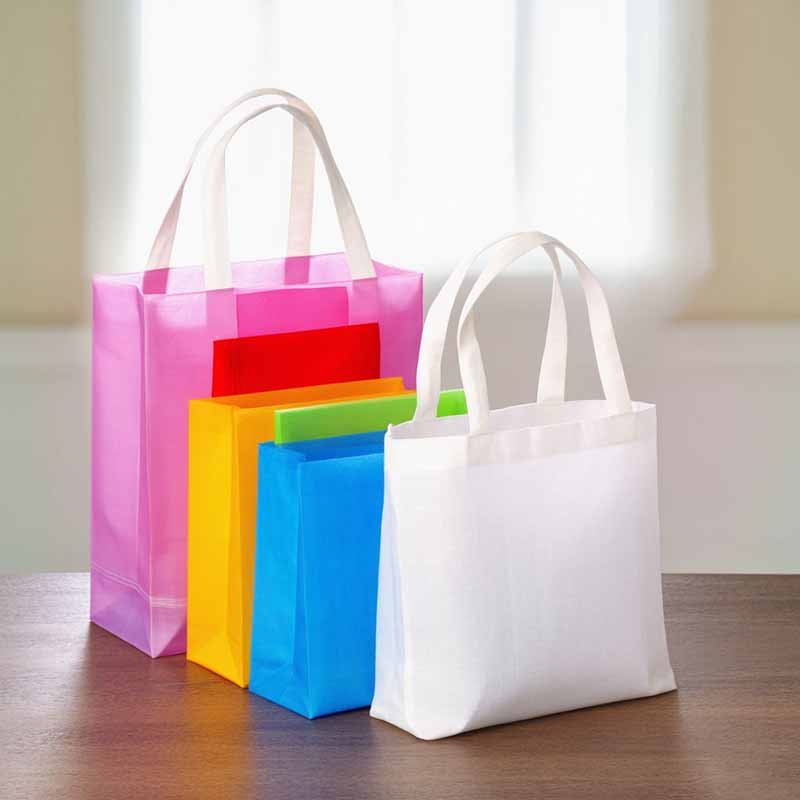
Most promotional bags fail before they ever reach the event table, retail counter, welcome kit, or customer’s hand. Not because the logo is wrong, and not because the shape is unusual, but because the material decision was treated like a small detail. A bag used for a one-day trade show does not need the same material as a retail shopping bag expected to carry groceries every week. A corporate gift bag does not send the same message if it feels thin, noisy, or easy to tear. An eco campaign can lose credibility if the “green” material looks good on paper but performs poorly in real use. For brands, agencies, retailers, importers, and promotional product companies, choosing the right bag material is not just a sourcing task. It is a brand, cost, function, and production decision packed into one choice.
The best material for promotional bags depends on five factors: use case, target audience, expected load, logo method, and budget. Non-woven PP suits large-volume giveaways, cotton and canvas suit reusable brand bags, polyester and nylon suit stronger functional bags, rPET supports recycled-positioned campaigns, and jute or laminated materials work when texture, structure, or retail presentation matters.
A promotional bag is often the first physical product a customer carries away from your brand. It may sit on a desk, travel through an airport, appear in an office, or be reused in daily life. That is why experienced bag developers start with material evaluation before quoting. The right material does not just make a bag look better. It reduces complaints, protects your campaign budget, keeps the logo visible, and helps the final product feel like something customers want to keep.
What Makes a Good Promotional Bag Material?

A good promotional bag material matches the bag’s real use, expected load, logo method, audience, budget, and brand image. The best choice is not always the cheapest, thickest, or most sustainable-looking fabric. It is the material that can carry the right weight, print cleanly, feel appropriate in the customer’s hand, and remain stable during bulk production.
Use Comes First
Promotional bags are often judged by appearance, but the material decision should begin with use. A bag for a one-day exhibition does not need the same fabric as a retail shopping bag expected to be reused for months. A conference tote may only carry brochures, a notebook, and a water bottle. A grocery-style reusable bag may need to hold several kilograms of products without handle failure. A corporate gift bag may not carry heavy weight, but it must feel clean, neat, and worth keeping.
The most useful question is not “Which material is best?” but “What must the bag survive?” If the answer is light documents, non-woven PP or light cotton may be enough. If the answer is boxed gifts, retail goods, bottles, books, or tools, stronger canvas, laminated woven PP, polyester, or nylon will make more sense.
A material that looks acceptable as a flat swatch can behave differently after cutting, printing, sewing, folding, packing, and shipping. A practical material decision always considers the full product, not the fabric alone.
Audience and Perception
Material changes how people judge the brand. Cotton feels natural and casual. Canvas feels stronger and more durable. Polyester feels practical and functional. rPET gives a recycled-material story. Jute feels rustic and eco-oriented. Laminated woven PP feels structured and retail-ready. None of these materials is automatically better than the others; they simply send different signals.
A wellness brand may prefer cotton, recycled cotton, or rPET because the feel supports a softer, cleaner image. A sports event may choose polyester because it is lightweight, colorful, and practical. A supermarket campaign may use laminated woven PP because it stands upright, carries volume, and supports colorful printing. A premium corporate event may choose canvas because the bag feels more substantial.
The wrong material can create a mismatch. A luxury gift in a very thin non-woven bag may feel underwhelming. A low-budget event using heavy canvas may waste money where audience reuse is unlikely. Good material selection protects both function and perception.
Strength and Feel
Strength is not only about fabric thickness. Handle width, seam allowance, stitch density, reinforcement, webbing quality, and bottom construction all affect performance. A thick body fabric with weak handles can still fail. A medium-weight fabric with strong stitching can perform better than expected.
For light promotional use, many bags only need to carry around 1-3 kg. For retail, grocery, tools, books, or event kits, the working load may need to be higher. Instead of guessing, brands should define a target carrying weight before sampling. The sample can then be filled with real items and tested by lifting, shaking, carrying, and folding.
Hand feel also matters. A fabric can be strong but too stiff, too noisy, too rough, or too cheap-feeling for the campaign. Good promotional bags sit between performance and comfort: strong enough to use, pleasant enough to keep.
Material Selection Matrix
| Project Condition | Better Material Direction | Common Specification Range | Key Risk to Check |
|---|---|---|---|
| Light event giveaway | Non-woven PP, light cotton | Non-woven PP around 70-100 gsm; cotton around 4-6 oz | Handle tearing, weak side seams |
| Reusable retail tote | Canvas, cotton canvas, rPET, laminated woven PP | Canvas often 8-12 oz; laminated woven PP often 100-140 gsm | Bottom shape, print durability |
| Corporate gift bag | Canvas, premium polyester, recycled fabric, jute blend | Canvas often 10-16 oz; polyester often 300D-600D | Hand feel, logo finish, packaging |
| Heavy-load use | Canvas, 600D/900D polyester, nylon, woven PP | Polyester often 600D or above | Handle attachment, seam strength |
| Eco campaign | rPET, organic cotton, recycled cotton, jute | Depends on certification and fabric source | Material claim, color consistency |
Which Materials Are Used for Promotional Bags?

Promotional bags are commonly made from non-woven PP, woven PP, cotton, canvas, polyester, nylon, rPET, recycled cotton, jute, and laminated fabrics. Each material offers a different balance of cost, durability, print quality, sustainability message, hand feel, and production complexity. The right choice depends on the bag’s purpose rather than the material name alone.
Non-Woven PP
Non-woven PP is widely used for high-volume promotional bags because it is light, affordable, and suitable for simple tote, shopper, drawstring, and event bag structures. It is often selected for trade shows, school events, charity campaigns, conference giveaways, and local promotions where the main goal is practical distribution at controlled cost.
Its biggest advantage is efficiency. It can be produced in large quantities, printed with large logos, and packed compactly. For simple promotional use, a well-made non-woven PP bag can do the job without adding unnecessary cost.
The weakness is perceived value. Very thin non-woven PP can wrinkle, stretch, or feel disposable. For campaigns where the bag should be reused or represent a higher-value brand, the material may need a heavier weight, stitched construction, lamination, reinforced handles, or a different fabric altogether. It is a good material when expectations are realistic.
Cotton and Canvas
Cotton and canvas are popular when brands want a more natural, reusable, and lifestyle-oriented bag. Light cotton bags are softer and easier to fold, making them suitable for bookstores, beauty brands, schools, wellness campaigns, simple retail packaging, and casual giveaways. Canvas is heavier, denser, and stronger, giving the bag more body and a better long-term feel.
The important detail is fabric weight. A 4 oz cotton tote and a 12 oz canvas tote are very different products, even though both may be called cotton bags in casual conversation. Light cotton is better for low-weight items and clean natural branding. Canvas is better for repeated use, heavier goods, premium presentation, and stronger structure.
Cotton and canvas work well with screen printing, embroidery, woven labels, and patches, but shrinkage, color fastness, and fabric texture should be checked during sampling.
Polyester and Nylon
Polyester and nylon are strong choices for functional promotional bags. Polyester is widely used because it offers stable color, many fabric weights, coating options, and good production flexibility. It can be used for foldable shopping bags, drawstring bags, cooler bags, sports bags, travel pouches, backpacks, and tool bags. Common denier options include 210D, 300D, 420D, 600D, and 900D, with heavier denier fabrics offering more structure and abrasion resistance.
Nylon is often selected when light weight, toughness, and foldability matter. It is common in travel-related promotional products, outdoor pouches, reusable shopping bags, and compact storage bags. It may cost more than basic polyester, but it can offer a smoother hand feel and strong tear resistance in the right construction.
For both materials, coating matters. PU, PVC, TPU, or water-resistant coatings can improve function, but they may affect printing, sewing, flexibility, and cost.
Recycled and Natural Options
rPET, recycled cotton, organic cotton, and jute are used when sustainability is part of the campaign message. rPET can perform similarly to polyester while giving the product a recycled-material story. Recycled cotton can support a softer, natural look, though fiber strength and color consistency should be checked carefully. Organic cotton is useful when the brand wants a cleaner natural-material message, but price and certification requirements should be reviewed early.
Jute has a coarse, natural texture and is often used for grocery bags, wine bags, farmers’ market bags, and eco retail packaging. It looks distinctive, but fine logo details may not print as clearly on its rough surface. Many jute bags use cotton handles, laminated backing, or inner lining to improve comfort and durability.
Sustainable materials should still be judged by performance. A bag that looks eco-friendly but fails quickly does not support a strong brand message.
Material Comparison
| Material | Best Use | Common Strength | Logo Suitability | Main Watch Point |
|---|---|---|---|---|
| Non-woven PP | Event giveaways, basic shopping bags | Low to medium | Screen print, heat transfer | Thin grades feel disposable |
| Cotton | Light totes, lifestyle campaigns | Low to medium | Screen print, embroidery on heavier grades | Shrinkage, light-load limits |
| Canvas | Reusable totes, retail, corporate gifts | Medium to high | Screen print, embroidery, patches | Higher cost and shipping weight |
| Polyester | Functional bags, drawstring bags, cooler bags | Medium to high | Screen print, heat transfer, sublimation on suitable fabric | Coating compatibility |
| Nylon | Foldable bags, travel, outdoor pouches | Medium to high | Heat transfer, woven labels, patches | Printing and coating limits |
| rPET | Eco campaigns, reusable bags | Medium, depending on fabric | Print, labels, patches | Certification and cost |
| Jute | Grocery, natural gift bags | Medium | Large simple prints, labels, patches | Rough surface affects fine detail |
| Laminated woven PP | Retail shoppers, grocery bags, expo bags | Medium to high | Full-color surface printing | Sustainability message needs care |
How Do Materials Affect Cost and MOQ?

Materials affect cost and MOQ through fabric type, weight, color, coating, lamination, availability, logo method, cutting waste, and production complexity. Available stock materials usually support faster sampling and lower minimums. Custom-dyed, certified recycled, laminated, coated, or specially woven materials often increase MOQ, lead time, and approval steps.
Fabric Weight and Yield
Fabric weight is one of the clearest cost drivers. Heavier fabric usually costs more per meter, increases shipping weight, and may slow sewing speed. A 12 oz canvas tote will normally cost more than a 5 oz cotton tote, not only because the fabric is heavier, but also because it may require stronger thread, stronger needles, reinforced seams, and more careful handling.
Fabric yield also matters. Two bags using the same material can have different costs because of size, gusset depth, handle length, pocket layout, and cutting efficiency. Large panels create more fabric consumption. Curved shapes can increase cutting waste. Wide gussets or lined structures use more material than flat totes.
A smart cost review looks at the full BOM: outer fabric, lining, webbing, thread, zipper, hardware, logo process, label, packaging, and carton. Focusing only on fabric price can lead to wrong decisions.
Stock vs Custom Materials
Stock materials are usually safer for projects with tight deadlines, moderate quantities, or first-time testing. They allow faster sampling, easier color approval, and lower sourcing risk. Common stock colors such as black, white, natural, navy, gray, red, and standard green are often easier to arrange than custom-dyed colors.
Custom materials are useful when brand consistency is critical. A company may want exact Pantone-matched fabric, custom webbing, special coating, unique texture, or certified recycled content. These requirements can improve brand control, but they often raise MOQ and extend lead time. The reason is simple: fabric mills, dyeing factories, coating suppliers, and accessory suppliers each have their own minimum production quantities.
For promotional bags, custom color should be requested only when it truly matters. In many cases, a stock material with a strong logo contrast produces a better balance of speed, cost, and final appearance.
MOQ Triggers
MOQ is not only a factory rule. It is often linked to material sourcing. A simple tote using available cotton may support a smaller production run than a bag requiring custom-dyed rPET, special lining, printed webbing, metal trims, and retail packaging. The more unique the components, the more minimums appear across the supply chain.
Logo process also affects MOQ. Screen printing can be flexible for many orders, while custom rubber patches, woven labels, metal badges, zipper pullers, or special packaging may require their own minimums. If the bag uses custom webbing or special hardware, each component may increase the practical MOQ.
For brands developing a product line, it is better to plan material families. Using one approved fabric across several bag styles can improve purchasing efficiency, reduce color variation, and make repeat orders easier.
Cost Control Without Cheapening
Cost control does not mean choosing the weakest material. It means spending money where the user will notice and where quality risk is highest. For many promotional bags, the best places to protect quality are fabric weight, handle strength, logo clarity, and stress-point stitching. Inner pockets, special lining, premium trims, or retail packaging can be added only when the campaign requires them.
A good way to manage cost is to ask for two or three versions during development. For example, compare 80 gsm non-woven PP with 100 gsm non-woven PP, or 6 oz cotton with 10 oz canvas, or standard polyester with rPET. The cost difference becomes easier to understand when samples are placed side by side.
| Cost Driver | Lower-Cost Path | Higher-Cost Trigger | Practical Decision |
|---|---|---|---|
| Fabric | Stock fabric | Custom dyeing, special weave, certified recycled fabric | Use stock first unless brand color is critical |
| Weight | Lighter gsm/oz/denier | Heavy canvas, thick polyester, laminated fabric | Match fabric to carrying load |
| Logo | Simple screen print | Embroidery, rubber badge, metal logo, woven patch | Use premium logo only when reuse value is high |
| Structure | Flat tote, simple seams | Lining, zipper, pockets, gusset, piping | Add structure only where function requires it |
| Packaging | Bulk pack | Retail box, hangtag, barcode, individual pouch | Match packaging to sales channel |
| Accessories | Standard webbing and zipper | Custom webbing, custom puller, special hardware | Standardize components for multi-style orders |
How Do Materials Affect Logo Results?

Materials affect logo results through surface texture, absorbency, coating, weave density, heat tolerance, color contrast, and flexibility. Smooth fabrics usually print cleaner, while rough, coated, or highly textured fabrics may need simpler artwork or alternative branding. Logo method and material should be chosen together before sampling, not treated as separate decisions.
Printing Clarity
Printing clarity depends heavily on the surface. Smooth cotton, fine canvas, non-woven PP, polyester, and laminated woven PP can support clean logos when artwork is prepared correctly. Coarse canvas, jute, slub cotton, and recycled blends may reduce sharpness because the surface is uneven.
The safest artwork for fabric printing uses bold lines, clear lettering, and strong contrast. Very small text, thin strokes, gradients, and complex shadows often look good in a digital mockup but lose detail on fabric. A logo that is only 20 mm wide may be readable on paper but unclear on textured cotton or jute.
Print size also matters. Large logos are easier to read from a distance, especially at trade shows and events. If the bag is used in public, logo visibility is part of the value. For promotional bags, artwork should be tested on the actual material before bulk approval.
Embroidery and Patches
Embroidery works best on materials with enough body, such as canvas, thicker cotton, polyester canvas, 600D polyester, and structured fabrics. It gives a more premium feel than basic printing and can last well through repeated use. It is suitable for corporate gift bags, merchandise totes, travel bags, backpacks, and sports bags.
However, embroidery is not ideal for every logo. Small text, gradients, detailed illustrations, and very thin shapes may not stitch cleanly. Large embroidery can make the fabric stiff, increase cost, and create puckering if the material is too light.
Patches are useful when direct printing or embroidery is not ideal. Woven labels, rubber badges, silicone patches, leather patches, and PU labels can create a clean logo area on rough or textured materials. A jute bag with a woven label may look better than a detailed logo printed directly onto coarse fibers.
Coatings and Heat
Coated fabrics need special attention. PU, PVC, TPU, water-resistant finishes, and lamination can affect ink adhesion, heat transfer bonding, and sewing behavior. A print that works well on uncoated cotton may not perform the same way on coated polyester or slick nylon.
Heat-sensitive materials require testing before using heat transfer, sublimation, or hot stamping. Too much heat can cause gloss marks, distortion, shrinkage, or poor adhesion. Laminated surfaces can deliver bright graphics, but the printing method must match the lamination.
For bags used outdoors, in retail, or in repeated handling, logo durability should be checked by rubbing, folding, light scratching, and packing tests. The logo should not crack, peel, blur, or transfer color easily.
Logo Compatibility Guide
| Material | Strong Logo Methods | Use with Care | Common Risk |
|---|---|---|---|
| Non-woven PP | Screen print, heat transfer | Small detailed artwork | Ink coverage on thin material |
| Cotton | Screen print, embroidery on heavier weights, woven label | Fine lines on loose weave | Shrinkage and color absorption |
| Canvas | Screen print, embroidery, patches, leather labels | Large dense embroidery on soft canvas | Puckering, texture reducing detail |
| Polyester | Screen print, heat transfer, sublimation on suitable fabric | High heat on coated fabric | Adhesion and coating reaction |
| Nylon | Heat transfer, woven label, rubber patch | Screen print without testing | Slick surface and heat sensitivity |
| rPET | Print, woven label, patch | Strong claims without documentation | Color and sourcing consistency |
| Jute | Large simple print, cotton label, patch | Small text, detailed logos | Rough texture reduces clarity |
| Laminated woven PP | Full-color surface print | Post-print folding stress | Cracking at folds if poorly tested |
Which Material Fits Each Use Case?
The right promotional bag material depends on the use case. Trade shows need cost control and logo visibility. Retail bags need structure and reuse value. Corporate gifts need better hand feel and finishing. Eco campaigns need credible materials and long usable life. Heavy-load bags need reinforced construction, not just thicker fabric.
Trade Shows
Trade show bags need to be easy to distribute, easy to pack, and strong enough for brochures, catalogs, samples, and small gifts. Non-woven PP is often suitable when quantity is high and cost control matters. Light cotton can work when the brand wants a more natural look. Polyester can work when the bag should be foldable, colorful, or slightly more durable.
A common mistake is choosing a bag that looks good empty but cannot handle the materials placed inside at the booth. Catalogs, sample boxes, water bottles, and giveaways can quickly add weight. Handle length also matters because attendees may carry the bag for several hours.
For trade shows, the best material is usually not the most premium option. It is the one that balances cost, print visibility, packing efficiency, and short-term carrying strength. A medium-weight non-woven PP bag with stitched handles can perform better than a thinner bag with poor construction.
Retail Giveaways
Retail giveaway bags are closer to packaging and merchandise than simple event items. They are handed to customers after a purchase, so the bag becomes part of the shopping experience. Cotton, canvas, rPET, laminated woven PP, jute, and polyester are all useful depending on the store type.
A fashion or beauty brand may choose cotton canvas because it feels clean and reusable. A grocery or home goods retailer may choose laminated woven PP because it stands up better and carries more volume. A sustainability-focused store may choose rPET, recycled cotton, jute, or organic cotton.
Retail bags should be checked for shape, gusset depth, handle comfort, and repeat-use strength. Customers are more likely to reuse a bag that looks good, carries well, and folds or stores conveniently. When reused in public, the bag continues working as brand exposure.
Corporate Gifts
Corporate gift bags need to feel more considered. They are often used for employee onboarding, client events, conferences, partner gifts, executive kits, and internal campaigns. The bag may carry notebooks, drinkware, apparel, electronic accessories, brochures, or boxed gifts. For these uses, canvas, rPET, structured polyester, premium cotton, and selected jute blends are common choices.
The material should match the gift value. A high-quality welcome kit in a thin bag can weaken the whole presentation. At the same time, overbuilding the bag can waste budget if the items inside are light. The best approach is to weigh the gift set, check the total volume, and then choose a fabric and handle structure that feel secure.
Logo method matters here. Embroidery, woven labels, rubber patches, or clean screen printing can all work, but the finish should look neat from close distance because corporate gift recipients usually inspect the product more carefully than event attendees.
Eco Campaigns
Eco campaigns need careful material decisions because customers are more sensitive to claims. rPET, organic cotton, recycled cotton, jute, and durable canvas are common options, but the material alone does not make the campaign credible. The bag should be useful enough to keep and reuse.
A recycled fabric bag that breaks quickly sends the wrong message. A natural jute bag with poor stitching does not help the brand. A cotton bag with a nice feel but weak handles may be discarded too soon. For sustainability-related projects, durability and honest communication matter as much as fiber content.
Brands should also think about packaging. An eco-positioned bag packed with excessive plastic or unnecessary decoration can create a mixed message. Simple cartons, recyclable hangtags, minimal polybags, or channel-appropriate packing can make the whole project feel more consistent.
Heavy-Load Use
Heavy-load promotional bags need stronger fabrics and stronger construction. Canvas, 600D or 900D polyester, nylon, laminated woven PP, and reinforced woven materials can work well. But heavy-load performance comes from the full design: handle width, webbing strength, stitch type, seam allowance, bottom reinforcement, and stress-point bartacks.
For bags carrying groceries, books, tools, bottles, equipment, or product samples, define the expected load before sampling. If normal use may be 5 kg, the sample should be tested above that level to allow for real-world handling. Customers do not carry bags gently, especially during events, travel, or shopping.
A strong-looking bag can still fail at the handle if the attachment area is too small. A good heavy-load promotional bag should spread stress across the body, reinforce the handle area, and avoid sharp stress points at corners and seams.
How Should Brands Verify Materials Before Bulk?
Brands should verify promotional bag materials through physical samples, fabric swatches, logo tests, load checks, stitching review, color approval, BOM confirmation, packaging review, and pre-production sample approval. A material should not be approved from a photo alone. Real handling, printing, sewing, folding, loading, and packing reveal whether the material is ready for bulk production.
Sample Review
A sample should be tested like the final bag will be used. Place real items inside, carry it by the handles, fold it, open it, check the logo, inspect the seams, and review the shape. If the bag is for retail, see how it looks when filled. If it is for an event, check how many units fit into a carton and whether the bag creases badly after packing.
Material hand feel should also be checked. Is it too thin, too stiff, too rough, too shiny, or too soft for the brand? Does the color match expectations under different lighting? Does the logo remain clear after rubbing or folding? Does the bag have odor from coating, ink, lamination, or packaging?
A good sample review catches problems before they become bulk issues. It is much cheaper to change material, webbing, print size, or seam reinforcement during sampling than after production has started.
Load and Stress Points
Load testing should focus on the real failure areas: handles, side seams, bottom corners, zipper ends, pocket openings, and points where webbing or binding is attached. Many promotional bags do not fail in the center of the fabric. They fail where stress is concentrated.
For simple light-use bags, a basic carrying test may be enough. For reusable retail bags, grocery bags, tool bags, or heavy conference kits, stronger testing is needed. The sample should be filled with target weight, lifted repeatedly, carried for a period of time, and checked for seam stretching, tearing, handle deformation, or fabric distortion.
If a bag needs to carry heavy items, the material should be reviewed together with the stitching method. Increasing fabric weight without improving handle attachment may not solve the problem.
Color and Logo Approval
Color approval should be done on actual material, not only on digital artwork. Fabric texture, coating, fiber content, and lighting can all change the color appearance. Natural cotton, dyed polyester, laminated woven PP, jute, and rPET may show the same Pantone color differently.
Logo approval should include size, position, color, edge clarity, and durability. A print may look sharp on a flat sample panel but less clean after the bag is sewn and folded. Embroidery may look premium but may also distort thin fabric. Patches may solve clarity problems but add cost and change the look of the bag.
Before production, the approved sample should clearly define logo location, logo dimensions, color standard, and acceptable tolerance. Without these details, bulk inspection becomes subjective.
BOM and Production Records
A clear BOM prevents confusion during bulk production. It should record the outer fabric, fabric weight, color, lining, webbing, zipper, hardware, thread, label, logo method, print size, packaging, carton size, and any special requirement. For repeat orders, the BOM becomes even more valuable because it helps maintain consistency across batches.
The pre-production sample should match the BOM. If the sample uses one webbing width and the BOM lists another, problems will appear later. If the logo method changes after approval, the final bag may not match the original expectation.
For brands planning repeat orders or multi-style promotional programs, material records save time. A stable file of approved materials, colors, labels, and packaging details reduces back-and-forth communication and helps keep future orders consistent.
| Verification Item | What to Check | Practical Method | Why It Matters |
|---|---|---|---|
| Fabric | Weight, hand feel, color, coating, texture | Review swatch and finished sample | Confirms appearance and function |
| Logo | Size, clarity, color, adhesion, placement | Print or stitch on actual material | Prevents bulk logo failure |
| Load | Handle strength, seam stretch, bottom support | Fill with target weight and lift repeatedly | Reduces breakage complaints |
| Stitching | Stress points, seam allowance, thread tension | Inspect inside and outside seams | Confirms production reliability |
| Packaging | Folding, carton quantity, crease marks, labels | Pack sample as bulk shipment | Avoids damage and channel issues |
| BOM | Materials, trims, logo, labels, packing details | Lock written production record | Keeps bulk and repeat orders consistent |
Final Thoughts: Choose the Material That Protects Your Brand After the Event
Choosing materials for promotional bags is not about picking the most popular fabric from a supplier list. It is about understanding what the bag must do after it leaves your warehouse, booth, store, or gift box. The right material protects your budget, improves logo presentation, supports your sustainability message, reduces quality risk, and gives customers a product they are more likely to keep.
For large-volume event giveaways, non-woven PP or light cotton may be practical. For reusable brand bags, cotton canvas, polyester, rPET, jute, or laminated woven PP may deliver stronger value. For corporate gifts, the best choice may be a material with better hand feel, cleaner stitching, and a logo method that looks stable after real handling. For heavy-load projects, fabric strength must be confirmed together with handle construction, seam reinforcement, and load testing.
Lovrix supports OEM/ODM custom bag projects from material selection, structure evaluation, logo method review, sampling, MOQ planning, production cost assessment, packaging, quality control, and delivery coordination. The standard MOQ for custom bag projects starts from 500 pcs, while the final MOQ depends on product structure, material availability, logo process, packaging method, and order complexity. If you are developing promotional bags for events, retail programs, corporate gifts, eco campaigns, or long-term product lines, send your drawings, reference images, product size, material preferences, logo files, target quantity, packaging needs, and delivery schedule. The team can review your project and provide a structured custom manufacturing proposal.


