 Skip to content
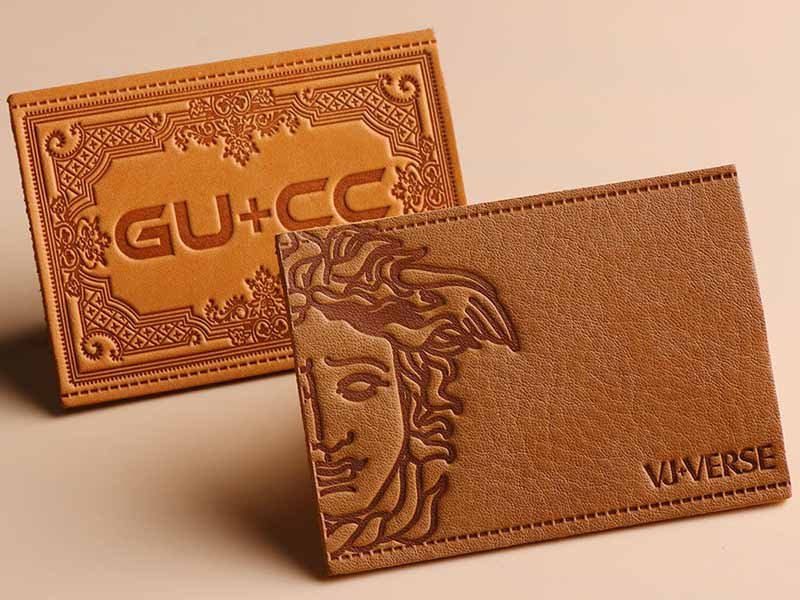
A logo patch may cover only a small part of a bag, but it often carries a large part of the brand’s visual identity. Customers notice its texture, color, edge quality, logo definition, and attachment before they examine many of the bag’s functional details. A patch that looks poorly cut, unevenly pressed, or incorrectly matched can make an otherwise well-made product feel less valuable.
That is why choosing between genuine leather and PU leather should not be treated as a simple price comparison. The decision affects appearance, durability, repeat-order consistency, production yield, branding options, inspection standards, and the way the finished bag ages in real use.
Genuine leather patches are generally better for natural texture, premium positioning, distinctive aging, and products designed for long-term ownership. PU patches are usually better when brands need controlled colors, uniform grain, animal-free positioning, efficient cutting, and predictable results across large production runs. The correct option depends on material grade, bag type, logo process, climate, order volume, target cost, and attachment method.
A premium material does not automatically produce a premium result. Soft leather may fail to hold a small debossed logo. Poor-quality PU may look perfect in a showroom but begin cracking after warm and humid storage. A beautifully engraved patch may still detach if the stitch line sits too close to the edge.
One brand once approved a genuine leather patch after reviewing a single perfect sample. When bulk production started, natural shade and grain differences made a large part of the order appear inconsistent beside the approved piece. The leather was not defective. The real problem was that the approval standard did not define acceptable variation.
The following comparison explains how leather and PU patches behave during development, branding, testing, production, and real-world use so that buyers can make a decision based on the finished product rather than material names alone.
What Are Leather and PU Patches?

Leather patches are cut from processed animal hide, while PU patches normally use a polyurethane surface supported by fabric, microfiber, split leather, or another backing. Genuine leather offers natural grain and aging character. PU provides more controlled color, texture, and bulk consistency. Buyers should confirm the exact material construction because terms such as leather, faux leather, and synthetic leather are often used loosely.
Material Construction
A genuine leather patch is made from tanned animal hide. Cowhide is widely used for commercial bag applications because it offers a practical balance of strength, availability, surface character, and compatibility with common branding methods.
The description “genuine leather” is not detailed enough for professional purchasing. A patch may be made from full-grain leather, top-grain leather, corrected-grain leather, split leather, vegetable-tanned leather, chrome-tanned leather, or finished leather. These materials can differ significantly in grain, firmness, logo definition, color consistency, and aging behavior.
Vegetable-tanned leather is often chosen for heritage and lifestyle bags because it has a firm body and usually produces a clear debossed or laser-engraved result. It can develop visible patina over time. Softer chrome-tanned leather offers broader color and hand-feel options, but very soft grades may not hold deep logos consistently.
Corrected-grain leather is sanded or coated to create a more uniform surface. It usually provides stronger appearance consistency than highly natural full-grain leather, although the surface character may feel less organic. Split leather is made from a lower hide layer and may be coated to imitate top-grain leather.
PU leather has a layered construction. The visible polyurethane coating is applied to a woven, knitted, microfiber, split-leather, or other supporting base. Its surface can be engineered to imitate pebbled leather, smooth leather, saffiano grain, suede, matte leather, metallic leather, or other finishes.
The backing strongly influences performance. A dense microfiber or stable woven backing can provide better strength and dimensional control than a weak knitted base. Two PU materials may look almost identical in a sample book but behave differently after bending, heating, engraving, or prolonged storage.
Thickness and Hand Feel
Patch thickness influences logo definition, edge quality, sewing difficulty, flexibility, and the way the patch sits on the bag panel.
For many custom bag applications, genuine leather patches commonly begin around 1.0–1.8 mm in finished thickness. PU patches frequently begin around 0.8–1.5 mm. These ranges are useful for early development but should not be treated as universal requirements.
A patch that is too thin may wrinkle during sewing or appear visually weak. A patch that is too thick may resist bending, create bulky corners, or distort a lightweight bag panel. Large patches generally need better structural balance than small labels because their stiffness affects a wider area.
The main bag material must be considered at the same time. A 1.6 mm leather patch may look balanced on heavy canvas, waxed fabric, or structured travel luggage. The same patch may overpower a lightweight polyester tote or cosmetic pouch.
Hand feel also affects customer perception. Genuine leather normally feels warmer and less uniform because its grain and fiber structure vary naturally. High-grade PU can feel smooth, refined, and soft, while low-grade PU may feel overly plastic, stiff, or thin.
The patch should be evaluated after it has been attached to the actual bag panel. A loose material swatch may look excellent on a table but behave differently after sewing tension, foam, lining, curvature, and panel construction are introduced.
Material Terms
Professional buyers should distinguish between several materials that are often grouped together in casual product descriptions.
- **Full-grain leather:**The natural outer grain remains largely intact.
- **Top-grain leather:**The upper hide layer is used, sometimes with surface correction.
- **Corrected-grain leather:**The grain is altered or coated to improve consistency.
- **Split leather:**A lower hide layer, often finished or coated.
- **Bonded leather:**Leather fibers or scraps combined with binders.
- **PU leather:**Polyurethane-coated material with a textile or synthetic support.
- **PVC leather:**Vinyl-based synthetic leather with different flexibility and aging characteristics.
- **Microfiber leather:**A synthetic material designed to imitate the fiber structure and surface of leather.
- **Vegan leather:**A broad marketing term for non-animal leather alternatives.
“Vegan” does not automatically mean biodegradable, recycled, or environmentally superior. It describes the absence of animal hide, not the complete environmental profile of the material.
A professional material specification should state more than “brown leather patch.” It could read “1.4 mm vegetable-tanned cowhide” or “1.1 mm microfiber-backed PU with matte pebbled grain.”
This level of detail reduces substitution risk and improves consistency when the same product is reordered months later.
Key Specifications
| Specification | Genuine Leather | PU Leather | Practical Starting Point |
|---|---|---|---|
| Common patch thickness | 1.0–1.8 mm | 0.8–1.5 mm | Confirm on finished bag |
| Surface variation | Naturally variable | More uniform | Define an acceptable range |
| Supporting structure | Natural hide fibers | Fabric, microfiber, split, or synthetic base | Record full construction |
| Stitch margin | Commonly 2–3 mm | Commonly 2–3 mm | Increase for weak or soft edges |
| Corner radius | Often 2–5 mm | Often 2–5 mm | Rounded corners reduce lifting |
| Logo compatibility | Strong for debossing and engraving | Strong when coating is compatible | Test nominated material |
| Color consistency | Moderate | Generally higher | Retain physical approval swatches |
| Edge appearance | Natural fiber edge | Coated or textile-backed edge | Approve edge treatment |
These values are development references. Patch size, artwork, fabric weight, attachment method, and intended use should determine the final specification.
Which Patch Is More Durable?

A properly selected genuine leather patch usually offers better long-term structural aging, while high-grade PU can provide strong initial abrasion resistance, easy surface cleaning, and controlled color. Low-grade PU is more likely to crack, peel, or delaminate. Actual durability depends on coating quality, backing strength, finish, climate, storage, flexing, logo method, and attachment construction.
Abrasion and Flexing
Bag patches usually fail through repeated low-level stress rather than one dramatic event. A backpack patch bends as the front panel moves. A tote patch rubs against clothing. A travel bag may scrape against conveyor belts, car interiors, floors, shelves, or packaging.
Genuine leather has an interconnected natural fiber structure. When the hide is dense and properly finished, it can tolerate repeated movement without relying on a separate surface film. Scratches may appear, the color may darken, and high-contact areas may become smoother, but the material can continue functioning.
PU behaves differently because its appearance depends heavily on the stability of the polyurethane surface and the bond between the coating and backing. A high-grade microfiber-backed PU can tolerate considerable bending and rubbing. A poor coating may begin whitening, cracking, or separating much earlier.
This does not mean every leather patch is stronger than every PU patch. Loose-fiber leather, weak split leather, or heavily corrected leather with a fragile finish may wear quickly. A carefully engineered PU can outperform a low-grade natural material in specific tests.
Durability should also be assessed after branding. A PU surface may resist abrasion before printing but fail after ink is added. Leather may remain structurally sound while metallic foil wears away. The completed patch system must be tested, including the logo process and attachment.
Moisture, Heat, and Humidity
Neither genuine leather nor PU should automatically be described as waterproof.
Finished leather can resist occasional splashes, but unfinished cut edges and needle holes may absorb moisture. Water can darken the hide, create marks, change stiffness, or cause limited dimensional movement.
PU often has stronger initial surface water resistance because the top coating is continuous. However, water can enter through edges, backing fabric, stitch holes, or damaged areas. Surface water resistance does not make the complete patch waterproof.
Warm and humid storage creates an important risk for some PU materials. Hydrolysis can gradually damage the polyurethane structure, leading to cracking, tackiness, flaking, or delamination. The problem may appear after storage even when the patch looked normal during production.
Heat also affects surrounding processes. Adhesive can soften, foil can release, printing can discolor, and PU surfaces can distort. Genuine leather can dry, harden, or change color under excessive heat.
Products intended for tropical markets, hot warehouses, long sea shipments, or vehicle storage should be assessed under appropriate heat-humidity conditions. The test method and acceptance criteria should match the expected environment rather than using one generic standard for every bag.
Aging and Cleaning
Genuine leather normally develops patina. Its surface may darken, soften, polish, or show small marks over time. Heritage, outdoor, wine, travel, and lifestyle brands may consider this a valuable part of the product experience.
Other brands may interpret the same changes as inconsistent appearance. A minimalist fashion brand may prefer PU because it maintains a more controlled look during its intended commercial life.
PU does not develop natural patina in the same way. It tends to retain its original appearance until the surface begins wearing. Long-term aging may appear as gloss loss, hardening, cracking, peeling, or exposed backing.
Cleaning performance depends on the whole product. A patch may resist water while its foil logo, printed artwork, adhesive, lining, foam, or surrounding fabric fails.
Machine-wash claims require particular caution. Water temperature, detergent, spin speed, cycle length, and drying method can all influence the patch. For many travel, fashion, and lifestyle bags, spot cleaning is safer than machine washing.
Where machine washing is required, the complete finished bag should undergo repeated wash trials. Inspection should cover patch deformation, edge lifting, color transfer, logo wear, stitch failure, shrinkage, and damage to the surrounding panel.
Attachment Strength
Many apparent patch failures are attachment failures rather than material failures. The patch remains intact, but stitches tear through the edge, adhesive lifts, rivets loosen, or the bag panel wrinkles.
A perimeter stitch normally requires enough material between the stitch line and cut edge. Around 2–3 mm is a common starting point for medium-sized patches. Softer leather, weak PU backing, larger needle holes, or high-stress applications may require a wider margin.
Rounded corners generally perform better than sharp corners because they reduce concentrated lifting forces. A patch installed across a curved or padded panel should be flexible enough to lie flat without forcing the bag shape.
Adhesive is often useful for holding a patch in position before sewing. Adhesive-only attachment is more sensitive to heat, humidity, oil, coating chemistry, and repeated flexing.
| Risk Area | Practical Evaluation | What to Inspect | Main Concern |
|---|---|---|---|
| Repeated flexing | Controlled flex test | Cracking, whitening, separation | Backpack and curved-panel use |
| Dry rubbing | Dry colorfastness test | Color transfer and surface wear | Clothing contact |
| Wet rubbing | Damp rub test | Dye transfer and finish damage | Rain and perspiration |
| Abrasion | Appropriate abrasion test | Grain loss, logo wear, coating damage | Travel and outdoor products |
| Heat-humidity aging | Accelerated environmental test | PU flaking, tackiness, delamination | Tropical storage |
| Water exposure | Splash, soak, or rain simulation | Darkening, swelling, edge damage | Outdoor use |
| Attachment pull | Stitch, peel, or rivet test | Edge tearing and panel distortion | Heavy-use bags |
| Cleaning trial | Intended wash or wipe procedure | Fading, deformation, logo failure | Consumer care claims |
Passing one laboratory test does not prove universal durability. The test program should reflect how the actual bag will be used, stored, cleaned, and transported.
How Do Cost and Production Compare?

PU patches usually provide lower and more predictable production costs because rolls and sheets are uniform, cutting yield is easier to control, and colors are more repeatable. Genuine leather normally costs more because hide grade, natural defects, usable cutting area, sorting, and shade variation affect output. Final cost also depends on thickness, patch dimensions, logo method, tooling, attachment, order quantity, and inspection standards.
Material and Cutting Yield
The purchase price of the raw material is only one part of patch cost. The factory must also consider usable yield, cutting labor, logo processing, sorting, sewing, rejection, inspection, and protection during packaging.
Natural hides are irregular. Scars, wrinkles, loose fiber areas, holes, shade changes, and different grain densities reduce the usable surface. When a buyer requires very uniform pieces, the factory may reject areas that would be acceptable for a more natural-looking product.
Patch size has a direct effect on leather yield. Small labels can often be arranged around defects. Large rectangular patches require wider clean areas and create more waste. Requirements for consistent grain direction can reduce yield further.
PU rolls and sheets are more regular, allowing production teams to calculate consumption and arrange cutting more efficiently. Defects still exist, including coating lines, wrinkles, backing distortion, and roll-end damage, but they are easier to identify systematically.
The material comparison must therefore be based on equivalent grades and defined visual standards. Comparing premium top-grain leather with entry-level PU only by unit price does not provide a useful purchasing conclusion.
The installed cost on the finished bag is more important than the standalone patch price. Tooling, printing, foil, edge treatment, reinforcement, sewing time, and inspection can sometimes cost more than the base material difference.
MOQ and Timing
Patch MOQ is influenced by material availability, custom color requirements, logo tooling, process setup, and the overall bag quantity.
Standard black, tan, brown, or gray materials may be available in smaller quantities. Exclusive colors, custom grains, unusual thicknesses, or specially developed coatings can require larger material orders.
Logo processes also create setup costs. An embossing or debossing die has a cost whether it is used for 100 pieces or 10,000 pieces. Custom foil, multi-color printing, individual edge painting, or combined attachments may create additional minimums.
| Production Item | Common Planning Range | Main Variables |
|---|---|---|
| Material swatch review | 1–3 working days | Availability and sample delivery |
| Standard patch sample | 3–7 working days | Artwork, material, and tooling |
| Complex logo sample | 5–10 working days | Foil, printing, and multiple processes |
| Custom-color material | 10–25+ working days | Mill MOQ and color matching |
| Standard bulk patch production | 7–15 working days | Quantity and process |
| New embossing tool | 3–7 working days | Size and logo detail |
| Patch attachment on bag sample | 2–5 working days | Bag structure and revisions |
| Bulk inspection preparation | Before production | Golden sample and tolerance file |
These are common planning references rather than guaranteed lead times. Material shortages, holidays, testing, artwork revisions, and approval delays can extend the schedule.
For many custom bag programs, 500 pieces is a practical project starting point because tooling and setup costs can be distributed across enough units. Specially developed materials or complex logo processes may require higher quantities.
Bulk Consistency
PU generally provides stronger consistency in grain, color, and thickness. This makes it useful for multi-SKU programs, seasonal collections, and large retail orders.
However, PU batches are not perfectly identical. Coating lots may differ slightly in gloss, shade, grain depth, flexibility, or hand feel. A retained physical swatch remains necessary.
Genuine leather requires a different acceptance approach. The buyer should approve a visual range rather than one ideal piece. Shade, grain density, natural markings, and logo response should be divided into acceptable and unacceptable categories.
A useful leather approval set may include:
- A preferred target patch
- A lighter acceptable shade
- A darker acceptable shade
- The maximum acceptable natural mark
- The minimum acceptable logo depth
- The approved cut-edge appearance
- The approved stitch placement
This system helps inspectors make consistent decisions and reduces disagreements based on personal opinion.
Dimensions also require control. Small size changes are noticeable because the logo is usually centered. A tolerance around ±1 mm may be practical for many medium-sized patches, while very small labels may require tighter limits.
Repeat-Order Control
Repeat orders become easier when the manufacturer retains the material code, approved swatch, logo artwork, tooling, thread specification, stitch location, packaging method, and golden sample.
Genuine leather repeat orders may vary because hides come from different animals and tanning lots. Buyers must decide whether exact visual matching is necessary or whether a controlled natural range supports the brand story.
PU is normally easier to repeat when the same supplier and material code remain available. Problems can arise when the original coating is discontinued and replaced by a visually similar grade with different backing strength, flex resistance, or hydrolysis performance.
For long-term programs, brands can improve continuity by providing demand forecasts and reserving material from the same production lot where practical.
The lowest initial price does not always create the lowest total cost. Shade disputes, rejected patches, delayed shipments, rework, and inconsistent repeat orders can cost more than choosing a more suitable material at the development stage.
Which Logo Methods Work Best?

Debossing, embossing, laser engraving, foil stamping, and printing can work on genuine leather and suitable PU, but their results depend on the exact material. Genuine leather often produces richer debossed and engraved effects. PU offers greater flexibility for color and engineered surfaces. Every process should be tested for logo definition, heat response, rubbing resistance, adhesion, odor, and bulk consistency.
Embossing and Debossing
Debossing presses the logo below the surface. Embossing creates a raised effect. These terms are sometimes confused in sourcing discussions, so buyers should provide a drawing, cross-sectional illustration, or physical reference.
Genuine leather normally responds well to debossing because pressure compresses its natural fibers. Firm vegetable-tanned leather often produces a deep, clear impression with an attractive tonal change.
Soft leather may create a shallower result. Heavily coated leather can lose surface finish or produce inconsistent gloss when exposed to heat and pressure.
PU can also produce sharp embossed or debossed results, but the temperature, pressure, and dwell time must match the coating and backing. Excessive heat may flatten the grain, create unwanted shine, distort the patch, or weaken the coating.
Artwork should be simplified before tooling. Very thin lines, narrow spaces, and small text can close during pressing. As a practical starting point, line widths around 0.3–0.5 mm and text heights around 2.5–3 mm are generally easier to reproduce than extremely fine details.
These dimensions are not universal. A smooth, firm surface can hold smaller detail than soft, deep-grain material.
Deep impressions across a large area may also make the patch curl. Logo scale, depth, patch thickness, and material firmness should be balanced during sampling.
Laser Engraving
Laser engraving removes or changes the patch surface to create a permanent-looking mark. It is useful for line art, detailed logos, serial information, small quantities, and understated branding.
On genuine leather, the laser normally darkens or removes the surface. The final shade depends on tanning, dye, oil content, moisture, finish, material thickness, and machine settings.
Even patches cut from one hide may show some engraved shade variation. This can support a handcrafted appearance but should be included in the approval standard.
Dark leather may create limited contrast, making debossing or foil stamping more visible than engraving.
PU must be tested individually. Different polyurethane formulations respond differently to heat. Possible problems include melting, curling, burnt odor, sticky residue, uneven discoloration, exposed backing, or weak edges.
A laser setting that works on one PU grade may damage another material that looks almost identical. The test must use the actual nominated bulk material.
For repeat orders, production records should include the material code, artwork version, machine settings, engraving direction, cleaning method, and approved appearance range.
Foil and Printing
Foil stamping combines pressure, heat, and colored film. It is widely used for fashion, beauty, gift, and premium lifestyle bags because it provides stronger contrast than blind debossing.
Gold, silver, rose gold, black, white, and specialty effects are common. Foil adhesion depends on the surface finish, material chemistry, foil grade, process temperature, and pressing conditions.
A foil that adheres well to smooth leather may fail on oily, rough, or heavily textured material. PU may accept foil cleanly, but the coating must tolerate heat without shrinking or becoming glossy.
The stamped patch should be rubbed and flexed after processing. Visual appearance immediately after stamping does not prove long-term adhesion.
Printing is useful when artwork requires several colors, gradients, or exact brand shades. Screen printing suits relatively simple solid graphics. Digital and UV-related methods can support more complex artwork on compatible surfaces.
Printed patches should be assessed for dry rubbing, wet rubbing, scratching, flexing, color accuracy, chemical resistance, and heat exposure.
A logo process should match the intended product lifespan. A short-term promotional bag may not require the same abrasion level as a travel backpack intended for years of use.
Attachment Methods
The branding process is incomplete until the patch is securely attached to the bag.
Perimeter sewing is one of the most reliable methods because the attachment can be inspected directly. A stitch length around 3–4 mm is a practical starting point for many medium-sized patches, although the correct setting depends on material thickness, thread, needle, and appearance.
Rivets create an industrial or heritage look. The bag panel may require reinforcement to prevent tearing. Metal finish, corrosion resistance, and contact with bag contents must also be considered.
Adhesive can hold a patch in position before sewing or support selected low-stress applications. Adhesive-only attachment is more sensitive to heat, humidity, repeated flexing, and surface contamination.
Combining adhesive and sewing often provides stable positioning and dependable mechanical strength.
| Method | Genuine Leather | PU Leather | Best Use | Main Risk |
|---|---|---|---|---|
| Blind debossing | Excellent | Very good after testing | Premium, subtle branding | Weak detail on soft surfaces |
| Embossing | Very good | Very good after testing | Raised tactile effect | Surface distortion |
| Laser engraving | Excellent on suitable leather | Material-specific | Fine detail and line art | Burning, odor, uneven color |
| Foil stamping | Very good | Very good after heat testing | Fashion and luxury contrast | Foil lifting or cracking |
| Screen printing | Suitable on prepared surfaces | Generally suitable | Solid brand colors | Adhesion and abrasion |
| Digital printing | Surface-dependent | Strong on compatible PU | Complex graphics | Flex and chemical resistance |
| Perimeter sewing | Highly reliable | Highly reliable | Most bag categories | Edge tearing |
| Rivets | Suitable with reinforcement | Suitable with reinforcement | Heritage and industrial styling | Panel damage or corrosion |
| Adhesive only | Limited | Limited | Flat, low-stress applications | Heat and peel failure |
| Sewing plus adhesive | Excellent | Excellent | Stable positioning and strength | Additional process control |
Which Patch Fits Each Bag Type?

Genuine leather is often the stronger choice for premium canvas bags, heritage backpacks, wine carriers, and products where natural aging supports the design. PU is often more practical for fashion collections, promotional bags, color-driven ranges, animal-free programs, and high-volume multi-SKU production. Outdoor bags require more caution because moisture, heat, abrasion, and storage conditions can expose weaknesses in either material.
Canvas and Tote Bags
Canvas and genuine leather create a familiar heritage combination. A firm leather patch can add warmth, craftsmanship, and perceived value to totes, duffels, wine bags, tool bags, and lifestyle products.
Canvas weight affects the result. Heavy canvas can support a larger or thicker patch without visible distortion. Lightweight cotton may wrinkle around the stitches or sag beneath an oversized leather patch.
PU may be more proportionate for light promotional totes. It reduces weight, provides more color options, and can be produced consistently across large orders.
Patch placement should avoid areas that fold repeatedly. A label positioned over a natural crease may bend thousands of times and begin lifting at the corners.
On an unlined tote, the reverse side of the stitching remains visible. Thread tension, backing treatment, and seam cleanliness therefore become part of the product’s appearance.
Natural leather works particularly well with cotton webbing, antique metal hardware, earthy colors, and heritage design. PU is often more suitable for bright seasonal ranges, beauty programs, coated fabrics, and precisely coordinated retail collections.
The patch should also match other trim materials. A PU patch combined with genuine leather handles can look inconsistent unless the grain, color, and finish have been carefully coordinated.
Backpacks and Outdoor Bags
Backpacks expose patches to repeated bending, rubbing, body heat, rain, sunlight, and contact with rough surfaces.
Placement near the bottom panel, zipper curve, or compression strap increases abrasion. A patch on a padded panel may also flex as the foam compresses.
Genuine leather suits workwear, hiking-inspired, vintage, and premium travel backpacks. Scratches and darkening may reinforce the intended character. Unfinished leather, however, can absorb water and show rain marks.
High-grade PU can suit urban backpacks, school bags, fashion packs, pet bags, and lifestyle products where color control and easy cleaning are priorities.
For tropical markets, hydrolysis resistance should be evaluated rather than assumed. Long periods in warm packaging or warehouses may be more damaging to some PU grades than daily outdoor use.
For genuinely wet products, such as dry bags and marine equipment, neither leather nor ordinary PU may be the best solution. TPU, PVC, silicone, rubber, welded labels, or direct printing may better support waterproof construction.
Attachment should account for all panel layers. Sewing through outer fabric, foam, and lining may create puckering. Applying the patch before the panel is fully assembled can improve stitch control and appearance.
Fashion and Lifestyle Bags
Fashion bags often require exact colors, controlled grain, and consistent appearance across complete collections.
PU performs strongly in these areas because the surface can be developed in matte, glossy, pebbled, metallic, saffiano, suede-like, or smooth finishes.
It is also easier to coordinate PU with zipper tape, lining, webbing, coated fabric, handles, and seasonal packaging.
Genuine leather is appropriate when the brand wants tactile depth, natural grain, patina, or a premium material story. Small imperfections can become part of the design rather than production defects.
Patch size must match the product. A large leather badge may overpower a compact cosmetic pouch. A very small patch may not provide enough space for detailed debossing.
Fashion products frequently combine foil, printing, decorative stitching, edge paint, or rivets. Every additional process introduces another point that must be controlled.
A perfect development sample may still be difficult to reproduce across several thousand pieces if the artwork, temperature, pressure, thread placement, and acceptance tolerances are not clearly documented.
The reverse side of rivets and stitches must also be considered, especially in bags used for cosmetics, electronics, glasses, or clothing.
Promotional and Multi-SKU Programs
Promotional projects usually prioritize logo visibility, delivery timing, repeatability, and controlled cost.
PU often fits these priorities because its thickness, color, grain, and shape can be standardized across large quantities.
Genuine leather can still create value for executive gifts, high-end event merchandise, membership kits, wine programs, premium corporate travel sets, and customer loyalty campaigns.
A genuine leather patch may increase the likelihood that recipients keep and reuse the item, improving the long-term visibility of the brand.
Multi-SKU programs benefit from using one material, one approved color, and one logo process across several products. This reduces sourcing complexity and strengthens visual consistency.
Attachment methods may still need to change. A patch that sews cleanly onto a flat tote may require reinforcement on a padded backpack or a different position on a small organizer.
Large programs should control patch dimensions, thickness, grain, logo depth, stitch color, stitch length, edge margin, placement tolerance, and packing protection.
If genuine leather shades vary, random mixing may create obvious differences within a retail display. Shade grouping can improve presentation but increases sorting time and cost.
How Should Brands Choose?
Choose genuine leather when natural character, premium positioning, long-term aging, and tactile value are central to the product. Choose PU when color consistency, animal-free positioning, surface variety, controlled cost, and scalable production are more important. The decision should also account for retail price, product lifespan, climate, order volume, logo method, compliance, cleaning, and repeat-order requirements.
Brand and Price Positioning
The patch should support the promise of the finished product.
A heavy canvas weekender with strong webbing, reinforced handles, and premium metal hardware may justify a firm genuine leather patch. A lightweight seasonal pouch may receive little commercial benefit from the same material investment.
Start with the expected retail price and intended lifespan. A bag designed for several years of use deserves a different patch specification from a one-season promotional item.
Brands should also identify the emotion behind the product:
- Heritage and craftsmanship
- Modern color coordination
- Outdoor reliability
- Minimalist styling
- Animal-free material positioning
- Premium gifting
- Affordable fashion
- Corporate consistency
Genuine leather often aligns with heritage, natural texture, and long-term ownership. PU often aligns with exact colors, modern collections, and predictable large-volume production.
Premium perception is not guaranteed by material name. A precisely cut PU patch with a clean debossed logo and controlled stitching may look more professional than low-grade leather with rough edges and inconsistent branding.
The best comparison is made using two completed bag samples under normal retail lighting. Loose patch swatches do not show how the material interacts with the bag structure and surrounding components.
Sustainability and Compliance
Natural, vegan, and sustainable describe different issues.
Genuine leather comes from animal hide and requires tanning, finishing, water, chemicals, and energy. PU avoids animal hide but normally uses synthetic polymer chemistry and a supporting textile.
Neither material should be presented as environmentally superior without supporting evidence.
For genuine leather, relevant documentation may include:
- Material type and origin
- Tanning method
- Restricted-substance declarations
- Chromium VI testing where applicable
- Azo colorant testing
- Formaldehyde testing
- Colorfastness results
- Physical-strength results
For PU, useful information may include:
- Full material composition
- Backing construction
- Hydrolysis test information
- Flex and abrasion performance
- Restricted-substance declarations
- Recycled-content evidence where claimed
- Solvent or waterborne process information where available
- Colorfastness results
Compliance requirements depend on the target market, consumer age group, product category, and retailer specifications.
Marketing language should be specific. “Animal-free PU patch” is clearer than claiming that the material is automatically sustainable. “Genuine leather tested for nominated restricted substances” is more credible than describing all leather as environmentally friendly.
Sampling and Approval
A golden sample should convert design preferences into measurable production instructions.
For genuine leather, several pieces should be reviewed instead of approving one unusually perfect patch. The approval set should show acceptable shade, grain, natural marks, logo depth, and edge appearance.
For PU, the material should be checked after bending, rubbing, scratching, heating, and humidity exposure. The sampled construction must be the same as the material planned for bulk production.
A complete approval record should include:
- Material name and construction
- Supplier or material code
- Thickness
- Color reference
- Grain or surface finish
- Patch dimensions
- Corner radius
- Logo artwork version
- Logo process
- Logo position
- Stitch thread
- Stitch length
- Stitch distance from edge
- Attachment method
- Acceptable visual variation
- Packaging protection
Photographs are useful for communication but should not replace retained physical samples. Cameras, screens, and lighting can significantly change the appearance of brown, tan, black, metallic, and textured materials.
The approved bag, patch, swatch, tooling information, and inspection standard should be preserved for future repeat orders.
Leather or PU: Which One Should Your Brand Use?
There is no universal winner in the leather patches versus PU patches comparison.
Genuine leather is often the better choice for premium canvas bags, travel bags, heritage backpacks, wine carriers, and lifestyle products that benefit from natural texture and visible aging.
PU is often the more practical choice for fashion collections, promotional bags, cosmetic bags, color-driven products, animal-free programs, and large orders requiring controlled grain and appearance.
A useful final rule is:
- Choose genuine leather for natural variation and long-term character.
- Choose PU for controlled variation and production predictability.
- Approve neither until the material, logo, attachment, and bag panel have been tested together.
The safest purchasing decision considers the complete product: bag fabric, retail price, expected lifespan, climate, care instructions, logo artwork, patch position, order quantity, inspection standard, and repeat-order plan.
Lovrix supports custom bag development using genuine leather, PU leather, canvas, nylon, polyester, webbing, coated fabrics, and other soft-goods materials. Its OEM, ODM, and private-label services can cover material evaluation, patch development, logo testing, bag sampling, bulk production, quality inspection, customized packaging, and worldwide delivery.
The development team can compare genuine leather and PU options, assess logo and attachment processes, identify likely production risks, and prepare samples before the material is approved for bulk production.


