 Skip to content
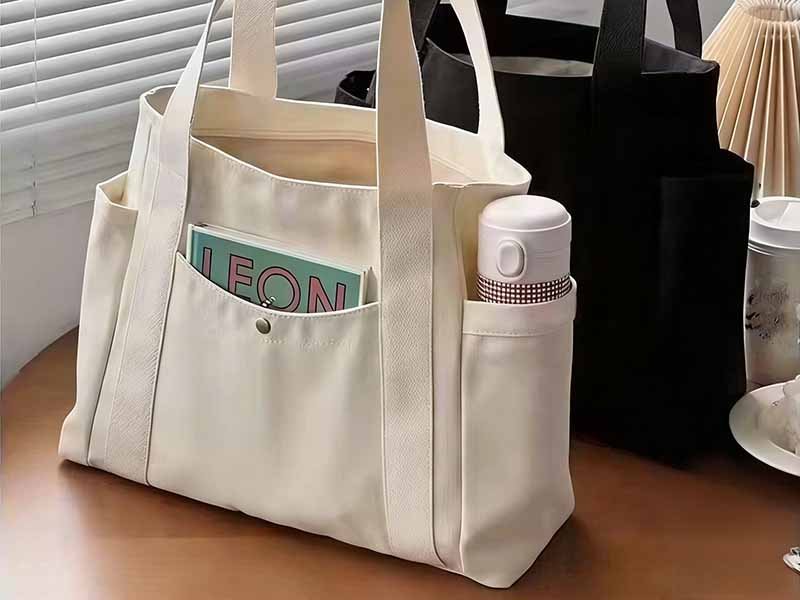
A lot of bags look useful in photos, but real users quickly discover the difference between “enough space” and “usable space.” A large open tote may seem practical at first, yet once a phone, charger, notebook, bottle, keys, wallet, cosmetics, and small accessories are all thrown inside, the bag stops feeling convenient. People waste time searching. Small items sink to the bottom. Sharp or heavy items rub against softer ones. The bag becomes messy faster, and the daily experience feels less premium than expected. That is why multi-pocket canvas bag design has become much more important in today’s market. It is not simply about adding more compartments. It is about creating order, improving access, protecting belongings, and making the bag feel more thoughtful in real use.
A multi-pocket canvas bag design is better because it combines storage structure, easy access, and stronger day-to-day function. Well-planned pockets help users separate items by size, value, and frequency of use. This improves organization, reduces clutter, protects important belongings, and makes the bag more practical for commuting, shopping, work, travel, and daily carry.
For brands and e-commerce sellers, this matters more than it may first appear. A bag that solves everyday problems is easier to explain, easier to photograph, easier to market, and easier to sell at a stronger price point. For wholesale and custom clients, it also opens the door to clearer product positioning: work bag, teacher bag, utility tote, travel tote, market bag, tool bag, or lifestyle organizer. Lovrix, with more than 18 years of experience across fabric, webbing, and bag manufacturing, understands that a successful canvas bag is not built around appearance alone. It is built around how people actually live, move, carry, and organize. And once you start looking closely at pocket layout, structure, and materials, you begin to see why some canvas bags become long-term bestsellers while others are quickly forgotten.
What Is a Multi-Pocket Canvas Bag?

A multi-pocket canvas bag is a canvas bag designed with multiple storage areas instead of one open interior. These pockets may be inside, outside, or both, and each one is created to hold different items more efficiently. The result is better organization, quicker access, less clutter, and stronger everyday practicality for work, travel, shopping, and daily use.
What is a multi-pocket canvas bag?
A multi-pocket canvas bag is a bag made from canvas fabric that includes several compartments arranged for different storage purposes. Instead of asking the user to place everything into one large central space, the bag divides storage into smaller functional zones. This sounds simple, but in practice it changes the entire user experience.
The first thing to understand is that “more pockets” does not automatically mean “better design.” A true multi-pocket canvas bag is not just a standard tote with extra stitched-on pieces. It is a bag designed around use scenarios. Each pocket should have a reason to exist. Each storage zone should help the user complete a specific action faster, more safely, or more comfortably.
A well-developed multi-pocket canvas bag often includes:
- Outer slip pockets for quick-access items
- Inner zip pockets for valuables
- Side pockets for bottles or umbrellas
- Divider pockets for tablets, notebooks, or documents
- Front utility pockets for accessories, chargers, cards, or tools
This type of design works well because users no longer need to search through a single crowded main compartment. Instead, they can develop a habit: keys in one place, phone in another, laptop accessories in another, personal items in another. That habit creates convenience, and convenience creates product loyalty.
From a manufacturing and product planning point of view, this category has become especially attractive because it serves many customer groups at once. The same bag structure can be adapted for office use, school use, retail promotions, travel organization, gifting programs, subscription products, or private label e-commerce collections. This flexibility is one of the reasons multi-pocket canvas bags remain commercially strong.
For clients developing custom products, it is also a category with room for differentiation. A plain tote bag is easy to find almost anywhere. A carefully designed multi-pocket canvas bag with the right structure, correct proportions, quality fabric, and clear function is much harder to replace. That is exactly where a group manufacturer like Lovrix creates value: not just by sewing bags, but by helping clients translate product ideas into functional, market-ready designs.
What does a multi-pocket canvas bag hold?
One reason this bag category performs well is that it can support many daily item combinations without feeling chaotic. Customers do not buy a bag only for volume. They buy it for how well the bag handles a mix of items at the same time.
A strong multi-pocket canvas bag can usually hold:
- Phone
- Wallet
- Keys
- Notebook or planner
- Tablet or small laptop
- Water bottle
- Charger and cables
- Cosmetics or toiletries
- Pens and stationery
- Sunglasses
- Snacks
- Small clothing items
- Travel documents
- Retail essentials
What matters is not just capacity, but storage logic. Items should be separated by type, fragility, cleanliness, and frequency of use. This is where poor bag design often fails. Some bags claim to be practical, yet the pockets are too shallow, too narrow, too loose, or placed in awkward positions. In those cases, the compartments do not actually solve the storage problem.
A better way to understand this is through item behavior:
| Item Category | What Users Need | Best Pocket Type |
|---|---|---|
| Frequently used items | Fast access | Outer front or side pocket |
| Valuables | Security | Inner zipper pocket |
| Flat items | Shape retention | Rear slip pocket or divider |
| Bottles / umbrellas | Upright stability | Structured side pocket |
| Small accessories | Separation | Small utility compartments |
This table shows an important truth: pocket design should reflect how objects behave in motion. A water bottle needs support. Keys need containment. A phone needs fast access but some protection. A notebook needs a flat area so it does not bend.
Different end users also change what the bag needs to hold:
| User Type | Common Contents | Design Priority |
|---|---|---|
| Office commuter | Laptop accessories, notebook, bottle, wallet | Structure + quick access |
| Student | Books, stationery, charger, snacks | Capacity + segmentation |
| Travel user | Passport, cosmetics, cables, bottle, tissues | Organization + security |
| Retail shopper | Purchases, phone, wallet, keys | Flexibility + convenience |
| Creator / freelancer | Tablet, camera accessories, cords, notebook | Equipment separation |
For brands, this creates a powerful product storytelling angle. When the bag clearly supports a user lifestyle, marketing becomes easier. The product listing becomes stronger. The customer sees themselves using it. That connection is often what drives the sale.
Lovrix is especially well positioned for this kind of development because it controls not only bag production, but also related fabric and webbing resources. That means the product can be engineered around actual carrying needs rather than just surface appearance.
What makes a multi-pocket canvas bag useful?
Usefulness comes from how naturally the bag fits into daily life. A bag may look attractive, but if the pockets are awkward, the opening is too narrow, the structure collapses, or the weight is poorly balanced, the user will notice quickly. In contrast, a useful multi-pocket canvas bag feels easy from the first day.
Several design factors make this happen.
1. Pocket placement must match user habits
People reach for certain items repeatedly throughout the day. Phone, keys, card holder, bottle, tissues, and earphones are often used far more frequently than books or clothing. If those items are buried inside the main compartment, the bag becomes frustrating. Good design places high-frequency items in easy-access zones.
2. Pocket size must match real objects
This sounds obvious, but many products get it wrong. A pocket that is too shallow lets items fall out. A pocket that is too tight becomes difficult to use. A pocket that is too deep makes small items disappear. Strong product development requires testing against actual item sizes, not guesses.
3. The bag must stay stable when filled
A useful multi-pocket canvas bag should still feel balanced when carrying several different items. If the outer pockets are oversized without structural support, the bag may tip or distort. If the main body has no form, everything collapses toward the center.
4. The design should reduce mental effort
Good organization saves time, but it also reduces irritation. Users feel more in control when they know exactly where things are. That is a surprisingly strong emotional benefit, especially in busy daily routines.
The difference becomes clearer in a side-by-side comparison:
| Design Approach | Real User Result |
|---|---|
| One open main compartment | Bigger space, lower organization |
| Many random pockets | More complexity, not always more function |
| Structured multi-pocket layout | Faster access, better order, easier carry |
A useful bag also tends to support stronger commercial performance. Products that solve real problems often receive better reviews because users talk about daily convenience, not just appearance. They are also easier to upsell because customers can see the added value in the structure.
For custom product clients, this is where the conversation should go deeper than color and logo. The real questions are:
- What is the bag supposed to help the user do?
- Which items should it carry best?
- Which pockets should be open, and which should be secure?
- Should the shape stay soft, semi-structured, or reinforced?
These questions lead to better products. And when supported by an experienced manufacturer like Lovrix, they lead to product lines that are more competitive, more practical, and more aligned with what the market actually wants.
Why Choose a Multi-Pocket Canvas Bag?

People choose a multi-pocket canvas bag because it offers stronger organization, better carrying efficiency, and higher day-to-day practicality than a basic open bag. It helps separate items, reduces clutter, improves access speed, and often performs better in work, travel, shopping, and daily routines. When the design is done well, it also improves comfort, durability, and product value.
Why is a multi-pocket canvas bag more organized?
Organization is the clearest advantage of this design category. A single open bag may seem spacious, but spacious is not the same as efficient. Once multiple items are placed together, they compete for the same space. Small items slide under larger ones. Fragile items rub against heavy ones. Flat items bend. The user spends time searching, rearranging, and emptying the bag just to find one object.
A multi-pocket canvas bag solves this by assigning storage roles. This changes the bag from a container into a system.
The strongest organizational benefits usually include:
- Separation of large and small items
- Separation of valuable and non-valuable items
- Faster access to daily-use objects
- Less tangling between accessories
- Better visibility inside the bag
- Cleaner storage logic for repeated daily use
The effect of this can be shown simply:
| Situation | Basic Bag Result | Multi-Pocket Canvas Bag Result |
|---|---|---|
| Looking for keys | Search through full bag | Access designated pocket |
| Carrying charger and cable | Tangled with other items | Stored in separate section |
| Keeping documents flat | Creased or mixed | Placed in dedicated divider |
| Carrying wallet and phone | Compete with other items | Easier and safer access |
Organization also increases the bag’s perceived value. Even when total material usage is not dramatically different, a better storage layout makes the bag feel more premium. Customers notice planning. They notice convenience. They notice when the bag seems to “understand” their day.
This is especially important in e-commerce and private label markets, where conversion often depends on clearly visible function. A multi-pocket canvas bag is easier to photograph and explain because its value is visible in structure. Clients can show each compartment, explain each use case, and help end users imagine their own routine.
Lovrix can support this kind of development from a practical angle. With integrated fabric, webbing, and bag production capability, the company can help clients build products that organize well not only in concept drawings but in actual finished goods.
Why is a multi-pocket canvas bag more durable?
Durability is often discussed only in terms of fabric weight, but real bag durability depends on several factors working together. A multi-pocket canvas bag can be more durable than a basic bag because good structure helps distribute weight and reduce concentrated stress.
In a one-compartment bag, most items settle at the bottom. This means:
- More pressure on the base panel
- More seam stress at the lower corners
- More distortion during carrying
- Faster wear from shifting contents
A multi-pocket layout can improve this by distributing part of the load into different storage zones. That does not remove weight, but it changes how the weight acts on the bag.
Durability is improved further when the design includes:
- Reinforced pocket openings
- Bar-tack stitching at stress points
- Strong webbing handles
- Layered base construction
- Proper seam allowance
- Heavier canvas fabric or lined construction
The relationship between structure and durability can be understood like this:
| Construction Choice | Effect on Product Life |
|---|---|
| Thin fabric + no reinforcement | Lower lifespan |
| Heavy canvas + weak seam planning | Better material, weak structure |
| Balanced fabric + reinforced pocket design | Stronger real use performance |
Canvas quality also matters. A 10 oz canvas bag may be suitable for lighter everyday use, while 12 oz, 14 oz, or even heavier constructions often perform better for utility, work, or shopping categories.
Here is a practical view:
| Canvas Weight | Common Use Direction |
|---|---|
| 8–10 oz | Promotional or light-use tote bags |
| 10–12 oz | Daily use, retail, lifestyle bags |
| 12–16 oz | Heavy-duty, utility, work, shopping bags |
| Waxed / coated canvas | Outdoor, premium, more rugged applications |
Pocket count alone does not create durability. In fact, badly added pockets can weaken a bag if stitching lines create poor tension or thin the body structure. This is why professional development matters. The design must balance utility and strength together.
Lovrix has a clear advantage here because it is not only assembling finished bags. As a group company with fabric and webbing resources, it can optimize material matching, strap strength, pocket reinforcement, and sewing structure as one coordinated system.
Why do people like a multi-pocket canvas bag?
People like this kind of bag because it feels more useful in real life. That may sound simple, but usefulness is one of the strongest drivers of product preference. Many purchases today are influenced by daily friction: lost time, clutter, inefficient routines, and products that do not work as smoothly as expected. A well-designed multi-pocket canvas bag reduces that friction.
Users often like it for several reasons at once:
- It feels easier to use
- It keeps belongings in order
- It looks more intentional and functional
- It supports multiple situations with one product
- It often feels more premium than a plain tote
There is also a strong emotional side to this preference. People respond positively to products that help them feel prepared, neat, and in control. A bag that keeps everything where it should be creates a sense of calm. This is especially relevant for commuters, parents, teachers, creatives, travelers, and professionals who carry several types of items each day.
A multi-pocket canvas bag also performs well in the market because it offers visible value. In digital selling environments, that matters a lot.
| Product Feature | Why Customers Respond Well |
|---|---|
| Visible outer pockets | Function is obvious in photos |
| Interior organization | Adds hidden value beyond appearance |
| Canvas material | Familiar, trusted, casual-premium feel |
| Multi-use positioning | Wider audience and stronger demand |
From a product strategy perspective, this category is attractive because it sits between fashion and utility. It can be styled cleanly enough for lifestyle retail, yet functional enough for practical everyday use. That gives brands more room to position the product across channels.
For custom clients, this means one design concept can often be developed into multiple commercial directions:
- Daily work tote
- Teacher bag
- Travel organizer tote
- Utility shopping bag
- Student carryall
- Creative equipment tote
That kind of flexibility is valuable. It helps reduce development risk and gives the client more ways to grow the same product idea.
Lovrix supports that process well because it understands both the making side and the market side: low MOQ customization, fast sampling, free design support, stable production, and short lead times. For clients who want more than a generic canvas bag, that combination makes a real difference.
How Is a Multi-Pocket Canvas Bag Designed?

A multi-pocket canvas bag is designed by combining storage logic, material selection, and structural planning. It is not just about adding pockets, but about arranging them in a way that matches real user habits. A well-designed bag improves access, keeps balance when filled, and maintains shape over time while carrying different types of items.
How are pockets placed in a multi-pocket canvas bag?
Pocket placement is the core of the entire design. If pockets are placed incorrectly, even high-quality materials cannot fix the user experience. Good placement starts from understanding how people use a bag throughout the day.
The first rule is frequency-based placement. Items used more often should be easier to reach.
- Front outer pockets → phone, keys, cards
- Side pockets → water bottle, umbrella
- Inner zipper pockets → wallet, valuables
- Main compartment → books, clothing, bulk items
The second rule is movement behavior. Items move when people walk, sit, or travel. Pocket design must control that movement.
- Loose items need enclosed pockets
- Heavy items need stable positioning
- Fragile items need separation
The third rule is visual logic. Users should understand the layout without thinking too much.
A clear example:
| Pocket Location | Best Use | Reason |
|---|---|---|
| Front pocket | Phone / quick items | Fast access |
| Inner zipper pocket | Wallet / passport | Security |
| Side pocket | Bottle / umbrella | Stability |
| Back pocket | Documents | Flat storage |
A common mistake in low-cost designs is adding too many pockets without clear purpose. This creates confusion instead of convenience.
Professional development focuses on less but better pockets. Each pocket should serve a defined role.
Lovrix typically supports this process by reviewing the customer’s target use scenario first, then suggesting pocket layouts that match real usage instead of just visual balance.
How is a multi-pocket canvas bag structured?
Structure determines whether the bag feels stable or collapses during use. Many canvas bags fail not because of material, but because the structure is too soft or poorly supported.
There are three main structure types:
| Structure Type | Characteristics | Best Use |
|---|---|---|
| Soft structure | Flexible, collapses easily | Casual lightweight bags |
| Semi-structured | Holds shape partially | Daily use bags |
| Structured | Keeps shape clearly | Work / premium bags |
For multi-pocket canvas bags, semi-structured design is often the best balance.
Key structural elements include:
- Reinforced bottom panel
- Internal lining or support layer
- Proper seam alignment
- Pocket attachment reinforcement
- Handle connection strength
A well-structured bag improves:
- Carrying comfort
- Weight distribution
- Product appearance over time
- Perceived product quality
One important detail is bottom reinforcement. Without it, the bag sags when loaded. With it, the bag stands better and protects contents.
Another key detail is handle connection. This area carries the most stress.
| Handle Type | Strength Level | Use Case |
|---|---|---|
| Single stitch | Low | Light use |
| Cross stitch (X pattern) | Medium | Daily use |
| Reinforced webbing + stitching | High | Heavy-duty use |
Lovrix, with its integrated production system, can adjust structure based on target price and product positioning, ensuring that the bag performs correctly in real use conditions.
How is a multi-pocket canvas bag material chosen?
Material selection directly affects durability, cost, appearance, and user experience. Canvas is the base material, but not all canvas is the same.
Key material considerations:
1. Canvas weight (thickness)
| Canvas Weight | Feel | Use |
|---|---|---|
| 8–10 oz | Light | Promotional bags |
| 10–12 oz | Balanced | Daily use |
| 12–16 oz | Strong | Heavy-duty bags |
2. Fabric type
- Cotton canvas → natural, eco-friendly, soft feel
- Polyester canvas → more water-resistant, durable
- Blended canvas → balance of both
3. Surface treatment
- Washed canvas → softer, vintage look
- Waxed canvas → water resistance, rugged style
- Coated canvas → smoother surface, easier cleaning
4. Lining material
Adding lining improves structure and durability.
| Lining Type | Benefit |
|---|---|
| Polyester lining | Smooth, lightweight |
| Cotton lining | Natural feel |
| Foam padding | Protection for electronics |
Material selection should match product positioning:
- Retail fashion → softer canvas, cleaner look
- Utility/work bags → heavier canvas, reinforced build
- Outdoor bags → treated or waxed canvas
A common mistake is choosing material only based on cost. Lower-cost fabric may reduce price but often leads to faster wear, weaker structure, and lower customer satisfaction.
Lovrix has a strong advantage here because it operates its own fabric supply chain. This allows:
- Better material consistency
- Flexible material options
- Faster development
- More control over cost vs quality balance
What Improves a Multi-Pocket Canvas Bag?

A good multi-pocket canvas bag becomes better through thoughtful details. Small design improvements can significantly increase usability, durability, and customer satisfaction. These improvements often determine whether a product becomes average or a strong seller.
What pockets improve a multi-pocket canvas bag?
Not all pockets add value. The most effective designs use a combination of pocket types that match real needs.
Common high-value pocket types:
- Zipper pockets → security for valuables
- Elastic pockets → flexible storage for bottles or accessories
- Divider pockets → separation for flat items
- Hidden pockets → anti-theft function
- Quick-access pockets → convenience
Here is how they compare:
| Pocket Type | Function | Best Use |
|---|---|---|
| Zipper pocket | Security | Wallet, passport |
| Elastic pocket | Flexibility | Bottle, charger |
| Divider pocket | Organization | Documents, tablet |
| Hidden pocket | Safety | Cash, valuables |
| Open pocket | Quick access | Phone, keys |
The best designs combine 3–5 pocket types instead of using one type repeatedly.
Too many identical pockets often reduce usability instead of improving it.
What details improve a multi-pocket canvas bag?
Small details can change the entire user experience.
Important design details include:
- Smooth zipper operation
- Reinforced stitching at pocket openings
- Comfortable handle width
- Adjustable shoulder straps
- Secure closure system (zipper, magnetic, snap)
- Clean edge finishing
Example of detail impact:
| Detail | Poor Execution | Good Execution |
|---|---|---|
| Zipper | Stuck or rough | Smooth, reliable |
| Handle | Thin, uncomfortable | Wide, strong |
| Stitching | Loose threads | Clean, reinforced |
| Closure | Weak or loose | Secure and stable |
Another key detail is opening design. If the bag opening is too narrow, even a well-organized interior becomes hard to use.
Lovrix typically refines these details during sampling, helping clients improve the product before bulk production.
What makes a multi-pocket canvas bag stronger?
Strength is achieved by combining material, structure, and reinforcement.
Key strengthening methods include:
- Double-layer fabric in high-stress areas
- Reinforced stitching (double stitch, bar-tack)
- Strong webbing handles
- Corner reinforcement
- Pocket seam reinforcement
Stress areas to focus on:
- Handle attachment points
- Bottom corners
- Pocket edges
- Side seams
Here is a simple strength comparison:
| Construction Level | Performance |
|---|---|
| Basic stitching | Light use only |
| Reinforced stitching | Daily use |
| Multi-layer + reinforced | Heavy-duty use |
One critical factor is load distribution. A strong bag spreads weight across multiple points instead of concentrating it in one area.
Another factor is webbing quality. Handles made with strong webbing can significantly increase the bag’s load capacity.
Lovrix integrates webbing production into its system, allowing better control over handle strength and consistency.
How to Customize a Multi-Pocket Canvas Bag?
Customizing a multi-pocket canvas bag is not only about adding a logo or changing colors. It is about building a product that fits a specific market, user group, and price level. A well-planned customization process helps improve product positioning, increase perceived value, and make the product more competitive in both retail and wholesale channels.
How to customize a multi-pocket canvas bag material?
Material selection is usually the first and most important customization step. It directly affects durability, appearance, cost, and target market positioning.
Customers typically choose materials based on three main goals: price control, durability, and visual style.
Key material options include:
Canvas type options
- Natural cotton canvas → soft, eco-friendly, widely used
- Recycled canvas → sustainable positioning
- Polyester canvas → stronger water resistance
- Blended canvas → balance between cost and performance
Canvas weight selection
| Canvas Weight | Product Positioning | Common Use |
|---|---|---|
| 8–10 oz | Entry-level | Promotions, giveaways |
| 10–12 oz | Mid-range | Daily use, retail |
| 12–16 oz | Premium | Work bags, heavy-duty use |
Surface treatments
- Washed finish → soft, casual look
- Waxed finish → water resistance, rugged style
- Coated finish → cleaner appearance, easier maintenance
Color and dyeing
- Standard colors for cost efficiency
- Custom Pantone colors for branding
- Vintage or washed colors for lifestyle positioning
Material decisions should always match the target selling price. Over-specifying material can increase cost without increasing sales, while under-specifying can damage product quality and reviews.
Lovrix supports material customization through its own fabric resources, helping clients select the right combination based on their market instead of guessing.
How to customize a multi-pocket canvas bag layout?
Layout customization is where the product becomes unique. Even small adjustments in pocket size or placement can significantly change how the bag performs.
Key layout customization points include:
Pocket quantity and position
- Outer pockets for quick access
- Inner pockets for security
- Side pockets for vertical items
Compartment structure
- Single main compartment
- Divided interior
- Modular pocket system
Special function areas
- Laptop sleeve
- Bottle holder
- Hidden pocket
- Tool compartments
Here is a simplified layout strategy:
| Target User | Recommended Layout |
|---|---|
| Office users | Laptop sleeve + document divider + small pockets |
| Students | Large compartment + multiple small organizers |
| Travelers | Zipper pockets + hidden pocket + bottle holder |
| Retail shoppers | Flexible open space + quick-access pockets |
A common mistake is copying an existing design without adjusting it for the target market. What works for a student bag may not work for a professional tote.
Good customization starts with asking:
- What items will users carry most?
- Which items need protection?
- Which items need fast access?
Lovrix often helps clients refine layout during the sampling stage, improving usability before production begins.
How to customize multi-pocket canvas bag branding?
Branding is what transforms a functional product into a recognizable product. A well-branded canvas bag increases perceived value and strengthens customer loyalty.
Common branding methods include:
Logo application options
| Method | Effect | Position |
|---|---|---|
| Screen printing | Cost-effective, clear | Front panel |
| Embroidery | Premium look | Pocket or body |
| Woven label | Subtle branding | Side seam |
| Leather patch | High-end feel | Front or handle |
| Heat transfer | Detailed graphics | Large surface |
Branding considerations
- Logo size and visibility
- Color contrast with canvas
- Placement balance
- Durability of application
For example:
- A large printed logo works well for promotional products
- A small woven label suits premium minimalist designs
- A leather patch fits lifestyle and outdoor positioning
Branding should match the product’s price level. Overly complex branding on a low-cost product can increase cost without improving sales. On the other hand, under-branding a premium product reduces perceived value.
Lovrix provides full branding customization, helping clients align logo style with product positioning and target market.
How to control MOQ, cost, and lead time?
For B2B customers, these three factors are often the most important in decision-making.
MOQ (Minimum Order Quantity)
Low MOQ allows brands to test products before scaling.
| Order Type | Typical MOQ Strategy |
|---|---|
| New product testing | Low MOQ |
| Stable product line | Medium MOQ |
| Large-scale retail | High volume |
Lovrix supports flexible MOQ, which is especially useful for:
- Startups
- E-commerce sellers
- Brands testing new designs
Cost control factors
Main cost drivers include:
- Material choice
- Bag size
- Pocket complexity
- Hardware quality
- Branding method
- Packaging
Cost optimization strategy:
| Area | Optimization Method |
|---|---|
| Material | Use balanced canvas weight |
| Design | Avoid unnecessary complexity |
| Branding | Choose efficient logo method |
| Packaging | Simplify where possible |
Lead time considerations
| Stage | Typical Time |
|---|---|
| Sampling | 5–10 days |
| Production | 20–35 days |
| Shipping | Depends on method |
Fast sampling and stable production timelines are critical for market responsiveness.
Lovrix offers:
- Fast sample development
- Short production lead times
- Stable delivery schedules
How does Lovrix develop multi-pocket canvas bags?
Lovrix operates as a group company with integrated capabilities in fabric, webbing, and bag manufacturing. This structure allows better control over quality, cost, and development speed.
The development process typically follows these steps:
1. Requirement discussion
- Understand product use scenario
- Define target market and price level
2. Design and material selection
- Suggest fabric and structure options
- Provide layout recommendations
3. Sampling
- Create prototype
- Adjust based on feedback
4. Production planning
- Confirm materials and processes
- Set quality standards
5. Bulk production
- Controlled manufacturing process
- In-line quality checks
6. Final inspection and packaging
- Ensure product consistency
- Prepare for shipment
Lovrix advantages include:
- 18+ years of industry experience
- Integrated supply chain (fabric + webbing + bags)
- Free design support
- Low MOQ customization
- Fast sampling
- Stable quality control
This integrated system helps reduce communication gaps and ensures that the final product matches the original design intention.
Start Your Multi-Pocket Canvas Bag Project with Lovrix
If you are planning to develop a multi-pocket canvas bag, choosing the right manufacturing partner can make a significant difference in product success. A well-designed bag is not only about appearance—it must work well in real use, meet customer expectations, and support your brand’s long-term growth.
Lovrix provides:
- Full customization from material to packaging
- Professional design support based on real market needs
- Flexible MOQ for testing and scaling
- Fast sampling for quick product validation
- Stable production quality for repeat orders
- Competitive pricing through integrated supply chain
Whether you are building a new product line, expanding an existing collection, or testing a new market, working with an experienced manufacturer helps reduce risk and improve results.
You can start by:
- Sharing your idea or reference design
- Requesting material suggestions
- Asking for a sample
- Discussing your target price and quantity
A strong multi-pocket canvas bag is not just made—it is developed with purpose. Reach out to Lovrix and begin creating a product that is practical, durable, and ready for the market.


