 Skip to content
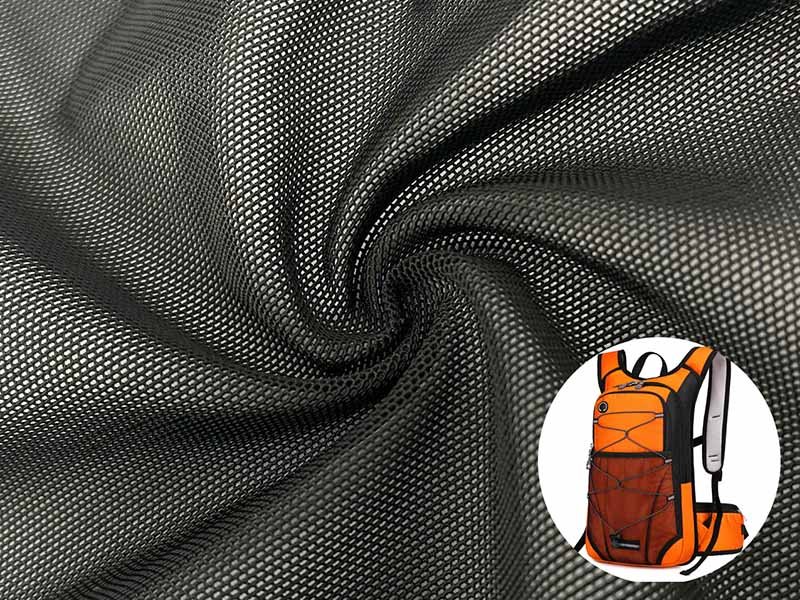
A mesh pocket may account for only a small portion of a backpack, sports bag, or travel organizer, yet it often receives more daily stress than the main body fabric. Water bottles are pushed in and pulled out repeatedly. Wet towels remain inside for hours. Sand, hooks, zippers, tools, and rough floors rub against exposed yarns. When the mesh structure is poorly matched to the application, the first warning signs usually appear as loose openings, stretched pocket edges, broken yarns, seam distortion, or permanent sagging.
Nylon mesh for bags should be selected according to construction, yarn denier, fabric weight, opening size, stretch direction, recovery, abrasion exposure, seam method, and expected carrying load. Knitted nylon mesh works well for flexible pockets and ventilated compartments, while woven or monofilament mesh is better suited to applications requiring stable openings, reduced sagging, and controlled shape.
Choosing only by appearance can create expensive problems after sampling. Two black meshes may look nearly identical on a swatch card, yet one may recover after holding a 1-liter bottle while the other remains permanently stretched. A successful development process therefore begins with a simple question: what work must the mesh perform after the bag leaves the showroom and enters daily use?
What Is Nylon Mesh for Bags?

Nylon mesh is an open textile made from polyamide yarns through knitting, weaving, or monofilament net construction. Bag performance depends on more than fiber name. Yarn thickness, fabric weight, opening geometry, stretch recovery, heat setting, dyeing, finishing, seam reinforcement, and panel placement determine whether the finished material remains stable during repeated use.
Nylon Raw Material
Most nylon mesh fabrics used in bag production are made from nylon 6 or nylon 6.6. Nylon 6 is widely used for knitted mesh, pocket mesh, sports mesh, lining mesh, and lightweight storage applications. It offers good flexibility, dye absorption, abrasion resistance, and manufacturing availability.
Nylon 6.6 may be considered for projects requiring improved heat resistance, dimensional control, or mechanical performance. Final performance still depends heavily on yarn quality and textile construction. A well-developed nylon 6 mesh may outperform a poorly constructed nylon 6.6 mesh in a finished pocket.
Three yarn formats are commonly considered:
- Multifilament yarn creates a softer surface and more textile-like hand feel.
- Monofilament yarn creates firmer openings and stronger shape definition.
- Textured yarn adds bulk, softness, and visual coverage without requiring extremely heavy fabric.
Recycled nylon is also available for selected programs. Material claims should be supported by supplier documentation, batch traceability, and physical testing. Recycled content alone does not confirm abrasion resistance, color consistency, or long-term stretch recovery.
Mesh Production
Knitting and weaving create very different mechanical behavior. Warp-knitted mesh is widely used because its loop structure offers flexibility while controlling excessive movement better than many loose weft-knitted constructions. Weft-knitted mesh often provides greater elasticity and can suit expandable pockets, soft organizers, and close-fitting storage areas.
Woven mesh uses interlaced warp and weft yarns. Its openings remain more stable under moderate tension, making it useful for tool storage, technical organizers, medical bags, and flat zippered compartments.
Production usually involves several stages:
- Yarn preparation
- Knitting or weaving
- Scouring and cleaning
- Dyeing
- Heat setting
- Finishing
- Width and weight inspection
- Rolling and packing
Heat setting is especially important for controlling width, shrinkage, opening size, and stretch behavior. Mesh cut before proper stabilization may change during sewing, steam exposure, washing, or hot warehouse storage.
Core Specifications
Nylon mesh should be reviewed through measurable specifications rather than descriptions such as “strong,” “soft,” or “heavy-duty.” Such terms mean little unless linked to numbers and test conditions.
| Specification | Common Development Range | Why It Matters |
|---|---|---|
| Fabric weight | 60–300 GSM | Influences body, durability, cost, and sewing behavior |
| Yarn denier | 70D–840D | Affects yarn thickness, strength, and visual scale |
| Opening size | 1–15 mm | Controls airflow, drainage, visibility, and item retention |
| Usable width | 140–160 cm | Affects cutting efficiency and material consumption |
| Stretch | Low to over 100% | Determines pocket expansion and load retention |
| Shrinkage target | Commonly controlled within 2–5% | Supports dimensional stability after heat or washing |
| Thickness | Approximately 0.4–2.5 mm | Affects hand feel, folding, binding, and seam bulk |
Values vary by construction and application. A 120 GSM stretch mesh may perform better in a bottle pocket than a rigid 200 GSM mesh because pocket performance depends on recovery and pattern tension, not weight alone.
Breathability
Nylon mesh is breathable because air moves through the spaces between yarns. Airflow depends mainly on open-area percentage, opening size, fabric thickness, and whether the mesh is blocked by lining, foam, or packed contents.
Large-hole mesh suits:
- Beach bags
- Swim gear bags
- Sports equipment bags
- Ball bags
- Outdoor storage sacks
Fine-hole mesh suits:
- Travel organizers
- Laundry wash bags
- Cosmetic storage
- Small-item compartments
- Internal zippered pockets
A mesh panel cannot ventilate a compartment effectively when an impermeable layer sits directly behind it. Effective ventilation requires an open route for air to enter and leave. Bag shape, pocket depth, zipper placement, and loading density should therefore be reviewed together.
Water Behavior
Nylon mesh is not waterproof. Water passes through the openings even when the yarn receives a water-repellent treatment. A finish may reduce surface wetting or shorten drying time, but it cannot seal the open structure.
For wet-use bags, three questions matter:
- How quickly does water drain?
- How much moisture remains inside the yarn?
- How quickly can the complete bag dry?
A beach bag may need openings of 3–8 mm to release sand and water efficiently. A laundry wash bag may require smaller openings of 1–3 mm to protect clothing and prevent hooks or straps from passing through. A diving equipment bag may use larger, heavier monofilament mesh for drainage and resistance to rough gear.
Water-sensitive contents require a separate coated lining, welded pouch, or waterproof compartment. Mesh alone should never be presented as moisture protection for electronics, documents, medicines, or valuables.
Which Nylon Mesh Types Are Used for Bags?

Common nylon mesh options include warp-knitted mesh, weft-knitted mesh, woven mesh, monofilament mesh, elastic mesh, and shaped-opening mesh. Each structure handles tension, abrasion, folding, drainage, and sewing differently. The right option depends on where the panel sits, how much weight it carries, how often it stretches, and what objects contact its surface.
Knitted Nylon Mesh
Knitted nylon mesh is produced from connected yarn loops. The looped construction allows movement under load and distributes stress across neighboring yarns. Warp-knitted structures are common in backpack pockets, gym bags, cycling packs, helmet carriers, and sports storage.
Knitted mesh can be engineered for low, medium, or high extension. Stretch may run horizontally, vertically, diagonally, or in several directions. Cutting orientation therefore matters. A bottle pocket normally needs greater width expansion than vertical growth. Incorrect orientation can cause the pocket opening to loosen while the lower panel drops downward.
Useful evaluation points include:
- Extension under a defined load
- Recovery after 30 minutes
- Recovery after 24 hours
- Repeated loading cycles
- Yarn breakage around pocket corners
- Seam distortion after repeated insertion
A soft hand feel does not guarantee good recovery. A mesh may feel comfortable and still lose holding force after several hundred uses.
Woven Nylon Mesh
Woven nylon mesh uses straight warp and weft yarns crossing at controlled angles. The construction generally offers lower stretch and better dimensional stability than knitted mesh. It is suited to flat organizers, document compartments, tool pouches, medical storage, equipment cases, and zippered interior panels.
Woven structures provide cleaner grid lines and more predictable opening dimensions. They work well where contents must remain visible without pulling the panel into a deep curve.
Fraying is a major production concern. Cut edges may release yarns unless the seam is properly controlled. Suitable methods include:
- Binding with woven tape
- Folding into a fabric seam
- Hot-knife cutting
- Ultrasonic cutting
- Double-needle attachment
- Covered seam allowance
Rigid woven mesh may also create stress near tight curves. Rounded corners, wider seam allowances, and reinforcement tape can reduce concentrated pulling.
Monofilament Mesh
Monofilament mesh is made from single solid filaments. It normally feels firmer than multifilament mesh and maintains clear, stable openings. The smooth surface traps less lint and can be easier to rinse after contact with sand, soil, or wet equipment.
Common applications include:
- Diving equipment bags
- Fishing gear bags
- Protective equipment storage
- Ball bags
- Wash bags
- Industrial organizers
- Technical filter pockets
Monofilament mesh performs well where drainage, cleaning, visibility, and opening stability are more important than softness. Heavier versions may use yarns from approximately 210D to 840D, depending on required strength and opening scale.
The firmer surface may feel uncomfortable against skin. It is rarely the best choice for shoulder-contact panels or areas pressed directly against the body. Tight folds can also create bulky seams, so binding width and needle selection should be confirmed during sampling.
Stretch Nylon Mesh
Stretch nylon mesh gains elasticity from knitted geometry, elastane yarn, or a combination of both. It is commonly used for bottle pockets, expandable compartments, helmet holders, compression areas, and quick-access storage.
Strong stretch performance requires both extension and recovery. Extension shows how far the fabric can expand. Recovery shows how closely it returns to the original dimension.
A pocket specification may require:
- Horizontal extension of 50–100%
- Vertical extension below 30%
- Strong recovery after load removal
- No visible yarn damage after repeated cycles
- Stable pocket opening after 500–1,000 insertions
Those figures are project targets rather than universal standards. A slim running pack and a large hiking backpack need different pocket tension.
Elastic binding often supports the top opening. Binding tension must match the mesh. Excessive tension causes puckering, while weak tension allows bottles or tools to move during walking.
Mesh Opening Shapes
Mesh openings may be square, diamond, hexagonal, round, oval, honeycomb, or irregular. Shape changes both appearance and mechanical behavior.
| Opening Type | Main Strength | Main Limitation | Suitable Applications |
|---|---|---|---|
| Square | Stable, technical appearance | Less diagonal flexibility | Organizers, tool bags, medical bags |
| Diamond | Flexible under directional load | Can elongate along the diagonal | Backpack pockets, sports bags |
| Hexagonal | Balanced appearance and airflow | More complex knitting structure | Premium sports and outdoor bags |
| Round or oval | Smooth visual effect | Opening size may change under stretch | Fashion bags, soft organizers |
| Fine micro mesh | Holds small items | Reduced airflow and slower drainage | Laundry bags, internal pockets |
| Large-hole mesh | High airflow and drainage | Greater snagging risk | Beach bags, ball bags, diving bags |
Opening size should be matched to the smallest stored item. A 10 mm hole may work for sports balls but fail for clips, keys, cosmetic tools, or drawcord parts. Large holes also expose longer yarn sections to abrasion.
Visual design matters, but mechanical performance should lead the final choice. A decorative mesh pattern can strengthen product identity only when it also survives carrying, washing, stretching, and repeated contact with surrounding hardware.
Nylon Mesh Specification Guide
Material development becomes faster when the intended application is translated into measurable targets before sampling. A vague request for “durable black mesh” can produce dozens of unsuitable options. A specification sheet should define the storage item, load, opening size, stretch direction, visual requirement, surrounding fabric, seam method, and required testing.
The following starting points can help product teams communicate more clearly with a mesh or bag manufacturer:
| Bag Area | Suggested Weight | Suggested Structure | Opening Range | Main Requirement |
|---|---|---|---|---|
| Backpack bottle pocket | 120–220 GSM | Stretch knitted mesh | 2–6 mm | Recovery and holding force |
| Gym shoe compartment | 100–180 GSM | Warp-knitted mesh | 2–5 mm | Airflow and snag resistance |
| Laundry wash bag | 70–140 GSM | Fine knitted mesh | 1–3 mm | Garment protection and wash stability |
| Beach bag body | 160–280 GSM | Heavy knitted or monofilament mesh | 4–12 mm | Drainage and sand release |
| Tool organizer pocket | 180–300 GSM | Woven or monofilament mesh | 2–6 mm | Shape retention and abrasion resistance |
| Internal travel pocket | 80–150 GSM | Fine warp-knit or woven mesh | 1–3 mm | Visibility and clean appearance |
Final values should be confirmed through physical samples. Fabric weight alone should never determine approval. A complete evaluation should include hand feel, color, extension, recovery, seam compatibility, abrasion exposure, panel load, and finished-bag appearance.
For Lovrix projects, mesh selection can be reviewed together with the main fabric, webbing, binding, elastic, zipper, lining, and construction method. Coordinated development reduces mismatched shrinkage, color variation, weak seam transitions, and pocket deformation before bulk production begins.
How Does Nylon Mesh Perform in Bags?

Nylon mesh performs well when yarn strength, fabric construction, stretch direction, opening size, and seam reinforcement match the carrying load. It offers a strong balance of low weight, flexibility, abrasion resistance, airflow, and recovery. Problems usually develop when lightweight mesh is used in high-load areas or when pocket tension and edge construction are not tested as a complete unit.
Mesh Strength
Mesh strength cannot be judged by fabric weight alone. A 220 GSM mesh is not automatically stronger than a 160 GSM mesh. Yarn denier, yarn count, knitting density, junction structure, opening size, and elongation all influence how the panel responds to pulling.
Strength should be evaluated in several directions. A knitted mesh may hold considerable force horizontally but deform vertically. Diamond openings may extend diagonally, while square structures often remain more stable along the warp and weft directions.
The carrying load also changes how strength should be assessed. A bottle pocket normally experiences repeated stretching and release. A beach bag body carries a distributed load across a large panel. A tool pocket may receive concentrated pressure from metal edges or handles.
Common performance checks include:
- Tensile strength along the length and width
- Tear resistance at cut edges
- Seam slippage near attachment lines
- Burst resistance across the mesh surface
- Load retention after several hours
- Permanent deformation after unloading
- Yarn breakage around high-stress corners
Finished-bag testing provides more useful information than a fabric swatch alone. A mesh may pass a tensile test but still fail where elastic binding, bartacks, piping, or zipper tape changes the stress path.
Carrying Load
The acceptable load depends on pocket size, fabric construction, seam length, and how the weight moves during use. Static weight is easier for mesh to manage than repeated impact from walking, running, cycling, or dropping the bag onto a surface.
A side pocket holding a 750 ml bottle may carry only about 0.8 kilograms, but the moving bottle repeatedly pulls against the opening and lower seam. During walking, force rises whenever the bottle changes direction. A loose pocket allows more movement, increasing stress at the seam and mesh junctions.
Approximate development loads may include:
| Bag Component | Common Load Condition | Suggested Development Check |
|---|---|---|
| Small internal pocket | 0.3–0.8 kg | Hold for 4–8 hours |
| Backpack bottle pocket | 0.5–1.5 kg | Static hold plus insertion cycles |
| Shoe compartment panel | 1–2 kg distributed | Fill, carry, and abrasion check |
| Beach bag body | 5–12 kg distributed | Carry cycle and bottom seam inspection |
| Sports ball bag | 5–15 kg distributed | Suspension and drop testing |
| Tool pocket | 1–4 kg concentrated | Edge pressure and puncture review |
These figures are development references rather than fixed rules. The final requirement should reflect the intended product size and use.
Pocket depth also matters. A shallow mesh pocket transfers more pressure to the opening. A deeper pocket supports more of the object through the lower panel. Pattern shape can therefore improve holding performance without increasing fabric weight.
Abrasion Resistance
Abrasion resistance measures how well yarns withstand rubbing against other surfaces. Nylon generally performs well against repeated friction, which makes it suitable for outdoor, sports, travel, and equipment bags.
Mesh faces several forms of abrasion:
- Water bottles rubbing during movement
- Shoes pressing against a ventilated panel
- Sand moving through beach bag openings
- Metal tools contacting pocket walls
- Hook-and-loop fasteners catching exposed yarn
- Rough floors rubbing against the bag base
- Zipper sliders contacting nearby openings
Large-hole mesh has longer exposed yarn sections between junctions. Those sections can catch more easily than the short yarn spans in a fine mesh. Thick yarn improves resistance, but a thick yarn with loose junctions may still shift or snag.
Abrasion testing should focus on the contact area found in the real product. A side pocket may need rubbing tests against bottle surfaces. A tool bag may need testing against metal edges. A beach bag requires sand, saltwater, and repeated flexing rather than a clean indoor rubbing test.
High-risk areas can be protected with solid fabric overlays, binding, webbing strips, piping, or reinforced lower panels. Placing mesh directly on the bottom of a bag is rarely advisable unless the material is specifically developed for floor contact.
Stretch Recovery
Stretch describes how far mesh expands. Recovery describes how well it returns to its original dimensions. Recovery is more important than maximum extension for many bag pockets.
A mesh that stretches 120% may look impressive during material review, but weak recovery can leave a bottle pocket loose after several uses. For secure storage, controlled expansion with strong return force often performs better than extreme stretch.
Useful measurements include:
- Original panel width
- Width under a defined force
- Width immediately after release
- Width after 30 minutes
- Width after 24 hours
- Change after repeated extension cycles
For example, a 100 mm sample may extend to 170 mm under load. After release, it may return to 104 mm immediately and 101 mm after 24 hours. Such performance would generally be more stable than a sample returning only to 112 mm.
Elastane content does not guarantee long service life. Heat, sunlight, chlorine, sweat, detergent, and repeated overextension can weaken elastic fibers. Mechanical stretch created through knitting may offer better aging performance for some applications, although it may provide less holding force.
A complete pocket combines mesh recovery with elastic binding tension and pattern reduction. All three must be balanced. Strong binding attached to weak mesh can distort the pocket. Strong mesh with loose binding may fail to secure the contents.
Drying Speed
Open mesh generally dries faster than solid fabric because water can drain and air reaches more yarn surface. Drying speed still varies according to yarn type, fabric density, finish, thickness, and environmental conditions.
Nylon absorbs more moisture into the fiber than polyester. Even so, a lightweight open nylon mesh may dry faster than a dense coated polyester fabric because structure affects drying as much as fiber chemistry.
Drying performance matters for:
- Swim bags
- Diving bags
- Gym bags
- Shoe compartments
- Laundry bags
- Shower organizers
- Outdoor storage bags
Product design can either support or block drying. A ventilated side panel provides limited value when water collects in a coated bottom with no drainage path. Mesh should be positioned so gravity and airflow work together.
For wet-use products, development checks may record:
- Dry bag weight
- Weight immediately after wetting
- Weight after 30 minutes of drainage
- Weight after 2, 4, and 8 hours
- Remaining damp areas around seams and binding
Bound edges often dry more slowly than the open panel because several fabric layers overlap. Mold and odor usually begin in those dense seam areas rather than in the center of the mesh.
UV Resistance
Untreated nylon can lose strength and color after extended sunlight exposure. UV radiation affects the polymer and may cause fading, yellowing, surface roughness, or gradual yarn weakening.
Exposure risk varies greatly by product. An internal organizer may receive almost no sunlight. A beach bag, cycling pack, fishing bag, stroller organizer, or outdoor equipment carrier may remain outdoors for several hours at a time.
UV performance can be improved through:
- UV stabilizers in the yarn
- Suitable dye selection
- Darker colors with stable pigments
- Protective finishing
- Denser construction
- Reduced placement on fully exposed surfaces
Black mesh often appears visually stable, but not every black dye performs equally. Colorfastness and strength retention should be reviewed separately. A panel may retain color while losing mechanical strength.
Outdoor programs should include accelerated light exposure or actual-use testing. After exposure, the mesh should be checked for fading, brittleness, reduced tear strength, and loss of elastic recovery.
Service Life
There is no single lifespan for nylon mesh bags. Service life depends on loading frequency, exposure, cleaning, construction, hardware contact, and how far the mesh is stretched during use.
A lightweight laundry mesh may last through many washing cycles because loads are soft and evenly distributed. The same mesh could fail quickly in a backpack pocket carrying rigid bottles. A heavy monofilament mesh may handle diving gear well but crack at a tightly folded seam when the construction is poorly planned.
Common failure signs include:
- Permanent pocket sagging
- Broken yarns near corners
- Enlarged or distorted openings
- Fraying at cut edges
- Elastic binding losing tension
- Seam holes growing around stitches
- Surface fuzzing after abrasion
- Fading or brittleness from sunlight
Service life improves when the material operates below its maximum stretch. A pocket repeatedly expanded near its limit experiences greater fatigue than one working within a moderate range.
Is Nylon Mesh Better Than Polyester Mesh?

Nylon mesh is often preferred for flexibility, abrasion resistance, softness, and impact tolerance. Polyester mesh normally offers lower moisture absorption, faster fiber-level drying, better UV stability, and easier dimensional control. Neither material is universally better. The more suitable option depends on load, climate, exposure, required stretch, hand feel, cost, and expected product life.
Strength Comparison
Nylon and polyester can both produce strong bag mesh. Performance depends on denier and construction, so fiber names should not be compared without matching fabric specifications.
Nylon generally has high tensile strength and good resistance to repeated bending. It can absorb sudden movement without feeling brittle, which is useful for bottle pockets, sports compartments, and flexible storage panels.
Polyester usually stretches less under the same conditions. Lower elongation helps pockets, organizers, and flat panels maintain a controlled shape. For products where sagging is a greater concern than impact, polyester may offer an advantage.
| Performance Area | Nylon Mesh | Polyester Mesh |
|---|---|---|
| Tensile strength | High | High |
| Impact tolerance | Very good | Good |
| Natural elasticity | Higher | Lower |
| Dimensional stability | Good | Very good |
| Flex fatigue resistance | Very good | Good to very good |
| Shape retention | Depends on construction | Usually easier to control |
A fair comparison should use samples with similar weight, opening size, yarn denier, and structure. Comparing a heavy nylon mesh with lightweight polyester provides little useful information.
Abrasion Comparison
Nylon is widely recognized for strong abrasion resistance. It can handle repeated rubbing and folding while maintaining a relatively smooth surface. That quality supports its use in outdoor packs, sports gear, work bags, and luggage components.
Polyester also performs well, especially when made with heavier yarns and dense junctions. Under some conditions, polyester can retain a cleaner surface because it absorbs less moisture and may be less affected by wet-dry cycling.
For bottle pockets and areas exposed to frequent mechanical rubbing, nylon is often the first material considered. For large ventilated panels with moderate rubbing and high sunlight exposure, polyester may provide a better balance.
Abrasion should be tested with the actual contacting material. Smooth stainless-steel laboratory surfaces do not reproduce damage caused by textured bottles, sandy equipment, hook-and-loop tape, or rough concrete.
Moisture Comparison
Polyester absorbs less moisture into its fiber than nylon. As a result, polyester generally feels less wet, dries more predictably, and changes dimensions less in humid conditions.
Nylon can absorb moisture, which may slightly affect weight, softness, and dimensions. The open structure still allows strong drainage, so nylon remains suitable for many wet-use products.
Polyester may be preferred for:
- Poolside bags
- Shower organizers
- Marine storage
- Tropical climates
- Outdoor products exposed to repeated rain
- Long-term damp storage risk
Nylon may still be selected when abrasion resistance, softness, and stretch recovery carry more importance than low moisture absorption.
The surrounding materials also matter. A fast-drying polyester mesh attached to cotton binding or thick foam will not make the whole bag dry quickly. Every layer around the wet zone should be reviewed.
UV Comparison
Polyester generally has better inherent resistance to sunlight than nylon. It is often selected for products that remain outdoors for long periods, including beach gear, stroller accessories, sports equipment carriers, and marine bags.
Nylon can perform well outdoors when UV-stabilized yarns and suitable dyes are used. However, untreated nylon may show faster strength loss under prolonged exposure.
Selection should reflect actual exposure rather than broad assumptions. A backpack side pocket used during daily commuting may receive limited sunlight and perform well in nylon. A ball bag stored beside an outdoor field every day may benefit from polyester or specially stabilized nylon.
Lightfastness grades, color changes, tensile retention, and surface aging should be reviewed for outdoor collections. Visual approval immediately after production does not predict performance after a summer of use.
Shape and Stretch
Nylon mesh usually offers greater flexibility and a softer response. Polyester mesh is generally firmer and easier to control dimensionally.
Nylon suits areas that need to expand around irregular contents:
- Bottle pockets
- Helmet holders
- Compression panels
- Expandable storage
- Body-contact ventilation areas
Polyester suits areas that should remain flatter:
- Internal zip pockets
- Large front panels
- Laundry organizers
- Flat equipment dividers
- Structured ventilation sections
Stretch can be changed through knitting, yarn texturing, elastane content, and heat setting. A low-stretch nylon may be more stable than a loose polyester knit, so fabric construction must remain part of every comparison.
Cost Comparison
Material cost changes with oil prices, yarn availability, recycled content, color quantity, finishing, fabric weight, and required testing. Polyester mesh is often more economical for large-volume applications, while high-grade nylon may carry a higher yarn cost.
The cheapest fabric price does not always reduce finished-bag cost. A mesh that frays heavily may require extra binding. A highly elastic fabric may slow sewing. Poor width stability may increase cutting waste. Weak color consistency can lead to rejected panels.
Cost review should include:
- Price per meter or kilogram
- Usable fabric width
- Cutting yield
- Defect allowance
- Edge treatment
- Sewing speed
- Testing requirements
- Replacement risk
- Expected service life
A slightly higher material price can be worthwhile when it reduces seam problems, deformation, complaints, and product replacement.
Material Selection Table
| Product Application | Preferred Starting Option | Main Reason |
|---|---|---|
| Stretch bottle pocket | Nylon stretch mesh | Flexibility and recovery |
| Flat internal organizer | Polyester or woven nylon mesh | Shape control |
| Heavy sports equipment bag | Heavy nylon or monofilament mesh | Abrasion and load resistance |
| Beach bag | UV-stable polyester or treated nylon | Drainage and sunlight exposure |
| Laundry wash bag | Fine polyester or nylon mesh | Small-item protection |
| Cycling pack pocket | Nylon stretch mesh | Secure expansion |
| Outdoor ball carrier | Heavy UV-stable polyester mesh | Sunlight and dimensional stability |
| Diving gear bag | Heavy monofilament nylon or polyester | Drainage and cleaning |
| Premium travel organizer | Fine woven nylon mesh | Smooth feel and visual quality |
| Tool storage pocket | Woven or monofilament nylon | Abrasion and shape retention |
Material approval should follow physical comparison rather than assumptions based on fiber category. Lovrix can prepare nylon and polyester mesh options in related weights, opening sizes, and stretch levels so the final decision can be made through side-by-side bag sampling.
How Do You Choose Nylon Mesh for Bags?

Choose nylon mesh by defining the stored item, expected load, stretch requirement, abrasion exposure, airflow demand, opening size, cleaning method, and outdoor conditions. Fabric weight or appearance alone cannot confirm suitability. A reliable selection process compares material samples, builds a finished prototype, and tests the mesh together with seams, elastic binding, webbing, zippers, and surrounding fabric.
Backpack Pockets
Backpack side pockets experience repeated expansion, impact, and rubbing. A pocket may hold a bottle, umbrella, tripod, snack container, gloves, or small tools. Every object applies pressure in a different direction, so pocket performance depends on more than mesh strength.
A suitable backpack pocket normally needs:
- Controlled horizontal extension
- Limited vertical sagging
- Strong recovery after unloading
- Abrasion resistance against bottle surfaces
- Secure top-edge tension
- Reinforced lower corners
- Stable attachment to the body fabric
For everyday backpacks, mesh around 120–220 GSM often provides a workable starting range. Lightweight commuter bags may use finer knitted mesh, while hiking and equipment packs usually need denser yarns, reinforced lower panels, or solid fabric overlays.
Pocket depth should cover enough of the bottle to keep the center of gravity below the opening. A shallow pocket with strong elastic can still allow a tall bottle to rotate outward. An angled upper edge or compression strap may improve retention without making the mesh excessively tight.
During sampling, the pocket should be tested with several bottle diameters rather than one ideal sample. A useful check may include 500 ml, 750 ml, and 1-liter containers, followed by walking, stair climbing, shaking, and repeated insertion. The mesh should return close to its original shape after the load is removed.
Sports Bags
Sports bags need ventilation, but airflow should not weaken storage control. Shoe compartments, wet-clothing sections, helmet carriers, and ball storage areas require different mesh specifications.
A shoe compartment generally benefits from fine or medium warp-knitted nylon mesh. Openings around 2–5 mm can release heat while limiting snagging from laces and buckles. A separate lining or divider may be needed to stop dirt from reaching clean clothing.
Ball bags and equipment carriers require larger openings and heavier yarns. Panel loads may reach 5–15 kilograms depending on size and sport. Heavy knitted mesh or monofilament mesh can provide drainage and visibility, but seams should carry the weight through webbing or solid fabric rather than relying only on mesh edges.
High-contact sports applications should be reviewed for:
- Sweat resistance
- Repeated wet-dry cycles
- Odor retention
- Abrasion from textured equipment
- Hook-and-loop contact
- Cleaning temperature
- Color transfer onto light garments
Dark mesh should pass rubbing and washing colorfastness checks, particularly when attached to white lining, towels, uniforms, or footwear.
Laundry Bags
Laundry bags use mesh for airflow, item visibility, and water movement. Material selection changes depending on whether the product serves as a household storage bag, travel laundry organizer, or machine-wash protection bag.
Machine-wash bags need fine openings to reduce snagging and prevent bra hooks, drawcord ends, zipper pulls, or small accessories from passing through. An opening range around 1–3 mm is common for delicate garments. Larger openings may suit socks, towels, or general clothing.
Important design points include:
- Smooth yarn surface
- Soft seam construction
- Covered zipper ends
- Corrosion-resistant zipper components
- Stable dimensions after washing
- Low color transfer
- Resistance to detergent and warm water
- Rounded corners to prevent garment trapping
The zipper should remain inside a protective cover during washing. Exposed metal sliders can strike the washing drum and damage both the bag and garments.
A lightweight fabric may handle soft clothing well, even when its tensile strength is lower than outdoor mesh. Heavy fabric is not always better because stiff mesh can rub delicate garments and reduce water movement.
Beach Bags
Beach bags need fast drainage, sand release, sunlight resistance, and resistance to repeated saltwater exposure. Large openings improve drainage but increase snagging and reduce containment of small objects.
Openings around 4–12 mm may suit the main body of a beach bag. Smaller mesh or solid internal pockets should hold keys, cards, jewelry, sunscreen caps, and earphones.
Useful beach-bag construction features include:
- Reinforced solid-fabric base
- Webbing handles extending below the load area
- Bound or enclosed mesh seams
- Rust-resistant hardware
- Removable inner pouch
- Drainage route at the lowest point
- UV-resistant color and yarn
- Easy-rinse surface
Salt crystals can remain around seams after drying. Rinsing tests should therefore examine binding, zipper tape, labels, and handle attachment points as well as the center mesh panel.
A large beach tote may carry 8–12 kilograms of towels, bottles, clothing, and accessories. Handles should transfer weight through webbing or a reinforced frame. Sewing handles directly onto open mesh without load-distribution panels creates concentrated stress and early tearing.
Denier Selection
Denier describes yarn linear density. A higher number usually indicates a thicker, heavier yarn, but denier alone does not define finished fabric strength. Yarn count, knitting density, opening size, filament structure, and heat setting also affect performance.
| Yarn Range | General Character | Suitable Starting Applications |
|---|---|---|
| 40D–100D | Fine, light, soft | Delicate laundry bags, internal pockets |
| 100D–210D | Light to medium | Backpack pockets, gym ventilation panels |
| 210D–420D | Medium to heavy | Sports bags, beach bags, equipment pockets |
| 420D–840D | Heavy and firm | Ball bags, diving bags, industrial storage |
| Above 840D | Very heavy structure | Specialized cargo or equipment applications |
A 210D knitted mesh can feel softer and stretch more than a 150D woven mesh. Denier should therefore appear alongside GSM, construction, opening size, and stretch data on the specification sheet.
Yarn thickness also affects visual proportion. Fine yarns support clean, refined organizers. Heavy yarns create a rugged technical appearance. Product styling and mechanical needs should be considered together.
Opening Size
Mesh opening size controls airflow, drainage, visibility, containment, and snagging risk. Larger holes improve airflow but reduce protection for small contents. Smaller holes hold items securely but can trap lint, fine sand, or moisture around dense intersections.
| Opening Size | Main Benefit | Main Risk | Common Use |
|---|---|---|---|
| Below 1 mm | Fine containment | Lower airflow | Filter pockets, delicate organizers |
| 1–3 mm | Item protection and moderate airflow | Can hold lint | Laundry bags, internal storage |
| 3–6 mm | Balanced ventilation and strength | Small clips may pass through | Backpack and gym pockets |
| 6–10 mm | Strong airflow and drainage | Higher snagging exposure | Beach and sports bags |
| Above 10 mm | Maximum openness | Limited small-item control | Ball and equipment carriers |
Opening measurements should be taken after dyeing and heat setting. Knitted openings may change under tension, so relaxed and stretched dimensions are both useful.
The smallest stored component often determines the maximum acceptable opening. A ball bag can use a large mesh, while an organizer holding memory cards, cosmetic brushes, or fasteners requires much finer openings.
Coatings and Finishes
Coatings and finishes can adjust water behavior, stiffness, surface feel, UV performance, flame response, and cleanliness. They should solve a defined product requirement rather than appear as a generic upgrade.
Available treatments may include:
- Water-repellent finish
- UV-resistant finish
- Antimicrobial treatment
- Anti-static finish
- Flame-retardant treatment
- Softening finish
- Stiffening finish
- Anti-yellowing treatment
- Odor-control finish
A water-repellent finish reduces surface wetting but does not make open mesh waterproof. Antimicrobial treatment may help control microbial growth under specified conditions, but it does not replace ventilation or regular cleaning.
Finishes can change sewing behavior. Stiffened mesh may crease near curves. Softened mesh may stretch more during attachment. Flame-retardant treatment can alter hand feel or color. Treated samples should therefore be sewn and tested rather than approved only as flat fabric.
Compliance requirements vary by destination, product category, and chemical formulation. Material documentation should cover restricted substances, treatment chemistry, and relevant market requirements before bulk approval.
Edge Reinforcement
Mesh often fails first at the edge rather than in the center panel. Cut yarns, stitch holes, sharp corners, and concentrated pulling make seam design critical.
Common reinforcement methods include:
- Nylon or polyester binding tape
- Folded main-fabric seam
- Webbing frame
- Elastic binding
- Solid-fabric corner patches
- Piping reinforcement
- Double stitching
- Bartacks at stress points
- Hot-cut edges
- Ultrasonic-cut edges
Binding width must match fabric thickness and seam load. Narrow binding may roll or expose raw edges. Excessively wide binding adds stiffness and can distort curved pockets.
Stitch density also requires control. Too few stitches reduce seam security. Too many stitches can perforate fine mesh and create a tear line. Needle size, thread thickness, stitch length, and presser-foot pressure should be adjusted for each structure.
For bottle pockets, lower corners usually carry the greatest stress. A triangular overlay or short webbing reinforcement can spread the load across a larger area. Bartacks should sit on reinforced zones rather than directly across unsupported open mesh.
Material Testing
Testing should reproduce expected use rather than focus only on fabric certificates. A laboratory result provides valuable baseline data, but the finished bag combines many materials and stress points.
Recommended checks may include:
| Test Area | What to Examine |
|---|---|
| Fabric weight | Consistency across rolls and dye lots |
| Width | Cutting yield and dimensional control |
| Tensile strength | Length and width resistance |
| Tear strength | Damage growth from cuts or snags |
| Burst strength | Resistance to pressure across open panels |
| Abrasion | Yarn fuzzing, thinning, and breakage |
| Stretch recovery | Permanent deformation after loading |
| Shrinkage | Dimensional change after washing or heat |
| Colorfastness | Rubbing, washing, water, sweat, and light |
| Seam strength | Failure at stitching and attachment lines |
| Load retention | Sagging during extended carrying |
| Repeated cycling | Pocket opening after repeated use |
A bottle-pocket cycle test may involve inserting and removing a container 500–1,000 times. A beach tote may be loaded, carried, and placed on abrasive surfaces repeatedly. A laundry bag may undergo several wash-and-dry cycles with inspection after each cycle.
Approval criteria should be written before testing. Without a target, teams may receive data without knowing whether the result meets product needs.
Custom Development
Nylon mesh can be customized through yarn selection, weight, color, opening shape, stretch level, finishing, lamination, panel cutting, logo treatment, and finished-bag construction.
Common customization options include:
- Pantone-matched dyeing
- Two-tone yarn combinations
- Custom opening geometry
- One-way or two-way stretch
- Recycled nylon content
- Reflective yarn integration
- Printed surface graphics
- Embroidered logos
- Woven labels
- Rubber badges
- Heat-transfer logos
- Contrast binding
- Custom webbing and elastic
Printing on open mesh requires careful artwork planning. Fine text and small graphics may break across openings. Larger logos, bold lines, or solid backing patches usually provide cleaner results.
Embroidery can distort lightweight mesh unless stabilizer or backing fabric is added. Rubber patches and woven labels create better definition for detailed logos, but attachment zones should be reinforced.
Color matching also requires attention. Nylon, polyester, webbing, elastic, zipper tape, and lining may absorb dyes differently. A single Pantone reference can produce several visible shades across mixed materials. Approval should therefore consider the full material set under daylight and indoor lighting.
Development Information
Clear project information helps a manufacturer propose suitable materials without unnecessary sampling rounds. A useful development package should include:
- Product drawings or reference images
- Bag dimensions
- Mesh location
- Stored item dimensions
- Expected load
- Required opening size
- Stretch direction
- Main fabric specification
- Binding and elastic requirements
- Logo method
- Color reference
- Cleaning method
- Target market
- Testing requirements
- Estimated order quantity
A physical reference product can also be useful, especially when pocket tension, hand feel, or opening shape is difficult to explain through images.
When no detailed technical file is available, Lovrix can help turn sketches, reference photos, or product ideas into a workable specification. Material selection should remain connected to pattern engineering and sewing construction throughout development.
Is Nylon Mesh Right for Your Bag?
Nylon mesh is a strong choice for bags requiring airflow, drainage, flexibility, visibility, or expandable storage. It performs especially well in backpack pockets, sports bags, laundry bags, beach bags, travel organizers, cycling packs, and equipment carriers. Reliable results depend on selecting the correct construction, denier, weight, opening size, stretch direction, finish, and reinforcement method.
A successful mesh panel must work as part of the entire bag. Strong fabric cannot compensate for shallow pocket geometry, weak elastic, exposed raw edges, poor stitch control, or unsupported stress points. Material selection, pattern shape, seam engineering, and testing need to move forward together.
Lovrix integrates fabric development, webbing production, bag design, sampling, manufacturing, and quality inspection within one supply system. More than 18 years of material and bag-production experience allows the team to evaluate mesh together with the main fabric, lining, binding, elastic, zipper, hardware, logo, and packaging.
For a custom nylon mesh bag project, send Lovrix the product drawing, reference image, dimensions, expected load, intended use, target color, logo file, and estimated quantity. The team can assist with:
- Nylon mesh recommendation
- Custom color development
- Opening and stretch selection
- Free product design support
- Material and construction comparison
- Prototype development
- Private-label production
- OEM and ODM manufacturing
- Quality inspection
- Custom packaging preparation
Contact Lovrix to discuss backpacks, sports bags, beach bags, laundry bags, travel organizers, equipment bags, or a completely new mesh-based product. A clear application brief allows the team to recommend a material specification designed for real use rather than visual approval alone.


