 Skip to content
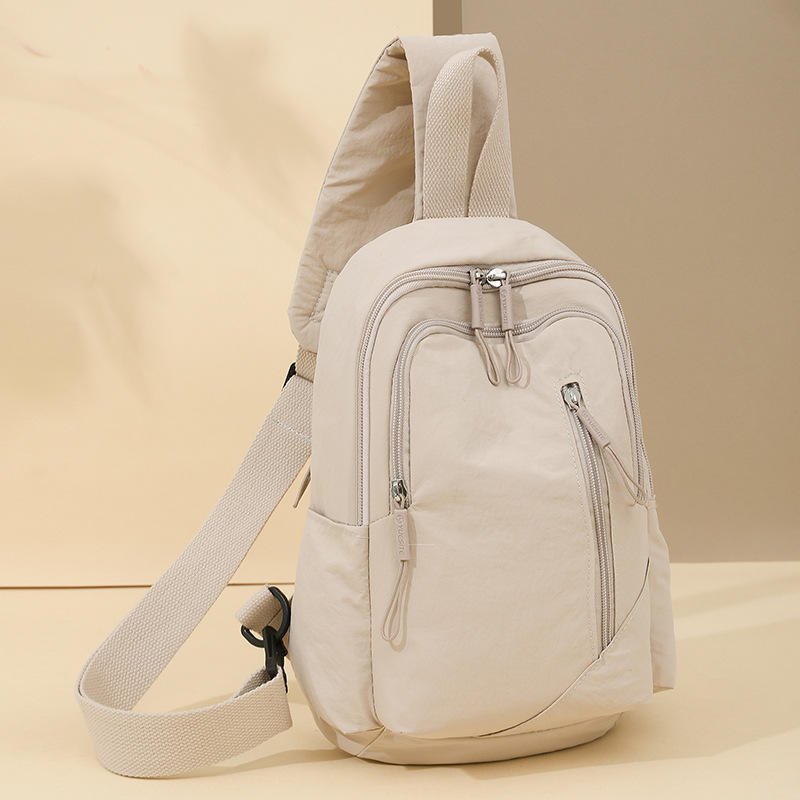
Choosing between nylon and polyester sounds like a small material decision until the first bulk order goes wrong. A backpack that sags after three months, a tote bag that fades under sunlight, a travel bag that absorbs rain, or a tool bag with weak seams can all trace back to the same early mistake: the fabric was chosen by price or habit, not by real use conditions. For bag brands, importers, retailers, Amazon sellers, promotional companies, and product development teams, nylon vs polyester is not only a fabric comparison. It is a product strategy decision.
For most bags, nylon is better when the project needs higher strength, flexibility, abrasion resistance, and a more performance-driven feel. Polyester is better when the project needs better color stability, lower water absorption, UV resistance, cost control, and strong value for large-volume production. The best choice depends on bag type, denier, coating, lining, stitching, load-bearing points, branding method, and target price.
A good factory should not simply ask, “Do you want nylon or polyester?” The better question is: “What will your customer do with this bag every day?” A beach tote, laptop backpack, bike pouch, cooler bag, and tool bag may all use synthetic fabric, but they fail in different ways. The right answer begins with the user, then moves into fabric, structure, sampling, inspection, and repeat production.
What Is Nylon Fabric for Bags?

Nylon is a synthetic polyamide fabric used in bags that need strength, flexibility, abrasion resistance, and a lighter performance feel. It is common in backpacks, travel bags, outdoor bags, gym bags, tactical pouches, and compact foldable bags. Nylon is not automatically waterproof, but with the right denier, weave, coating, lining, and stitching, it can become a durable material for demanding bag projects.
Common Nylon Specifications Used in Bag Development
| Nylon Type | Typical Bag Use | Practical Strength Level | Development Notes |
|---|---|---|---|
| 210D nylon | Linings, foldable bags, lightweight pouches | Light duty | Good packability; not ideal for heavy load points. |
| 420D nylon | Backpacks, travel bags, soft cases | Medium duty | Balanced weight, hand feel, and strength for many custom bags. |
| 500D nylon | Outdoor bags, tactical pouches, premium packs | Medium-heavy | Often selected when a stronger performance image is needed. |
| 840D nylon | Duffels, reinforced panels, protective soft goods | Heavy duty | Adds structure and durability but increases fabric weight and cost. |
| 1000D nylon | Tactical bags, rugged outdoor gear | Heavy duty | Strong and abrasion-resistant; less suitable for ultralight designs. |
| Ripstop nylon | Outdoor bags, travel pouches, packable bags | Tear-control use | Grid weave helps reduce tear spreading after a small puncture. |
| TPU-laminated nylon | Dry bags, cycling bags, waterproof-style pouches | Water barrier use | Needs correct seam, zipper, or welding planning to match the claim. |
Nylon Basics
Nylon is valued because it has a strong strength-to-weight ratio. In practical bag development, this means a product can stay relatively light while still handling pulling, bending, compression, and daily movement. That is why nylon is often seen in travel backpacks, hiking bags, soft cases, sports pouches, tactical-style bags, and compact organizers that are carried often rather than used once and stored away.
Common nylon bag fabrics include 210D nylon, 420D nylon, 500D nylon, 840D nylon, 1000D nylon, ripstop nylon, nylon Oxford, and TPU-laminated nylon. The letter D means denier, which roughly indicates yarn thickness. A higher denier usually means a thicker, heavier, and stronger fabric, but it does not tell the whole story. Weave density, yarn quality, coating, finishing, and backing can change performance sharply.
For example, a dense 420D nylon can feel stronger and cleaner than a low-grade 600D fabric with loose weaving or weak coating. A responsible material decision should never rely on denier alone. The final bag also needs proper seams, webbing, zipper strength, foam thickness, lining, reinforcement patches, and stress-point stitching.
Main Advantages
Nylon works well under movement. Bags are not flat pieces of fabric. They are pulled by straps, pressed by contents, opened by zippers, folded during packing, and rubbed against clothing, seats, floors, luggage compartments, shelves, and warehouse cartons. Nylon handles this active use well because it is tough and slightly flexible.
For performance categories, nylon also supports a stronger product story. If a brand wants to sell a travel backpack, hiking pouch, lightweight gym duffel, compact foldable tote, or technical organizer, nylon can help communicate mobility, strength, and durability. Customers may not understand every fabric specification, but they can often feel the difference when touching a good nylon shell.
Nylon is also useful in packable designs. Foldable bags, travel shopping bags, lightweight daypacks, and compact pouches often need material that can be folded repeatedly without feeling too stiff. In this situation, nylon can offer a clean balance of softness, strength, and portability.
Common Limits
Nylon usually costs more than standard polyester. For a sample, the difference may not feel important, but in bulk production it can affect the final unit price quickly. A material increase of only USD 0.30 per piece becomes USD 1,500 on a 5,000-piece order and USD 15,000 on a 50,000-piece annual program. Nylon should be chosen when it supports real product value, not simply because it sounds premium.
Another limitation is moisture behavior. Nylon can absorb more moisture than polyester, so it may need PU coating, TPU lamination, DWR treatment, PVC backing, or another finish when used in rain-friendly products. Nylon can still be excellent for water-resistant or waterproof-style bags, but the whole construction must be planned properly.
Nylon may also require closer attention in printing and heat-transfer processes. Surface treatment, coating type, temperature sensitivity, and logo method should be tested before bulk production. A logo that looks good on one sample may not perform well across thousands of units if the material surface is not suitable.
Best-Fit Projects
Nylon is a strong choice when the end user carries the bag often, moves with it, or expects a stronger technical feel. It is commonly suitable for travel backpacks, hiking bags, sports bags, tactical pouches, foldable bags, bike bags, lightweight duffels, laptop backpacks, camera soft cases, and compact organizers.
The key question is not whether nylon is better in theory. The better question is whether nylon improves the user experience enough to justify the higher cost. If the product is a premium travel backpack, nylon may be worth it. If the product is a short-term event tote, basic polyester may be more logical.
A professional factory should ask about load weight, usage scenario, target price, expected water resistance, color, logo process, retail channel, and repeat-order plan before recommending nylon. The material must fit the whole business case, not just the technical chart.
What Is Polyester Fabric for Bags?

Polyester is a synthetic PET-based fabric widely used in bags because it offers stable color, lower water absorption, broad availability, good cost control, and flexible customization. It is commonly used for tote bags, backpacks, cooler bags, cosmetic bags, promotional bags, tool bags, school bags, and private label products. Polyester is often the most practical material for large-volume commercial bag production.
Common Polyester Specifications Used in Bag Development
| Polyester Type | Typical Bag Use | Practical Strength Level | Development Notes |
|---|---|---|---|
| 210D polyester | Linings, inner pockets, dust bags | Light duty | Common lining fabric; not usually chosen as a heavy outer shell. |
| 300D polyester | Light pouches, simple backpacks, promotional bags | Light-medium | Useful when cost, weight, and basic function matter most. |
| 420D polyester Oxford | Backpacks, organizers, storage bags | Medium duty | Balanced option for everyday commercial products. |
| 600D polyester | Backpacks, tote bags, cooler bags, pet bags | Medium duty | One of the most common commercial bag fabrics. |
| 900D polyester | Travel bags, sports bags, stronger soft goods | Medium-heavy | Better structure and wear resistance than many 600D options. |
| 1200D polyester | Duffels, tool bags, heavy storage bags | Heavy duty | A thicker option when more body and abrasion resistance are needed. |
| 1680D polyester | Tool bags, business cases, reinforced panels | Heavy duty | Strong surface feel; often used for durable, structured designs. |
| RPET polyester | Eco-positioned totes, backpacks, retail bags | Varies by spec | Useful when recycled material positioning is part of the product story. |
Polyester Basics
Polyester is one of the most widely used materials in the bag industry. It can be woven into 210D lining fabric, 300D fabric, 420D Oxford, 600D polyester, 900D polyester, 1200D polyester, 1680D polyester, mesh fabric, RPET fabric, and coated versions for water resistance or added structure.
The reason polyester is so popular is not only price. It is stable, available, versatile, and easy to adapt across many product categories. A manufacturer can use polyester for the outer shell, inner lining, pocket panels, binding, mesh sections, printed panels, and laminated structures. For multi-SKU programs, this makes polyester practical because colors, coatings, and repeat orders can be managed more predictably.
Polyester also works well with many branding methods, including screen printing, heat transfer, embroidery, woven labels, rubber patches, leather patches, zipper pullers, hangtags, barcode labels, and retail packaging. For many commercial buyers, that flexibility is just as valuable as fabric strength.
Main Advantages
Polyester offers a strong balance of price, performance, and production stability. For tote bags, school backpacks, cooler bags, promotional bags, cosmetic pouches, and everyday retail bags, polyester often gives enough strength while also supporting color control, printing, coating, and repeat production.
Polyester absorbs less moisture than nylon, which helps bags dry faster and remain more stable in damp conditions. This does not make polyester automatically waterproof, but it makes it a useful base fabric for water-resistant products. A 600D polyester with PU coating, for example, is commonly used in daily backpacks, cooler bags, and outdoor-style promotional products.
Polyester also performs well in bright colors and outdoor exposure. For brands that need stable logo colors, multiple colorways, or long-term repeat orders, this matters. A bag that fades too quickly can damage customer trust even if the structure remains usable.
Common Limits
Polyester is not always the best choice for high-performance products. Compared with good-quality nylon, standard polyester may feel stiffer and may not offer the same flexibility or abrasion resistance in demanding environments. For rugged travel, tactical, or outdoor gear, buyers must choose polyester specifications carefully or consider nylon for the main shell.
Another issue is product perception. Some customers associate nylon with higher-end performance bags, while polyester is sometimes seen as more basic. This does not mean polyester is low quality. A well-selected 900D or 1680D polyester can be strong and professional, especially when paired with good hardware, reinforced seams, clean binding, and a thoughtful structure.
The lowest-cost polyester is rarely the best choice. Poor coating, loose weave, weak color fastness, or low-grade backing can lead to peeling, odor, wrinkles, fading, or surface wear. For serious custom projects, polyester should be checked by fabric weight, coating adhesion, hand feel, color consistency, and sample performance.
When Polyester Wins
Polyester wins when the project needs controlled cost, reliable availability, consistent color, good printability, and practical durability. It is often the right answer for brands that need scalable production, not maximum material performance at any cost.
For example, a 600D polyester backpack may be more commercially successful than a nylon version if the target market is school, casual commuting, or budget travel. A polyester cooler bag with the right lining and insulation may perform better than a nylon cooler bag because the full structure matters more than the shell fabric alone.
The strongest polyester projects are developed with a clear purpose. Buyers should specify target price, carrying weight, expected lifetime, water resistance, branding method, and sales channel. Once those details are clear, polyester can be selected intelligently instead of being treated as a cheap default.
Which Is Better for Bag Durability?

Nylon usually offers better strength, flexibility, and abrasion resistance at similar fabric weights, especially for performance bags. Polyester can still be very durable when using heavier deniers, strong Oxford weaves, good coatings, and reinforced construction. In real bag production, durability depends not only on fabric, but also on seams, webbing, zippers, bartacks, foam, lining, and stress-point reinforcement.
Fabric Strength
Nylon often has better tensile strength and tear resistance than polyester when comparing similar weight and construction. This makes nylon a common choice for travel backpacks, outdoor pouches, tactical bags, and performance soft goods. It can bend, stretch slightly, and absorb movement without feeling brittle.
Durability, however, cannot be judged by material name alone. A well-built 1680D polyester tool bag can outperform a thin nylon bag. A strong nylon shell can still fail if the shoulder strap seam is weak. A heavy polyester panel can still tear if the stitching line is placed too close to the fabric edge.
Buyers should ask for fabric specifications, but they should also review the entire construction. The bag should be checked at the real failure points: handles, shoulder straps, zipper ends, side seams, bottom corners, pocket openings, and load-bearing joints. These areas usually decide whether the product survives daily use.
Abrasion Resistance
Nylon often performs better in abrasion-heavy situations. Bags that rub against airport floors, outdoor rocks, bicycle frames, car trunks, work surfaces, warehouse shelving, and rough packaging environments can benefit from nylon’s toughness. For outdoor and travel products, abrasion resistance affects both product life and appearance.
Polyester can also perform well when selected properly. Heavy Oxford polyester, 1200D polyester, 1680D polyester, or polyester with reinforced bottom panels can be effective for tool bags, storage bags, business cases, and commercial transport bags. The right choice depends on where the abrasion happens.
Sometimes only the bottom or corner panels need reinforcement rather than upgrading the whole bag to a more expensive fabric. A smart design may use polyester for the main body, nylon for high-stress panels, heavier material at the bottom, and stronger webbing at the straps.
Seam Construction
Many bag failures happen at seams, not in the middle of the fabric. A material may test well, but if the seam allowance is too narrow or the stitch density is wrong, the bag can split during use. Handles and shoulder straps are especially risky because they carry dynamic weight, not just static weight.
For stronger bags, stress points should use reinforcement layers, bartack stitching, suitable thread, proper seam direction, and the right webbing width. The bottom panel may need extra fabric, foam, PE board, PVC backing, or binding depending on the product type.
Sample approval should include more than appearance. A serious buyer should check load performance, zipper movement, strap attachment, corner strength, pocket stress, and whether the bag keeps its shape when filled. If the sample only looks good empty, it may not be ready for bulk production.
Real Use Testing
Durability should be tested based on how customers will actually use the bag. A cosmetic pouch does not need the same testing as a tool bag. A laptop backpack does not need the same structure as a foldable shopping bag. Testing should match the product promise.
Practical checks can start simply: fill the bag with expected weight, lift it repeatedly, pull the handles, open and close zippers many times, check bottom deformation, rub high-contact areas, and inspect seams after stress. For larger orders, more formal inspection can include strap pull tests, zipper cycle checks, seam strength checks, color fastness checks, coating adhesion review, and final AQL inspection.
The most durable bag is not always the one using the heaviest fabric. It is the one where fabric, structure, stitching, hardware, and use case are aligned.
Durability and Water-Resistance Factors Buyers Should Check
| Factor | Nylon Tendency | Polyester Tendency | Buyer Checkpoint |
|---|---|---|---|
| Tensile strength | Often stronger at similar weight | Good when denier and weave are upgraded | Compare fabric spec with expected load and strap design. |
| Tear resistance | Strong, especially in ripstop weaves | Good with Oxford or ripstop construction | Review weave and reinforcement, not denier alone. |
| Abrasion resistance | Often stronger for performance use | Strong in 900D-1680D options | Reinforce bottoms, corners, and high-rub panels. |
| Flexibility | Better for movement and folding | Can feel stiffer with some coatings | Test packing behavior and hand feel on a real sample. |
| Moisture absorption | Usually higher than polyester | Usually lower than nylon | Clarify whether the bag needs splash, rain, or waterproof-style protection. |
| Coating options | PU, TPU, PVC, silicone, DWR are possible | PU, PVC, TPU, and laminated options are common | Check coating adhesion, odor, folding marks, and sewing behavior. |
| Seam leakage | Needle holes can leak if not sealed | Needle holes can leak if not sealed | Do not claim waterproof performance from coated fabric alone. |
| Zipper risk | Standard zippers are not waterproof | Standard zippers are not waterproof | Use flaps, water-resistant zippers, garages, or sealing where needed. |
Which Is Better for Water Resistance?

Polyester usually absorbs less water and dries faster than nylon, making it practical for everyday water-resistant bags. Nylon can also perform well with proper coating or lamination, especially for higher-performance outdoor products. Neither material is automatically waterproof. Real water resistance depends on coating, lamination, seam design, zipper choice, lining, and whether the bag uses normal stitching or sealed construction.
Fabric Behavior
Untreated nylon and untreated polyester are both not waterproof. They can resist some moisture depending on weave density, but water can still pass through the fabric or enter through seams and zipper openings. Polyester has an advantage because it generally absorbs less moisture than nylon, so it often feels more stable in damp conditions.
Nylon can still be excellent for wet-use products when treated correctly. TPU-laminated nylon, PU-coated nylon, or nylon with DWR finishing can work well for outdoor pouches, bike bags, travel organizers, and waterproof-style soft goods. The material must be selected based on the expected water exposure, not just the word nylon.
For normal daily use, many buyers do not need full waterproof construction. A commuter backpack, cooler bag, or travel pouch may only need protection against light rain and splashes. For kayaking, cycling in heavy rain, marine use, or dry-bag applications, the construction standard must be much higher.
Coating Options
Coatings and laminations turn a basic fabric into a more functional water-resistant material. PU coating is common because it offers a reasonable balance of water resistance, flexibility, weight, and cost. PVC backing can add stiffness and stronger barrier performance, but it may increase weight and change the hand feel. TPU lamination is often used when better flexibility, waterproof-style performance, or premium outdoor positioning is required.
The coating should match the bag’s use. A soft foldable pouch should not be too stiff. A cooler bag may need structure and insulation compatibility. A dry bag may need welded or sealed construction, not just coated fabric. A tool bag may need a water-resistant bottom more than a water-resistant upper body.
Coating quality also affects long-term performance. Poor coating can peel, crack, smell, or become sticky after storage and shipping. Buyers should review coating adhesion, hand feel, odor, folding marks, and sample aging risk before approving bulk fabric.
Seam and Zipper Risk
Many water complaints come from seams and zippers, not the main fabric. Even if the fabric has a good coating, needle holes can allow water to pass through. Standard zippers also leave small gaps between teeth and tape. Corners, zipper ends, and pocket openings are common leak points.
Water-resistant zippers can help, but they are not always the right choice for every bag. They can be stiffer, more expensive, and harder to operate than standard zippers. A bag used daily by commuters may need smooth opening more than extreme water protection. A bike frame bag may need stronger resistance and tighter zipper planning.
Flaps, zipper garages, binding, seam sealing, welding, and internal linings all affect the result. When a buyer asks for a waterproof bag, the factory should clarify whether the product needs splash resistance, rain resistance, or submersion protection. These are very different standards.
Honest Claims
Brands should be careful with language. Water-resistant and waterproof are not the same. A coated polyester backpack with normal sewing can protect against light rain, but it should not be marketed as fully waterproof. A dry bag with welded seams and proper closure can support a stronger claim, but even then, the closure system and testing method matter.
Honest claims reduce customer complaints and improve long-term trust. For e-commerce sellers, unclear waterproof claims can lead to poor reviews and returns. For retailers and importers, unclear claims can create quality disputes. It is better to define the water performance early and build the material, seam, zipper, and testing plan around that promise.
The best approach is simple: decide the real water scenario first, then choose the fabric system. Do not choose a coated material first and invent the claim later.
Which Material Fits Each Bag Type?
Nylon fits bags that need strength, flexibility, abrasion resistance, and performance positioning, such as travel backpacks, outdoor bags, tactical pouches, foldable bags, and sports bags. Polyester fits bags that need cost control, stable color, printing, repeat production, and broad commercial use, such as tote bags, cooler bags, school bags, cosmetic bags, promotional bags, and tool bags.
Backpacks
For backpacks, the right choice depends on the market. Nylon is a strong option for travel backpacks, hiking packs, laptop backpacks, premium commuter bags, and tactical-style designs. It supports a stronger technical feel and handles repeated movement well. Polyester is often better for school backpacks, promotional backpacks, casual commuter bags, and price-sensitive retail products.
A backpack has many structural parts, so fabric alone does not decide quality. The shoulder straps need foam and reinforcement. The back panel may need breathable mesh. The laptop sleeve may need padding. The zipper opening must be smooth. The bottom panel should resist wear. A 600D polyester backpack with well-planned structure can be more reliable than a nylon backpack with poor strap stitching.
For custom projects, buyers should define carrying weight, laptop size, pocket layout, water resistance, logo method, and retail price before selecting material. Backpack material should support the full user experience, not only the product description.
Tote Bags
Tote bags often work well in polyester, especially when the project needs printing, color consistency, lower cost, and repeat production. Polyester tote bags can be used for retail packaging, corporate gifts, trade shows, grocery shopping, beauty kits, and promotional campaigns. RPET polyester can also be used when recycled material positioning is important.
Nylon is useful for foldable totes, lightweight travel shopping bags, and premium technical totes. It gives a softer, lighter, more packable feel. However, for basic promotional totes, nylon may increase cost without adding enough value.
Tote bag performance depends on handle strength, seam construction, fabric weight, bottom structure, and logo durability. A tote carrying groceries needs stronger handles than a tote carrying brochures. A retail gift tote needs clean appearance and color consistency. A beach tote may need better UV and moisture performance. The material should match the real load and usage.
Travel and Outdoor Bags
Travel and outdoor bags often lean toward nylon when the product needs flexibility, abrasion resistance, lightweight strength, or a premium technical image. Nylon works well for travel backpacks, compact duffels, outdoor pouches, bike bags, hiking accessories, and packable bags. Ripstop nylon and TPU-laminated nylon can be useful where tear control or water resistance matters.
Polyester is still widely used in travel and outdoor categories. Polyester Oxford, 900D polyester, 1200D polyester, and 1680D polyester can be good choices for duffel bags, luggage organizers, picnic bags, sports bags, cooler bags, and value-driven outdoor products. Polyester also offers good color stability for products used in sunlight.
The real decision depends on use severity. A weekend travel organizer does not need the same material as a mountain hiking pack. A picnic cooler does not need the same shell as a waterproof cycling pouch. Outdoor is not one category; it is many different conditions.
Tool and Cooler Bags
Tool bags often benefit from heavier polyester options such as 900D, 1200D, or 1680D polyester, especially with PVC backing, reinforced bottoms, strong webbing, and bartack stitching. Tool bags need structure, abrasion resistance, pocket strength, and load-bearing stability. Nylon can also work, but polyester often provides strong cost-performance for commercial tool storage products.
Cooler bags are usually more about the full insulation system than the shell fabric alone. Polyester Oxford is common for the outer fabric because it supports printing, color, coating, and cost control. The inside may use PEVA, aluminum foil lining, EVA, EPE foam, pearl cotton, or other insulation layers depending on cold-retention needs and price level.
For both tool bags and cooler bags, fabric choice should be connected with internal structure. A tool bag needs pocket reinforcement. A cooler bag needs lining seam quality and insulation thickness. Choosing nylon or polyester without reviewing the inner structure can lead to the wrong result.
How Do Cost, Color, and Branding Differ?
Polyester usually offers better cost control, color stability, UV resistance, and large-volume production value. Nylon usually costs more but can support a stronger performance image and premium hand feel. Branding depends on surface texture, coating, logo method, temperature sensitivity, color control, and production repeatability. The best material is the one that fits the brand’s price, channel, and customer promise.
Cost Control
Polyester is usually more cost-efficient than nylon, especially in common specifications such as 300D, 420D, and 600D polyester. It is widely available and easier to source in many standard colors and coatings. This makes it practical for large orders, promotional programs, retail gift products, and multi-SKU private label projects.
Nylon often costs more because the raw material, weaving, finishing, and performance positioning can be higher. The cost may be justified for premium travel bags, outdoor bags, tactical pouches, and performance backpacks. But for simple tote bags, basic storage bags, or event giveaways, nylon may not generate enough extra value.
A serious cost comparison should include more than fabric price. It should include cutting loss, coating cost, zipper grade, webbing, lining, foam, logo process, packaging, inspection, shipping weight, and defect risk. Sometimes a slightly more expensive material reduces complaints. Sometimes a cheaper material is perfectly suitable because the product does not need high performance.
Color Stability
Polyester usually performs well in color stability and UV resistance. This matters for bright products, outdoor use, retail display, school bags, promotional bags, and brands that need multiple colorways. If a company needs red, blue, yellow, black, and custom Pantone colors across repeat orders, polyester may be easier to manage.
Nylon can also be dyed in attractive colors, but some nylon projects need closer attention to color consistency, sunlight exposure, and finishing. The final result depends on fabric type, dyeing process, coating, batch control, and inspection.
For brand products, color is not a small detail. A bag that arrives slightly different from the approved sample can create retail problems. Bulk fabric should be checked against approved color standards before cutting. For repeat programs, material records and approved swatches should be kept to control future batches.
Logo Methods
Polyester is often practical for screen printing, heat transfer, woven labels, rubber patches, embroidery, and other commercial branding methods. It is widely used in promotional and retail bags because it gives flexible branding options at manageable cost.
Nylon can also support many logo methods, but testing is important. Coated nylon may react differently under heat. Some surfaces may not accept certain inks well. Embroidery can look premium, but backing, stitch density, and needle holes must be considered, especially on coated or water-resistant fabrics.
Logo choice should be made after fabric confirmation. A simple event tote may use screen printing. A premium backpack may use woven labels, rubber badges, embroidery, custom zipper pullers, or metal plates. A cooler bag may need a logo method that survives bending, rubbing, and temperature changes.
MOQ and Repeat Orders
MOQ can change based on fabric availability, custom color, coating, logo process, hardware, webbing, packaging, and production complexity. Standard fabrics in common colors are usually easier to manage. Special nylon, custom ripstop, TPU lamination, exclusive colors, or unique coatings may require higher material MOQ.
For long-term programs, repeatability matters as much as first-order pricing. A buyer may start with one backpack, then expand into five colors or several related products. If the material is hard to source consistently, repeat orders can become difficult. Polyester often has an advantage here because many standard options are widely available.
For nylon projects, buyers should confirm material lead time, supplier stability, color availability, and whether the same fabric can be repeated later. For both nylon and polyester, approved samples, material records, BOM files, and packaging standards should be kept for future orders.
Business Fit: Cost, Color, Branding, and Bulk Production
| Decision Factor | Nylon Direction | Polyester Direction | Practical Decision |
|---|---|---|---|
| Typical fabric cost | Usually higher | Usually lower | Use nylon when the performance value supports the selling price. |
| Product perception | Strong for technical, travel, and outdoor positioning | Strong for commercial, retail, promo, and daily-use products | Match fabric message to the customer promise. |
| Color stability | Good, but more project-dependent | Often stronger for sunlight and repeat color control | Use polyester for bright, repeated, or outdoor color programs. |
| Logo flexibility | Good after surface and heat testing | Very practical for many printing and patch methods | Test the exact logo process on the exact coated fabric. |
| Bulk availability | Can be more limited in special specs | Broad in common specs and colors | Polyester may support faster repeat-order planning. |
| MOQ impact | Special denier, ripstop, or lamination may raise MOQ | Standard fabrics may allow easier planning | Confirm material availability before final quotation. |
| Best commercial fit | Premium, technical, performance products | Retail, promotional, everyday, scalable product lines | Choose based on use case, margin, and warranty risk. |
How Should Brands Choose?
Brands should choose nylon when the bag needs higher strength, flexibility, abrasion resistance, compact performance, or premium outdoor/travel positioning. Brands should choose polyester when the project needs cost control, color stability, printing flexibility, UV resistance, and scalable bulk production. The final choice should be based on use case, target price, expected load, water resistance, branding, and repeat-order plan.
Start With Use Case
The first question should be simple: what will the end user do with the bag? A bag for carrying cosmetics, tools, laptops, groceries, ice packs, sports gear, medical supplies, or travel clothes will not need the same fabric. The material must match the real usage, not just the product category name.
A laptop backpack needs padding, structure, zipper quality, and strap strength. A cooler bag needs insulation and lining. A tool bag needs abrasion resistance and pocket reinforcement. A foldable tote needs lightweight fabric and clean folding behavior. A travel backpack needs balance between weight, strength, water resistance, and comfort.
Once the use case is clear, nylon and polyester become easier to compare. Nylon often fits movement, stress, and performance. Polyester often fits color, cost, printing, and scalable commercial use. The best fabric is the one that helps the bag keep its promise in the customer’s daily life.
Match Price and Positioning
A premium bag and a promotional bag should not be built with the same material logic. If the product sells at a higher retail price and promises durability, comfort, travel performance, or outdoor use, nylon may help support that positioning. If the product is designed for events, retail gift sets, school use, or broad online sales, polyester may be more commercially efficient.
Target price should be shared early with the factory. Without a target price, material recommendations can become unrealistic. A factory may suggest a high-performance fabric that makes the product too expensive, or a low-cost fabric that weakens the brand promise.
Good development balances cost and customer expectation. Saving a small amount on material can be smart when the use case is light. It can be risky when the product must carry weight or survive frequent use. The decision should be based on margin, return risk, review quality, and repeat-order potential.
Confirm Technical Details
Before sampling, the buyer should confirm the main technical details: fabric denier, weave, coating, lining, zipper type, webbing width, foam thickness, logo process, seam construction, reinforcement points, packaging, and water resistance expectation. These details are what turn a material choice into a finished product.
If the project compares nylon and polyester, it may be useful to sample both options. The buyer can compare hand feel, weight, appearance, logo result, stiffness, folding behavior, structure, and estimated unit cost. This is often more useful than making a decision only from a fabric swatch.
The final approved sample should become the production standard. Bulk production should follow the approved material, color, stitching, size, logo, packaging, and quality details. Without a clear approved sample, nylon vs polyester discussions can become confusing during mass production.
Prepare Project Information
A factory can give better advice when the buyer provides clear information. Useful details include product type, size, expected carrying weight, reference images, drawings, target material, color, logo method, order quantity, target price, sales market, packaging needs, water resistance level, and delivery schedule.
For a custom bag inquiry, the most helpful information is not a long message. It is a clear project brief. Even simple notes like “600D polyester backpack for school use, five colors, one logo print, 3,000 pieces, target retail under USD 25” can guide the material decision quickly.
The final goal is not to win a fabric debate. The goal is to build a bag that fits the market, performs reliably, and can be produced again with stable quality. Lovrix helps brands evaluate custom bag projects from material choice, structure, sampling, cost, production feasibility, quality control, packaging, and worldwide delivery. Send drawings, reference images, sample photos, target quantity, logo files, packaging needs, and delivery plans so the team can compare nylon and polyester options and develop a production-ready proposal.


