 Skip to content
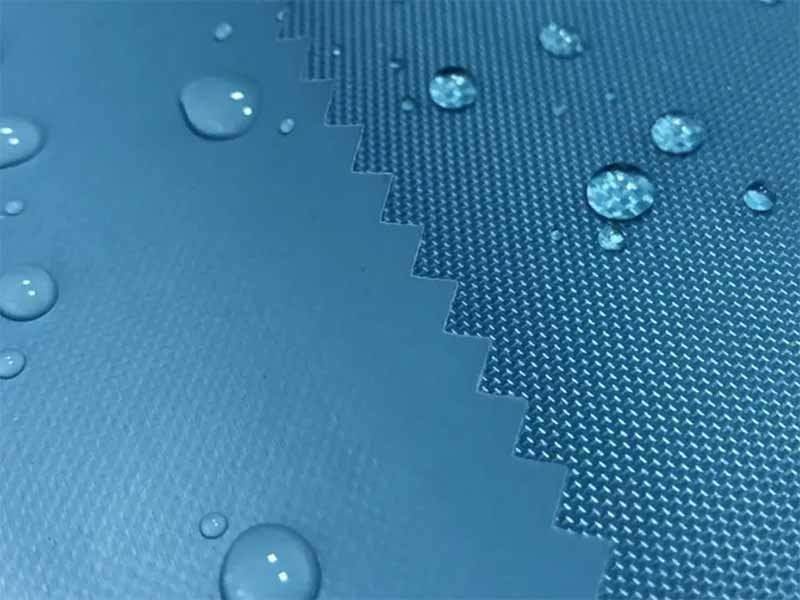
A coating is often hidden on the back of a fabric, yet it can decide whether a finished bag feels light or bulky, folds smoothly or cracks at the corners, survives daily rain or leaks through the seams. Many product teams compare PU and PVC as though one must always be better. In real manufacturing, that question is too simple. A coating works as part of a system that includes the base cloth, coating weight, lining, foam, stitching, reinforcement, zipper, seam treatment, climate, and expected product life.
PU coating is generally the better choice for lightweight, flexible, soft-hand bags, while PVC coating is often better for heavy-duty, highly water-resistant, wipe-clean products. Neither material is universally superior. The correct choice depends on the base fabric, coating weight, climate, seam construction, chemical requirements, target cost, and expected service life. A finished bag must be tested as a complete product, not judged by the coating name alone.
A sourcing team once asked why two tool bags described as “600D waterproof polyester” performed completely differently after only a few months. One remained flexible and clean. The other became stiff, peeled near the folds, and leaked around the base. Both specifications looked almost identical on paper. The missing information was everything that came after the words “600D polyester.” That is where the real PU-versus-PVC decision begins.
What Are PU and PVC Coatings?

PU and PVC coatings are polymer layers applied to woven fabrics to improve water resistance, durability, stiffness, cleanability, and surface appearance. PU is generally lighter and more flexible, while PVC usually creates a thicker, more impermeable layer. Their real performance depends on the coating formulation, coating weight, base fabric, processing quality, and finished bag construction.
PU Coating Basics
PU stands for polyurethane. In bag manufacturing, PU is commonly applied to the reverse side of polyester, nylon, Oxford cloth, and other woven fabrics. The coating fills some of the spaces between yarns and forms a barrier that reduces water penetration while preserving much of the fabric’s original flexibility.
PU-coated fabrics are widely used in backpacks, travel bags, sports bags, cosmetic bags, organizers, drawstring bags, and lightweight outdoor products. They are usually easier to fold, turn, bind, and sew than thick PVC-coated materials. This makes PU useful for products with curved panels, multiple pockets, soft edges, or complex internal structures.
However, the term “PU coating” does not describe one fixed level of quality. Performance changes with coating chemistry, thickness, curing conditions, and adhesion to the base fabric. A light PU coating may provide basic water resistance for everyday use, while a heavier or multi-layer PU system can reach much higher hydrostatic-pressure values.
Manufacturers may use polyester-based or polyether-based PU systems. Polyester-based PU is common and cost-effective, but some grades can be more vulnerable to hydrolysis in hot and humid conditions. Polyether-based PU generally provides better moisture resistance, although it may increase material cost.
The choice should reflect climate, expected lifespan, storage conditions, and the product’s real exposure to water, folding, heat, and humidity. A specification that only says “PU coated” is not detailed enough for a professional sourcing decision.
PVC Coating Basics
PVC stands for polyvinyl chloride. In coated bag fabrics, PVC is combined with plasticizers, stabilizers, pigments, and other additives to create a flexible surface layer. It can be coated, laminated, or bonded onto polyester or another woven carrier fabric.
PVC-coated materials are frequently used for tool bags, industrial organizers, delivery bags, equipment covers, heavy-duty storage products, tarpaulin-style bags, and wipe-clean applications. The coating can create a thicker, more continuous barrier against water, dirt, grease, and many common workplace contaminants.
Compared with light PU coatings, PVC usually adds more weight and stiffness. This can be helpful when a product needs stronger shape retention or a rugged technical appearance. It can also create production challenges where several layers overlap, particularly around piping, folded edges, reinforced bases, webbing attachments, and zipper ends.
PVC performance depends heavily on formulation. Low-temperature flexibility, plasticizer type, UV stabilization, hardness, odor, and restricted-substance compliance should be confirmed before production.
A PVC material designed for indoor storage may not perform well in cold outdoor conditions. An outdoor-grade or cold-resistant formulation may remain flexible across a wider temperature range but often costs more.
The material name alone cannot confirm suitability. Buyers should review the exact construction, thickness, performance tests, chemical documents, and physical samples.
How Coated Fabrics Are Made
Coated-fabric performance starts with the base textile. Common bag fabrics include polyester and nylon in specifications such as 210D, 300D, 420D, 500D, 600D, 900D, 1000D, and 1680D.
Denier describes the approximate yarn size, but it does not fully predict strength, waterproofness, abrasion resistance, or finished quality. Yarn density, weave structure, fiber type, finishing, and coating quality matter just as much.
PU can be applied through direct coating, transfer coating, knife coating, or related production processes. PVC may be knife-coated, laminated, calendared, or bonded to the textile through other methods.
Production controls such as coating viscosity, line speed, coating gap, curing temperature, drying time, and surface treatment influence the finished material. Even when two suppliers use the same polymer type, variations in processing can create noticeable differences in weight, hand feel, adhesion, odor, and aging performance.
A reliable specification should include more than the polymer name.
| Specification Item | Why It Matters |
|---|---|
| Base fiber and denier | Influences weight, tear strength, hand feel, and price |
| Yarn density and weave | Affects strength, coating coverage, and surface appearance |
| Finished GSM | Helps control total material weight and batch consistency |
| Coating type | Identifies the basic polymer system |
| Coating add-on | Influences waterproofness, stiffness, and durability |
| Total thickness | Affects sewing, folding, structure, and surface protection |
| Hydrostatic pressure | Measures resistance to water penetration |
| Peel strength | Indicates coating adhesion to the base cloth |
| Flex performance | Shows resistance to repeated folding and cracking |
| Temperature range | Helps predict hot- and cold-climate behavior |
| Chemical requirements | Supports compliance in the target market |
A fabric described only as “600D polyester with PU coating” may vary substantially between suppliers. Finished GSM, coating weight, weave density, and hydrostatic performance should be included when repeat-order consistency matters.
Coating vs Synthetic Leather
PU-coated or PVC-coated woven fabric is not automatically synthetic leather. Coated Oxford cloth normally retains a recognizable textile structure, even if the coating is visible on one side. It is selected mainly for strength, water resistance, stiffness, or ease of cleaning.
Synthetic leather is designed to create a leather-like surface. It usually includes a base cloth, foam or intermediate layer, colored surface layer, grain pattern, and top treatment. The surface may imitate natural leather in texture, gloss, and hand feel.
This distinction matters because the two material groups behave differently during cutting, sewing, folding, and aging. Coated woven fabric generally distributes stress through its yarn structure. Synthetic leather depends more heavily on the bond between layers and may show surface cracking, peeling, or permanent creases if the wrong grade is used.
Material descriptions must therefore be precise. The phrase “PU material” could refer to PU-coated polyester, PU synthetic leather, cast polyurethane film, or another polyurethane-based construction.
Each option has different weight, appearance, cost, performance, and processing requirements. A physical swatch, technical specification, and approved finished sample are essential before bulk material is ordered.
How Do PU and PVC Coatings Differ?

PU is usually lighter, softer, and easier to sew, while PVC is often thicker, stiffer, and easier to wipe clean. PU commonly suits flexible consumer bags; PVC often suits rugged or industrial products. Neither is inherently more durable or waterproof in every situation because coating quality, thickness, base fabric, climate, and product construction can change the outcome.
Weight and Flexibility
PU-coated fabrics generally retain more of the base fabric’s natural drape. This is useful when a bag needs to fold flat, curve around foam panels, compress into luggage, or feel soft in the hand.
Lower coating weight can also reduce finished-product weight and packing volume. This becomes important for backpacks, travel bags, airline products, and e-commerce orders where every additional gram affects carrying comfort or freight cost.
PVC coatings are commonly applied at higher weights, so the material often feels denser and more structured. This can help a tool bag, utility bag, or equipment case stand upright. It may be less suitable for a lightweight backpack, foldable tote, or product with many turned seams.
The ranges below are broad industry references rather than universal limits. Actual values vary by formulation, coating method, base cloth, and intended use.
| Property | PU-Coated Fabric | PVC-Coated Fabric |
|---|---|---|
| Common coating add-on | Approximately 20–100 g/m² | Approximately 100–500+ g/m² |
| Typical hand feel | Soft to moderately firm | Firm to very stiff |
| Foldability | Usually good | Highly thickness-dependent |
| Sewing bulk | Low to moderate | Moderate to high |
| Cold flexibility | Often better | Must be confirmed by formulation |
| Surface character | More textile-like | More plastic-like |
The difference becomes more meaningful when multiplied across an entire pattern. If one construction adds 120 g/m² more than another and the bag uses 1.8 m² of material, the coating alone may increase the finished product by more than 200 grams.
For a daily backpack, that difference may affect comfort, shipping cost, and customer reviews. For a stationary equipment cover, the extra weight may have little commercial impact.
Durability and Aging
PVC is often considered more rugged because it can form a thick, abrasion-resistant outer surface. This is valuable where bags contact concrete floors, metal tools, mud, grease, or rough vehicle interiors.
A smooth PVC surface can also be cleaned repeatedly without exposing the woven face fabric. However, thickness alone does not guarantee durability.
PU can provide excellent durability when properly specified, particularly in products that undergo frequent flexing. Its softer structure may reduce stress at folds and corners.
Some PU systems are vulnerable to hydrolysis, a chemical breakdown accelerated by heat and moisture. Warning signs can include tackiness, powdering, loss of bond strength, and delamination.
PVC has different aging risks. Depending on the formulation, plasticizers may migrate over time, the surface may become harder, or the coating may crack in low temperatures. UV exposure can also affect color and flexibility if the material lacks suitable stabilization.
The better material depends on the likely failure mode:
- A foldable travel organizer needs flex endurance.
- A tool bag needs abrasion and puncture resistance.
- A tropical-market backpack needs hydrolysis resistance.
- A winter delivery bag needs cold-crack performance.
- A cosmetic bag may require oil and stain resistance.
- An outdoor cover may need strong UV stability.
It is more useful to ask what the coating must survive than to ask which polymer lasts longer. Durability should always be connected to temperature, humidity, load, folding frequency, cleaning chemicals, storage conditions, and expected product life.
Waterproof Performance
PU and PVC can both create highly water-resistant fabrics. PVC often produces a thicker, more visibly continuous barrier, while PU can achieve strong performance with less weight when coating density and adhesion are well controlled.
Hydrostatic pressure is commonly used to measure how much water pressure a fabric can withstand before leakage occurs.
For many ordinary bags, a fabric rating of around 1,000–2,000 mm may provide useful protection against light rain. More demanding outdoor or technical products may require higher values.
These figures should be treated as project-specific development targets rather than universal definitions of waterproofness. Test method, conditioning, coating age, and fabric construction can influence the result.
The finished bag may still leak even when the fabric performs well. Common water-entry points include:
- Needle holes
- Zipper chains
- Zipper ends
- Piping seams
- Handle attachments
- Logo embroidery
- Bottom corners
- Bound seams
- Unsealed lining joints
A sewn bag made with fabric rated at 5,000 mm may still leak quickly through untreated stitching. A welded bag made from a suitable coated fabric may perform better because welding eliminates many needle penetrations.
Waterproof claims should therefore be based on complete-product testing. The material, zipper, closure design, seam construction, thread, and production process must work together.
“Waterproof fabric” and “waterproof bag” are not interchangeable descriptions.
Heat, Cold, and Humidity
Climate can completely change the result of a coating decision. A material that feels flexible in a sample room may behave differently in a frozen warehouse, a hot vehicle, a shipping container, or a humid coastal environment.
Low temperatures can make some PVC formulations considerably harder. The material may resist folding, develop white stress marks, or crack at sharp bends.
Cold-resistant PVC is available, but its performance should be verified at the lowest expected service temperature. Stating that a material is “cold resistant” without a defined test temperature provides little useful information.
PU often performs well in repeated bending and cold conditions, yet certain PU systems can deteriorate during prolonged exposure to heat and humidity. This is relevant for products stored in tropical warehouses, damp garages, closed vehicles, or poorly ventilated containers.
UV exposure also deserves attention. Outdoor bags, covers, and delivery products may fade, chalk, stiffen, or lose coating strength after long periods in sunlight.
For internationally sold products, room-temperature approval is not enough. The same bag may be used in a dry desert climate, a humid tropical city, or a freezing winter environment.
Material testing should reflect the most demanding realistic market rather than only the conditions at the factory.
Which Coating Performs Better for Bags?

PU usually performs better in bags that need low weight, flexibility, a soft hand, and detailed sewing. PVC often performs better where a thick moisture barrier, easy cleaning, or rugged surface is more important. The best material supports the bag’s structure, user experience, compliance needs, and expected lifespan without adding unnecessary cost or weight.
Lightweight Bags
PU-coated polyester and nylon are common choices for backpacks, sports bags, travel organizers, school bags, soft totes, and cosmetic bags. The coating improves water resistance without making the material excessively stiff.
This flexibility helps during production. Curved panels can be sewn more cleanly, turned edges sit flatter, zipper openings move more naturally, and internal pockets are easier to assemble.
A lighter coating also reduces bulk where several layers meet. This is particularly useful around zipper ends, pocket corners, handle attachments, piping, and bound seams.
For a general travel bag, 300D to 600D PU-coated polyester may offer a practical balance between cost, weight, and durability. For a lighter technical product, 210D to 500D nylon with PU coating may provide good tear performance, although material cost and color control can be more demanding.
The lowest-weight material is not automatically the best choice. A fabric that is too soft may collapse when the bag is empty or provide insufficient protection for the contents.
Shape and protection may need to come from foam, PE board, EVA, nonwoven reinforcement, or a heavier bottom panel.
A well-balanced design often uses different materials in different zones. The upper body may use a flexible PU-coated textile, while the base uses a heavier coated fabric. This reduces weight without sacrificing durability where abrasion is highest.
Heavy-Duty Bags
PVC-coated polyester is often suitable for tool bags, equipment cases, delivery bags, utility storage, and industrial organizers. Its thicker surface can resist dirt, moisture, and repeated wiping while creating a sturdy, technical appearance.
Heavy-duty performance involves much more than the shell. A strong coating cannot compensate for weak webbing, narrow seam allowances, poor thread selection, unsuitable hardware, or insufficient reinforcement.
In load-bearing products, failure frequently begins around handle attachments, zipper ends, bottom corners, and internal dividers.
A tool bag designed to carry approximately 15–25 kilograms may require:
- High-density base fabric
- Abrasion-resistant exterior coating
- Reinforced bottom construction
- Heavy-duty handle webbing
- Box stitching or bartacks
- Strong thread
- Controlled stitch length
- Bound exposed seams
- Rigid or semi-rigid base support
- Loaded lift and drop testing
Very thick PVC can make sewing difficult. Layer buildup may become excessive where piping, webbing, lining, reinforcement, and shell fabric overlap.
Needle selection, needle heat, presser-foot pressure, stitch tension, and seam design may require adjustment during sampling.
Using the heaviest PVC everywhere is rarely the most efficient solution. A hybrid design with reinforced base and corner panels can provide better handling, lower weight, and more controlled cost.
Feel and Appearance
Coating changes how a bag feels, sounds, reflects light, folds, and holds its shape. These qualities influence how users judge the product, even when they cannot identify the material.
PU-coated fabric normally feels closer to an ordinary textile. It may bend more smoothly, produce less noise, and create a softer appearance. This often works well for lifestyle products, backpacks, travel bags, and branded retail collections.
PVC-coated fabric can look more industrial, glossy, technical, or rubberized. That appearance may be desirable for tool storage, outdoor equipment, marine products, delivery bags, and protective covers.
The same appearance may feel too rigid or plastic-like for certain fashion, beauty, travel, or lifestyle products.
Surface finish matters as much as coating type. Matte, semi-matte, glossy, embossed, rubberized, and printed finishes can create very different results.
Color depth and gloss may also vary between production lots, especially when the coating itself forms the visible surface.
A small swatch does not show how the material behaves in a finished bag. The approved sample should be opened, folded, carried, compressed, cleaned, and viewed under different lighting.
Crease recovery, surface whitening, noise, stiffness, and shape retention are much easier to judge after assembly.
Cleaning and Structure
A smooth external PVC coating is usually easier to wipe clean than a woven face fabric with PU only on the back. This can be useful for tool bags, delivery products, medical-related storage, cosmetic pouches, and products exposed to mud, oil, dust, or spills.
A PU back coating mainly improves the inner water barrier. The exposed woven surface may still collect dirt, oil, or stains unless it receives an additional water-repellent or stain-resistant finish.
Surface treatment should therefore be considered separately from the back coating.
Coating also affects shape. A firmer PVC construction may help a bag stand upright, but it can form permanent creases during folding, packing, and transport.
A softer PU material may create a more natural silhouette but require internal reinforcement.
The interaction between coating and structure should be evaluated at seam level. Thick materials can resist folding, create uneven binding, or push zipper tapes out of alignment. Soft materials may stretch during sewing or show waves around foam panels.
The ideal coating supports the intended shape without creating avoidable production problems. Structure should come from a coordinated combination of shell fabric, coating, lining, foam, board, stitching, and pattern geometry rather than coating stiffness alone.
Which Bags Need PU or PVC Coating?

Backpacks and travel bags usually benefit from flexible PU-coated textiles. Tool bags and industrial products may need heavier PVC-coated materials. Cooler bags rely on a complete insulation system, while dry bags depend on weldable fabric and sealed construction. Product category offers a starting point, but load, climate, cleaning, closure design, and user behavior should determine the final specification.
Backpacks and Travel Bags
Daily backpacks, laptop bags, sports packs, duffel bags, and travel organizers usually need moderate water resistance without excessive stiffness.
PU-coated polyester or nylon is often suitable because it combines flexibility, lower weight, and easier sewing.
Material selection should vary by bag area rather than applying one fabric everywhere.
| Bag Area | Main Performance Need | Common Material Direction |
|---|---|---|
| Upper shell | Appearance and rain resistance | PU-coated polyester or nylon |
| Bottom panel | Ground abrasion and moisture | Heavy PU, PVC, TPU, or reinforced fabric |
| Shoulder area | Flexing and comfort | Flexible coated fabric with breathable backing |
| Laptop zone | Impact protection | Lining plus foam or EVA |
| Zipper area | Water-entry control | Rain flap, coated zipper, or seam protection |
| Interior | Stain resistance and organization | Light PU-coated lining or cleanable film |
A 300D to 600D polyester may suit many general travel products. Higher-denier fabrics such as 900D, 1000D, or 1680D may be used on bases and high-wear zones.
Nylon can provide strong tear performance at a relatively low weight, but it may require a higher budget and tighter color control.
Travel products are repeatedly folded, compressed, handled, and lifted. Excessively stiff PVC can increase carton volume, create difficult zipper openings, and make the product less comfortable to carry.
A PVC or heavily coated reinforcement panel may still be valuable at the bottom or other high-abrasion zones.
The strongest solution is often a coordinated material map rather than a single all-purpose textile.
Tool and Utility Bags
Tool bags face concentrated loads, sharp edges, oils, dust, and repeated contact with floors. PVC-coated polyester is frequently selected because it creates a robust, easy-clean exterior.
Heavy PU-coated polyester may be preferred when the product needs greater flexibility or lower weight.
Material thickness should match the construction. A heavily coated shell may require stronger needles, longer stitch lengths, reinforced seam allowances, and careful control of layer buildup.
Poorly designed corners can become too thick to sew consistently.
The base deserves particular attention. A tool bag may use:
- A double layer of coated fabric
- A molded plastic tray
- PE board
- Rubberized reinforcement
- A separate abrasion panel
- External feet
- Reinforced corner guards
Handles should transfer the load into a wide section of the bag body rather than relying on a short line of surface stitching.
Testing should use the intended load rather than an arbitrary lightweight substitute. Repeated lift cycles, loaded drop tests, handle pull tests, floor-drag trials, zipper operation, and oil-cleaning tests reveal weaknesses that are not visible in an empty sample.
A rigid appearance can be useful, but unnecessary material thickness adds cost and weight. Reinforcing the stress zones usually provides better value than making every panel equally heavy.
Cooler and Insulated Bags
The exterior coating of a cooler bag contributes to rain resistance, cleaning, and handling, but it does not determine insulation performance by itself.
Cooling duration depends more heavily on foam thickness, foam density, lining, seam construction, closure, internal air volume, ambient temperature, cooling media, and how often the bag is opened.
Common insulation systems may include EPE foam, EVA foam, PE foam, aluminum film, PEVA, PVC film, or TPU film.
Each component performs a different function. The shell protects the structure, the foam slows heat transfer, and the lining contains moisture while providing a cleanable interior.
A cooler bag with a thick PVC-coated shell can still perform poorly if the foam has gaps around seams or the lid does not close tightly.
A lighter PU-coated shell can perform well when insulation panels fit correctly and the closure limits warm-air exchange.
Useful testing involves loading the actual bottle, can, food container, or medical pack planned for the product. Internal temperature should be recorded at fixed intervals under a controlled ambient temperature.
Opening frequency, starting temperature, ice quantity, and cooling media must remain consistent between comparisons.
Leak testing should focus on seam junctions and liner corners. A waterproof-looking shell cannot prevent liquid from escaping through an inadequately sealed inner lining.
Waterproof and Clear Bags
Water-resistant backpacks, welded dry bags, transparent stadium bags, and cosmetic pouches require different material systems.
A sewn backpack may use PU-coated fabric, water-resistant zippers, rain flaps, and internal seam tape. It can provide useful protection from rain without being designed for immersion.
A dry bag usually needs a weldable PVC- or TPU-based material. High-frequency welding, hot-air welding, or heat sealing joins panels without ordinary sewing holes.
Roll-top geometry, buckle strength, closure instructions, and the number of folds also influence water resistance.
Transparent bags are commonly produced from clear PVC or TPU sheet. PVC is widely available and cost-effective. TPU may offer softer handling, stronger cold flexibility, and a different environmental profile, although usually at a higher cost.
Clear materials should be assessed for:
- Transparency and haze
- Surface scratching
- Yellowing
- Odor
- Low-temperature flexibility
- Weld strength
- Oil and cosmetic resistance
- Blocking during storage
- Chemical compliance
Cosmetic bags may combine transparent panels with PU-coated textile, synthetic leather, or printed lining. The right choice depends on whether the product prioritizes visibility, softness, cleaning, structure, or premium presentation.
Are PU and PVC Coatings Safe and Sustainable?

PU is not automatically environmentally preferable, and PVC is not automatically unsafe. Both materials vary by formulation, additives, processing, durability, and disposal route. Responsible selection requires clear specifications, market-specific chemical testing, supplier traceability, and realistic environmental claims. Product lifespan, coating weight, repairability, and material efficiency should be considered alongside polymer type.
Environmental Trade-Offs
PU is often positioned as the more sustainable choice because it can be produced without PVC and may use water-based coating technology.
Water-based PU can reduce the use of certain organic solvents during manufacturing, but this does not make the finished product biodegradable or automatically recyclable.
Most coated bag fabrics combine different materials that are difficult to separate. A polyester textile with PU coating remains a mixed-material construction. PVC-coated polyester presents a similar end-of-life challenge.
PVC raises concerns related to chlorine chemistry, plasticizers, additives, and disposal. These concerns are important, but product life must also be considered.
A durable PVC-coated tool bag used for several years may create less waste than a lightweight product that fails quickly and requires frequent replacement.
A balanced environmental comparison should consider:
- Polymer chemistry
- Coating weight
- Solvent use
- Energy consumption
- Base-fabric content
- Expected product life
- Repairability
- Manufacturing waste
- Transportation weight
- Chemical compliance
- End-of-life options
Improving product structure may have as much environmental value as changing the coating. Stronger handle reinforcement, replaceable straps, better zipper selection, and controlled seam construction can extend useful product life.
Precise statements such as “water-based PU coating,” “PVC-free main fabric,” or “recycled polyester base cloth” are more credible than broad claims such as “green” or “100% eco-friendly.”
Phthalates and Additives
Flexible PVC often uses plasticizers, but PVC formulations differ widely. Some phthalates are restricted in certain products and markets, while alternative plasticizer systems may be used to meet specific requirements.
It is inaccurate to assume that all PVC contains the same restricted substances. It is equally inaccurate to treat a “phthalate-free” statement as proof of complete chemical compliance.
Other regulated substances may still require testing.
Applicable requirements depend on product type, target market, end-user age, and retailer standards. Children’s bags, promotional products, cosmetic bags, medical-related storage, and products sold by major retailers may face different restricted-substance lists.
A useful verification package can include:
- Material declaration
- Supplier compliance statement
- Safety data sheet
- Third-party laboratory report
- Batch or lot reference
- Customer restricted-substance checklist
- Approved material sample
- Bill-of-material record
Test reports should match the actual material description, color, thickness, supplier, and production period.
A report for a black PVC material tested several years ago may not represent a new transparent formulation from another production batch.
Chemical requirements work best when they are defined before sampling, not after bulk material has already been ordered.
PVC-Free Claims
A product with a PU-coated body is not necessarily PVC-free. PVC may still appear in transparent windows, piping, logo patches, zipper pullers, labels, printing inks, adhesives, or packaging.
A meaningful PVC-free specification should identify the exact scope of the claim. It may apply only to the main shell, or it may apply to every component in the finished product.
The bill of materials should be reviewed line by line:
- Main fabric
- Coating
- Lining
- Mesh
- Transparent sheet
- Webbing
- Piping
- Zipper
- Hardware
- Logo material
- Adhesive
- Labels
- Packaging
The same discipline applies to recycled-content claims. A bag may use recycled polyester shell fabric while the coating, thread, lining, webbing, foam, and accessories remain virgin materials.
That does not make the claim invalid, but it must be described accurately.
Material declarations and traceable supplier codes help prevent accidental substitution during production. If a component changes because of availability, price, color, or minimum order quantity, its compliance status should be reviewed again.
Clear wording protects both the brand and the customer. “Main shell made from recycled polyester with PVC-free PU coating” communicates far more than “sustainable bag material.”
Testing and Traceability
Safety and sustainability claims need evidence that connects directly to production. A laboratory report is useful only when the tested sample can be linked to the material used for the order.
The material code, supplier, color, thickness, batch, and coating specification should be recorded.
Incoming inspection can compare bulk material with the approved swatch for color, hand feel, thickness, weight, odor, coating condition, and surface appearance.
Higher-risk projects may require periodic third-party testing. Retesting is particularly important when there is a change in:
- Material supplier
- Coating formulation
- Color
- Thickness
- Plasticizer system
- Printing ink
- Adhesive
- Production location
- Target market
- Customer restricted-substance list
Traceability also supports repeat orders. Without controlled material records, a visually similar fabric may be substituted even though it has a different coating weight, chemical formulation, or performance level.
Environmental claims should be managed with the same discipline as quality specifications. Recycled content, PVC-free status, water-based coating, and restricted-substance compliance should appear in the bill of materials and approved production documents.
Good documentation cannot replace testing, but it greatly reduces the risk of unsupported claims, material substitution, and inconsistent repeat production.
How Should Buyers Choose and Test a Coating?
Start with the product’s actual use, then define weight, flexibility, waterproofness, abrasion, climate, chemical, appearance, and compliance requirements. Compare complete material constructions rather than polymer names alone. Test both the fabric and the assembled bag. Final production should follow an approved material code, signed sample, bill of materials, and measurable inspection criteria.
Define the Use Conditions
The first step is to understand where and how the bag will be used. A coating for a lightweight indoor organizer should not be evaluated by the same standards as a delivery bag exposed to rain, road dirt, sunlight, and repeated cleaning.
Important questions include:
- What load will the bag carry?
- How often will it be folded?
- Will it contact floors or sharp objects?
- Is it exposed to rain or immersion?
- Will it be stored in heat or humidity?
- What is the lowest expected temperature?
- Will it contact oil, makeup, disinfectant, or sunscreen?
- How long should the product remain in service?
- What is the maximum acceptable weight?
- Which market and retailer requirements apply?
Commercial priorities also matter. A premium travel brand may accept higher material cost for lower weight, softer hand feel, and better color presentation.
An industrial supplier may prioritize abrasion resistance and cleaning over appearance.
Once the risks are clear, materials can be compared fairly. Without a defined use case, suppliers may recommend whatever fabric is readily available rather than what is technically appropriate.
The most expensive material is not necessarily the best material. The correct construction meets the required performance with controlled weight, cost, processing difficulty, and supply stability.
Confirm the Specification
A complete specification reduces variation between samples and bulk production. “600D polyester with coating” is too vague for reliable sourcing.
A stronger specification can include:
- Fiber type
- Yarn denier
- Weave density
- Finished GSM and tolerance
- Coating chemistry
- Coating side
- Coating add-on
- Total thickness
- Surface finish
- Color standard
- Hydrostatic-pressure target
- Abrasion target
- Peel-strength target
- Flex requirement
- Cold-crack temperature
- Hydrolysis-aging condition
- Chemical restrictions
- Approved supplier
- Material code
The base textile and coating should be treated as one construction. A dense weave may achieve useful water resistance with less coating. A loose weave may require a heavier coating layer, increasing weight and stiffness.
Color can also influence performance. Dark surfaces absorb more heat in sunlight, while lighter coatings may show dirt or discoloration more easily.
Printed, metallic, rubberized, or high-gloss finishes can change coating adhesion and flex behavior.
Tolerance limits should be realistic. Extremely narrow tolerances increase cost and may not provide meaningful product benefits.
The focus should remain on characteristics that influence appearance, assembly, function, regulatory risk, and customer complaints.
Test the Material
No single test proves that a coating is suitable. Testing should reflect the most likely failure modes.
| Test | What It Measures | Common Development Use |
|---|---|---|
| Hydrostatic pressure | Resistance to water penetration | Rain-resistant and waterproof fabrics |
| Spray test | Surface wetting | Outer shells exposed to light rain |
| Abrasion test | Surface and coating wear | Tool, travel, and outdoor bags |
| Flex test | Resistance to cracking from folding | Foldable and frequently opened products |
| Peel strength | Bond between coating and fabric | Laminated and heavily coated materials |
| Cold-crack test | Flexibility at low temperature | Winter and refrigerated applications |
| Hydrolysis aging | Resistance to heat and humidity | PU-coated materials |
| UV aging | Color and surface stability | Outdoor products |
| Chemical resistance | Reaction to oil, cleaners, or cosmetics | Tool, medical, and cosmetic bags |
| Odor evaluation | Volatile smell after storage | Consumer products and enclosed packaging |
Development targets vary by product. Light-rain bags may use hydrostatic-pressure targets around 1,000–2,000 mm, while more demanding applications may require higher performance.
Abrasion requirements may range from tens of thousands of cycles upward, depending on the test method, load, abrasive surface, and product use.
Test methods must be recorded because results from different machines, loads, wheels, and conditioning procedures cannot always be compared directly.
Material reports are useful for screening options, but they do not replace finished-product testing.
Test the Finished Bag
Sampling reveals problems that a flat fabric test cannot show. A coating may pass laboratory testing but crack when folded around a tight corner, create excessive seam bulk, interfere with zipper movement, or produce an unpleasant hand feel.
Finished-product testing should reflect actual use.
A backpack may require:
- Loaded carry testing
- Rain exposure
- Zipper cycling
- Shoulder-strap pull testing
- Drop testing
- Repeated compression
- Base abrasion
- Seam-strength evaluation
A tool bag may require floor abrasion, handle loading, sharp-object contact, loaded drop testing, zipper operation, and oil-cleaning trials.
A cooler bag should be tested with the intended containers, cooling media, ambient temperature, and opening schedule. Internal temperature should be recorded at fixed intervals.
A dry bag should be evaluated for seam integrity, closure reliability, air leakage, and the expected level of water exposure.
Production readiness also requires:
- An approved material swatch
- A signed or sealed sample
- A confirmed bill of materials
- Defined color and thickness tolerances
- Incoming-material inspection
- In-line workmanship checks
- Finished-product testing
- Pre-shipment inspection
- Material and sample records for repeat orders
The final decision should balance performance, weight, sewing behavior, appearance, compliance, cost, and material availability.
PU is often the better choice for flexible, lightweight consumer bags. PVC is often suitable for rugged, wipe-clean, heavy-duty applications. TPU and other alternatives may be worth considering when welding, cold flexibility, transparency, or PVC-free positioning is important.
Choosing the correct coating is not simply a purchasing decision. It affects pattern development, sewing methods, reinforcement, finished weight, product claims, compliance documentation, packaging, shipping, and long-term customer satisfaction.
Lovrix supports custom bag projects from material evaluation and structural development to sampling, production, quality control, packaging, and worldwide delivery.
For a more accurate project assessment, provide the product drawings, reference samples, dimensions, target order quantity, sales market, expected load, waterproof requirements, logo files, packaging needs, and target delivery plan.
The standard MOQ for custom bag projects is generally 500 pieces, although the final requirement may vary according to material availability, product structure, custom branding, packaging, and production complexity.
Contact Lovrix at email or WhatsApp to discuss a PU-coated, PVC-coated, TPU-laminated, or other custom bag project. The team can help compare practical material constructions, identify performance risks, develop a production-ready sample, and prepare a structured OEM/ODM manufacturing proposal.


