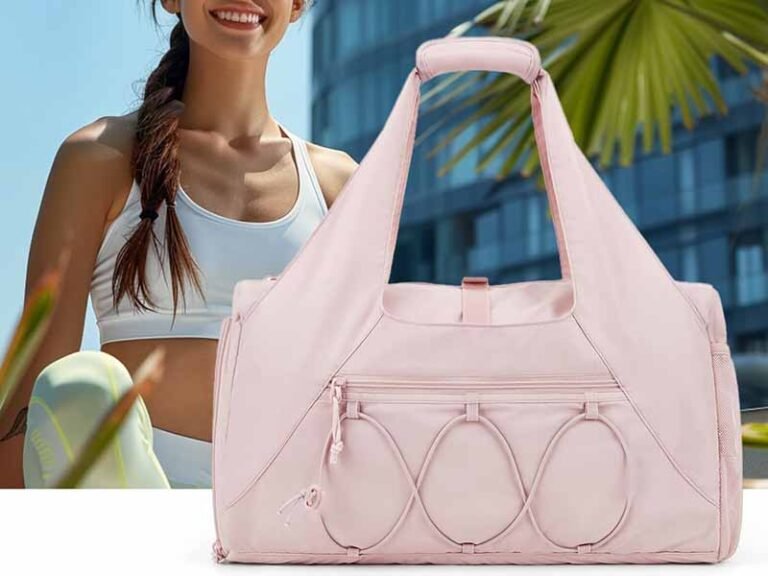
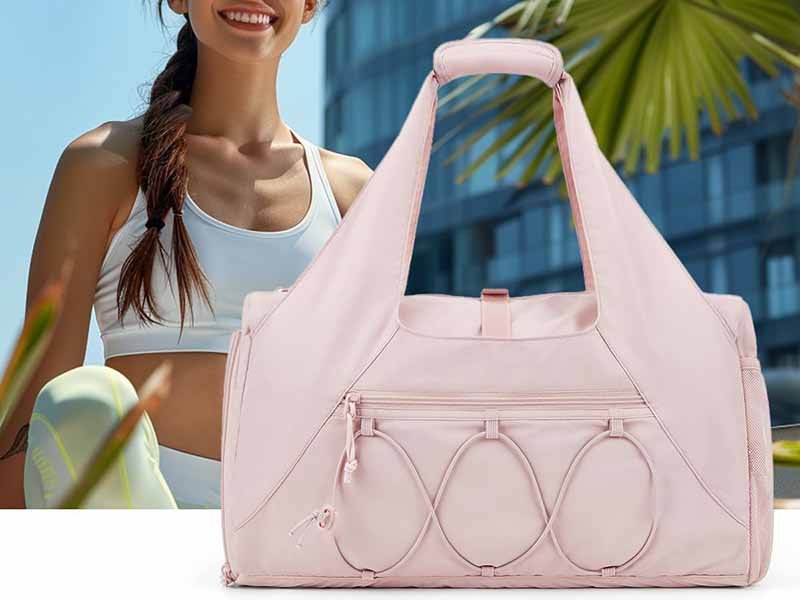
Most gym bags don’t disappoint because the fabric feels cheap or the logo looks wrong. They disappoint because the size doesn’t match real life. A bag that’s “big enough” in a product photo can suddenly feel cramped once you add shoes, a towel, and a hoodie. A bag that looks compact can turn into a shoulder-killer when you pack it for a double session. And the worst part? Many people don’t realize the mismatch until the bag has already been used—when returns become difficult and the experience is already negative.
Standard Gym Bags Sizes are practical size ranges—usually expressed in liters (L) and dimensions (L×W×H)—that help you predict what the bag can carry and how it will feel when used. Most gym bags fall into 20–60 liters: 20–30 L for light daily carry, 30–45 L for full gym gear (often including shoes), and 45–60 L+ for travel, team sports, or multi-day use.
Here’s the interesting truth: many “bad reviews” about gym bags are really size communication problems. A 38 L bag with a wide opening can feel more usable than a 45 L bag with narrow ends. A shoe compartment can “steal” 6–10 liters of usable space even if the bag looks large. Once you understand what Standard Gym Bags Sizes really mean, you can choose—or build—a bag that fits people’s routines, not just their imagination.
What Are Standard Gym Bags Sizes?
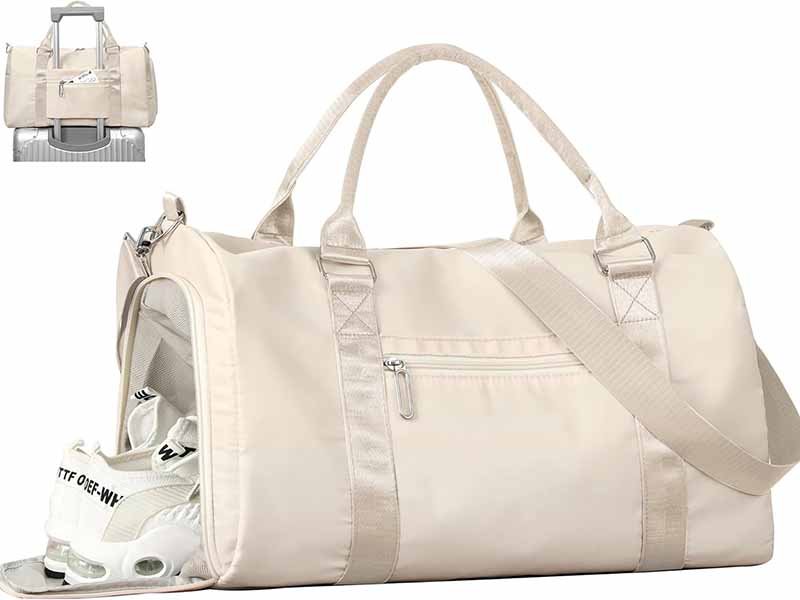
Standard Gym Bags Sizes are the commonly used capacity and dimension ranges that help people understand how much a gym bag can realistically carry and how comfortable it will feel in daily use. In most global markets, gym bags are grouped by usable volume in liters, usually falling between 20 L and 60 L+, and supported by external measurements such as length × width × height. These shared size ranges allow customers, designers, and manufacturers to communicate clearly about storage space, gear fit, and portability before a bag is produced or purchased.
In real life, the idea of “standard size” comes from repeated user behavior rather than strict industry rules. People tend to carry similar combinations of items—training shoes, a change of clothes, a towel, water bottle, and small accessories—so certain volume ranges naturally become more practical than others. Over time, three broad categories have formed:
| Size Group | Capacity Range | Typical Daily Use |
|---|---|---|
| Small | 20–30 L | Light workouts, yoga, quick sessions |
| Medium | 30–45 L | Full gym gear including shoes |
| Large | 45–60 L+ | Travel, team sports, multi-day training |
Among these, the 30–45 L range is the most widely chosen because it balances storage completeness and carrying comfort. It is large enough for shoes and clothing but still manageable for commuting, locker storage, and short travel.
Understanding Standard Gym Bags Sizes also requires looking beyond simple numbers. Two bags listed at the same liter capacity can feel very different depending on:
- Shape efficiency – rectangular bases hold gear more effectively than rounded ends
- Compartment design – shoe pockets or thick padding can reduce main storage space
- Opening width – wider zippers make packing easier even in smaller volumes
- Material thickness – structured walls improve durability but slightly reduce capacity
Because of these factors, experienced product developers often consider both calculated volume and functional usability when defining a standard size.
From a business perspective, clear size standards improve more than customer choice. They help brands:
- build logical S/M/L product lines
- predict shipping carton dimensions and logistics cost
- reduce sampling revisions during development
- maintain consistent sizing across production batches
For customers, the benefit is simpler:
knowing the real meaning of Standard Gym Bags Sizes makes it easier to choose a bag that fits daily routine, body comfort, and long-term use, rather than relying on appearance alone.
Which Standard Gym Bags Sizes Fit Daily Use?
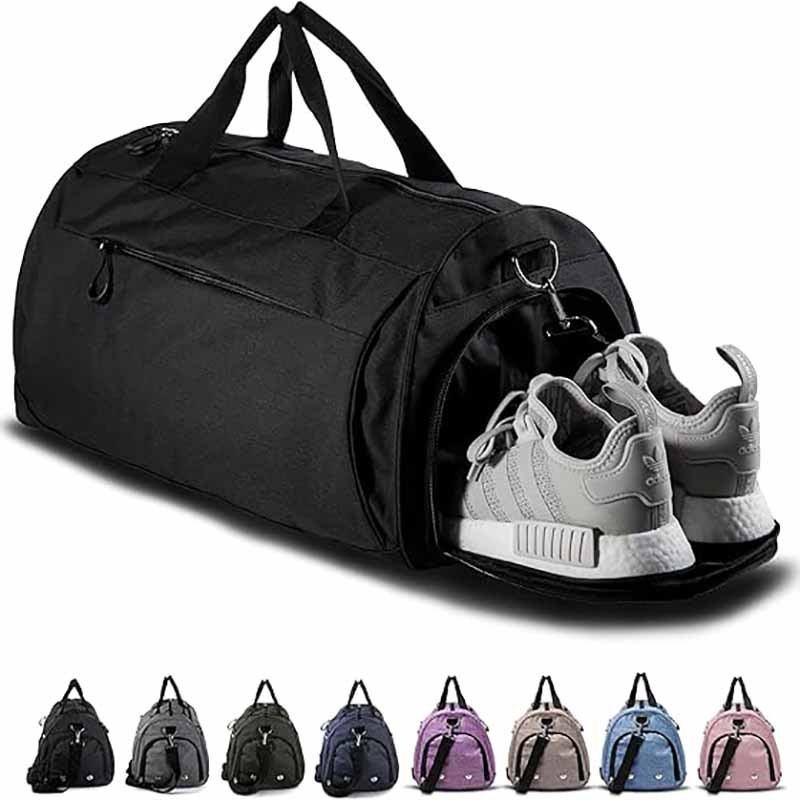
For most people, daily gym routines match Standard Gym Bags Sizes between 25 L and 40 L.
This range provides enough room for training clothes, shoes, a towel, and small personal items while still staying comfortable for commuting, locker storage, and short walks. Bags below this range often feel too tight once shoes are added, while bags above it can become unnecessarily heavy for everyday carry.
Daily use is rarely limited to the gym alone. Many users carry a mix of fitness gear and lifestyle items, such as:
- a water bottle or shaker
- toiletries or shower kit
- phone, wallet, and keys
- sometimes a light jacket or small laptop
Because of this blended routine, the most practical Standard Gym Bags Sizes are not the smallest available, but the ones that balance capacity, weight, and portability.
Real-World Daily Packing by Size Range
| Volume Range | What Usually Fits | Daily Comfort Level | Best For |
|---|---|---|---|
| 20–25 L | Clothes + small towel + bottle | Very light and easy to carry | Quick workouts, yoga, minimal gear |
| 25–30 L | Adds compact shoes or toiletries | Comfortable for commuting | Short gym sessions after work |
| 30–35 L | Full clothing set + shoes + towel | Balanced weight and space | Most daily gym users |
| 35–40 L | Extra layer, shaker, accessories | Slightly heavier but flexible | Gym + errands or work items |
| 40–45 L | Multiple shoes or bulky gear | Noticeable weight for daily use | Heavy training or long sessions |
Customer feedback across retail and private-label projects consistently shows that around 32–38 L delivers the highest everyday satisfaction.
At this size, users can pack completely without feeling that the bag is oversized during transport.
How Routine Changes the Best Daily Size
Different lifestyles shift the ideal Standard Gym Bags Sizes:
| Daily Scenario | Recommended Volume | Reason |
|---|---|---|
| Home → Gym → Home | 25–35 L | Only workout essentials needed |
| Work → Gym commute | 30–40 L | Must carry clothes, shoes, toiletries |
| Gym + light shopping/errands | 35–40 L | Extra flexible storage required |
| Double training sessions | 40–45 L | Additional clothing and recovery gear |
This shows that daily size is defined by routine, not fitness level.
A beginner commuting from work may need more space than an advanced athlete training near home.
Comfort and Carrying Limits for Daily Use
Weight matters as much as volume.
When fully packed, daily gym bags typically reach:
| Volume | Average Loaded Weight | Carrying Experience |
|---|---|---|
| 25–30 L | 3–5 kg | Easy shoulder carry |
| 30–35 L | 5–7 kg | Comfortable for commuting |
| 35–40 L | 6–9 kg | Manageable with padded strap |
| 40–45 L | 8–11 kg | Can feel heavy for long walks |
This is why many experienced users avoid oversized bags for everyday training.
A slightly smaller, well-organized bag often feels more convenient and less tiring over time.
Practical Guidance for Choosing Daily Size
To select the right Standard Gym Bags Sizes for everyday use:
- List everything you carry on a normal gym day.
- Check whether shoes are stored inside or separately.
- Estimate total weight when packed.
- Choose the smallest size that fits comfortably, leaving a small margin for flexibility.
Following this simple approach usually leads to a 30–40 L daily gym bag, which remains the most practical and widely accepted choice for regular training life.
How Do You Measure Standard Gym Bags Sizes?
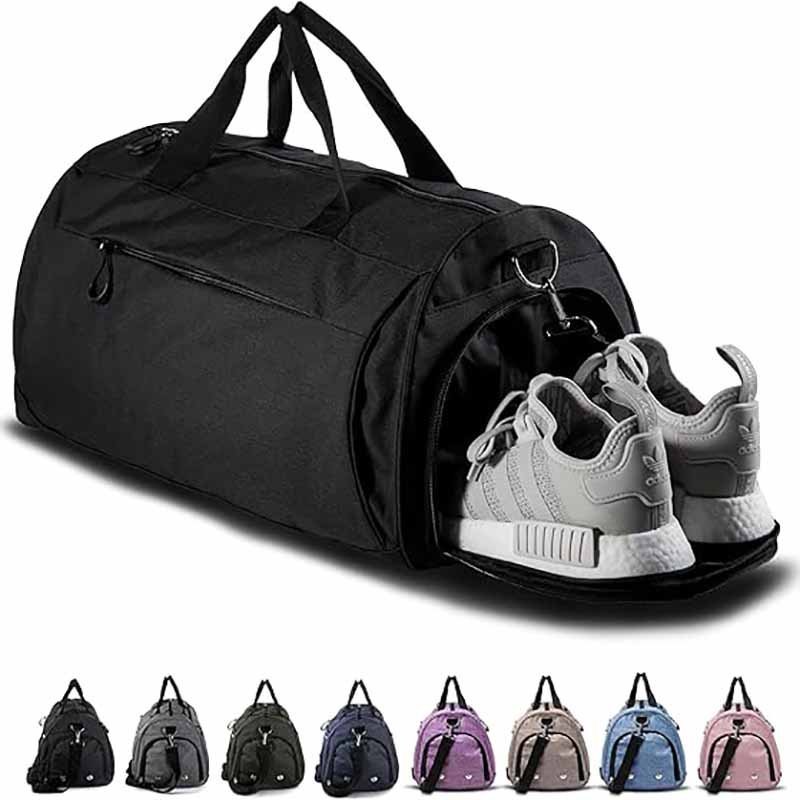
Standard Gym Bags Sizes are measured using three key factors: external dimensions (L × W × H), internal usable volume in liters, and functional compartment space. Accurate measurement helps customers predict real packing capacity and allows manufacturers to keep production consistent across different batches.
Many misunderstandings about gym bag size come from mixing outer appearance with true storage space.
A bag may look large because of thick padding or rounded styling, yet hold less gear than a simpler rectangular design.
Clear measurement methods prevent this confusion before purchase or production.
How to check external Standard Gym Bags Sizes?
External measurement is the first and fastest way to estimate gym bag size.
Factories and retailers normally measure:
- Length – end to end along the base
- Width (depth) – front to back at the widest point
- Height – bottom to top when the bag is naturally filled
However, external size alone cannot describe real usability.
Padding thickness, curved panels, and seam allowance can reduce usable space.
External size vs usable feel
| External Dimensions | Visual Impression | Real Packing Experience |
|---|---|---|
| Tall but narrow | Looks large online | Hard to fit shoes |
| Wide base, low height | Looks compact | Packs efficiently |
| Rounded ends | Stylish shape | Loses corner space |
| Thick foam walls | Premium feel | Reduces inner volume |
For product developers, external measurement also affects:
- locker compatibility
- airline carry-on limits
- shipping carton efficiency
This is why accurate dimension control is essential in OEM production.
How to calculate internal Standard Gym Bags Sizes?
Internal capacity is usually expressed in liters (L), which gives a clearer idea of how much gear fits inside.
A simple reference formula:
Length × Width × Height (cm) ÷ 1000 ≈ liters
But real soft bags rarely match perfect geometry.
Because of seams, curves, padding, and compartments, usable volume is typically 75–90% of the calculated box volume.
Example comparison
| External Size (cm) | Box Volume (L) | Usable Volume (L) | Reason for Loss |
|---|---|---|---|
| 50 × 25 × 25 | 31.3 | 26–28 | Padding + seams |
| 55 × 28 × 28 | 43.1 | 36–39 | Rounded ends |
| 60 × 30 × 30 | 54.0 | 45–50 | Shoe pocket + lining |
Understanding this difference helps customers avoid the common mistake of choosing a bag that looks correct but feels cramped in use.
For brands, stating true usable liters instead of theoretical volume improves customer satisfaction and reduces returns.
How expandable parts change Standard Gym Bags Sizes?
Modern gym bags often include expandable sections, such as:
- zipper-release gussets
- roll-top extensions
- detachable compartments
- stretch pockets
These features allow one bag to function across multiple scenarios.
Capacity shift with expansion
| Base Volume | Expanded Volume | Typical Use Change |
|---|---|---|
| 30 L | 38 L | Daily → full training |
| 35 L | 45 L | Gym → overnight |
| 45 L | 55 L | Weekend → short trip |
Expandable design is popular because it balances:
- daily comfort
- occasional extra storage
- reduced need for multiple bags
From a manufacturing standpoint, expandable structures require:
- reinforced zipper seams
- stronger bottom panels
- controlled pattern grading
Otherwise durability drops when fully loaded.
Are Standard Gym Bags Sizes Based on Volume?
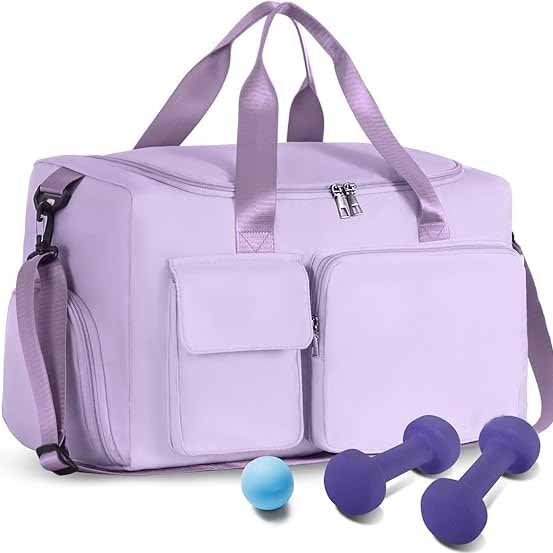
Yes. Standard Gym Bags Sizes are primarily defined by internal volume in liters, supported by external dimensions and functional layout. Volume measurement allows fair comparison across different shapes, materials, and brands.
Customers naturally understand small, medium, and large, but these labels vary widely.
Liters provide the only consistent reference across markets.
Are liters used in Standard Gym Bags Sizes?
Liters are the most reliable way to compare gym bag capacity because they reflect real storage space, not styling.
Why liters matter to customers
- Predicts whether shoes and clothing fit together
- Helps compare duffel vs backpack designs
- Supports online buying without physical testing
Common liter expectations
| Volume | Customer Expectation |
|---|---|
| 20–25 L | Minimal gear only |
| 30–35 L | Full daily workout |
| 40–45 L | Gym + extra layers |
| 50–60 L | Travel or team sports |
Clear liter labeling reduces confusion and improves purchase confidence.
Are small, medium, large Standard Gym Bags Sizes fixed?
Small/medium/large labels are not globally fixed.
Different brands define them differently based on product positioning.
Example variation
| Label | Brand A | Brand B |
|---|---|---|
| Small | 20–25 L | 25–30 L |
| Medium | 30–40 L | 35–45 L |
| Large | 45–55 L | 50–65 L |
Because of this inconsistency, experienced buyers rely more on:
- liter capacity
- dimension tables
- gear-fit photos or charts
For OEM development, defining exact liter targets is more reliable than using S/M/L naming alone.
Are sports types linked to Standard Gym Bags Sizes?
Yes. Different sports naturally require different capacity ranges.
Size preference by activity
| Sport / Routine | Common Volume |
|---|---|
| Yoga / light fitness | 20–30 L |
| General gym training | 30–40 L |
| Strength training + belt | 35–45 L |
| Swimming | 40–50 L |
| Team sports | 50–70 L |
Understanding this link helps brands design targeted product lines instead of one generic size.
It also explains why the 30–45 L range dominates global sales—it fits the widest variety of routines.
How Do Standard Gym Bags Sizes Affect Use?
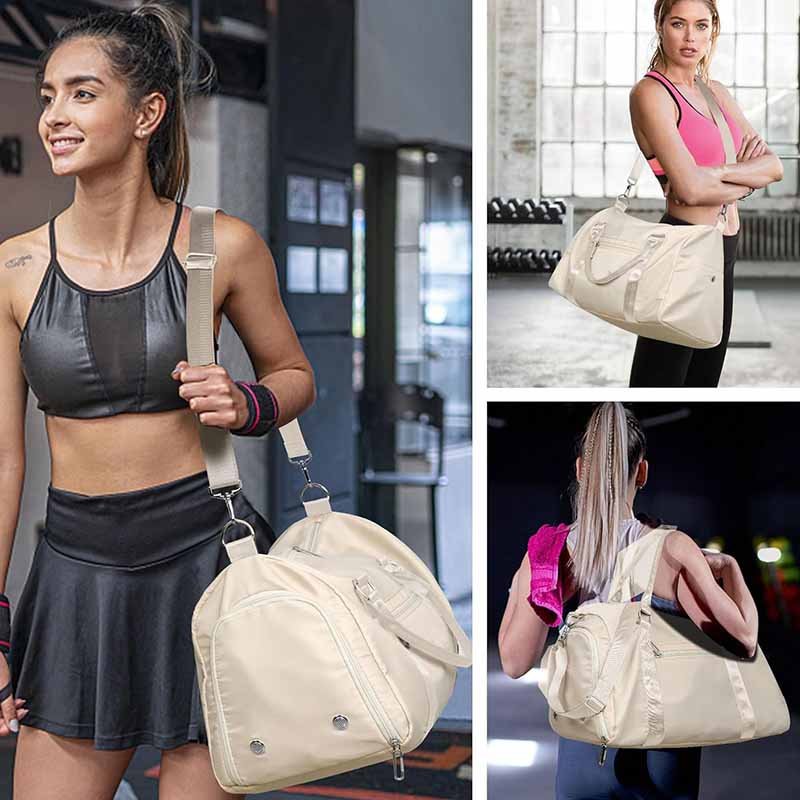
Standard Gym Bags Sizes directly influence carrying comfort, weight balance, packing efficiency, and long-term user satisfaction. Choosing the correct size is not only about storage capacity—it determines how the bag feels during daily movement, commuting, and repeated training routines.
Many users assume “bigger is safer.”
In reality, oversized bags often create unused space, unstable weight distribution, and shoulder strain, while undersized bags force tight packing and faster wear.
The best size is the one that matches real gear volume plus a small functional margin.
How Standard Gym Bags Sizes influence comfort?
Comfort depends on weight, strap structure, and load position, all of which change with size.
When volume increases, users naturally carry more items.
This raises total load and shifts pressure onto:
- shoulder muscles
- neck area
- lower back during walking
Comfort impact by volume
| Volume Range | Typical Loaded Weight | Comfort Experience |
|---|---|---|
| 20–30 L | 3–5 kg | Easy daily carry |
| 30–40 L | 5–8 kg | Balanced comfort |
| 40–50 L | 8–11 kg | Noticeable shoulder load |
| 50–60 L+ | 11–15 kg | Fatigue over distance |
From a design standpoint, larger Standard Gym Bags Sizes require:
- wider shoulder straps
- thicker padding
- reinforced attachment points
Without these upgrades, comfort drops quickly even if capacity looks attractive.
How Standard Gym Bags Sizes change packing space?
Packing efficiency is not equal across volumes.
Some sizes allow natural organization, while others create wasted gaps.
Packing behavior by size
| Volume | Packing Result | Real-World Feeling |
|---|---|---|
| 20–25 L | Tight but organized | Minimalist routine |
| 30–35 L | Efficient layout | Ideal daily balance |
| 40–45 L | Extra flexibility | Comfortable full gear |
| 50 L+ | Risk of overpacking | Heavy and bulky |
A key insight from retail feedback:
Users report the highest satisfaction in the 32–40 L range, where the bag feels complete without becoming heavy.
For brands, this explains why mid-size gym bags often deliver the strongest repeat purchase performance.
How to choose the right Standard Gym Bags Sizes?
A simple decision method is to match routine → gear → comfort limit.
Step-by-step selection logic
- List daily gear (shoes, clothes, towel, extras).
- Estimate required liters using packing tables.
- Add 10–15% extra space for flexibility.
- Check carry comfort for expected weight.
Quick selection table
| Routine Type | Recommended Volume |
|---|---|
| Light fitness only | 20–30 L |
| Standard gym session | 30–40 L |
| Gym + work items | 35–45 L |
| Gym + overnight | 45–55 L |
| Team sports | 55–70 L |
This method prevents both under-sizing frustration and over-sizing fatigue.
What Mistakes Do People Make When Choosing Standard Gym Bags Sizes?
Common mistakes include relying only on appearance, ignoring usable internal space, underestimating shoe volume, and choosing oversized bags that reduce comfort. Avoiding these errors leads to better long-term satisfaction and fewer product returns.
Understanding mistakes is valuable because most size problems appear after purchase, not before.
What common errors happen with Standard Gym Bags Sizes?
Several patterns appear repeatedly in customer feedback:
1. Judging size from photos only
Camera angles often exaggerate space, especially with soft bags.
2. Ignoring shoe compartment impact
Shoes can occupy 20–30% of total volume.
3. Choosing “largest just in case”
Leads to heavier daily carry and unused space.
4. Forgetting locker or travel limits
Some large bags exceed airline cabin or gym locker dimensions.
Error impact overview
| Mistake | Result |
|---|---|
| Too small | Tight packing, zipper stress |
| Too large | Shoulder fatigue, instability |
| Wrong shape | Poor organization |
| No compartment planning | Hygiene and odor issues |
What should be checked before confirming Standard Gym Bags Sizes?
Before selecting or producing a gym bag, practical verification helps avoid regret.
Pre-decision checklist
- Confirm true liter capacity, not only S/M/L label
- Review external dimensions vs locker or travel limits
- Check shoe compartment depth
- Estimate loaded weight, not empty weight
- Ensure strap width and padding match volume
Simple comparison method
Fill a cardboard box with planned gear.
Measure its size.
Convert to liters.
This quick test often reveals the most realistic Standard Gym Bags Sizes for personal use or product development.
Ready to Build the Right Standard Gym Bags Sizes with Lovrix?
Understanding Standard Gym Bags Sizes is the first step.
Turning that understanding into a successful product line requires experience in materials, structure, sampling, and manufacturing consistency.
Lovrix brings together:
- 18+ years of fabric, webbing, and bag production expertise
- Integrated development from size planning → sampling → bulk manufacturing
- Support for custom design, private label, and OEM/ODM gym bags
- Low minimum order quantities for testing new size ranges
- Fast sampling to shorten product launch timelines
For brands and retailers, the real goal is simple:
Right size → better comfort → stronger customer satisfaction → higher repeat sales
Whether you are planning a new gym bag collection, optimizing an existing size range, or exploring custom capacity designs for specific sports markets, the Lovrix team can help translate real-world usage data into production-ready gym bag specifications.
You are welcome to contact Lovrix to discuss:
- Custom Standard Gym Bags Sizes development
- Capacity and structure optimization
- Sampling schedules and cost planning
- Private label manufacturing solutions
A well-designed size is not just a number.
It is the difference between a bag that is used every day—and one that stays forgotten in a locker.