 Skip to content
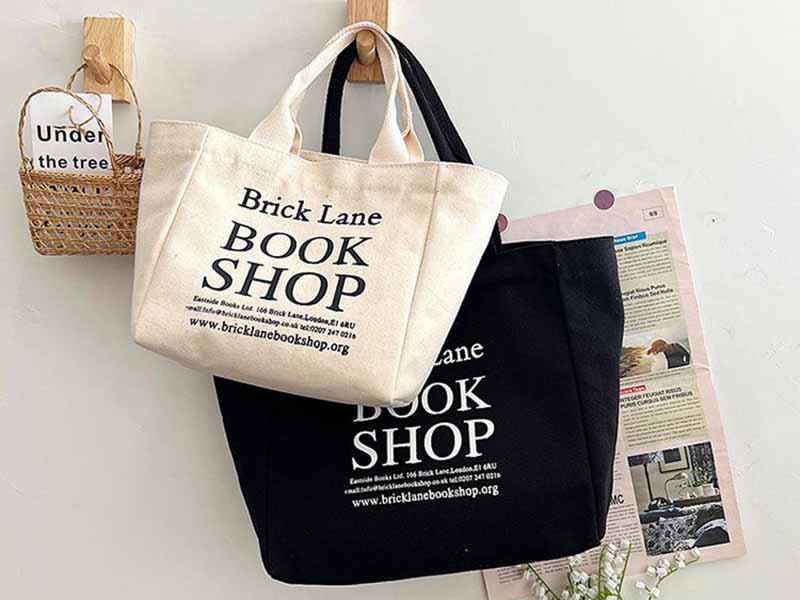
Choosing between 8 oz and 10 oz canvas may look like a small fabric decision, but in a custom bag project, it can change the final product in several visible ways. The bag may feel softer or firmer. It may fold more easily or hold its shape better. The logo may print more cleanly. The handles may feel more secure. The carton weight, packing method, and final unit cost may also change.
For most custom bag projects, 8 oz canvas is better for lightweight promotional bags, event totes, simple shopping bags, drawstring bags, and soft pouches. 10 oz canvas is usually better for daily-use tote bags, retail merchandise bags, grocery totes, bookstore bags, and private label canvas bags that need better durability and structure.
The real question is not whether 10 oz is “better” than 8 oz. The better question is: which fabric weight matches the bag’s real job? A conference tote, a museum shop bag, a grocery tote, and a cosmetic pouch should not automatically use the same canvas. One buyer may need a bag that folds flat for 20,000 event kits. Another may need a retail tote that customers proudly reuse for two years. That is where the material decision becomes a business decision.
What Does 8 oz vs 10 oz Canvas Mean?

8 oz and 10 oz canvas describe fabric weight per square yard, not simply fabric thickness. 8 oz canvas is about 271 GSM, while 10 oz canvas is about 339 GSM. In custom bag production, 8 oz usually feels lighter and softer, while 10 oz usually gives better body, structure, and durability.
Canvas Weight
Canvas weight is usually expressed in ounces per square yard. This means the number tells you how much one square yard of fabric weighs before the fabric is cut, sewn, dyed, printed, lined, or packed. It does not directly tell you the finished bag weight, and it does not tell you the full strength of the final product.
The difference between 8 oz and 10 oz may sound small, but in real bag production it can be visible and easy to feel. 10 oz canvas has about 25% more fabric weight per square yard than 8 oz canvas. That extra material usually creates more firmness, better shape retention, and a stronger first impression.
Still, buyers should not treat the number as a complete quality standard. A well-woven 8 oz canvas can feel cleaner and perform better than a loosely woven 10 oz canvas. Fabric weight is only one part of the material decision.
| Canvas Weight | Approx. GSM | General Feel | Common Bag Use |
|---|---|---|---|
| 6 oz canvas | 203 GSM | Light, soft, very foldable | Dust bags, light drawstring bags, simple pouches |
| 8 oz canvas | 271 GSM | Medium-light, flexible | Event totes, promotional bags, light shopping bags |
| 10 oz canvas | 339 GSM | Medium, firmer, more structured | Retail totes, daily-use totes, grocery bags |
| 12 oz canvas | 407 GSM | Heavy, strong, more substantial | Premium totes, heavier shopping bags |
| 14 oz canvas | 475 GSM | Very strong, stiff | Tool bags, rugged totes, reinforced bags |
GSM Conversion
Many US buyers use oz, while many factories and fabric mills in Asia and Europe also use GSM. GSM means grams per square meter. When sourcing internationally, it is useful to write both measurements in the material specification to avoid confusion.
The common conversion is:
1 oz/yd² ≈ 33.906 GSM
So:
8 oz canvas ≈ 271 GSM
10 oz canvas ≈ 339 GSM
In a tech pack or sample request, a clear material line might look like this:
10 oz cotton canvas, approx. 340 GSM, natural color, plain weave, suitable for screen printing.
This is much clearer than simply writing “canvas bag material.” It tells the manufacturer the expected weight, material type, color direction, weave style, and logo requirement. For custom bag projects, this kind of detail reduces wrong samples, repeated revisions, and quotation confusion.
However, even GSM is not enough by itself. Cotton quality, yarn thickness, weave density, dyeing method, surface finishing, shrinkage, and coating can all affect the final hand feel. That is why professional buyers should always confirm physical swatches before starting sample production.
Thickness And Weave
Heavier canvas is often thicker, but it is not always thicker in a simple visual way. Fabric thickness depends on yarn size, yarn twist, weave density, finishing, washing, coating, and pressing. A tightly woven 10 oz canvas can look compact and smooth, while a looser 8 oz canvas can look thicker but perform weaker under tension.
This is important for custom bags because customers do not buy “oz.” They buy a finished product. They judge whether the bag feels strong, whether the surface looks clean, whether the logo is sharp, whether the seams stay flat, and whether the bag keeps its shape after use.
A tight weave usually improves surface stability and printing results. A loose weave may feel more natural and soft, but it can stretch, wrinkle, or deform more easily. For tote bags, tighter canvas often gives a more reliable structure. For pouches or drawstring bags, a slightly softer hand feel may be more comfortable.
When comparing 8 oz and 10 oz canvas, buyers should touch the fabric, fold it, pull it slightly by hand, check the surface under light, and test the logo method. The right material decision is not made from a number alone. It is made from how that number behaves in the finished bag.
Production Meaning
In manufacturing, 8 oz vs 10 oz affects more than material cost. It can affect cutting behavior, sewing pressure, seam thickness, folding method, logo application, carton packing, and final product appearance.
8 oz canvas is usually easier to fold and sew. It creates less seam bulk and works well for simple flat totes, promotional bags, and lightweight pouches. It can also reduce packed weight for large-volume orders. But if the bag is too large or expected to carry heavy items, 8 oz may need structural support such as reinforced handles, wider seams, or a better bottom design.
10 oz canvas usually gives the bag more body. It is better when the product needs to feel reusable, stable, and brand-ready. But it may create thicker folded seams, slightly higher material cost, and less compact packing. It also requires careful control around corners, gussets, handles, and logo areas.
For B2B sourcing, the best approach is to connect canvas weight with the full product plan: bag size, load expectation, logo method, sales channel, packing style, and target price. That is how a fabric specification becomes a production-ready decision.
Is 8 oz Canvas Good for Bags?

Yes, 8 oz canvas is good for lightweight bags, promotional totes, event bags, simple shopping bags, drawstring bags, dust bags, and small pouches. It is soft, foldable, and cost-efficient. However, it may feel too light for premium retail totes, heavy grocery bags, or products that need strong structure.
Best Uses
8 oz canvas is a practical choice when the bag needs to be easy to carry, easy to fold, and reasonable in cost. It is widely used for conference totes, brand giveaways, school activity bags, bookstore event bags, natural cotton shopping bags, simple drawstring bags, dust bags, cosmetic pouches, and product packaging bags.
For many promotional projects, the buyer does not need a very heavy bag. The bag may only carry brochures, samples, small gifts, documents, apparel, or light retail products. In those cases, 8 oz canvas can deliver the right balance between appearance, function, and budget.
It is also a good choice when a brand wants a soft and casual look. Some buyers do not want a stiff tote. They want a natural cotton feeling, relaxed structure, and easy folding. An 8 oz natural canvas tote can feel approachable and environmentally conscious without looking overly engineered.
The important point is size control. 8 oz canvas performs better in small to medium bag sizes. If the tote becomes too large, the panels may look loose, the bottom may sag, and the handles may pull against the fabric more visibly. For larger bags, structure should be adjusted instead of relying on fabric alone.
Strength Limits
8 oz canvas can be strong enough for light daily use, but it should not be treated as a heavy-duty material. It can carry ordinary items such as books, documents, light groceries, apparel, cosmetics, and event materials. But repeated heavy loading may expose weaknesses in the bag structure.
In many projects, the failure point is not the flat canvas panel. It is the handle attachment, side seam, bottom seam, or stress point where the fabric is pulled repeatedly. A simple 8 oz flat tote with narrow handle stitching may not perform well if users carry bottles, canned food, laptops, or heavy books every day.
This does not mean 8 oz is unreliable. It means the product should be designed honestly. If a buyer wants to use 8 oz canvas for a larger tote, the factory may need to improve the construction. Useful options include wider handle webbing, X-box stitching, reinforced stress points, binding tape, better seam allowance, a smaller bag size, or a gusset design that distributes weight more evenly.
For buyers, the key question is not “Is 8 oz strong?” The better question is “Strong enough for what load, what size, and what user habit?” That question leads to a much more accurate material decision.
Printing Behavior
8 oz canvas usually works well for screen printing, heat transfer, simple embroidery, woven labels, and basic private label decoration. The surface is usually stable enough for common promotional logos, especially when the artwork is not too dense or oversized.
However, because 8 oz canvas is softer than 10 oz canvas, large solid prints may need more careful handling. If the fabric shifts during printing, logo edges can become less sharp. If the ink layer is too heavy, the printed area may feel stiff compared with the softer fabric body. If embroidery is too dense, the fabric may pucker unless proper backing is used.
For event bags and promotional totes, simple one-color or two-color screen printing often works very well on 8 oz canvas. For premium logos, embroidery or patches can also work, but the artwork should be tested first. Fine letters, small details, and dense stitch areas may not look as clean as expected on lighter fabric.
A good pre-production process should include logo testing on the actual canvas, not just a digital mockup. The buyer should check logo sharpness, color result, fabric distortion, folding position, and packing impact before approving bulk production.
Cost And Packing
8 oz canvas is often attractive because it helps control material weight and packing efficiency. Since it is lighter than 10 oz, it can reduce fabric consumption weight and make large-volume orders easier to pack and ship. This matters for promotional distributors, event companies, retail campaigns, and brands shipping products by air or courier.
The price difference between 8 oz and 10 oz depends on fabric quality, order volume, dyeing, finishing, bag size, logo process, and labor cost. A 10 oz fabric has about 25% more fabric mass than 8 oz, but the finished bag price does not usually increase by 25% because sewing, printing, packing, and logistics are also part of the final cost.
8 oz canvas also folds more compactly. This can help when thousands of bags need to be packed into cartons, inserted into event kits, distributed at trade shows, or shipped to multiple locations. A softer bag may also be easier for end users to store inside another bag.
The trade-off is perceived value. If the brand wants the bag to feel premium, reusable, and retail-ready, saving a small amount on material may not be worth it. 8 oz works best when the product goal is clear: light, practical, foldable, and cost-controlled.
Is 10 oz Canvas Better for Tote Bags?

10 oz canvas is often better for tote bags that need stronger structure, better hand feel, daily reuse, retail value, or heavier carrying performance. It gives the bag more body than 8 oz canvas while still staying practical for cutting, sewing, printing, packing, and bulk production.
Daily Tote Use
10 oz canvas is a strong starting point for daily-use tote bags. It feels more substantial in the hand and usually gives the finished bag a cleaner shape. For bags that customers may carry to work, school, grocery stores, bookstores, cafes, exhibitions, or weekend markets, 10 oz canvas often feels more reliable than 8 oz.
A tote bag is not only a flat piece of fabric with handles. It is a product that faces repeated pulling, folding, loading, and friction. When users put books, water bottles, groceries, cosmetics, or personal items inside, the fabric needs enough body to support the load without looking weak. 10 oz canvas gives better panel stability and reduces the floppy look common in lighter totes.
For brands, this matters because a reusable tote often becomes a moving advertisement. If users like the feel of the bag, they keep using it. If the bag feels too thin, they may leave it at home or throw it away. In that sense, the added material weight can support not only function but also long-term brand exposure.
10 oz is not the heaviest option, but it is a practical middle ground. It gives more confidence than 8 oz without becoming as stiff or expensive as 12 oz or 14 oz canvas.
Retail Feel
For retail totes, 10 oz canvas often gives a better first impression. Customers usually judge a canvas bag by touch before they think about fabric specifications. They notice whether the bag feels solid, whether it hangs nicely, whether the logo looks clean, and whether the body feels reusable.
Retail bags are different from basic giveaways. A bag sold in a museum shop, bookstore, fashion store, beauty store, coffee shop, or lifestyle brand website needs to feel like a product, not just packaging. 10 oz canvas helps create that product-level impression.
The better structure also improves product photography and shelf display. A 10 oz tote can look cleaner when photographed flat or lightly filled. It is less likely to appear limp or overly casual. If the bag has a gusset, wider handle, inside pocket, or branded patch, the stronger fabric supports those details better.
Still, buyers should not assume 10 oz automatically means premium. A poorly sewn 10 oz tote can still look cheap. Thread color, seam alignment, handle position, logo placement, fabric shade, and packing method all matter. 10 oz provides a better foundation, but good manufacturing turns that foundation into a strong retail product.
Structure And Load
10 oz canvas usually holds shape better than 8 oz because it has more fabric mass and often better resistance to panel collapse. This is especially useful for bags with gussets, boxed bottoms, large logo panels, wider openings, or heavier carrying expectations.
For grocery totes, bookstore totes, merchandise bags, and market bags, structure matters. When users carry heavier items, the bag should not stretch too much or sag badly at the bottom. A 10 oz body can help distribute load more evenly, but the full construction is still critical.
The strongest tote is not simply the one with the heaviest fabric. A good structure includes proper seam allowance, reinforced handle stitching, suitable thread, balanced handle length, and a bottom design that matches the expected load. A 10 oz tote with weak handle stitching can fail faster than an 8 oz tote with better reinforcement.
If a buyer expects the bag to carry very heavy goods regularly, 10 oz may still be only the starting point. The project may need 12 oz canvas, reinforced webbing handles, bound seams, or a bottom board. For most daily-use retail totes, however, 10 oz is a balanced and dependable option.
Cost Value
10 oz canvas costs more than 8 oz in fabric weight, but it can deliver better value when the bag needs to represent a brand. If the finished product feels stronger, lasts longer, and gets reused more often, the added material cost can be justified.
The important thing is to look at total value, not only unit price. For a premium brand, a tote that feels too thin can damage perception. For a retailer, a weak bag may lead to complaints. For a corporate gift program, a better tote may create longer exposure because recipients continue using it after the event.
At the same time, 10 oz is not always necessary. If the order is for a one-day trade show giveaway, 8 oz may be more efficient. If the product is a soft drawstring pouch, 10 oz may be too stiff. If the buyer has a strict freight budget, the extra weight may need to be considered carefully.
A useful sourcing method is to compare two samples with the same dimensions, same logo, same handle, and same packing method. When the buyer holds both bags side by side, the decision is usually clearer than any material chart.
| Factor | 8 oz Canvas | 10 oz Canvas | Practical Meaning |
|---|---|---|---|
| Approx. GSM | 271 GSM | 339 GSM | 10 oz has about 25% more fabric mass |
| Hand feel | Softer, lighter | Firmer, stronger | 10 oz feels more retail-ready |
| Shape | More relaxed | Better structure | 10 oz works better for daily totes |
| Foldability | Easier to fold | Less compact | 8 oz packs more efficiently |
| Load support | Light to medium | Medium to stronger daily use | 10 oz handles repeated use better |
| Best fit | Promotions, events, pouches | Retail totes, grocery totes, merchandise | Match weight to product role |
Which Canvas Weight Fits Your Bag Type?

8 oz canvas fits lightweight promotional bags, simple shopping bags, drawstring bags, dust bags, and small pouches. 10 oz canvas fits retail totes, grocery bags, bookstore bags, daily-use shopping bags, and brand merchandise. The right weight depends on the bag’s size, load, structure, logo method, and sales channel.
Promotional Bags
For promotional bags, 8 oz canvas is often the practical choice. Promotional bags usually need to be cost-efficient, easy to print, easy to pack, and light enough for large-volume distribution. They are commonly used for exhibitions, conferences, brand events, school activities, charity campaigns, and corporate giveaways.
In these situations, the bag often carries brochures, small gifts, documents, apparel samples, or light products. A medium-size 8 oz canvas tote can perform well and still feel better than very thin non-woven or basic cotton alternatives. It gives the user a natural fabric feel without pushing the project into a higher-cost category.
However, not all promotional bags are low-value items. A luxury hotel event, premium product launch, museum campaign, or VIP corporate gift may need a stronger impression. In those cases, 10 oz canvas can make the bag feel more serious and more reusable.
The best decision depends on what the promotion is supposed to achieve. If the bag is mainly a one-time carrier, 8 oz is usually enough. If the bag is expected to stay in use after the event and represent the brand in public, 10 oz may be worth the upgrade.
Retail Totes
For retail totes, 10 oz canvas is usually the safer starting point. Retail customers expect the bag to look and feel like a real product. They may buy it directly, receive it as part of a product bundle, or use it as branded packaging. In all cases, the tote becomes part of the brand experience.
10 oz canvas gives better body and hand feel than 8 oz. It also supports logo decoration more confidently, especially for larger front-panel artwork. The bag is less likely to look limp in product photography or store display.
Retail totes are common in bookstores, museums, cafes, beauty brands, fashion stores, organic shops, lifestyle brands, and DTC merchandise programs. These bags often need to balance cost and quality. 10 oz canvas usually gives enough structure without becoming too heavy or too expensive.
If the retail positioning is more premium, 12 oz may be considered. If the retail product is intentionally soft, casual, and foldable, 8 oz may still work. But for most standard retail canvas totes, 10 oz gives a better balance of durability, appearance, and customer confidence.
Grocery Bags
Grocery bags need stronger material and better structure because they carry heavier and more irregular items. Bottles, cans, fruit, vegetables, books, and household goods create pressure on the bottom and handle areas. For this reason, 10 oz canvas is usually a better starting point than 8 oz.
A good grocery tote should also have a functional shape. A wide gusset, reinforced bottom seam, stronger handle stitching, and suitable handle width can be more important than fabric weight alone. If the bag is large, 12 oz canvas may be more suitable, especially when the buyer wants a reusable market bag for weekly shopping.
8 oz canvas can work for light shopping bags, especially smaller flat totes. But for repeated grocery use, it may sag more easily and feel less secure. If the bag will be used by supermarket customers, farmers market shoppers, or eco retail programs, a stronger fabric gives users more confidence.
For grocery projects, buyers should test the bag with real weight. Paper-based load assumptions are not enough. Put common grocery items inside the sample, carry it, hang it, and check seam stress after use.
Pouches And Drawstring Bags
Pouches and drawstring bags often work better in 8 oz canvas because smaller products need flexibility. A drawstring opening must close smoothly. A pouch seam should not become too bulky. A dust bag should fold easily around the product. In these cases, 10 oz canvas can feel too stiff or too thick.
For cosmetic pouches, accessory pouches, gift bags, storage bags, jewelry bags, and branded dust bags, 8 oz provides a comfortable balance of durability and softness. It also allows easier folding and packing, which is important for product packaging or e-commerce shipping.
However, some pouches need stronger structure. A tool pouch, outdoor accessory pouch, hardware pouch, or premium zip pouch may benefit from 10 oz canvas. The decision depends on whether the product needs softness or protection.
Small products are more sensitive to seam bulk. A fabric that feels only slightly heavier in a tote can feel much heavier in a small pouch. That is why sample testing is especially important for small canvas products.
| Bag Type | Better Starting Weight | Reason | When To Upgrade |
|---|---|---|---|
| Trade show tote | 8 oz | Light, printable, easy to distribute | Upgrade to 10 oz for VIP events |
| Corporate gift tote | 8–10 oz | Depends on gift value and audience | Use 10 oz for premium campaigns |
| Retail merchandise tote | 10 oz | Better hand feel and structure | Upgrade to 12 oz for higher-end retail |
| Grocery tote | 10 oz | Better load support | Use 12 oz for large reusable market bags |
| Bookstore tote | 10 oz | Better for books and daily use | Use reinforced handles for heavier loads |
| Drawstring bag | 8 oz | Easier closure and softer feel | Use 10 oz for rugged utility style |
| Cosmetic pouch | 8 oz | Less seam bulk, easier handling | Use 10 oz for structured zip pouches |
| Tool pouch | 10 oz | Stronger fabric body | Add reinforcement for sharp or heavy tools |
How Do Weight, Cost, and Branding Change?

Canvas weight affects material cost, finished bag weight, hand feel, logo result, packing method, and shipping planning. 10 oz canvas uses about 25% more fabric weight than 8 oz, but final unit cost does not rise by the same percentage because labor, logo, packing, and logistics also affect price.
Material Cost
The material cost difference between 8 oz and 10 oz canvas starts with fabric weight. Since 10 oz fabric is about 25% heavier per square yard, the raw fabric portion usually costs more. But the finished bag price includes many other elements: cutting, sewing, thread, handles, logo decoration, labels, inner pockets, packing, cartons, inspection, and freight.
This means buyers should avoid a simple assumption such as “10 oz will cost 25% more.” In many cases, the final price gap is smaller than the fabric weight difference. The gap depends on bag size, fabric market price, cutting waste, order quantity, sewing complexity, and decoration method.
For a very simple flat tote, fabric cost may be a larger share of the total price. For a more complex bag with pockets, lining, webbing, zippers, patches, labels, and retail packaging, fabric weight may be only one part of the cost structure.
A serious quotation should compare the same bag design in both 8 oz and 10 oz canvas. This gives buyers a realistic view of the cost difference and helps them decide whether the better hand feel is worth it.
Printing And Logo
Both 8 oz and 10 oz canvas can support common logo methods, but the result may feel different. 8 oz canvas is suitable for simple screen printing, light embroidery, woven labels, and basic heat transfer. It works well when the logo is not too dense and the bag body is not expected to be very structured.
10 oz canvas usually gives a more stable surface for larger logos and retail-grade decoration. Because the fabric has more body, it is less likely to move or distort during handling. This can help screen printing look cleaner, especially on front-panel tote bags.
Embroidery needs careful testing on both weights. On 8 oz canvas, dense embroidery may create puckering unless backing is used. On 10 oz canvas, the fabric usually supports embroidery better, but very dense logos can still make the surface stiff. Fine text, gradient graphics, and complex artwork may work better as printing, woven labels, rubber patches, or leather patches.
Logo method should be chosen together with fabric weight. A beautiful digital mockup does not guarantee a good bulk result. Buyers should test the logo on the actual canvas before approving production.
Packing And Freight
8 oz canvas is easier to fold and pack. This can be useful for promotional orders, event distribution, and large-volume shipments where carton efficiency matters. A softer 8 oz bag can usually be folded flatter, which may reduce carton volume depending on the bag design and packing method.
10 oz canvas adds more weight and may increase carton weight. If the tote has gussets, reinforced handles, thick seams, or retail packaging, the packing volume may also increase. This matters for air freight, express courier, Amazon FBA preparation, and orders shipped to multiple warehouses.
Packing also affects the product appearance. If a 10 oz canvas tote is folded too tightly, visible creases may remain. If a printed logo is folded across the artwork, the ink may need testing. If the bag is sold as retail merchandise, buyers may prefer a packing method that protects the front panel and logo area.
A good packing plan should confirm fold method, units per polybag, units per carton, carton weight, carton size, label requirements, and whether the final presentation matches the sales channel.
Brand Perception
Canvas weight changes how customers feel about a bag. An 8 oz tote can feel casual, natural, soft, and easy to carry. That is positive for eco events, lifestyle promotions, relaxed retail campaigns, and lightweight product packaging.
A 10 oz tote usually feels more durable, more reusable, and more product-like. That is useful when the bag represents a retail brand, carries paid merchandise, or supports a premium customer experience. Customers may not know the weight number, but they can feel the difference.
Brand perception is especially important when the bag is part of the customer’s first contact with the brand. A thin-feeling tote may make a good logo look less valuable. A stronger tote can make a simple logo feel more intentional.
However, heavier does not always mean better branding. Some brands want softness and foldability. Some want a relaxed natural look. Others want structure and durability. The right canvas weight should match the brand personality, not just the idea of “higher quality.”
| Cost And Branding Factor | 8 oz Canvas | 10 oz Canvas | Buying Impact |
|---|---|---|---|
| Raw fabric weight | Lower | About 25% higher | 10 oz usually raises material cost |
| Finished unit price | Usually lower | Usually higher | Final gap depends on labor and logo |
| Logo surface | Good for simple artwork | Better for larger logo panels | Test actual logo before bulk |
| Embroidery | Needs backing for dense designs | More stable for embroidery | Still needs sample approval |
| Packing | Folds flatter | More body, heavier cartons | Confirm fold and carton plan |
| User impression | Casual, lightweight | Stronger, more reusable | Match the sales channel |
| Retail value | Basic to mid-level | Stronger retail feel | 10 oz usually supports better perceived value |
How Should Brands Choose Before Sampling?
Brands should choose between 8 oz and 10 oz canvas by reviewing bag purpose, size, load, structure, logo method, sales channel, target price, and packing needs. Before bulk production, compare real fabric swatches and finished samples. The best canvas weight is the one that works in the final bag, not only on paper.
Define The Use Case
Before choosing canvas weight, define how the bag will actually be used. This is the most practical step and often prevents wrong material choices. A tote for a one-day conference does not need the same canvas as a retail tote sold in a museum shop. A grocery tote does not need the same material as a drawstring dust bag.
Start with simple questions:
What will the user carry?
How often will the bag be reused?
Will the bag be sold or given away?
Does it need to fold flat?
Does it need to hold shape?
Will the logo be printed, embroidered, patched, or woven?
Will the bag be shipped in bulk, inserted into kits, or displayed in stores?
If the answers point toward light use, easy folding, and budget control, 8 oz may be enough. If the answers point toward daily use, resale value, heavier carrying, and stronger brand image, 10 oz is usually safer.
Material decisions should always come after product purpose. When buyers start from the use case, the fabric choice becomes much clearer and fewer revisions are needed during sampling.
Compare Real Samples
A fabric swatch is helpful, but a finished sample is much more reliable. A 10 cm swatch cannot show how a 38 cm tote will hang, fold, carry weight, or display a logo. The real test happens when the fabric becomes a finished bag.
When comparing 8 oz and 10 oz samples, use the same design. Keep the same size, handle width, seam construction, logo artwork, and packing method. This makes the comparison fair. If one sample has better stitching or a different handle, the fabric comparison becomes inaccurate.
Hold both samples in hand. Put typical items inside. Check whether the bottom sags. Look at the handle stress points. Fold the bag and see if the logo area creases. Photograph the bag as it would appear online or in retail. These small tests reveal more than a material chart.
For larger orders, it is often worth making two material versions before deciding. The extra sampling cost is usually much lower than the cost of producing thousands of bags in the wrong fabric weight.
Check Logo And Structure
Logo testing should happen before bulk approval. Canvas weight can change how printing, embroidery, patches, and labels perform. A logo that looks good on 10 oz canvas may not look the same on 8 oz canvas. Dense embroidery that works on a firm surface may pucker on lighter canvas.
Structure also needs review. For a tote bag, check handle length, handle width, stitch pattern, seam allowance, gusset shape, bottom support, and edge finishing. For a pouch, check seam bulk, zipper movement, corner shape, and opening feel. For a drawstring bag, test whether the opening closes smoothly.
A professional pre-production sample should confirm the full construction, not just the fabric. If a buyer only approves the material and logo separately, problems may appear when everything is assembled into the final product.
Good sampling should answer practical questions: Does the bag look right? Does it feel right? Does it carry correctly? Does the logo stay clean? Does the packing method protect the appearance? If the answer is yes, the project is much closer to production-ready.
Work With A Manufacturer
A reliable custom bag manufacturer should help buyers connect material choice with production reality. The conversation should not stop at “8 oz or 10 oz?” It should include bag size, carrying load, logo method, stitching, reinforcement, packaging, MOQ, delivery plan, and long-term reorder needs.
For OEM projects, buyers may already have drawings, samples, or tech packs. The manufacturer should review whether the requested canvas weight matches the structure. For ODM projects, buyers may only have a reference image or product idea. In that case, the manufacturer should help recommend material, shape, handle design, logo placement, and sampling route.
This is especially important for brands planning repeat orders or product lines. Once the material, color, pattern, BOM, logo process, and packing method are confirmed, future orders become easier to manage. Batch consistency improves when the first project is documented properly.
If you are developing custom canvas tote bags, retail bags, promotional bags, drawstring bags, or private label canvas products, prepare your target size, reference image, logo file, expected quantity, sales channel, and budget direction before requesting a quote. With that information, the manufacturer can give more accurate material suggestions and help turn the fabric choice into a production-ready bag.
| Sampling Checkpoint | What To Review | Why It Matters |
|---|---|---|
| Fabric swatch | Weight, hand feel, weave, color | Confirms the basic material direction |
| Finished sample | Shape, size, structure, handle feel | Shows how the fabric behaves as a bag |
| Logo test | Printing, embroidery, patch, label | Prevents decoration problems in bulk |
| Load test | Books, groceries, samples, real items | Checks handle and seam performance |
| Packing test | Folding, carton quantity, logo position | Reduces creases and shipping surprises |
| Cost comparison | Same design in 8 oz and 10 oz | Helps judge value, not only price |
| Pre-production sample | Final material, logo, construction, packing | Sets the bulk production standard |
Final Recommendation: Choose The Canvas Weight That Matches The Product
8 oz and 10 oz canvas are both useful materials for custom bags, but they serve different product goals.
8 oz canvas is the practical choice for lightweight, foldable, promotional, and cost-controlled bags. It works well when the bag needs to be easy to distribute, easy to pack, and suitable for light use.
10 oz canvas is usually the better choice for retail totes, daily-use bags, grocery totes, bookstore bags, and private label canvas products where structure, durability, and perceived quality matter more.
For brands, the wrong decision is not choosing 8 oz or 10 oz. The wrong decision is choosing without testing the real product. A canvas bag is not just fabric. It is a system of material, weave, handle, seam, reinforcement, logo process, packing, and quality control. The best canvas weight is the one that supports the user’s real behavior and the brand’s commercial goal.
If you are developing a custom canvas tote bag, promotional canvas bag, retail tote, drawstring bag, pouch, or private label canvas product, Lovrix can help evaluate the right material weight before sampling. Send your product drawing, reference image, target size, logo file, expected quantity, sales channel, and budget direction. The Lovrix team can review 8 oz, 10 oz, or other canvas options, then help turn the idea into a production-ready custom bag.
Contact Lovrix for your custom canvas bag project and request a material recommendation, sample development plan, and OEM/ODM quotation.


