 Skip to content

Language in fashion never stands still. When a product changes how it’s worn, who wears it, and why it’s worn, its name often changes too. That’s exactly what happened to the fanny pack. Once dismissed as outdated or unfashionable, it quietly re-entered wardrobes—this time worn across the chest, styled with streetwear, and endorsed by luxury brands. But interestingly, many people stopped calling it a “fanny pack” altogether.
Today, consumers search for belt bags, waist bags, hip packs, or even crossbody bags, often without realizing they’re referring to the same core product. The name shift isn’t accidental. It reflects changing cultural attitudes, generational preferences, and branding strategies. For brands, especially those selling online or globally, choosing the right name directly affects discoverability, perception, and sales.
Fanny packs are now commonly called belt bags, waist bags, or hip packs, depending on region and audience. In the U.S., “belt bag” is the most modern and widely accepted term, while “waist bag” is preferred in Europe and Asia. Gen Z and fashion brands often avoid the term “fanny pack” due to its outdated or casual connotation, even though the product itself remains popular.
A designer once said, “We didn’t change the product—we changed the language around it.” That single sentence explains why naming matters just as much as design.
What Is a Fanny Pack
A fanny pack is a small, compact bag designed to be worn around the waist or across the body, secured by an adjustable strap. It is intended to carry everyday essentials such as a phone, wallet, keys, and travel documents while keeping the wearer’s hands free. Modern fanny packs are often worn crossbody or on the chest and are also known as belt bags, waist bags, or hip packs.
Although the name “fanny pack” is increasingly replaced by newer terms, the product itself has a clear functional identity. Understanding that identity helps consumers choose the right bag—and helps brands design and position it correctly.
What defines a fanny pack in practical terms?
A fanny pack is defined more by how it is worn and used than by how it looks.
Core defining elements include:
- Hands-free design secured with a strap
- Compact capacity, usually for essentials only
- Quick-access orientation, worn in front or to the side
- Close-to-body fit, reducing swing and movement
Unlike handbags or shoulder bags, fanny packs are meant to move with the body. This is why they are popular for walking, traveling, commuting, and events where mobility matters.
How is a fanny pack different from other small bags?
Fanny packs are often confused with sling bags, crossbody bags, or mini backpacks, but there are key differences.
| Bag Type | Key Difference |
|---|---|
| Fanny pack | Designed to sit on waist or body with strap |
| Crossbody bag | Hung from shoulder, often looser fit |
| Sling bag | Usually larger, worn diagonally on back |
| Mini backpack | Two straps, worn on back |
A modern fanny pack may look like a crossbody bag, but its strap length, balance point, and intended wear position are different.
How did the fanny pack get its name?
The term “fanny pack” originated in the United States and refers to how the bag was traditionally worn at the front of the waist. In American English, “fanny” is informal slang for the backside, making the name descriptive rather than technical.
However, in British English, the word has a very different meaning, which is one reason global brands tend to avoid the term and prefer neutral alternatives like waist bag or belt bag.
How has the fanny pack evolved over time?
The original fanny pack was purely functional—often made from nylon or canvas with a single zippered compartment.
Modern versions have evolved in several ways:
- Worn crossbody or on the chest
- Made from premium materials (leather, coated fabrics)
- Designed with multiple compartments and structure
- Integrated into fashion and streetwear styling
Despite these changes, the core function—compact, hands-free storage—remains unchanged.
Why do modern brands avoid the term “fanny pack”?
Many brands avoid the term not because the product is outdated, but because the language feels dated or informal.
Reasons brands prefer newer terms:
- “Fanny pack” sounds casual or nostalgic
- “Belt bag” aligns better with luxury and fashion
- “Waist bag” works globally across markets
- Modern wear styles don’t match the old name
This is why you may buy a “belt bag” that is functionally identical to a classic fanny pack.
Is a fanny pack still relevant today?
Absolutely—but relevance depends on design, naming, and context.
Fanny packs remain popular because they:
- Solve real-life convenience problems
- Fit modern urban and travel lifestyles
- Align with hands-free fashion trends
The product never disappeared; it was simply rebranded and repositioned.
What Are Fanny Packs Called Now
Fanny packs are now most commonly called belt bags, waist bags, or hip packs. In the U.S., “belt bag” is the most modern and widely used term, especially in fashion and e-commerce. In Europe and Asia, “waist bag” is preferred. Younger consumers and brands often avoid “fanny pack” because it sounds outdated, even though the product itself remains popular.
The product didn’t change first—the language changed first. What people call a fanny pack today depends on where it’s sold, who it’s for, and how it’s worn.
What is the new name for a fanny pack?
The most widely accepted new name is belt bag.
Why “belt bag” became dominant:
- Sounds modern, clean, and neutral
- Works for both waist and crossbody wear
- Fits luxury, streetwear, and lifestyle branding
- Avoids the playful or dated tone of “fanny pack”
Most fashion brands, influencers, and online retailers now default to “belt bag,” even when the design is identical to a traditional fanny pack.
What is the modern word for a fanny pack?
There isn’t a single modern word—there is a set of modern terms, each used in different contexts.
| Modern Term | Common Context |
|---|---|
| Belt bag | Fashion, luxury, streetwear |
| Waist bag | International markets, travel |
| Hip pack | Outdoor, sports, functional use |
| Crossbody belt bag | Trend-driven e-commerce listings |
In practice, brands often use multiple terms together (e.g., “belt bag / waist bag”) to capture broader search intent and avoid limiting reach.
What do Americans call fanny packs today?
In the U.S., usage depends heavily on context.
- Fashion & lifestyle: belt bag
- Luxury brands: belt bag or crossbody belt bag
- Casual conversation: fanny pack still understood
- Sports & outdoor: waist pack or hip pack
Americans still recognize “fanny pack,” but many prefer “belt bag” when shopping online because it feels newer and more stylish.
Are there regional differences in naming?
Yes—and they matter for global brands.
| Region | Most Common Term |
|---|---|
| United States | Belt bag |
| Europe | Waist bag |
| UK | Bum bag |
| Asia | Waist bag / small crossbody bag |
Because the word “fanny” has different meanings outside the U.S., international brands usually avoid it entirely and choose neutral, descriptive language.
Why do brands intentionally avoid the term “fanny pack”?
Brands don’t avoid the product—they avoid the connotation.
Common reasons:
- Sounds dated or tourist-like
- Doesn’t match crossbody wear style
- Feels informal for premium pricing
- Doesn’t translate well internationally
By changing the name, brands reposition the same product as modern, fashionable, and globally relevant.
Do different names describe different products?
Sometimes—but often no.
In many cases:
- A belt bag = a fanny pack worn crossbody
- A waist bag = the same product in global markets
- A hip pack = a fanny pack used for sports
The core product is the same. The name changes based on how it’s styled, worn, and marketed.
What name should brands use today?
For most brands, the safest strategy is:
- Primary name: Belt bag
- Secondary (SEO): Waist bag, fanny pack
- Context-specific: Hip pack (sports), crossbody bag (fashion)
This approach balances modern branding with search visibility.
How Do Different Generations Call Fanny Packs
Different generations use different names for fanny packs. Gen Z most often calls them belt bags or crossbody bags, avoiding the term “fanny pack.” Millennials use a mix of belt bag, waist bag, and fanny pack depending on context. Older generations still commonly say fanny pack. These differences reflect fashion trends, social media influence, and how the bag is worn today.
What people call a fanny pack isn’t random—it reflects identity, cultural context, and lifestyle habits. Understanding generational language is essential for SEO, branding, and product development.
What do Gen Z call fanny packs?
Gen Z rarely uses the term “fanny pack” unless joking or speaking ironically.
Preferred Gen Z terms include:
- Belt bag
- Crossbody bag
- Mini bag (sometimes loosely used)
- Chest bag (when worn high across the torso)
Why Gen Z avoids “fanny pack”:
- The term feels outdated or uncool
- It’s associated with older travel stereotypes
- It doesn’t match modern crossbody styling
- Social media language favors fashion-forward terms
On platforms like TikTok, Instagram, and Pinterest, “belt bag” overwhelmingly dominates captions, hashtags, and product links. For Gen Z–targeted brands, using “fanny pack” as a primary name can actively reduce appeal.
How do Millennials refer to fanny packs?
Millennials act as a bridge generation between old and new terminology.
Common Millennial usage:
- Belt bag (fashion & lifestyle)
- Waist bag (travel & practicality)
- Fanny pack (casual or nostalgic conversation)
Millennials grew up seeing fanny packs decline and then return. As a result, they’re comfortable switching terms based on context. From an SEO perspective, Millennials are more likely to search using both old and new names, making them a key audience for dual-term optimization.
Do older generations still use “fanny pack”?
Yes—very consistently.
For Gen X and Baby Boomers:
- “Fanny pack” is clear, functional, and familiar
- Less concern about trend language
- Strong association with travel, walking, and convenience
In utility-driven markets (travel accessories, walking gear, medical or senior-use products), “fanny pack” remains a high-converting term, even if it feels outdated in fashion contexts.
What do Americans call fanny packs across generations?
In the U.S., naming varies by age + use case:
| Group | Most Common Term |
|---|---|
| Gen Z | Belt bag / Crossbody |
| Millennials | Belt bag / Waist bag / Fanny pack |
| Older generations | Fanny pack |
| Fashion retail | Belt bag |
| Travel & utility | Fanny pack |
Americans still understand “fanny pack” universally—but purchase intent skews toward “belt bag” in online shopping environments.
Why generational language matters for brands and SEO
Using the wrong term doesn’t just sound awkward—it affects:
- Search visibility
- Click-through rates
- Brand perception
- Conversion performance
Brands that succeed often:
- Use “belt bag” as the primary display name
- Include “fanny pack” as a secondary SEO keyword
- Adjust naming by channel (TikTok vs Amazon vs travel retail)
This layered strategy ensures reach without sacrificing relevance.
How generational naming influences product design
Naming doesn’t stop at words—it feeds back into design.
- Gen Z–focused products → slimmer, crossbody-first designs
- Millennial products → versatile waist/crossbody hybrids
- Older-generation products → comfort-first, waist-worn designs
Manufacturers who understand this can tailor size, strap length, materials, and structure to match both language and use behavior.
Generational Naming Map
| Generation | Preferred Terms |
|---|---|
| Gen Z | Belt bag, Crossbody bag |
| Millennials | Belt bag, Waist bag, Fanny pack |
| Gen X / Boomers | Fanny pack |
| U.S. fashion market | Belt bag |
| Global markets | Waist bag |
How Do People Use Modern Fanny Packs
Modern fanny packs are used far beyond traditional waist wear. Today, people commonly wear them crossbody across the chest, as sling-style bags on the back, or around the waist for travel, daily commuting, sports, and festivals. These usage patterns influence not only design features but also how the bags are named and marketed.
Usage patterns explain the evolution of design and naming
The way people use fanny packs today explains why the product was renamed. As wear positions and lifestyles changed, the original term no longer described reality.
How are modern fanny packs worn today?
The biggest change is how and where the bag sits on the body.
Common modern wearing styles:
- Crossbody (chest-worn): Most popular in fashion and streetwear
- Sling-style (back-worn): Common for commuting and cycling
- Waist-worn: Still used for travel, walking, and outdoor activities
Once worn across the chest or back, users naturally stop calling it a “fanny pack.” This shift directly led to terms like belt bag, crossbody bag, and mini sling.
How are modern fanny packs used in daily life?
In everyday use, modern fanny packs function as compact, hands-free organizers.
Typical daily-use items include:
- Phone and power bank
- Wallet and cards
- Keys and earbuds
- Small cosmetics or sanitizer
Urban users prefer them because they:
- Reduce pocket clutter
- Stay close to the body
- Allow quick access without stopping
This makes them ideal for commuting, shopping, and casual outings.
Why do travelers prefer modern fanny packs?
For travelers, security and accessibility matter most.
Travelers use modern fanny packs to:
- Keep passports and valuables in sight
- Reduce pickpocket risk
- Move easily through airports and cities
- Avoid bulky backpacks in crowded areas
This is why travel-focused users often still say waist bag or fanny pack, emphasizing function over fashion.
How are they used in sports and active lifestyles?
In sports and outdoor settings, usage drives naming and design.
Common activities:
- Walking and jogging
- Cycling
- Light hiking and day trips
Here, the bag is usually worn around the waist or low on the body for stability. Terms like hip pack or waist pack remain common because they describe this use accurately.
How do festivals and events influence usage?
Festivals accelerated the comeback of the modern fanny pack.
At events, users value:
- Hands-free movement
- Anti-theft positioning
- Lightweight comfort
Crossbody wear became especially popular at music festivals, helping reposition the product as fashionable and youthful rather than purely functional.
How usage affects size, shape, and design choices
Modern usage changed design priorities:
- Slimmer profiles for crossbody wear
- Adjustable straps for multiple positions
- Better internal organization
- Secure zippers and closures
Bags designed only for waist wear feel outdated. Versatile designs support multiple use cases—and multiple names.
Why usage matters for brands and OEM buyers
For brands, understanding usage patterns affects:
- Product naming
- Feature selection
- Strap length and adjustability
- Marketing imagery and copy
OEM buyers who align design with real-world usage reduce returns, improve reviews, and strengthen brand credibility.
What Features Matter in Today’s Fanny Packs
The most important features in today’s fanny packs are comfort, lightweight materials, secure closures, versatile wearing options, and efficient internal organization. Modern users prioritize slim profiles that work for crossbody wear, adjustable straps for multiple positions, and durable fabrics that balance style with function. Features that support hands-free, close-to-body use matter more than size alone.
Today’s fanny packs are not designed for a single scenario. They must perform across daily life, travel, fashion, and activity, which has fundamentally changed which features matter most.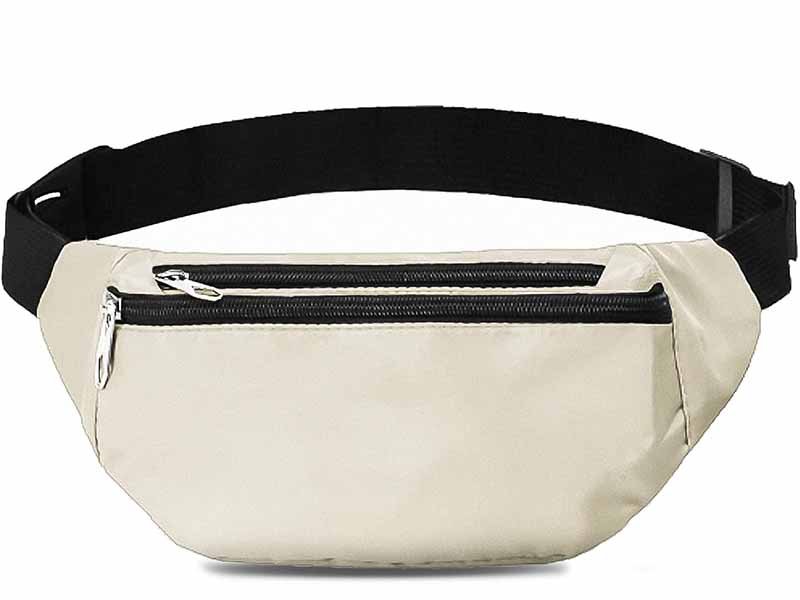
Comfort and wearability: the non-negotiable foundation
Comfort is the first feature users notice—and the first reason they stop using a bag.
Key comfort factors:
- Smooth edges and body-facing panels
- Balanced weight distribution
- Adjustable straps that don’t twist or dig in
Crossbody wear places pressure differently than waist wear. Packs designed only for waist use often feel awkward or unstable when worn on the chest. Modern designs account for both positions from the start.
Lightweight materials without sacrificing durability
Modern users expect fanny packs to feel almost weightless when empty.
Preferred material traits:
- High strength-to-weight ratio
- Abrasion resistance
- Soft but structured hand feel
Popular choices include high-density nylon, recycled polyester, coated fabrics, and lightweight leather. Heavy materials make the bag uncomfortable when worn crossbody and reduce all-day usability.
Secure closures and anti-theft details
Security has become a top priority, especially for urban and travel use.
Highly valued features include:
- Lockable or hidden zippers
- Back-facing security pockets
- Smooth, snag-free zipper tracks
A fanny pack worn in front offers natural visibility, but poor zipper quality quickly undermines that advantage. Security features directly influence trust and repeat use.
Strap design: versatility defines modern use
The strap is no longer just a belt—it’s a multi-position system.
Important strap features:
- Wide adjustability range (waist + crossbody)
- Quick-release buckles
- Durable webbing that doesn’t curl
Strap length and adjustability are what allow one product to be marketed as a belt bag, waist bag, or crossbody bag. Poor strap design limits both usability and naming flexibility.
Size and profile: slim beats bulky
Modern fanny packs favor low-profile silhouettes.
Why slim designs win:
- Look better worn crossbody
- Stay closer to the body
- Reduce bounce during movement
- Feel more fashion-forward
Oversized designs tend to feel dated and are more often labeled “fanny packs,” while slimmer profiles align with “belt bag” or “crossbody” branding.
Internal organization over raw capacity
Users today carry fewer items—but want them organized.
High-value internal features:
- Flat zip pockets for cards
- Mesh or divider panels
- Key clips
Rather than expanding size, smart organization allows users to carry essentials efficiently without bulk.
Weather resistance and easy care
Daily-use bags face unpredictable conditions.
Popular functional upgrades:
- Water-resistant fabrics
- Coated zippers
- Easy-clean linings
These features increase perceived quality and justify premium pricing—especially in travel and urban markets.
Aesthetic details that support modern naming
Visual details influence how the bag is categorized.
Design elements that feel “modern”:
- Minimal branding
- Clean panel lines
- Neutral or muted colorways
These details help shift perception from “fanny pack” to “belt bag,” even when functionality is identical.
Why features matter for brands and OEM buyers
For brands, feature choices directly affect:
- Product naming and positioning
- Target audience alignment (Gen Z vs Millennials)
- Reviews and return rates
- Price justification
OEM and private label buyers benefit from prioritizing usage-driven features rather than copying outdated designs. Feature alignment reduces risk and improves long-term performance.
Feature Priority Summary
| Feature | Why It Matters | Priority |
|---|---|---|
| Comfort & wearability | Enables all-day use | Essential |
| Lightweight materials | Improves crossbody comfort | Essential |
| Strap versatility | Supports multiple wearing styles | Essential |
| Secure closures | Builds trust, prevents loss | High |
| Slim profile | Matches modern aesthetics | High |
| Internal organization | Improves daily usability | Medium–High |
| Weather resistance | Extends product lifespan | Medium |
Why Are Fanny Packs Back in Style
Fanny packs are back in style because modern lifestyles favor hands-free convenience, compact carry, and versatile wear. Streetwear culture, luxury brand adoption, and social media influencers reframed the fanny pack as a fashionable belt or crossbody bag. At the same time, urban travel, festivals, and minimalist trends increased demand for small, body-close bags that balance function and style.
Fanny packs didn’t return because people suddenly missed the past. They returned because the way people move, travel, and dress has fundamentally changed.
How did lifestyle changes bring fanny packs back?
Modern lifestyles demand mobility and efficiency.
Key lifestyle shifts:
- More walking, commuting, and urban movement
- Less need to carry large items daily
- Preference for hands-free, close-to-body storage
Smartphones, wireless earbuds, and digital wallets reduced what people need to carry. A compact bag that stays on the body became more practical than backpacks or handbags for everyday life.
Why did streetwear culture accelerate the comeback?
Streetwear normalized functional accessories as fashion statements.
In streetwear:
- Utility is celebrated, not hidden
- Accessories are worn visibly
- Crossbody and chest wear are common
Once fanny packs were styled across the chest with hoodies, jackets, and sneakers, their image shifted from “tourist gear” to urban essential. The product didn’t change—the styling context did.
How did luxury brands change public perception?
Luxury adoption was a turning point.
When high-end brands introduced leather belt bags and premium waist bags:
- The product gained fashion legitimacy
- Price positioning shifted upward
- The term “fanny pack” was replaced by “belt bag”
Luxury branding removed the stigma and made the design aspirational. Once consumers saw belt bags on runways and in flagship stores, mainstream acceptance followed quickly.
What role did social media and influencers play?
Social media didn’t just promote the product—it rewrote its identity.
Influencers showed:
- Crossbody styling ideas
- Outfit coordination
- Everyday practicality
Platforms like Instagram and TikTok spread the new look globally within months. Importantly, creators rarely used the term “fanny pack,” reinforcing the modern rebranding through language as well as visuals.
Why do festivals and travel keep fanny packs relevant?
Festivals and travel environments reward:
- Hands-free movement
- Anti-theft positioning
- Compact essentials
At crowded events, wearing a bag in front of the body feels safer and more convenient. These real-world benefits reinforce ongoing demand—even after trend cycles change.
How does minimalist fashion support this trend?
Minimalism favors fewer items, better functionality.
Fanny packs align perfectly with:
- Capsule wardrobes
- Clean silhouettes
- Functional accessories
As fashion moved away from oversized logos and bulky bags, slim belt bags fit seamlessly into modern aesthetics.
Is this a temporary trend or a long-term shift?
All evidence points to a long-term shift, not a short-lived trend.
Why:
- The underlying lifestyle drivers remain
- Urbanization continues
- Travel and festivals are growing
- Hands-free design solves real problems
The name may evolve, and designs will change—but the product category is now firmly established.
How to Choose the Right Modern Fanny Pack
To choose the right modern fanny pack, match the bag’s size, strap style, and materials to how it will be worn (waist vs crossbody) and where it will be used (daily, travel, sport, fashion). Prioritize comfort, secure zippers, and an adjustable strap range. For brands, selecting the right product name (belt bag vs waist bag) and building a spec sheet for materials, hardware, and structure is the fastest way to get consistent quality.
The “right” modern fanny pack isn’t the same for everyone. A commuter’s ideal belt bag is different from a festival bag, and a travel waist bag is different from a premium leather belt bag. The key is choosing based on use-case + wear position + market.
What is the best wearing style for you: waist or crossbody?
Start here, because wear position determines everything: strap length, comfort, profile, and even naming.
- Crossbody (chest-worn): best for daily fashion, city use, commuting
- Waist-worn: best for outdoor, walking, running, travel security
If you plan to wear it crossbody most of the time, avoid bags designed only as waist packs—these often sit awkwardly, bounce more, and feel less stable on the chest.
Which size should you choose for daily use vs travel?
Size should follow your carry list—not your “just in case” mindset.
Typical sizing guidance:
- Daily essentials: phone + wallet + keys → compact size
- Travel essentials: passport + power bank + sanitizer → slightly larger
- Festival/event: minimal essentials → slim, secure
A modern belt bag wins when it stays close to the body. Oversized sizes may carry more, but they look bulky crossbody and are more likely to sag or bounce.
What materials deliver the best balance of style and durability?
Materials influence comfort, weight, and market positioning.
Good material matches:
- Nylon / coated nylon: travel + streetwear (light, durable)
- Recycled polyester: eco positioning + everyday use
- Leather: premium lifestyle + luxury belt bag
- TPU-coated fabrics: urban protection + easy cleaning
If the target is all-day wear, keep it lightweight. Heavy materials reduce comfort and increase “why am I wearing this?” fatigue.
Which closures and security features matter most?
Security is a top conversion driver for travel and city use.
High-value security features:
- Smooth, durable zippers
- Back-facing hidden pocket
- Anti-pick quick-access design
- Strap buckle placed away from front access
A fanny pack is worn close to the body—so even small security upgrades make it feel significantly safer.
How do you judge strap quality and comfort quickly?
Strap comfort is the most underrated feature.
Check for:
- Wide adjustability range (waist + crossbody)
- Webbing that stays flat (doesn’t curl)
- Buckle that doesn’t press the chest when worn crossbody
- Stitch reinforcement at strap anchor points
A bag can look great online but fail in real use if the strap is too narrow, too stiff, or poorly positioned.
Which name should you use: belt bag, waist bag, or fanny pack?
For consumers, the name affects what you find in search. For brands, it affects conversion.
Practical naming rule:
- Belt bag: modern fashion, U.S. lifestyle market
- Waist bag: global and travel-friendly naming
- Hip pack: outdoor/sports category
- Fanny pack: still works in casual U.S. travel/utility niches
Brand strategy often uses:
- A modern primary name (“belt bag”)
- With secondary SEO coverage (“waist bag / fanny pack”)
This captures both trend language and high-volume legacy searches.
For brands: how to choose the right spec for private label or OEM?
If you’re sourcing for a brand, choose by spec sheet, not by photos.
A simple OEM selection framework:
- Define target market and use case
- Lock wearing style and size range
- Specify material + lining + strap webbing
- Choose zipper/hardware level
- Confirm logo method and packaging
- Set MOQ and sampling timeline
This prevents redesign loops and ensures consistent bulk production quality.
What should you ask a manufacturer before placing an order?
Smart questions reduce risk:
- What fabric spec is used (density/coating)?
- How is the strap anchor reinforced?
- What zipper grade is used?
- How is size tolerance controlled in bulk?
- What QC steps happen before packing?
- Can you support low MOQ and fast sampling?
Manufacturers who answer clearly are usually stronger partners long-term.
Conclusion
With over 19 years of experience across fabric manufacturing, webbing production, and bag development, Lovrix helps brands design and produce modern fanny packs—whether you call them belt bags, waist bags, or crossbody packs.
If you’re planning a modern waist bag or belt bag collection, contact Lovrix for a tailored quotation and free sample consultation.
Sometimes, the right name—and the right partner—makes all the difference.


