 Skip to content
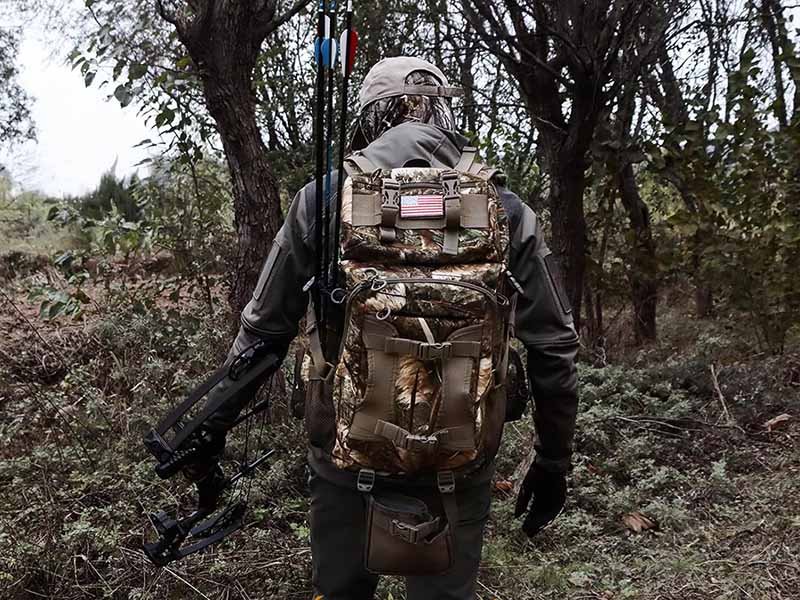
A hunting bag lives a harder life than most bags. It is thrown into trucks, dragged through brush, placed on wet ground, carried in cold mornings, rubbed against bark, and opened again and again with muddy hands. For outdoor brands, hunting gear sellers, Amazon private label teams, and OEM/ODM product developers, the fabric is not just the “outer shell.” It decides how the bag looks, feels, sounds, performs, and survives in real field conditions.
The best camouflage fabrics for hunting bags are usually 600D polyester Oxford, nylon Oxford, Cordura-style nylon, ripstop nylon, coated canvas, and laminated waterproof fabrics. For most commercial hunting bags, 600D polyester Oxford gives a strong balance of price, durability, print quality, and water resistance. For premium hunting backpacks, 500D or 1000D nylon fabrics offer better abrasion resistance and long-term strength.
Good fabric selection can save a brand from many hidden problems: weak seams, noisy movement, coating cracks, color fading, poor print alignment, water leakage, bad hand feel, and customer complaints after outdoor use. A hunting bag may look attractive in product photos, but customers judge it in the field. When a hunter is walking before sunrise with gloves, calls, tools, snacks, and equipment inside the bag, every material choice starts to matter. That is where camouflage fabric becomes a serious product decision, not just a design decoration.
What Are Camouflage Fabrics for Hunting Bags?
Camouflage fabrics for hunting bags are outdoor-grade materials printed or dyed with concealment patterns and engineered for bag construction. They are usually made from polyester, nylon, Oxford, canvas, ripstop, or laminated fabrics, then finished with PU, PVC, TPU, DWR, or backing layers to improve water resistance, tear strength, structure, and durability.
Camouflage fabric for hunting bags needs to do more than look like leaves, bark, grass, or marshland. It must hold its shape after sewing, accept coating evenly, resist abrasion, keep the print stable, and support the weight of gear. A low-cost printed fabric may work for fashion accessories, but hunting bags need stronger performance because they are used in forests, fields, wetlands, mountains, trucks, campsites, and outdoor storage spaces.
For brands developing custom hunting bags, the first question should not be “Which camo pattern looks best?” A better question is “Where will this bag be used, what will it carry, and how long should it last?” A small hunting waist pack, a heavy gear backpack, a waterproof duck hunting bag, and a camo tool pouch all need different fabric structures.
A serious hunting bag fabric usually includes four key layers of value:
| Fabric Factor | Why It Matters | What Brands Should Check |
|---|---|---|
| Base Fabric | Controls strength, weight, flexibility, and sewing performance | Polyester, nylon, Oxford, canvas, ripstop |
| Camo Pattern | Controls concealment, shelf appeal, and market positioning | Woodland, digital, marsh, snow, bark, grassland |
| Coating or Backing | Improves water resistance, stiffness, and durability | PU, PVC, TPU, DWR, laminated backing |
| Bag Compatibility | Affects cutting, sewing, seam strength, and structure | Thickness, foldability, stretch, edge fraying, needle marks |
For Lovrix, fabric development is closely connected with finished bag production. Because Lovrix operates as an integrated Chinese group company with fabric finished-product factories, webbing factories, and bag factories, customers can develop the camouflage fabric, matching webbing, lining, zipper tape, logo patch, and finished bag structure under one coordinated system. This reduces material mismatch and makes custom OEM/ODM development much smoother.
Why Camouflage Fabrics Matter
Camouflage fabrics matter because hunting bags need to blend into outdoor environments while resisting rough handling, moisture, friction, and repeated carrying. For the customer, the fabric affects trust. For the brand, it affects product reviews, return rates, pricing power, and repeat orders.
A hunting customer usually touches the fabric before looking at technical details. If the fabric feels thin, shiny, noisy, or weak, the bag immediately feels less reliable. If the print looks sharp, the surface feels durable, the coating has body, and the straps feel firm, the product feels more professional even before use.
For hunting bags, camouflage fabrics matter in several practical ways:
- Visual concealment: The camo pattern helps reduce contrast against trees, grass, soil, wetlands, or snow.
- Outdoor confidence: Customers expect hunting bags to look rugged, quiet, and field-ready.
- Water protection: Coated fabrics help protect gear from wet grass, rain, mud, and damp ground.
- Abrasion resistance: Strong outer fabric helps the bag withstand branches, rocks, truck beds, and daily outdoor handling.
- Product positioning: Premium fabrics help brands sell at higher price points, especially in specialty outdoor channels.
- Review performance: Better fabric reduces complaints about tearing, fading, peeling, weak coating, and cheap hand feel.
For e-commerce brands, this is especially important. Online customers cannot test the bag before purchasing, so product photos, close-up fabric texture, camo pattern quality, and material claims become powerful selling points. Once the product arrives, the hand feel must match the online promise. If not, reviews will quickly expose the gap.
What Hunting Bags Need
Hunting bags need fabric that balances strength, concealment, water resistance, quiet movement, weight, and structure. The right fabric depends on product type, carrying load, season, terrain, retail price, and target customer group.
A hunting backpack may need strong shoulder strap anchors, reinforced bottom fabric, and abrasion-resistant side panels. A hunting waist pack may need soft, quiet, lightweight fabric. A duck hunting bag may need stronger waterproof performance. A camo ammo pouch may need firm structure and reinforced stitching. This is why one fabric cannot serve every hunting product equally well.
Common hunting bag requirements include:
- Durable outer shell for brush, bark, rocks, and rough outdoor use.
- Stable coating that does not crack easily at folds or seams.
- Colorfast camo printing that does not fade quickly under sunlight or friction.
- Quiet surface feel for hunting situations where sound matters.
- Strong seam performance to prevent tearing near straps and stress points.
- Water-resistant backing to protect gear from rain, wet grass, and damp soil.
- Comfortable weight so the bag does not become too heavy after loading.
- Compatible webbing and trims to create a complete product system.
| Hunting Bag Type | Suggested Fabric | Recommended Weight Range | Key Performance Focus |
|---|---|---|---|
| Day Hunting Backpack | 600D polyester Oxford / 500D nylon | 250–380 gsm | Durability, print quality, carrying comfort |
| Heavy Gear Pack | 1000D nylon / reinforced Oxford | 350–500 gsm | Abrasion resistance, load strength |
| Waist Pack | 300D–600D polyester / brushed fabric | 180–320 gsm | Lightweight feel, quiet movement |
| Ammo Pouch | 600D Oxford / nylon Oxford | 250–420 gsm | Firm structure, seam strength |
| Duck Hunting Bag | TPU/PVC coated fabric | 350–600 gsm | Waterproof protection, easy cleaning |
| Bow Hunting Pack | Brushed laminated fabric | 250–450 gsm | Low noise, soft hand feel |
| Hunting Duffel | 600D/900D/1000D Oxford | 300–500 gsm | Capacity, bottom reinforcement |
| Foldable Game Bag | Ripstop nylon / polyester | 80–220 gsm | Lightweight, tear control |
For most private label or OEM hunting bag projects, 600D polyester Oxford is a practical starting point. It offers good print clarity, controlled cost, acceptable strength, and flexible coating options. For high-end products, brands may upgrade to nylon, Cordura-style nylon, TPU laminated fabric, or mixed-material construction.
A smart product structure may combine different materials instead of using one fabric everywhere. For example:
| Bag Area | Better Material Choice | Reason |
|---|---|---|
| Main Body | 600D camo Oxford | Good balance of cost, print, and durability |
| Bottom Panel | 1000D nylon or PVC-coated Oxford | Better abrasion and moisture resistance |
| Inner Lining | 210D/300D polyester | Lightweight and cost-efficient |
| Rain Cover | Ripstop polyester or nylon | Packable and water-resistant |
| Shoulder Strap Surface | Soft camo fabric or mesh | Comfort and reduced friction |
| Webbing | High-density polyester webbing | Strong load support |
| Binding Tape | Matching polyester tape | Clean edge finishing |
This kind of material planning helps the product feel more professional without pushing every component into the highest cost range.
Are Camo Fabrics Functional?
Camo fabrics are functional when the base fabric, camouflage print, coating, and bag structure are designed together. A good camouflage fabric can reduce visual contrast, protect gear, improve durability, support outdoor use, and strengthen the product’s market identity.
Poor camo fabric only changes the surface appearance. Good camo fabric changes the whole product experience. It helps the bag blend into the environment, survive friction, resist moisture, and feel suitable for real hunting conditions.
Functional camouflage fabrics usually support four performance areas:
| Function | How It Helps Hunting Bags | What Can Go Wrong If Ignored |
|---|---|---|
| Concealment | Breaks up the bag outline in forests, grassland, marsh, or snow | Bag looks too bright or unnatural outdoors |
| Protection | Coating helps resist rain, mud, and damp ground | Gear gets wet, coating peels, fabric absorbs moisture |
| Durability | Strong yarn and weave resist tearing and abrasion | Fabric rips near stress points |
| User Experience | Better hand feel and lower noise improve field use | Bag sounds loud or feels cheap |
For example, woodland camo may work well for forest hunting, while marsh camo is better suited for waterfowl hunting. Snow camo is useful in winter markets, while digital camo may attract tactical outdoor customers. A hunting bag brand selling in multiple regions may need different camo patterns for different sales channels.
Functional performance also depends on the coating. PU coating is commonly used when brands want flexible hand feel and moderate water resistance. PVC coating gives stronger structure and water protection but may feel heavier or stiffer. TPU laminated fabric can be used for higher-end waterproof applications, especially when the bag needs a cleaner, more premium finish.
For Lovrix customers, the advantage is not only choosing a fabric from a catalog. Brands can develop a full custom solution:
- Custom camouflage print based on terrain, season, or brand identity.
- Matching solid-color or camo webbing from Lovrix’s webbing factory.
- PU, PVC, TPU, or laminated backing based on performance target.
- Finished bag sampling through Lovrix’s bag factory.
- Logo patch, woven label, rubber badge, embroidery, or printed branding.
- Low MOQ customization for new product testing.
- Fast sampling for seasonal launches or e-commerce product updates.
- Free sample support and design assistance for qualified projects.
This makes the fabric more than a material. It becomes part of a complete hunting bag development system.
Which Camouflage Fabrics for Hunting Bags Work Best?

The best camouflage fabrics for hunting bags depend on the product type, price range, terrain, and performance needs. 600D polyester Oxford is best for balanced commercial use. Nylon and Cordura-style fabrics suit premium heavy-duty bags. Ripstop works for lightweight parts. Canvas fits heritage outdoor styles. Laminated fabrics support waterproof or quiet hunting products.
There is no single best camouflage fabric for every hunting bag. A large hunting backpack has different needs from a small waist pouch. A waterfowl bag needs different protection from a dry forest daypack. A premium bow hunting pack may value quiet movement more than extreme stiffness. A value-focused Amazon hunting bag may need better cost control while still looking durable and professional.
For most brands, the right choice starts with three questions:
- What will the bag carry? Heavy tools, clothing, food, ammunition, cameras, electronics, or light accessories?
- Where will the bag be used? Forest, marsh, mountain, snow, grassland, farm, shooting range, or general outdoor travel?
- What price point must the product hit? Entry-level e-commerce, mid-range private label, premium outdoor retail, or professional tactical market?
Once these answers are clear, fabric selection becomes much easier.
| Fabric Type | Best Use | Main Advantage | Main Limitation | Suitable Brand Position |
|---|---|---|---|---|
| 600D Polyester Oxford | Most hunting bags | Cost-performance balance | Not the highest abrasion level | Entry to mid-range |
| 500D Nylon | Premium backpacks | Strong and lighter than heavy fabrics | Higher cost | Mid to premium |
| 1000D Nylon | Heavy-duty gear bags | Excellent abrasion resistance | Heavier and stiffer | Premium / tactical |
| 300D Polyester | Lightweight bags | Lower weight and cost | Less rugged | Entry-level / lightweight |
| Ripstop Nylon | Packable gear | Tear control and light weight | Needs reinforcement for heavy loads | Technical lightweight |
| Canvas Camo | Field bags | Heritage look and solid hand feel | Heavier, needs treatment | Lifestyle / outdoor heritage |
| Brushed Laminate | Quiet hunting bags | Low-noise movement | Higher process cost | Bow hunting / premium |
| TPU/PVC Coated Fabric | Wet conditions | Strong water protection | Stiffer, heavier | Waterfowl / waterproof bags |
Polyester Camo Fabric
Polyester camo fabric is one of the most practical choices for hunting bags because it offers stable printing, good coating compatibility, controlled cost, and reliable mass production. For many brands, especially private label and e-commerce sellers, 600D polyester Oxford is the first material worth testing.
Polyester performs well when the product needs sharp camouflage printing. Camo patterns often include multiple colors, shadow areas, branches, leaves, bark textures, grass shapes, or digital blocks. Polyester Oxford can hold these patterns clearly when printing and finishing are properly controlled.
Key advantages of polyester camo fabric:
- Good cost control for bulk production.
- Strong print clarity for detailed camo patterns.
- Easy to apply PU or PVC backing.
- Stable supply for OEM/ODM production.
- Suitable for backpacks, pouches, duffels, tool bags, and cooler bags.
- Good option for low MOQ product testing.
- Works well with matching webbing, lining, and trims.
Common polyester camo fabric options:
| Fabric | Common Use | Approx. Feel | Suggested Application |
|---|---|---|---|
| 300D Polyester | Lightweight bags | Soft-medium | Waist packs, small pouches |
| 420D Polyester Oxford | Mid-light bags | Flexible | Day bags, accessory bags |
| 600D Polyester Oxford | Mainstream hunting bags | Firm and durable | Backpacks, duffels, gear bags |
| 900D Polyester Oxford | Heavy-duty bags | Thick and structured | Tool bags, reinforced panels |
| 1200D Polyester | Rugged outdoor bags | Heavy and strong | Large-capacity bags |
The main limitation is abrasion resistance compared with high-tenacity nylon. If a brand wants a premium hunting backpack for serious field users, polyester may need reinforcement at the bottom, corners, shoulder strap points, and MOLLE-style panels. This is not a weakness if managed well. In fact, many successful hunting bags use polyester for the main body and stronger material only where needed.
For Lovrix projects, polyester camo fabric is often a strong starting choice because the fabric, webbing, and finished bag can be developed together. Customers can request custom camo prints, PU/PVC backing, matching webbing colors, logo patches, and sample bags before confirming mass production.
Nylon Camo Fabric
Nylon camo fabric is better suited for hunting bags that need higher strength, better abrasion resistance, and a more premium outdoor image. It is often used for serious hunting backpacks, tactical bags, range bags, heavy pouches, and reinforced panels.
Compared with polyester, nylon usually gives stronger performance at a similar or lower weight. This matters when customers carry gear for several hours. A hunting backpack should not become unnecessarily heavy before anything is packed inside. Nylon can help brands build durable products without making the bag feel bulky.
Key advantages of nylon camo fabric:
- Better abrasion resistance than standard polyester.
- Stronger tear performance in many constructions.
- Good choice for premium hunting backpacks.
- Suitable for high-stress panels and load-bearing areas.
- More technical outdoor image.
- Works well for tactical-style bag designs.
- Can be used with PU coating, DWR treatment, or lamination.
Common nylon camo fabric choices:
| Nylon Fabric | Strength Level | Typical Use | Brand Position |
|---|---|---|---|
| 210D Nylon | Light | Lining, rain cover, packable pouch | Lightweight |
| 420D Nylon | Medium | Daypack, accessory panels | Mid-range |
| 500D Nylon | High | Hunting backpacks, tactical pouches | Premium |
| 1000D Nylon | Very High | Heavy-duty bags, bottom panels | Professional / tactical |
| Ripstop Nylon | Variable | Rain covers, lightweight gear | Technical outdoor |
The cost is usually higher than polyester. This means nylon should be selected with clear product positioning. If the customer group is price-sensitive and the bag is used for casual outdoor activities, 600D polyester Oxford may be more reasonable. If the product targets serious hunters, tactical customers, or premium retail channels, nylon can support a higher selling price and stronger product story.
A smart way to manage cost is hybrid construction:
- 600D polyester Oxford for main body.
- 500D nylon for high-wear panels.
- 1000D nylon for bottom and corners.
- Nylon webbing for load-bearing straps.
- Polyester lining for internal structure.
This gives customers visible strength where they expect it while keeping total cost under control.
Oxford Camo Fabric
Oxford camo fabric is one of the most common choices for hunting bags because it has a stable woven structure, practical durability, good coating performance, and strong compatibility with bag production. Oxford is not a fiber by itself. It is a fabric construction that can be made from polyester or nylon.
For hunting bags, Oxford fabric is popular because it feels more structured than many plain fabrics. It supports bag shape, handles sewing well, and works with many coatings. It is also widely available in different deniers, which gives brands more flexibility.
Common Oxford camo fabric options include:
| Oxford Fabric | Common Feature | Best Use |
|---|---|---|
| 210D Oxford | Lightweight and flexible | Lining, rain cover, small pouch |
| 300D Oxford | Light-medium | Waist pack, drawstring bag |
| 420D Oxford | Balanced weight | Day bag, accessory bag |
| 600D Oxford | Strong commercial standard | Hunting backpack, gear bag |
| 900D Oxford | More structure | Duffel, tool bag, reinforced panel |
| 1000D Oxford | Heavy-duty | Tactical bag, bottom panel |
| 1680D Oxford | Thick and tough | Luggage-style outdoor bags |
For many OEM/ODM hunting bag projects, 600D Oxford is the most practical option because it gives brands a reliable balance across five areas:
- Material cost.
- Print effect.
- Water-resistant coating.
- Cutting and sewing efficiency.
- Finished bag durability.
Coating selection matters a lot. The same 600D Oxford can feel very different depending on finishing.
| Coating Type | Feel | Main Benefit | Suitable Product |
|---|---|---|---|
| PU Coating | Softer, flexible | Good water resistance and hand feel | Backpacks, waist packs |
| PVC Coating | Stiffer, stronger body | Better structure and water protection | Duffels, tool bags |
| TPU Lamination | Premium, cleaner | Higher waterproof potential | Waterproof hunting bags |
| DWR Finish | Surface water repellency | Light rain protection | Outdoor day bags |
Oxford camo fabric is also suitable for custom printing. Brands can request woodland, forest, bark, grass, digital, snow, desert, or proprietary camo patterns. Lovrix can also coordinate matching webbing and trims, so the final bag does not look like a random mix of material colors.
Canvas Camo Fabric
Canvas camo fabric is a strong choice for hunting bags with a rugged, traditional, or outdoor lifestyle look. It is often used for field bags, cartridge bags, tote-style hunting bags, tool bags, waxed-look outdoor bags, and retro hunting accessories.
Canvas has a different emotional feel from Oxford or nylon. It feels more natural, solid, and old-school. Some customers do not want shiny technical fabric. They want something that feels tough, quiet, and familiar. For hunting and outdoor lifestyle brands, canvas can create that feeling very well.
Key advantages of canvas camo fabric:
- Strong hand feel and classic outdoor appearance.
- Lower noise than some stiff coated synthetic fabrics.
- Good for vintage, heritage, or lifestyle hunting products.
- Works well with leather patches, metal hardware, and cotton webbing.
- Can be waxed, coated, washed, or stone-treated for special texture.
- Suitable for giftable hunting bags and premium field collections.
Canvas also has clear limitations:
- Heavier than many synthetic fabrics.
- May absorb moisture if not treated properly.
- Longer drying time compared with polyester or nylon.
- More natural shrinkage and color variation may occur.
- Not ideal for every waterproof hunting bag.
For brands that want the canvas look without the maintenance issues, several alternatives can be developed:
| Option | Benefit | Suitable Use |
|---|---|---|
| Coated Cotton Canvas | Better water resistance | Field bags, tool bags |
| Polyester-Cotton Canvas | Better stability | Lifestyle hunting bags |
| Washed Canvas | Softer vintage feel | Retail gift bags |
| Waxed-Look Fabric | Premium outdoor style | Heritage hunting collection |
| Canvas-Look Polyester | Lower cost, better consistency | E-commerce products |
Canvas camo fabric is not always the most technical choice, but it can be the right commercial choice when the product story is about tradition, ruggedness, and field lifestyle.
Ripstop Camo Fabric
Ripstop camo fabric is made with reinforced yarns in a grid structure that helps limit tearing. It is useful for lightweight hunting bags, rain covers, inner compartments, foldable pouches, stuff sacks, game bags, and packable outdoor accessories.
Ripstop is popular because customers recognize the grid texture as “technical.” It gives a product a lightweight outdoor image while helping control tears better than many plain woven lightweight fabrics. However, brands should not assume every ripstop fabric is heavy-duty. A 70D ripstop fabric and a 420D ripstop fabric are completely different in strength.
Key advantages of ripstop camo fabric:
- Lightweight and packable.
- Grid structure helps reduce tear spread.
- Suitable for rain covers and foldable components.
- Good for technical outdoor product appearance.
- Can be coated for water resistance.
- Useful for inner pockets, removable bags, and accessory kits.
Common uses inside hunting bag development:
| Component | Suggested Ripstop Fabric | Reason |
|---|---|---|
| Rain Cover | 70D–210D ripstop | Lightweight and packable |
| Inner Pocket | 210D ripstop | Good strength with low weight |
| Foldable Pouch | 210D–300D ripstop | Easy to compress |
| Game Bag | 210D–420D ripstop | Tear control |
| Lightweight Backpack | 300D–420D ripstop | Better balance of strength and weight |
The key is to use ripstop where it makes sense. For a heavy-load hunting backpack, ripstop alone may not be enough unless the fabric weight and coating are upgraded. For internal parts and packable accessories, ripstop can be excellent because it reduces weight and adds functional value.
For Lovrix customers, ripstop can be used as part of a complete material package. A hunting backpack may use 600D camouflage Oxford on the outer body, 1000D reinforcement at the bottom, 210D ripstop lining, and a detachable ripstop rain cover. This creates a stronger product story and better user experience without overbuilding every part of the bag.
| Fabric Type | Best For | Durability | Water Resistance | Noise Control | Cost Level |
|---|---|---|---|---|---|
| 600D Polyester Oxford | Mainstream hunting bags | 4/5 | 4/5 with coating | 3/5 | 3/5 |
| 500D Nylon | Premium backpacks | 5/5 | 4/5 with coating | 3/5 | 4/5 |
| 1000D Nylon | Heavy-duty bags | 5/5 | 4/5 with coating | 2/5 | 5/5 |
| Canvas Camo | Heritage field bags | 4/5 | 3/5 with treatment | 4/5 | 4/5 |
| Ripstop Nylon | Lightweight accessories | 3/5–4/5 | 4/5 with coating | 3/5 | 3/5 |
| Brushed Laminate | Quiet hunting bags | 3/5–4/5 | 4/5–5/5 | 5/5 | 5/5 |
For brands planning a new hunting bag line, the best fabric choice is rarely based on one number. It is based on the final product goal. A practical 600D Oxford bag can sell very well when designed properly. A premium nylon hunting pack can justify higher pricing when built for demanding use. A canvas camo field bag can win customers who care about classic style. The smartest brands match fabric choice to customer behavior, not just material trends.
How Do Camouflage Fabrics for Hunting Bags Perform?

Camouflage fabrics for hunting bags perform through a combination of concealment, water resistance, abrasion strength, tear control, color stability, hand feel, and noise reduction. Strong performance does not come from the camo print alone. It comes from the full material system: base fabric, yarn strength, weave structure, coating, backing, finishing, and sewing compatibility.
A hunting bag is exposed to many small damages before it ever “fails.” Branches scratch the outer shell. Wet grass tests the coating. Heavy tools pull against the stitching. Sunlight slowly affects color. Mud pushes into fabric texture. Repeated folding tests coating flexibility. If the fabric is poorly selected, these small issues become customer complaints: peeling coating, faded camo, noisy movement, torn seams, weak bottom panels, or a bag that looks old after only a few trips.
For custom hunting bag development, fabric performance should be reviewed from field use, not only from a material catalog. A fabric may look strong because it is thick, but thickness alone does not guarantee better performance. A lighter nylon may outperform a heavier polyester in abrasion. A softer brushed fabric may be better for bow hunting because it moves quietly. A PVC-coated fabric may protect better against wet ground, but it may feel too stiff for a compact waist pack. This is why performance needs to be matched with actual use.
For Lovrix customers, fabric testing can be combined with finished bag sampling. This is important because fabric performance changes after cutting, sewing, folding, binding, coating stress, and loading. A material that looks good in rolls may behave differently when made into a backpack with corners, zipper curves, strap anchors, and bottom panels.
Waterproof Protection
Waterproof protection is one of the most important performance points for camouflage fabrics for hunting bags. Hunters often place bags on wet grass, muddy ground, boat decks, forest soil, or pickup truck beds. Even when the bag is not fully waterproof, the outer fabric should resist light rain, moisture, and surface dirt.
Most hunting bags use water-resistant fabric rather than fully waterproof construction. This difference matters. A fabric with PU or PVC coating may resist water on the surface, but water can still enter through needle holes, zipper gaps, seams, or unsealed edges. For a bag to be truly waterproof, the design may need seam sealing, welded construction, waterproof zippers, roll-top closure, or TPU/PVC laminated fabric.
For many commercial hunting bags, water resistance is enough. Customers mainly want the bag to protect gear from damp ground and short outdoor exposure. For waterfowl hunting bags, boat bags, or wetland gear bags, stronger waterproof construction may be needed.
Common water protection options include:
| Water Protection Type | Main Benefit | Common Use | Limitation |
|---|---|---|---|
| PU Coating | Flexible, cost-effective water resistance | Backpacks, pouches, waist packs | Not ideal for full waterproof bags |
| PVC Coating | Stronger body and moisture protection | Duffels, tool bags, bottom panels | Heavier and stiffer |
| TPU Lamination | Premium waterproof potential | Wetland bags, dry-style hunting bags | Higher material cost |
| DWR Finish | Surface water repellency | Lightweight outdoor bags | Wears down with use |
| Seam Sealing | Reduces water entry at seams | Rain bags, waterproof pouches | Adds production cost |
| Welded Seams | Strong waterproof construction | Dry bags, waterproof packs | Requires special equipment |
For brands, the right question is not only “Is this fabric waterproof?” A better question is “How much water exposure will the customer actually face?” If the product is a hunting backpack for forest use, PU-coated 600D Oxford may be enough. If it is a duck hunting bag used near wetlands, stronger coated fabric, waterproof lining, or seam sealing may be necessary.
Key details customers should confirm before production:
- Hydrostatic pressure or water resistance level, if required.
- Coating type and coating thickness.
- Whether the coating cracks after folding.
- Whether water enters through seams or zippers.
- Whether the bottom panel needs stronger waterproof backing.
- Whether the inner lining should be easy to wipe clean.
- Whether the bag needs waterproof claims or only water-resistant claims.
Many complaints happen because brands overpromise waterproof performance. A hunting bag made with water-resistant fabric should not be marketed as a fully waterproof dry bag unless the construction supports that claim. Clear positioning protects both the customer and the brand.
Tear Resistance
Tear resistance matters because hunting bags often carry hard, uneven, or heavy items. Knives, tools, calls, tripods, food containers, range gear, ammunition boxes, and electronic equipment can all create pressure points inside the bag. Outside, branches, rocks, fences, tree bark, and rough vehicle surfaces can pull or scratch the fabric.
Tear resistance is affected by yarn strength, fabric density, weave type, coating, and sewing structure. A ripstop grid can help slow tear spread, but fabric weight and yarn quality still matter. Nylon usually performs better than standard polyester when strength-to-weight ratio is important. Heavy Oxford fabrics can also perform well when properly coated and reinforced.
For hunting bags, tear risk is highest in these areas:
| Bag Area | Why It Tears | Suggested Solution |
|---|---|---|
| Shoulder Strap Anchor | Carries heavy load | Reinforced panels, bar-tack stitching |
| Bottom Corners | Touches ground and rocks | 900D/1000D fabric or PVC backing |
| Zipper Ends | Repeated pulling force | Extra seam allowance and reinforcement |
| MOLLE Panels | Pulling from accessories | Strong webbing and dense stitching |
| Side Pockets | Stuffed with bottles or tools | Elastic control and reinforced edges |
| Handle Area | High lifting force | Webbing wrap-around construction |
| Inner Divider | Sharp equipment pressure | Strong lining and binding tape |
Good tear resistance is not only a fabric problem. A strong fabric can still fail if the pattern design creates stress concentration. For example, if a heavy shoulder strap is stitched only onto one layer of fabric without reinforcement, the fabric may tear around the seam. If the bottom panel uses the same lightweight fabric as the upper body, the bag may wear out quickly.
For custom hunting bags, brands should request finished sample testing rather than only fabric swatches. A sample can be loaded, carried, pulled, opened, folded, and placed on rough surfaces. This gives a more realistic view of how the fabric and bag structure work together.
Practical tear-resistance improvements include:
- Use stronger fabric at the bottom and corners.
- Add inner reinforcement behind strap anchors.
- Use bar-tack stitching on webbing stress points.
- Increase seam allowance in high-stress areas.
- Use binding tape to protect raw edges.
- Use ripstop fabric for lightweight panels.
- Choose nylon or high-density Oxford for heavy-load products.
- Avoid overly thin fabric for large capacity bags.
For Lovrix OEM/ODM projects, this type of structural planning can be reviewed during sample development. Because Lovrix works across fabrics, webbing, and finished bags, the fabric team and bag production team can align material strength with real sewing needs.
Quiet Movement
Quiet movement is often overlooked, but it matters deeply for hunting bags. A bag that scratches, squeaks, or rustles can become frustrating during slow movement, especially in bow hunting, deer hunting, turkey hunting, and close-range field use. In these situations, hunters pay attention to sound as much as storage capacity.
Fabric noise comes from several sources:
- Hard coating rubbing against clothing.
- Stiff fabric folding during walking.
- Loose webbing moving against buckles.
- Zipper pulls hitting metal hardware.
- Rough surface rubbing against branches.
- Plastic-like fabric brushing against jacket sleeves.
Not every hunting bag needs silent fabric. A general outdoor gear duffel can use stronger, stiffer material. A waterfowl bag may prioritize waterproof protection. But a bow hunting pack, waist pack, or tree stand bag should be quieter because it is used closer to animals and often opened slowly in the field.
Quiet fabric options include:
| Material Option | Noise Level | Best Use |
|---|---|---|
| Brushed Polyester | Low | Waist packs, outer panels |
| Brushed Tricot Laminate | Very Low | Bow hunting packs |
| Soft-Shell Style Fabric | Low | Premium quiet bags |
| Canvas Camo | Low-Medium | Field bags |
| PU-Coated Oxford | Medium | General hunting bags |
| PVC-Coated Oxford | Medium-High | Wet-duty bags |
| 1000D Nylon | Medium-High | Tactical and heavy-duty gear |
Quiet movement is not only about the outer fabric. Bag accessories also matter. A quiet hunting bag may need rubber zipper pulls, covered buckles, elastic keepers, soft webbing, silent magnetic closures, or fabric zipper garages. Metal hardware may look premium but can create unwanted sound.
Brands can improve quiet performance by making small design choices:
- Use brushed fabric on panels that contact clothing.
- Avoid overly stiff coatings in compact bags.
- Add zipper pull covers or cord pullers.
- Use plastic or rubberized hardware instead of exposed metal.
- Control loose strap ends with elastic loops.
- Add soft lining inside compartments.
- Use quieter webbing with smoother hand feel.
- Test the sample while walking, not only on a table.
For customers targeting serious hunters, quiet movement can become a strong product selling point. Many hunting bags look similar online. A product that feels quieter in hand can create a more convincing premium experience.
Color Fastness
Color fastness is critical for camouflage fabrics because the pattern is part of the product’s value. If the camo print fades, bleeds, rubs off, or looks uneven after use, the bag quickly feels cheap. This can damage customer confidence even if the bag structure remains strong.
Camo fabrics often include several colors: dark brown, bark gray, leaf green, black, tan, grass yellow, marsh beige, snow white, or digital blocks. These colors need to remain stable during coating, cutting, sewing, storage, shipping, sun exposure, and rubbing. Poor color control can create mismatched panels, faded edges, or obvious color differences between fabric rolls.
Common color problems include:
| Problem | Cause | Brand Risk |
|---|---|---|
| Color Fading | Weak dye or print stability | Bad reviews after outdoor use |
| Crocking | Color rubs onto clothes or hands | Customer complaints |
| Roll-to-Roll Difference | Inconsistent production batches | Uneven finished bags |
| Print Blurring | Poor printing control | Low-quality appearance |
| Pattern Misalignment | Cutting without repeat control | Unprofessional product look |
| Coating Yellowing | Poor coating formula or aging | Color distortion |
Color fastness should be tested based on the product’s market. For general hunting bags, friction and light exposure are important. For export markets, brands may need testing aligned with customer requirements or retail standards. If the product is sold through large retail channels, color consistency and documentation become more important.
Brands should check:
- Rubbing fastness for dry and wet conditions.
- Light fastness for outdoor exposure.
- Washing or cleaning fastness, if relevant.
- Color consistency between sample and bulk production.
- Color difference between fabric, webbing, zipper tape, and binding.
- Whether the camo print becomes darker or lighter after coating.
- Whether the same pattern can be repeated for future reorders.
For private label programs, repeatability is especially important. If the first order sells well, the second order should match the original product. A supplier with fabric production control can help reduce color drift between batches.
Lovrix can support custom camo pattern development and coordinated material matching. This means the outer fabric, webbing, lining, zipper tape, patch colors, and packaging can be adjusted together instead of being selected separately from unrelated suppliers.
Outdoor Durability
Outdoor durability is the total result of fabric strength, coating quality, sewing compatibility, hardware selection, and field performance. A hunting bag does not fail because of one single factor. It usually fails because several weak points appear together.
A durable hunting bag should handle:
- Repeated carrying with loaded gear.
- Contact with rocks, bark, grass, mud, and truck beds.
- Light rain and damp ground.
- Opening and closing zippers many times.
- Pulling on webbing, handles, and straps.
- Seasonal storage in garages, vehicles, or outdoor rooms.
- Dirt cleaning and surface wiping.
- Folding, compression, and shipping.
The outer fabric plays a central role, but webbing and stitching are equally important. A strong camo fabric with weak webbing will still fail. A high-density nylon body with poor zipper quality will still disappoint customers. A waterproof fabric with unprotected seams will still leak.
A practical durability plan may look like this:
| Performance Target | Material or Design Choice |
|---|---|
| Strong Outer Body | 600D Oxford, 500D nylon, or 1000D reinforced fabric |
| Better Bottom Protection | PVC-coated Oxford or heavy nylon bottom panel |
| Better Water Resistance | PU/PVC/TPU coating, waterproof lining, seam sealing |
| Better Load Support | High-density webbing and reinforced stitching |
| Better Shape Retention | Foam padding, lining, backing, structured panels |
| Better Dirt Cleaning | Smooth coated surface or wipeable lining |
| Better Long-Term Appearance | Colorfast camo print and abrasion-resistant fabric |
For brands, outdoor durability should also match product pricing. A low-cost entry-level hunting bag does not need the same fabric system as a premium tactical backpack. But it still needs honest quality. Customers accept different price levels, but they do not accept misleading claims.
Lovrix helps customers build the right durability level based on target market, MOQ, product structure, and budget. For some projects, a cost-effective 600D polyester Oxford is enough. For others, nylon reinforcement, TPU lamination, custom webbing, and upgraded hardware may be required.
How to Choose Camouflage Fabrics for Hunting Bags?

To choose camouflage fabrics for hunting bags, start with the product’s use scenario, terrain, carrying load, water exposure, target price, and expected hand feel. Then match the fabric type, coating, pattern, weight, webbing, lining, and reinforcement areas. A good choice should balance performance, comfort, cost, and brand positioning.
Choosing fabric should never be treated as a final decorative step. It should happen early in product development because fabric affects the whole bag: structure, pocket design, sewing method, zipper choice, reinforcement plan, packaging volume, product weight, retail price, and customer experience.
A common mistake is selecting a fabric only because it looks good in a photo. Camo pattern is important, but a hunting bag must also pass touch, use, and durability expectations. Another mistake is overbuilding the product. Some brands choose the thickest fabric possible, then discover the bag becomes too heavy, stiff, expensive, or hard to sew. Good development means finding the right balance.
For Lovrix customers, the fabric selection process can be more direct because fabric, webbing, and bag manufacturing are connected. Instead of guessing from material swatches, customers can compare real sample bags, check how fabric behaves after sewing, review matching webbing and trims, and adjust before bulk production.
Match the Terrain
Matching terrain is the first step in choosing camouflage fabrics for hunting bags. A camo pattern that works in one environment may look unnatural in another. Forest hunting, marsh hunting, snow hunting, grassland hunting, and mountain hunting all require different color logic.
Terrain affects both pattern and fabric finish. A marsh hunting bag may need waterproof coating and beige-brown reed patterns. A forest hunting backpack may need woodland, bark, or leaf-based camo with strong abrasion resistance. A snow hunting accessory bag may need light gray and white tones. A tactical outdoor bag may use digital camo or muted military-style colors.
Common terrain and pattern matching:
| Terrain | Suitable Camo Style | Better Fabric Direction |
|---|---|---|
| Forest | Woodland, bark, leaf, tree pattern | 600D Oxford, 500D nylon |
| Marsh / Wetland | Reed, grass, brown-beige camo | PVC/TPU coated fabric |
| Snow | White, gray, broken branch pattern | Polyester Oxford, waterproof coating |
| Grassland | Dry grass, khaki, light brown camo | Polyester or ripstop fabric |
| Mountain | Rock, gray, muted green pattern | Nylon or reinforced Oxford |
| Tactical Outdoor | Digital, multicam-style, muted tones | Nylon Oxford, 1000D panels |
| General Retail | Soft woodland, lifestyle camo | 600D polyester Oxford |
Brands selling to multiple regions may need more than one camo pattern. A single woodland camo may not appeal to waterfowl hunters. A bright green forest camo may not work in dry grassland markets. For e-commerce sellers, product variation can also improve listing coverage because different patterns attract different customer groups.
When developing custom camo patterns, brands should consider:
- Main sales country or region.
- Hunting season and climate.
- Main hunting activity.
- Product photography style.
- Competitor color trends.
- Retail channel expectations.
- Whether the pattern should be realistic, digital, or lifestyle-oriented.
- Whether the same pattern will be used across bags, pouches, and accessories.
Lovrix can support pattern customization based on customer artwork, reference samples, brand color systems, or target terrain. Matching camo fabric with webbing and trims is especially useful because mismatched straps can make an otherwise good bag look unfinished.
Check the Coating
Checking the coating is essential because it directly affects water resistance, stiffness, hand feel, durability, and sewing performance. Two camouflage fabrics with the same base fabric can perform very differently if the coating is different.
PU coating is common for backpacks and pouches because it gives a flexible feel and moderate water resistance. PVC coating is stronger and more structured, often used for duffels, tool bags, bottom panels, and products that need more moisture protection. TPU lamination is suitable for higher-end waterproof applications. DWR is useful for surface water repellency but should not be treated as full waterproof protection.
Coating comparison:
| Coating | Hand Feel | Water Protection | Cost Level | Best Use |
|---|---|---|---|---|
| PU | Soft to medium | Medium | Medium | Backpacks, waist packs, general hunting bags |
| PVC | Firm and structured | Medium-High | Medium | Duffels, tool bags, bottom panels |
| TPU | Clean and premium | High | High | Waterproof hunting bags |
| DWR | Natural fabric feel | Light-Medium | Low-Medium | Lightweight outdoor bags |
| Lamination | Depends on layers | Medium-High | Medium-High | Quiet or waterproof bags |
A coating should be reviewed for more than water performance. Brands should also check whether it cracks when folded, smells too strong, feels sticky, separates after use, or affects sewing. Low-quality coating can create serious problems in storage and shipping, especially if bags are packed tightly for long periods.
Before confirming bulk production, brands should check:
- Coating type and thickness.
- Flexibility after folding.
- Odor level after packing.
- Resistance to peeling.
- Compatibility with stitching and turning.
- Whether coating affects camo color.
- Water resistance level.
- Whether bottom panels need stronger coating than the main body.
Some hunting bags benefit from mixed coating choices. For example, the main body can use PU-coated 600D camo Oxford for flexibility, while the bottom panel uses PVC-coated fabric for better ground protection. This creates better performance without making the entire bag too stiff.
Compare Fabric Weight
Fabric weight affects durability, cost, hand feel, shipping weight, and user comfort. Heavier fabric is not always better. A heavy bag may feel strong in product photos, but customers may dislike carrying it for long distances.
Fabric weight is often discussed in denier or gsm. Denier refers to yarn thickness, while gsm refers to fabric weight per square meter. Both can help, but neither tells the full story alone. A high-denier fabric with poor yarn quality may still perform badly. A lower-denier nylon with strong yarn may outperform heavier polyester in some uses.
General weight guidance:
| Fabric Range | Common Use | Advantage | Risk |
|---|---|---|---|
| 70D–210D | Lining, rain cover, packable pouch | Lightweight | Not for heavy load |
| 300D–420D | Small bags, waist packs | Flexible and lighter | Needs reinforcement |
| 500D–600D | Main hunting bags | Balanced performance | Must check coating quality |
| 900D–1000D | Reinforced panels, heavy bags | Strong and structured | Heavier, stiffer |
| 1200D–1680D | Heavy-duty luggage-style bags | Very tough | May be too bulky |
For most hunting backpack projects, 500D–600D is a practical range for the main body. For bottom and stress areas, 900D–1000D can be used. For lining and internal pockets, 210D–300D can help reduce weight. This layered approach gives better comfort and cost control.
Brands should calculate total bag weight early. A large bag made entirely from 1000D fabric may become too heavy after adding padding, lining, buckles, zippers, webbing, and accessories. In hunting categories, customers often carry the bag for hours, so every gram matters.
Useful questions to ask during development:
- Is the bag used for short trips or long-distance carrying?
- Does the customer carry heavy equipment?
- Should the bag feel structured or soft?
- Will the bag be sold online, where shipping cost matters?
- Does the target market prefer rugged weight or lightweight comfort?
- Can heavy fabric be used only in reinforcement areas?
Lovrix can help compare fabric swatches and finished sample bags, so customers can feel the difference between 300D, 420D, 600D, 900D, and 1000D materials before confirming production.
Test the Hand Feel
Hand feel is one of the fastest ways customers judge a hunting bag. The fabric may have good technical data, but if it feels too thin, too plastic, too noisy, too sticky, or too stiff, the customer may not trust it.
Hand feel includes several details:
- Surface texture.
- Softness or stiffness.
- Noise during movement.
- Coating touch.
- Flexibility when folded.
- Thickness at seams.
- Grip when wearing gloves.
- Comfort against clothing.
For hunting bags, hand feel should match product type. A waterproof gear bag can feel firm and coated. A bow hunting pack should feel quieter and softer. A tactical-style bag can feel dense and rugged. A lightweight waist pack should feel flexible and easy to wear.
Hand feel comparison:
| Product Type | Better Hand Feel | Fabric Direction |
|---|---|---|
| Bow Hunting Pack | Soft, quiet, brushed | Brushed laminated fabric |
| General Hunting Backpack | Firm but not too stiff | 600D Oxford with PU backing |
| Heavy Gear Duffel | Thick and structured | 900D/1000D Oxford |
| Waterfowl Bag | Smooth, wipeable, waterproof | PVC/TPU coated fabric |
| Heritage Field Bag | Natural and rugged | Canvas or canvas-look fabric |
| Small Pouch | Flexible and light | 300D–420D polyester |
Hand feel also affects sewing and packing. Very stiff fabric may create bulky corners. Very soft fabric may not hold shape. Very thick fabric may make zipper areas harder to sew cleanly. Very slick fabric may move during cutting. These production issues can change the final appearance of the bag.
For custom projects, customers should request sample bags, not only fabric cards. A fabric card can look acceptable, but once sewn into curves, pockets, straps, and corners, the real behavior becomes visible.
Review Bag Structure
Bag structure must be reviewed together with camouflage fabric selection. The same fabric can perform well or poorly depending on how the bag is designed. Pocket layout, seam position, reinforcement, webbing routing, lining choice, padding, and closure type all affect durability and user experience.
A hunting backpack with heavy shoulder straps needs reinforced anchor points. A duffel bag needs stronger bottom and handle construction. A waist pack needs flexible fabric that sits comfortably against the body. A waterproof bag may need fewer stitched seams to reduce leakage risk. A pouch for tools may need thicker lining or internal reinforcement.
Important structure checks include:
| Structure Area | What to Check | Better Solution |
|---|---|---|
| Bottom Panel | Ground contact and abrasion | Heavy coated fabric |
| Shoulder Straps | Load and comfort | Reinforced stitching, padded straps |
| Main Zipper | Repeated opening | Strong zipper tape and zipper garage |
| Side Pockets | Stretch and pressure | Reinforced edge binding |
| Handle | Lifting force | Webbing wrap-around design |
| Internal Divider | Sharp gear pressure | Strong lining and binding |
| Front Panel | Camo display area | Clean print alignment |
| Logo Area | Branding visibility | Patch, embroidery, rubber badge |
A strong bag often uses several materials in one structure. This is normal. The goal is not to use the most expensive fabric everywhere. The goal is to place the right material in the right area.
A practical hunting backpack structure could include:
- 600D camouflage Oxford main body.
- 1000D reinforced bottom panel.
- 210D polyester lining.
- High-density polyester webbing.
- PU coating for general water resistance.
- Extra backing behind strap anchors.
- Rubber logo patch for outdoor branding.
- Quiet zipper pulls for field use.
- Elastic keepers for loose straps.
- Matching camo or solid binding tape.
For Lovrix customers, reviewing bag structure is part of the OEM/ODM development process. Customers can send drawings, reference photos, physical samples, tech packs, or only a product idea. Lovrix can help translate those materials into fabric selection, sample development, webbing matching, and production planning.
Can Camouflage Fabrics for Hunting Bags Be Customized?

Camouflage fabrics for hunting bags can be customized in pattern, base material, coating, backing, color, weight, webbing, trims, lining, logo, and finished bag structure. For OEM/ODM hunting bag projects, customization should not stop at the fabric surface. A strong product needs matching fabric, webbing, hardware, stitching, branding, packaging, and production control.
Custom camouflage fabric is valuable because many hunting bags on the market look too similar. The same woodland print, the same black buckle, the same basic backpack shape, the same product photos — customers notice the repetition. A private label brand that wants stronger market recognition needs fabric and design details that feel more intentional.
For hunting bag customization, brands should think in systems. The camo fabric should match the bag’s terrain, season, product category, selling price, and brand identity. The webbing should match or contrast in a controlled way. The coating should support the product’s water resistance claim. The logo should look like part of the outdoor design, not an afterthought. The packaging should explain material value clearly.
Lovrix is built for this type of custom development. With more than 18 years of experience in fabrics, webbing, and bag R&D, manufacturing, and sales, Lovrix supports international mid-to-high-end brands and e-commerce customers with custom, private label, OEM, and ODM hunting bag projects. Customers can work with one group for fabric development, webbing matching, bag sampling, quality control, and bulk production, which makes the process faster and more consistent.
Custom Camo Prints
Custom camo prints help brands create hunting bags that match specific terrain, customer groups, and market positioning. A camo pattern is not only a visual design. It tells the customer where the bag belongs: forest, marsh, mountain, snow, grassland, tactical field, or outdoor lifestyle.
For most hunting bag projects, brands can choose from two main directions. The first is using existing camo patterns to reduce development time and cost. This works well for low MOQ product testing, Amazon launches, promotional hunting bags, and fast seasonal orders. The second is developing a custom camouflage pattern based on brand artwork, terrain reference, color direction, or product series identity.
Custom camo print options may include:
- Woodland camo for forest and deer hunting bags.
- Bark camo for tree stand hunting backpacks.
- Marsh camo for waterfowl and wetland bags.
- Grassland camo for open-field hunting gear.
- Snow camo for winter outdoor accessories.
- Digital camo for tactical-style hunting bags.
- Desert camo for dry outdoor environments.
- Dark tactical camo for shooting range and military-style products.
- Lifestyle camo for outdoor fashion and retail bags.
- Brand-exclusive camo with hidden logo elements.
When developing custom camouflage fabrics for hunting bags, repeat size matters. A large backpack may need a bigger pattern repeat, while a small pouch may need a tighter design so the pattern still looks clear on small panels. If the pattern repeat is too large, small bags may show only one unclear color block. If the repeat is too small, large bags may look busy or cheap.
Important print details to confirm before production:
| Print Detail | Why It Matters |
|---|---|
| Pattern Scale | Controls how the camo looks on different bag sizes |
| Color Accuracy | Keeps the fabric close to approved artwork |
| Repeat Alignment | Helps panels look clean after cutting |
| Print Sharpness | Affects premium appearance |
| Color Fastness | Reduces fading and rubbing complaints |
| Batch Consistency | Keeps reorder products visually consistent |
| Coating Effect | Some coatings may darken or change print tone |
Lovrix can help customers review camo artwork before sampling. This includes checking color direction, print scale, fabric base, coating influence, and how the pattern will look after cutting and sewing. For private label brands, this early review can prevent expensive mistakes during bulk production.
Custom Webbing
Custom webbing is one of the easiest ways to improve the quality feeling of camouflage hunting bags. Many bags fail visually because the fabric looks good but the straps look generic. Webbing color, width, thickness, texture, strength, and finish all affect the final product.
A hunting bag may use webbing for shoulder straps, compression straps, handles, MOLLE-style attachment points, waist belts, buckles, side adjustments, zipper pull loops, and accessory holders. These areas are touched often, pulled often, and seen clearly. Weak or mismatched webbing can make the whole bag feel lower quality.
Common custom webbing options include:
- Solid color webbing matched to camo fabric tones.
- Camouflage printed webbing for a full camo look.
- Jacquard logo webbing for premium branding.
- High-density polyester webbing for better load support.
- Nylon webbing for stronger tactical-style applications.
- Soft webbing for shoulder and waist comfort.
- Reinforced webbing for handles and heavy-load areas.
- Reflective or low-profile webbing for special outdoor products.
- Matte webbing for less shine in hunting environments.
- Custom width webbing for different bag structures.
| Webbing Area | Common Width | Key Requirement |
|---|---|---|
| Shoulder Strap | 25–50 mm | Comfort and load strength |
| Handle | 25–50 mm | Lifting strength |
| Compression Strap | 20–25 mm | Adjustment and stability |
| MOLLE Panel | 25 mm | Dense stitching and durability |
| Waist Belt | 38–50 mm | Support and comfort |
| Zipper Pull Loop | 5–10 mm | Easy grip and clean finishing |
| Binding Tape | 15–25 mm | Edge protection |
| Accessory Loop | 10–20 mm | Controlled strength and flexibility |
Because Lovrix has its own webbing factory resources, hunting bag brands can match fabric and webbing more efficiently. This matters for bulk production because color differences between fabric, webbing, zipper tape, and binding tape can make a product look unprofessional.
For premium hunting bags, webbing should not be selected only by color. Brands should check tensile strength, thickness, softness, edge feel, buckle compatibility, dye consistency, and stitching performance. A strong hunting backpack may need high-density webbing at load-bearing points, while a lightweight pouch can use softer, thinner webbing to reduce weight.
Custom Backing
Custom backing controls water resistance, structure, weight, stiffness, hand feel, and durability. For camouflage fabrics for hunting bags, backing is often just as important as the camo print. A good backing can turn a printed fabric into a practical outdoor material. A poor backing can crack, peel, smell, or make the bag too stiff.
Common backing and finishing options include PU coating, PVC coating, TPU lamination, waterproof membrane lamination, foam backing, brushed backing, and DWR surface treatment. Each option has its own use.
| Backing Type | Main Benefit | Best For | Limitation |
|---|---|---|---|
| PU Coating | Flexible water resistance | Backpacks, waist packs, pouches | Moderate waterproof level |
| PVC Coating | Stronger structure and moisture protection | Duffels, bottom panels, tool bags | Heavier and stiffer |
| TPU Lamination | Premium waterproof performance | Wetland bags, dry-style bags | Higher cost |
| Foam Backing | Shape and padding | Structured panels | Adds thickness |
| Brushed Backing | Softer touch | Quiet hunting bags | May raise cost |
| DWR Finish | Surface water repellency | Lightweight bags | Wears down over time |
| Waterproof Membrane | High protection | Premium outdoor bags | Needs careful construction |
Backing should be chosen based on product use. A deer hunting daypack does not need the same backing as a waterproof boat bag. A foldable pouch should not use a backing that makes the fabric too stiff. A bottom panel should not use a backing that is too weak for wet ground contact.
Brands should test backing by asking practical questions:
- Does the fabric fold without cracking?
- Does the coating feel sticky after storage?
- Does the backing create unpleasant odor?
- Does the coating affect sewing needles?
- Does the fabric become too thick at seams?
- Does the backing separate after bending?
- Does water enter through stitches or only through fabric?
- Does the backing change the camo print color?
For hunting bag manufacturing, mixed backing is often the best solution. The main body can use PU-coated camouflage Oxford for flexibility. The bottom panel can use PVC-coated Oxford for stronger ground protection. The inner pocket can use lightweight polyester lining. A rain cover can use ripstop fabric with water-resistant coating. This creates a practical product without overbuilding every part.
Custom Logo Options
Custom logos help hunting bags build brand recognition and improve perceived value. A logo on a hunting bag should look tough, clean, and suitable for outdoor use. It should not peel easily, crack quickly, or look like a cheap sticker added at the end.
Different logo techniques create different visual effects. Some are better for rugged outdoor bags. Some are better for premium retail products. Some are better for low MOQ customization. Some are better for large-volume production.
Common logo options for camouflage hunting bags include:
| Logo Method | Look and Feel | Best Use |
|---|---|---|
| Woven Label | Clean and cost-effective | Most hunting bags |
| Rubber Patch | Outdoor, tactical, durable | Backpacks, pouches, tactical bags |
| Leather Patch | Heritage and premium | Canvas field bags |
| Embroidery | Textured and classic | Caps, patches, soft panels |
| Screen Printing | Simple and economical | Promotional bags |
| Heat Transfer | Clean logo detail | Lightweight bags |
| PVC Patch | Rugged and dimensional | Tactical outdoor products |
| Metal Badge | Premium but heavier | Lifestyle bags |
| Jacquard Webbing Logo | High-end custom feel | Straps and handles |
For camouflage fabrics, logo placement should be planned carefully. If the camo pattern is busy, a small dark logo may disappear. If the logo is too bright, it may break the hunting look. Outdoor customers usually prefer branding that is visible but not flashy. Matte rubber patches, woven labels, dark embroidery, or tonal logo details often work better than shiny or high-contrast branding.
Good logo placement areas include:
- Front pocket center.
- Side pocket label.
- Top lid patch.
- Shoulder strap label.
- Handle woven label.
- Inner lining print.
- Zipper pull logo.
- Webbing jacquard logo.
- Packaging sticker or hangtag.
For private label customers, Lovrix can support logo integration during sample development. This is important because the logo method may affect sewing, material choice, MOQ, lead time, and cost. A rubber patch may need mold development. Embroidery may need fabric stability. Leather patches may need special care labeling. Heat transfer may need surface compatibility testing.
Private Label Support
Private label support is valuable for brands that want custom camouflage hunting bags without building their own factory supply chain. A strong private label partner should support product planning, material recommendation, sample development, logo customization, packaging, quality control, and repeat production.
For many brands, the challenge is not only finding a bag factory. The challenge is connecting fabric, webbing, coating, logo, structure, cost, MOQ, and lead time into one workable product. If each part is sourced separately, communication becomes slow and quality risk increases. One supplier may blame another supplier when color, coating, strap strength, or sewing issues appear.
Lovrix supports private label and OEM/ODM hunting bag customers through a more integrated development model:
- Fabric selection and camouflage print development.
- Webbing color and strength matching.
- Bag structure review and sample making.
- Free design support for qualified custom projects.
- Low MOQ customization for product testing.
- Fast sampling to support seasonal launches.
- Free sample support according to project needs.
- Packaging design and private label branding.
- Quality inspection before shipment.
- Short lead time planning for bulk orders.
A practical private label process may include:
| Step | What Happens | Customer Benefit |
|---|---|---|
| 1. Product Idea | Customer sends reference, drawing, tech pack, or sample | Faster project understanding |
| 2. Material Plan | Lovrix suggests fabric, webbing, backing, trims | Better cost and performance balance |
| 3. Quote Review | MOQ, sample cost, lead time, and bulk cost confirmed | Clear project budget |
| 4. Sample Making | Prototype developed for review | Real product evaluation |
| 5. Sample Revision | Size, fabric, structure, logo, or packaging adjusted | Better final product accuracy |
| 6. Bulk Approval | Final sample and order details confirmed | Lower production risk |
| 7. Mass Production | Fabric, webbing, cutting, sewing, QC managed | More stable quality |
| 8. Inspection | Finished bags checked before shipment | Fewer after-sales problems |
| 9. Delivery | Shipment arranged based on customer needs | Smoother launch planning |
For e-commerce customers, private label support also needs speed. A hunting season does not wait for slow development. Product launch timing, Amazon listing preparation, photography samples, packaging, and reorder planning all need coordination. Lovrix’s quick sampling, low MOQ customization, free design support, and short lead time are especially useful for brands that need to test the market before scaling.
FAQs About Camouflage Fabrics for Hunting Bags
Camouflage fabrics for hunting bags are chosen based on strength, water resistance, weight, noise control, print quality, and customization needs. Brands should compare polyester Oxford, nylon, ripstop, canvas, coatings, webbing, and finished bag structure before placing bulk orders. The best fabric is the one that matches real field use and target customer expectations.
Below are the questions brands often ask before developing custom hunting bags. These answers are written from a practical manufacturing and product development view, not only from a fabric catalog view.
What Fabric Is Best?
The best fabric for most camouflage hunting bags is 600D polyester Oxford because it offers a strong balance of durability, print clarity, coating compatibility, cost control, and production stability. It works well for backpacks, waist packs, pouches, duffels, and general outdoor bags.
For premium hunting backpacks, 500D nylon or Cordura-style nylon is often a better choice because it offers stronger abrasion resistance and a more technical outdoor image. For heavy-duty gear bags, 900D or 1000D Oxford/nylon can be used in high-wear areas. For lightweight accessories, ripstop polyester or nylon is useful. For heritage field bags, canvas camo can create a more rugged and classic look.
A practical material plan may look like this:
| Product Goal | Better Fabric Choice |
|---|---|
| Balanced hunting backpack | 600D polyester Oxford |
| Premium outdoor backpack | 500D nylon |
| Heavy-duty gear bag | 1000D nylon or Oxford |
| Lightweight pouch | 300D–420D polyester |
| Rain cover | Ripstop nylon/polyester |
| Quiet bow hunting bag | Brushed laminated fabric |
| Heritage field bag | Canvas camo |
| Wetland hunting bag | TPU/PVC coated fabric |
The best choice depends on the product’s market, not only the fabric’s strength.
Is Camo Fabric Waterproof?
Camo fabric can be water-resistant or waterproof depending on coating and construction. PU-coated and PVC-coated camouflage fabrics can resist rain, wet grass, and damp ground, but the finished bag may still leak through seams, zippers, needle holes, or openings.
For most hunting backpacks, water-resistant fabric is enough. It protects gear from light rain and outdoor moisture. For waterfowl hunting bags, boat bags, or wetland gear bags, stronger waterproof construction may be needed. This may include TPU laminated fabric, PVC-coated fabric, seam sealing, welded seams, roll-top closure, waterproof zipper, or waterproof lining.
Brands should avoid calling a bag “waterproof” unless the entire construction supports the claim. A fabric may resist water, but a sewn backpack with regular zippers is usually not fully waterproof. More accurate product wording can include:
- Water-resistant camo fabric.
- PU-coated outer shell.
- Waterproof bottom panel.
- Moisture-resistant hunting bag.
- Rain-resistant hunting backpack.
- TPU laminated waterproof pouch.
- Seam-sealed waterproof hunting bag.
Clear wording reduces after-sales problems and protects customer trust.
Which Fabric Is Quiet?
The quietest camouflage fabrics for hunting bags are usually brushed polyester, brushed tricot laminated fabric, soft-shell style fabric, treated canvas, and soft PU-coated materials. These fabrics create less rustling and scratching during movement compared with stiff PVC-coated Oxford or heavy 1000D tactical nylon.
Quiet fabric matters most for bow hunting, deer hunting, turkey hunting, tree stand hunting, and close-range field use. In these situations, customers may open bags slowly, move through dry leaves, or carry gear close to animals. A loud bag can ruin the user experience even if the bag is durable.
Quietness can also be improved through design:
- Use rubber zipper pulls instead of metal pulls.
- Add zipper garages to reduce movement noise.
- Use soft webbing in body-contact areas.
- Add elastic keepers for loose straps.
- Choose matte buckles instead of shiny hardware.
- Avoid overly stiff coating on compact bags.
- Use soft lining inside compartments.
- Reduce loose hanging accessories.
For brands targeting serious hunters, quiet movement can become a valuable selling point. It should be tested with a finished sample, not only judged from a fabric swatch.
Can Camo Fabric Be Printed?
Yes, camo fabric can be printed in custom patterns for hunting bags. Brands can choose existing camouflage patterns or develop custom artwork based on terrain, season, brand identity, or product series. Common patterns include woodland, bark, leaf, marsh, grassland, snow, desert, digital, tactical, and lifestyle camo.
Custom printing is useful when a brand wants stronger differentiation. A hunting bag with a unique pattern is easier to recognize across product listings, catalogs, retail displays, and social media. It can also support product line expansion, where backpacks, pouches, duffels, slings, coolers, and accessories share the same camo identity.
Before custom printing, brands should confirm:
- Fabric base material.
- Pattern repeat size.
- Color direction.
- Printing method.
- Coating influence on color.
- Colorfastness requirement.
- MOQ for custom print.
- Sample approval process.
- Future reorder consistency.
- Matching webbing and trim colors.
Lovrix can support customers from artwork review to fabric sampling and finished bag development. This helps brands avoid problems such as pattern scale mismatch, color difference, poor print sharpness, or trim color mismatch.
How to Start Custom Orders?
To start a custom camouflage hunting bag order, brands should prepare product references, size requirements, target fabric, camo pattern direction, logo files, expected quantity, target price range, packaging needs, and market use. If these details are not ready, Lovrix can also help develop the project from a simple idea, sketch, photo, or physical sample.
Useful information to send includes:
| Information | Example |
|---|---|
| Product Type | Hunting backpack, waist pack, pouch, duffel, gear bag |
| Size | Length, width, height, capacity |
| Fabric Preference | 600D Oxford, nylon, canvas, ripstop, waterproof fabric |
| Camo Pattern | Woodland, marsh, snow, digital, custom artwork |
| Coating Need | PU, PVC, TPU, DWR, waterproof backing |
| Logo Method | Woven label, rubber patch, embroidery, print |
| Webbing Style | Solid color, camo print, jacquard logo |
| Quantity | Trial order, low MOQ, bulk order |
| Packaging | Polybag, hangtag, retail box, Amazon-ready packaging |
| Market | Outdoor retail, Amazon, hunting brand, promotional use |
| Timeline | Sample deadline, bulk delivery target |
A clear request helps the factory quote faster and recommend better solutions. If the customer only says “I need a hunting bag,” the supplier has to guess too many details. If the customer explains the use scenario, target price, and preferred fabric direction, the development process becomes much faster.
Lovrix supports custom, private label, OEM, and ODM hunting bag projects with:
- 18+ years of fabric, webbing, and bag manufacturing experience.
- Fabric finished-product factories, webbing factory resources, and bag factory production.
- Free design support.
- Low MOQ customization.
- Fast sampling.
- Free sample support.
- Short lead time.
- 100% quality guarantee.
- Custom fabric, custom webbing, custom logo, and custom packaging.
Build Better Hunting Bags with Lovrix
Choosing camouflage fabrics for hunting bags is not only about picking a good-looking print. It is about building a product that feels right in the customer’s hands, performs well outdoors, supports the brand’s price point, and survives real use. The fabric must work with the coating, webbing, lining, zipper, stitching, reinforcement, logo, and packaging.
For many brands, the biggest risk is not choosing the wrong camo pattern. It is developing a bag from disconnected suppliers. The fabric supplier may not understand bag structure. The webbing supplier may not match the fabric color. The bag factory may not know how the coating behaves during sewing. These small gaps can create delays, quality issues, and expensive revisions.
Lovrix helps solve this problem through integrated manufacturing. As a Chinese group company with more than 18 years of experience in fabric, webbing, and bag R&D, manufacturing, and sales, Lovrix supports mid-to-high-end brands and e-commerce customers with custom, private label, OEM, and ODM hunting bag solutions.
Customers can work with Lovrix to develop:
- Camouflage hunting backpacks.
- Hunting waist packs.
- Waterproof hunting bags.
- Camo gear duffels.
- Ammo pouches.
- Tactical-style outdoor bags.
- Bow hunting packs.
- Field tool bags.
- Cooler hunting bags.
- Camo webbing and matching accessories.
- Custom private label packaging.
If you are planning a new camouflage hunting bag collection, Lovrix can help you turn the idea into a real product with fabric recommendation, custom camo development, webbing matching, sample making, quality control, and scalable production.
Send your product idea, reference sample, drawing, tech pack, or target price to Lovrix. The team can help you choose the right camouflage fabric, develop matching trims, create samples, and prepare a production plan for your custom hunting bag project.


